For Our Protestant Friends · The Catholic Way of Life
Every Way of Life Is a Reading of the Bible.
The objection is usually put like this: “Catholics have added the traditions of men to the plain Word of God.” It is a serious objection, and it deserves a serious answer. So here is what the Catholic life actually claims to be — not a rulebook bolted onto Scripture, but the reading of Scripture the Church has walked since the apostles: a way of praying, fasting, feasting, working and dying that is itself an interpretation of the text.
Nobody reads the Bible without a method. The question is only whether the method is chosen deliberately or absorbed by accident. The Catholic Church has written hers down — most precisely in a single paragraph of Vatican II, where a doctrine was defined for the fourth time in forty years: the reader must look for what God intended in three places at once. The content and unity of the whole of Scripture. The living Tradition of the whole Church. The analogy of faith. That paragraph is the Catholic hermeneutic in miniature, and it is a claim you can test.
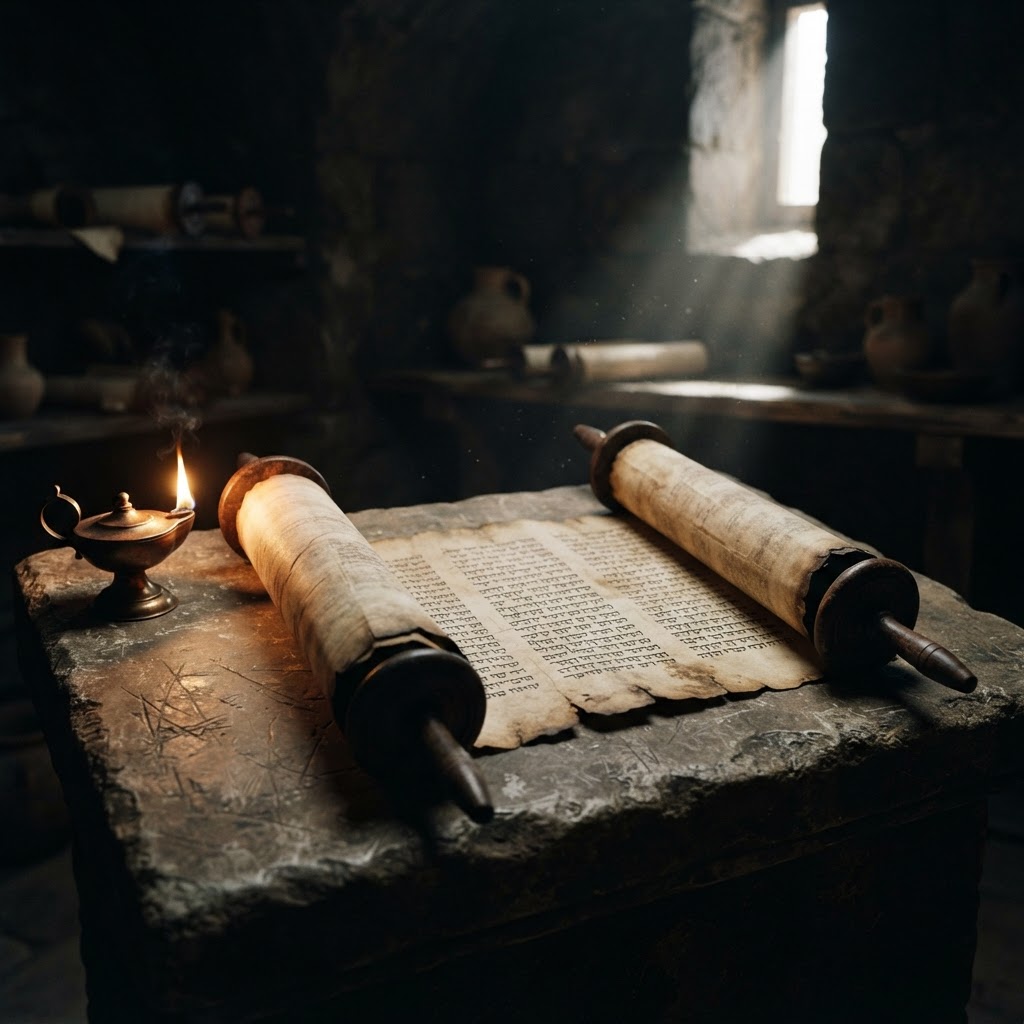
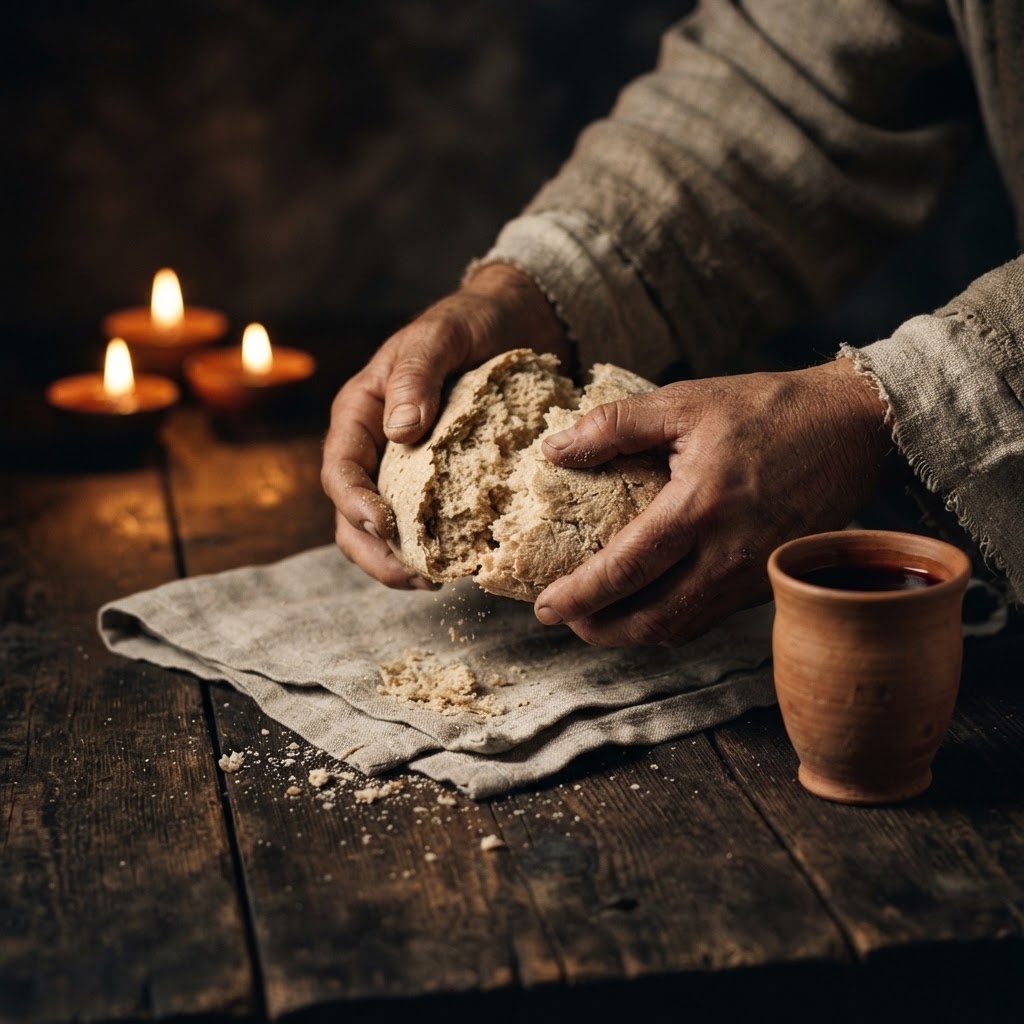
✦ The scroll of Isaiah, read aloud in the synagogue and then in the assembly of the Church.
01
The whole of Scripture, not the verse
“Sacred Scripture must be read and interpreted in the same Spirit in which it was written” (Dei Verbum 12). The Bible is not an anthology of detached sentences to be arranged into an argument; it is one book about one Person, and no verse is allowed to mean the opposite of the book that carries it. Augustine put the rule bluntly: in the Old Testament the New lies hidden, and in the New the Old is unveiled. A text read against the whole is a text misread, however confidently it is quoted.
Dei Verbum 11–13 · Luke 24:44–45 · 2 Corinthians 3:14–16
02
Christ at the centre of every page
On the road to Emmaus, “beginning with Moses and all the prophets, he interpreted to them in all the scriptures the things concerning himself” (Luke 24:27). He did not do this for a few messianic passages — he did it for all of them. Which means a passage that never mentions Christ is still about Christ, and the Church's habit of finding Him in the whole canon is not pious exaggeration; it is imitation of the Lord's own exposition.
Luke 24:27; 24:44 · John 5:39 · 1 Corinthians 2:2
03
The sense and the senses
The literal sense is what the words mean, and the Church will not let it be disregarded: the history is history, the command is command. The spiritual sense is what the things themselves mean, and it is Paul's, not the medievals': the sea is a baptism (1 Corinthians 10:2), the rock is Christ (10:4), Hagar and Sarah are the two covenants (Galatians 4:24). The old couplet named four senses, all of them gathered into one faith: the letter teaches what was done, the allegory what to believe, the moral what to do, and the anagoge where we are going.
Dei Verbum 12 · CCC 115–119 · 1 Corinthians 10:1–11 · Galatians 4:21–31
04
A reader who is not alone
“No prophecy of Scripture is a matter of one's own interpretation” (2 Peter 1:20). Reading privately is not the sin — private reading is how most Catholics come to love the Bible. Treating private reading as the final court of appeal is the question at issue. The Ethiopian official had the scroll in his hands and still asked, “How can I, unless someone guides me?” (Acts 8:31). The Church's answer is the rule of faith: the Creeds, the Fathers, the Liturgy, and the consensus of the saints — the same body of teaching Irenaeus called the Church's ancient inheritance.
2 Peter 1:20–21 · Acts 8:30–35 · Irenaeus, Against Heresies III.3.2
05
The rule of prayer is the rule of belief
Lex orandi, lex credendi — what the Church prays is what the Church believes, and the liturgy is where Scripture has always been at home. A Catholic Mass is a mosaic of the Bible: a psalm, a reading from the Law or the Prophets, a psalm, an epistle, the Gospel standing and sung, the Lord's Prayer, the Sanctus of Isaiah 6, the Agnus Dei of John 1. The Reformers did not invent the idea of a Word-saturated service; they inherited a form of one that the Church had already been praying for fifteen centuries.
Dei Verbum 21, 24 · 1 Timothy 3:15 · Revelation 4–5
II. The Way Itself
You Already Live This. We Only Named It.
The earliest description we have of a Christian community is four words long: they devoted themselves “to the apostles' teaching and the fellowship, to the breaking of bread and the prayers” (Acts 2:42). Teaching, fellowship, sacrament, prayer — a pattern of life, given before a single book of the New Testament had been written. The first name for the faith was not an idea but a road: the disciples were “of the Way” (Acts 9:2; 19:23; 22:4). Here is the part that surprises people. That pattern is not foreign to you. Look honestly at your own week, and you will find every one of these rhythms already there — smaller, and often unnamed, but there. The Catholic life is not a different life. It is the same one, given a body, a calendar and a table.
01
A Day You Already Keep
You already have a quiet time. A chapter before work, a prayer before the meal, a verse taped above the sink, a notebook of what you are asking God for. Nobody commanded you to be up at six; you do it because the day belongs to him, and because a day that begins without him feels unhooked.
The same instinct, full-grown
The Catholic day is that same instinct with a longer memory: the sign of the cross at rising, an offering of the day before the first email, the Psalms of the Liturgy of the Hours — the whole Psalter prayed through every four weeks — grace before and after meals, and the short examination of conscience at night. None of it is extraordinary. All of it aims at one ordinary thing: that the hours are his, not only the highs.
You already keep a day. Sunday is not spare time you happen to give to God; it is the first day, the day he rose, and you gather. Singing, the reading, the sermon, the prayers, the giving — you would not call it a ritual, but it has a shape, and the week is different when you miss it.
The same instinct, full-grown
The Catholic week has the same centre and a longer table. Justin Martyr described the service to an emperor in about 155: the memoirs of the apostles and the writings of the prophets are read, the president teaches, the people stand and pray, bread and wine are offered, and “the Eucharist is distributed.” Scripture read, and then Scripture eaten. The week is shaped too by fasting and almsgiving: Friday, the day he died, has been a fast since before the first century closed (Didache 8).
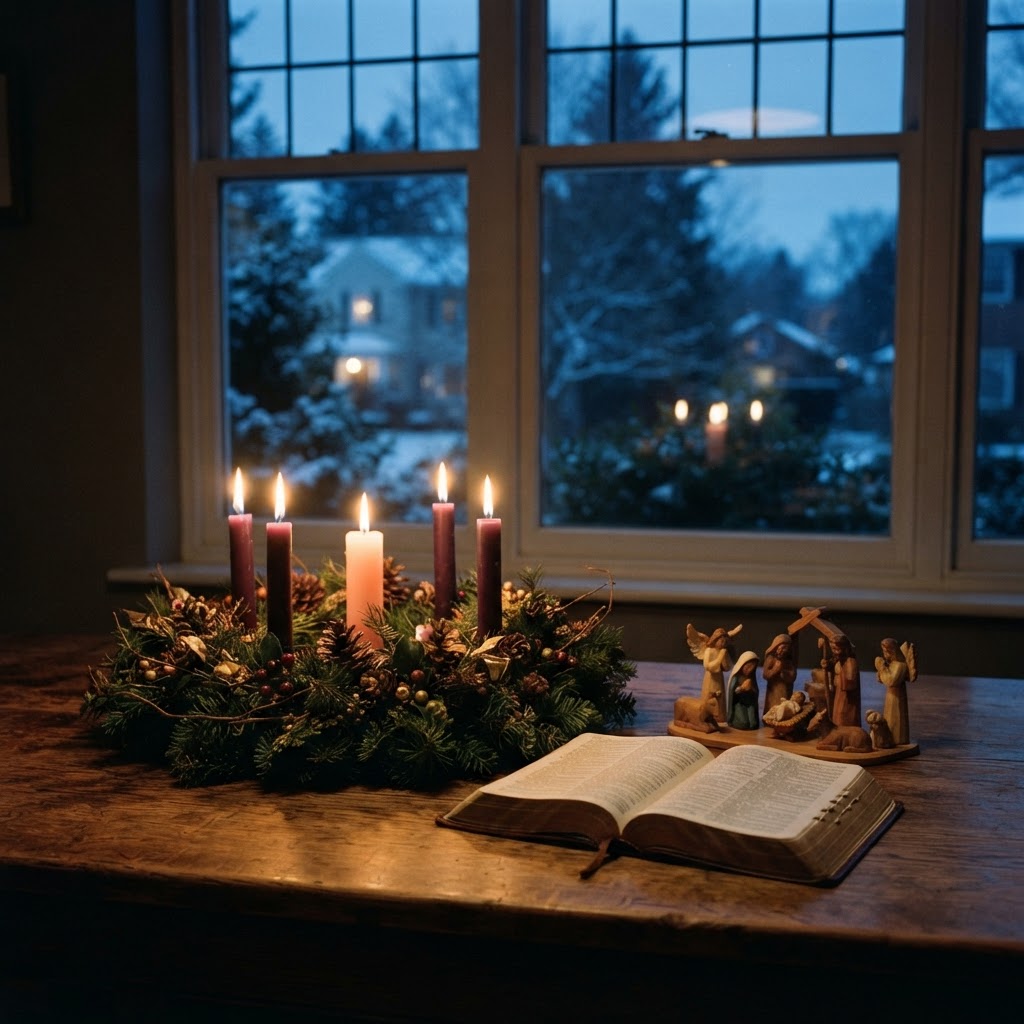
You already keep a year. Christmas is not a date to you and Easter is the hinge of everything. Many of you light an Advent candle, keep a Good Friday service, hold a harvest supper, sing carols in December. You have a rhythm whether or not you have ever used the word for it.
The same instinct, full-grown
A Catholic year is baptised time: Advent beginning with the prophets and ending with a birth outside an inn; Lent's forty days following Our Lord into the desert, kept since the Council of Nicæa; the fifty days of Easter held as one long Sunday; Pentecost to crown them; and then the saints' days — the ones the whole Church keeps, and the ones a country keeps. You cannot drift through that year without meeting the life of Christ in the order in which it was lived.
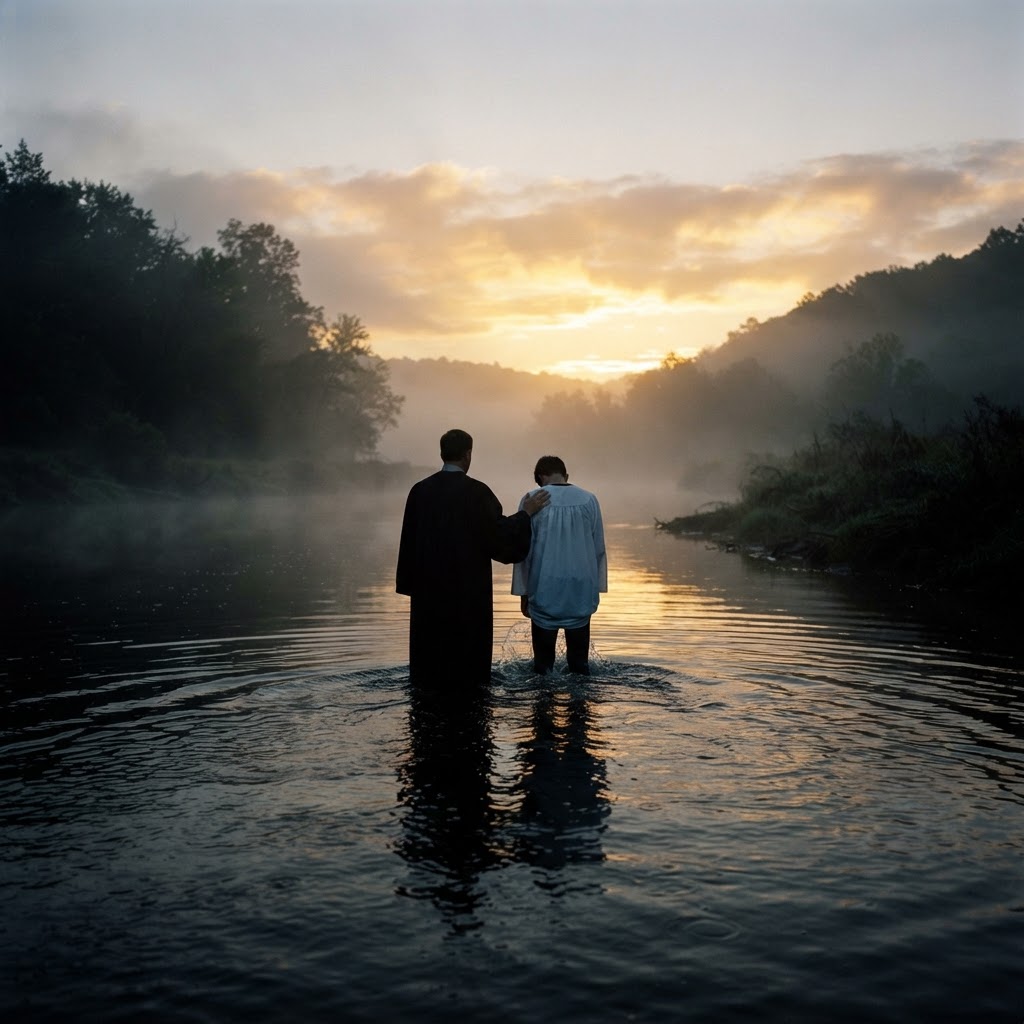
And you already give him a life. There was a moment you turned — a prayer, a decision, a walk to the front, a night you could still name. You were baptised, or you wish you had been. You have a family altar, or a Bible on the coffee table, or hands that hold each other before the meal. And when someone you love dies, you pray for them, because it is unbearable not to.
The same instinct, full-grown
That is the whole sacramental instinct — only without the sacraments to carry it. Baptism is the beginning, and everything after it is a return to that washing. Confession is medicine taken while you are still well, on the authority the risen Christ gave to men to forgive and to retain (John 20:22–23). The family is a domestic church, the oldest Bible study there is. Death is a door and not a wall, which is why the Church prays for her dead — the one practice Paul found his converts already keeping for their own, before they knew the Gospel (2 Maccabees 12:44–46; 1 Corinthians 15:29).
None of this is a price to be paid. The commandments are not the fare for heaven, and a Catholic who treats them as one has understood neither the commandments nor heaven. They are the shape love takes when it is trained: a trellis for a vine that cannot think it grows only because it is watched once a week. That is why we say the faith is not a set of rules but a way of life — and why the rules matter: you cannot have a rhythm of life without a beat.
So the distance between us is narrower than the map suggests. You are not being asked to abandon a life of prayer, Scripture, Sunday, fasting, family and hope. You are being asked whether that life has a home with a door, a table and a voice — and whether the instincts you already trust are the instincts of the Church that gave you the book.
III. The Call to Holiness
Be Humble. Be Grateful. Be Faithful.
Holiness is not a Catholic specialty, and it is not an add-on to the Gospel: “this is the will of God, your sanctification” (1 Thessalonians 4:3), and without it “no one will see the Lord” (Hebrews 12:14). Nor is it vague. Scripture names its shape, and the shape is three movements that every serious Protestant already knows by heart — the bowed knee, the lifted hand, the kept road. We say them as a rule of life. Be humble is the self-emptying. Be grateful is the receiving. Be faithful is the remaining. Between them there is nothing left of a Christian life that has not been named — and each one, followed far enough, walks you straight into the sacraments.
I
Be Humble
You already do this
You already know this posture, and you know where it belongs: on your knees, honest about what you are. Repentance is not the doorway you pass through once at the start and then leave behind — it is the air of the room. The publican beating his breast went home justified; the Pharisee itemising his virtues did not.
Where it leads
Now ask what humility would do if it were given a place to happen. “If we confess our sins, he is faithful and just to forgive” (1 John 1:9) — and the risen Christ breathed on men and said, “Receive the Holy Spirit. If you forgive the sins of any, they are forgiven” (John 20:22–23). A ministry of forgiveness is not a Catholic invention; it is an Easter gift left in the upper room. Confession is that same honesty, spoken aloud to a father who is bound to speak the absolution back: the humility you already practise, with a voice answering it.
Luke 18:13–14 · Psalm 51:17 · 1 John 1:8–9 · James 5:16 · John 20:22–23
II
Be Grateful
You already do this
The second is the one you already do best. “Give thanks in all circumstances” (1 Thessalonians 5:18) — the hymn before the sermon, the grace before the meal, the list of mercies in your journal. Gratitude is the one discipline that makes a Christian recognisable in a crowded room, because it is the opposite of the age we live in.
Where it leads
Here is something worth knowing: the central act of Catholic worship is named Thanksgiving. Eucharista is the Greek word for it; in the institution of the Supper, “he took bread, and when he had given thanks” is eucharistēsas (Luke 22:19). The Church did not choose a ceremony and then hunt for a name; she took the name from what he did at the table and made it the shape of every Sunday. “The cup of blessing which we bless — is it not a participation in the blood of Christ?” (1 Corinthians 10:16). Your gratitude is not less than ours. But if thanksgiving could be gathered into one act, offered to the Father, in the body and blood of the Son, would you not want to be there?
And the third is the hardest and the most Protestant of the three. Endurance. Remaining. Not the beginning of the race but the finishing of it. “He who endures to the end will be saved” (Matthew 24:13); “be faithful unto death” (Revelation 2:10). You have watched someone stay — in a hard marriage, in a dry season, in a church that hurt them — and you know that staying is the argument the world cannot answer.
Where it leads
Now notice the promise attached to the Sacrament. “He who eats my flesh and drinks my blood abides in me, and I in him” (John 6:56). The word is menein — abide, remain, stay. It is the same word he uses in the vine: “abide in me, and I in you” (John 15:4). The Catholic answer to how a person remains in Christ for fifty years is not a technique but a food: a sacrament that does the abiding from the inside. And when the staying has been broken — as it is, for all of us — there is absolution again, and the road begins once more. Be faithful is not a test you pass alone. It is a table you are fed at.
Matthew 24:13 · Revelation 2:10 · Hebrews 10:23 · John 15:4–5 · John 6:56
So put the two calls side by side and see how close they are. You are already trying to be humble, grateful and faithful, and so are we; we have simply been given furniture for the attempt — a place to kneel, a table to give thanks at, a food that makes remaining possible. None of the three is a Catholic achievement. Every one of them is a gift, and the Catholic claim is only this: the Giver put the gifts in hands, in a body, in a Church, and told her to keep giving them until he comes.
III. The Traditions Already in the Room
You Have Them Too. That Is the Whole Point.
The historical question a Protestant inherits is this: does the Church have anything handed down that is not written in the Bible? Look at your own Sunday before you answer. Most of what is in that room is unwritten — some of it very old, some of it remarkably recent — and no verse in the New Testament mandates a single one of them. None of this is a sin. It is simply evidence that the Church has always taught and ordered its life by something more than a bare text, and that a tradition is not automatically a tradition of men. Below, each practice is tagged for where it actually came from.
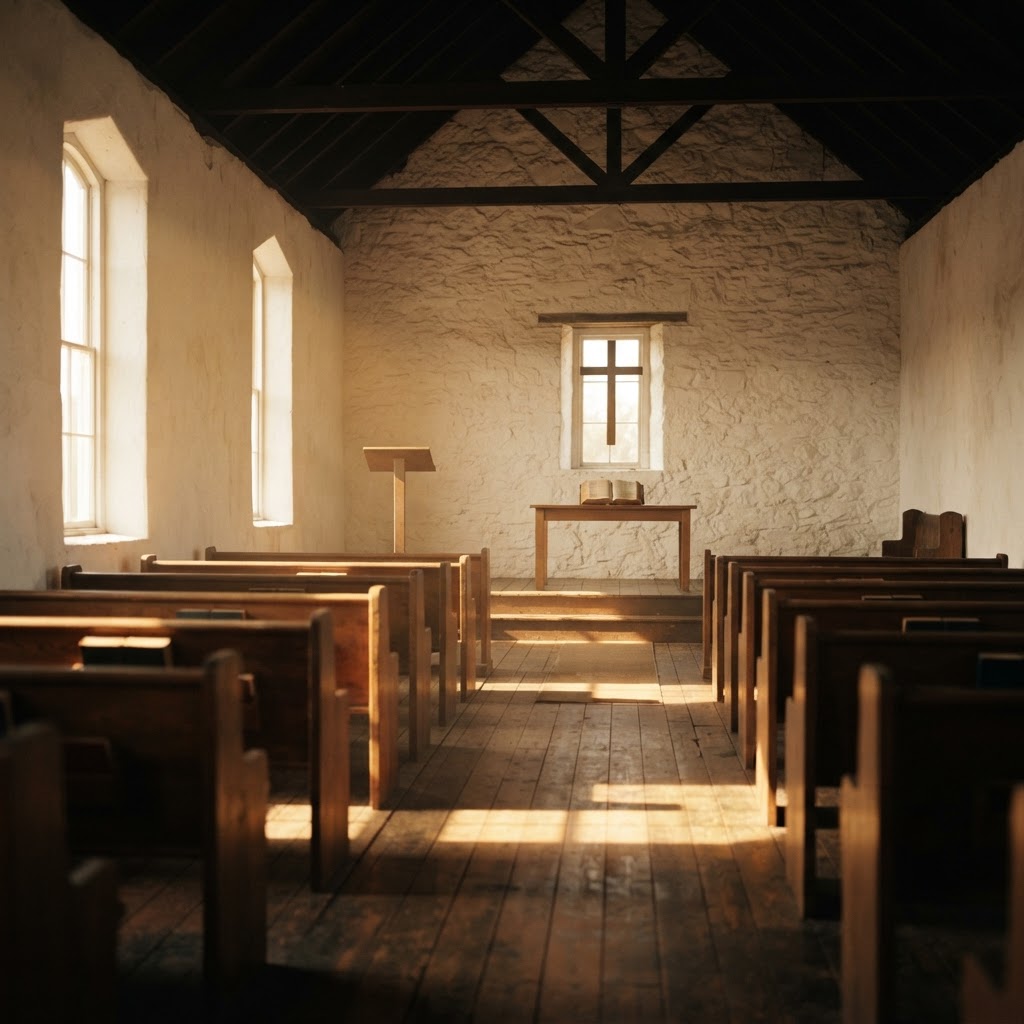
✦ A faithful chapel, ordered by unwritten custom as much as by written command — as every living church is.
Meeting on Sunday rather than the Sabbath
Apostolic — early and universal
The resurrection day, kept from the apostles onward — Acts 20:7, 1 Corinthians 16:2, Revelation 1:10. In the early centuries the practice was so universal that a dispute about the date of Easter was settled by council, not by verse.
Commanded in Scripture: No verse in the New Testament commands it.
The twenty-seven books of the New Testament
Apostolic — early and universal
Discerned and listed by the Church in council: Rome in 382, Hippo in 393, Carthage in 397, confirmed at Florence in 1442 and again at Trent in 1546.
Commanded in Scripture: No book of the Bible lists the books of the Bible.
Baptising the children of believing households — or, in place of it, dedicating them
Apostolic — early and universal
Household baptisms are in the text (Acts 16:15, 33; 18:8; 1 Corinthians 1:16); Irenaeus, writing about 180, speaks of Christ sanctifying “infants and little children.” The dedication service is the newer tradition: it entered with the Anabaptists in the 1520s.
Commanded in Scripture: Households yes; the age of each member, no.
Christmas and Easter, and the rest of a liturgical year
Apostolic — early and universal
Easter was kept from the second century, and its date was fixed by the Council of Nicæa in 325. Rome was keeping Christmas by about 336. Neither feast is commanded; the Church gave them the year.
Commanded in Scripture: No command to keep either.
Chapters and verses in your Bible
Custom — later and local
Stephen Langton divided the chapters in about 1205; Robert Estienne put in the verses in 1551. The numbers are the work of medieval Catholic scholars at a Catholic university press.
Commanded in Scripture: None — and without them you could not quote a verse.
The altar call and the sinner's prayer
Custom — later and local
American revivalism, 1820s–30s — the “anxious seat” of Charles Finney, refined into a standard ending for a service. Unknown to the New Testament and to the first eighteen centuries of Christian worship.
Commanded in Scripture: None.
A set-apart building with a platform, a pulpit and a pulpit's furniture
Custom — later and local
Christians met in homes for two centuries (Romans 16:5; 1 Corinthians 16:19; Colossians 4:15) and only slowly acquired dedicated buildings after the persecutions ended.
Commanded in Scripture: None.
Ten per cent, pledged to a church budget
Custom — later and local
The Mosaic tithe was agricultural produce assigned to the Levites, the sojourner, the orphan and the widow (Numbers 18:21; Deuteronomy 14:28–29). The New Testament commands generosity and names no percentage (2 Corinthians 9:6–7).
Commanded in Scripture: Generosity, yes. Ten per cent, no.
A senior pastor over a board, and a congregational constitution
Custom — later and local
The Pastorals give the qualifications of overseers and deacons (1 Timothy 3; Titus 1) but no senior pastor as a chief executive, no board, no constitution, and no vote.
Commanded in Scripture: Offices yes; this shape of them, no.
And the smaller furniture of the room — a printed order of service, a benediction to close, three songs and a sermon, microphones and screens, the offering plate passed at a set moment, the raising of hands, the “amen.” None of these is in the New Testament. All of them are tradition. That is not an accusation; it is what a living community does with a text it loves.
So the question was never “do you have traditions?” Every church has them, and to have none would be to have no life. The question is which ones are apostolic, which ones are merely customary, and whether any of them has quietly taken the place of the word of God. Hold that thought. The next section goes back to the century that settles it, and then comes the test.
“And they devoted themselves to the apostles' teaching and fellowship, to the breaking of the bread and the prayers.”
Acts 2:42
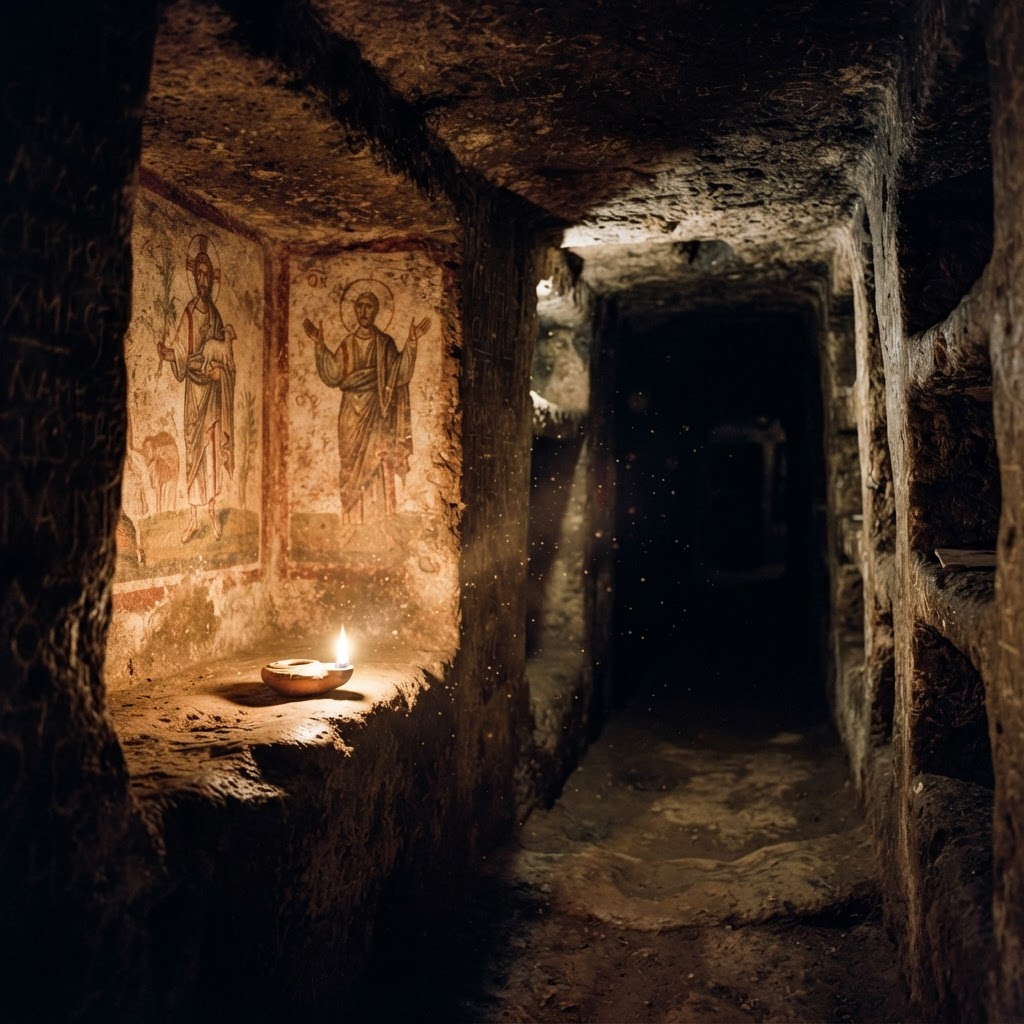
✦ The catacombs of Rome, where the Church prayed, sang and buried her dead long before any council listed the books.
IV. Before There Was a Bible
They Were Worshipping Before Anything Was Written Down.
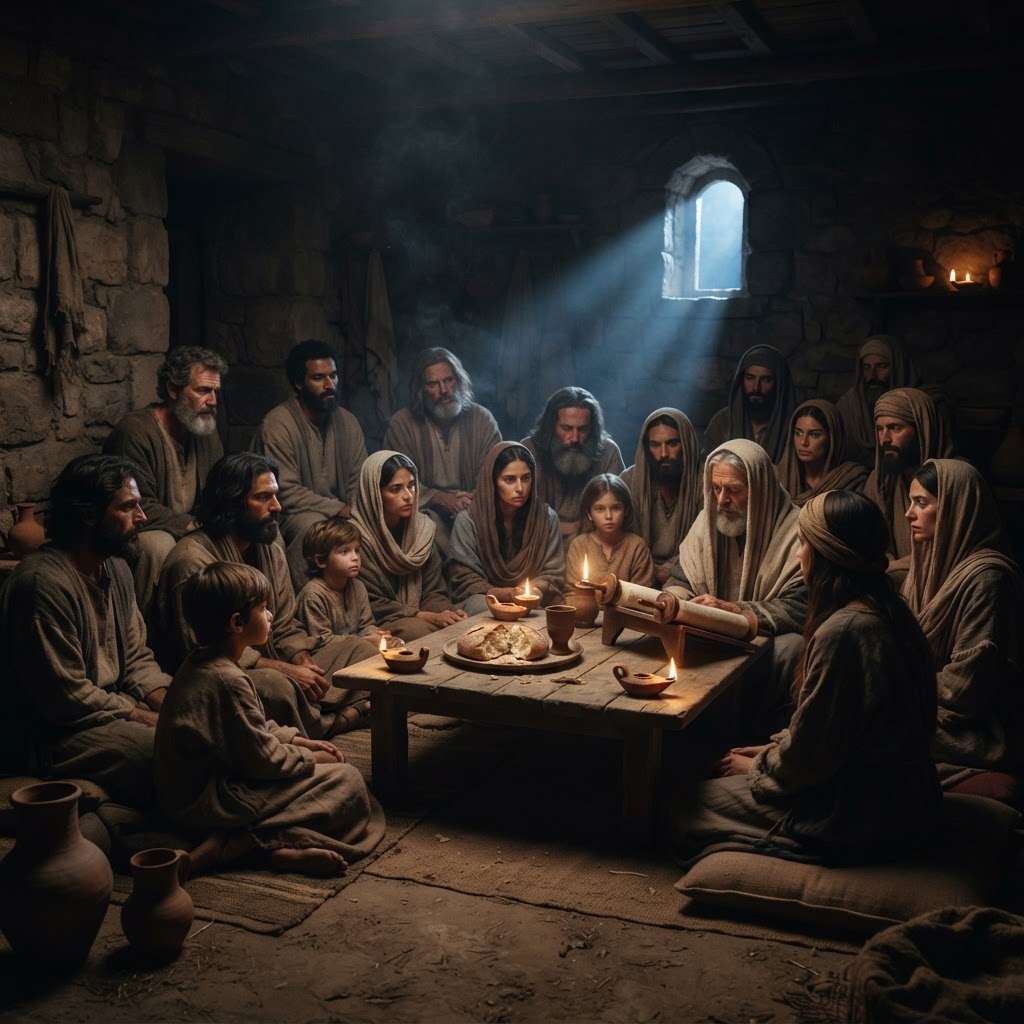
The word “Bible” did not exist in the first century. There was no bound book, no chapters, no verses, no table of contents — and for roughly twenty years after Pentecost, not one sentence of the New Testament had been written. Yet the Church was already gathered, singing, praying, baptising and eating. This is not a curiosity for historians. It is the decisive fact about how Christian worship was ordered: the Church's liturgy was not built later out of the New Testament. The New Testament was written into a worshipping Church that already existed, and it was read aloud inside that worship from the moment it arrived.
The Scriptures — the Old Testament
When the New Testament speaks of “the Scriptures,” it means the Law, the Prophets and the Psalms — usually in the Greek Septuagint the apostles quoted. Timothy had known “the sacred writings” from childhood (2 Timothy 3:15); the Bereans searched “the Scriptures” daily (Acts 17:11). Those Scriptures were read in the synagogue every Sabbath (Luke 4:16–21; Acts 13:15), and the first Christians simply carried that habit into the Lord's day.
The apostolic preaching, handed over by word
Before anything was written, everything was preached. Paul commands the Thessalonians to “hold to the traditions which you were taught by us, either by word of mouth or by letter” (2 Thessalonians 2:15), and tells Timothy to entrust what he heard “in the presence of many witnesses” to faithful men (2 Timothy 2:2). The Gospel existed as an oral, corporate, liturgical possession for a generation before it existed as a text.
The Eucharist, already celebrated
The earliest written account of the Last Supper is Paul's, around AD 54 — and notice how he gives it: “I received from the Lord what I also delivered to you” (1 Corinthians 11:23). He is handing on a practice the Church was already keeping when he wrote. Paul assumes the Corinthians know what he means by “when you come together to eat” (11:33), and the Didache, within the first century, already contains Eucharistic prayers. The Church had the Sacrament before she had the Gospels.
The Shape of the Sunday
Read the earliest descriptions side by side, and the same seven movements appear — a form older than any of the documents that record it, and still recognisable to a Catholic on any Sunday in Perth.
1
They gathered
“On the first day of the week, when we were gathered together to break bread” (Acts 20:7). Sunday was the fixed day from the beginning, because it was the day He rose.
2
The Scriptures were read
The Law, the Prophets and the Psalms — and then, as they arrived, the apostles' letters. Paul tells the Colossians to have his letter read in the church of Laodicea (Colossians 4:16).
3
Someone taught
“Paul talked with them… and prolonged his speech until midnight” (Acts 20:7). Justin, in 155, describes the president of the assembly “instructing and exhorting” the people to imitate what they have heard.
4
They prayed
Common prayer, the Lord's Prayer, and the kiss of peace. “We all rise together and pray,” Justin writes — the posture of a body, not a crowd of individuals.
5
Bread and wine were offered
“The bread which we break, is it not a participation in the body of Christ?” (1 Corinthians 10:16). Justin describes the offerings brought forward, and the president giving thanks at length.
6
They received
The people answered “Amen,” and the deacons carried the consecrated bread and wine to those absent. From the beginning, communion was something received, not merely remembered.
7
They were sent
Out into the week — to the poor, the widows, the imprisoned. The collection for the saints was taken on that same first day of the week (1 Corinthians 16:2).
That is the Catholic Mass, named before the word “Mass” existed: gather, read, preach, pray, offer, receive, be sent. Nothing was added to this skeleton in the centuries that followed — the prayers grew, the music grew, the calendar grew; the frame is apostolic.
The witnesses, in order
c. 96Clement of Rome, to the Corinthians
“Our apostles knew through our Lord Jesus Christ that there would be strife over the office of bishop. For this reason… they appointed those already mentioned, and afterwards gave further instructions, that if they should fall asleep, other approved men should succeed to their ministry.”
A Roman presbyter writes to settle a liturgical dispute in Greece — and the Church of Corinth, in the lifetime of the apostles' own disciples, accepts the answer. Ordered ministry and a liturgy with appointed times are simply assumed.
c. 90–120The Didache
“On the Lord's own day, assemble in common to break bread and offer thanks; but first confess your sins, so that your sacrifice may be pure.”
The earliest Christian manual after the New Testament. It contains Eucharistic prayers nearly word for word in the shape the Church still prays, and it calls the assembly's offering a sacrifice.
c. 107Ignatius of Antioch
“Let that be considered a valid Eucharist which is celebrated by the bishop, or by one whom he appoints.”
A bishop on his way to be martyred in Rome, writing seven letters about unity around one altar. Half a century after the last apostle died, the Eucharist is already the centre of a church with bishops — and no one is arguing about it.
c. 112Pliny the Younger, reporting to Trajan
“They were accustomed to meet on a fixed day before dawn, and sing responsively a hymn to Christ as to a god.”
The testimony of a hostile pagan official, in a government file, describing Christian worship. This is the kind of evidence historians trust most: an outsider with no interest in flattering the Church.
c. 155St. Justin Martyr, First Apology 65–67
“On the day called Sunday, all who live in cities or in the country gather together to one place, and the memoirs of the apostles or the writings of the prophets are read… then the president in like manner offers prayers and thanksgivings… and the people assent, saying Amen.”
Written to an emperor as a defence of Christians — a public, auditable description of the service. Readings, homily, common prayer, the kiss of peace, the offering, the Eucharistic prayer, the people's Amen, and communion taken to the absent: it is the Mass, under another name, in the second century.
c. 160sMelito of Sardis, On the Pascha
“He was slain — and God was slain.”
A complete Paschal homily survives, preached before the canon was settled: the Old Testament read as a figure of Christ, in a liturgy that runs from Passover to Easter. This is what the “spiritual sense” looked like when it was preached, not theorised.
c. 215The Apostolic Tradition
“The bishop shall give thanks according to what was said before… and the deacons shall present the oblation.”
A church order containing baptismal rites, anointing, the laying on of hands, and the Eucharistic prayer — a century before the canon of Scripture was formally listed by any council. The liturgy is already old, detailed and settled.
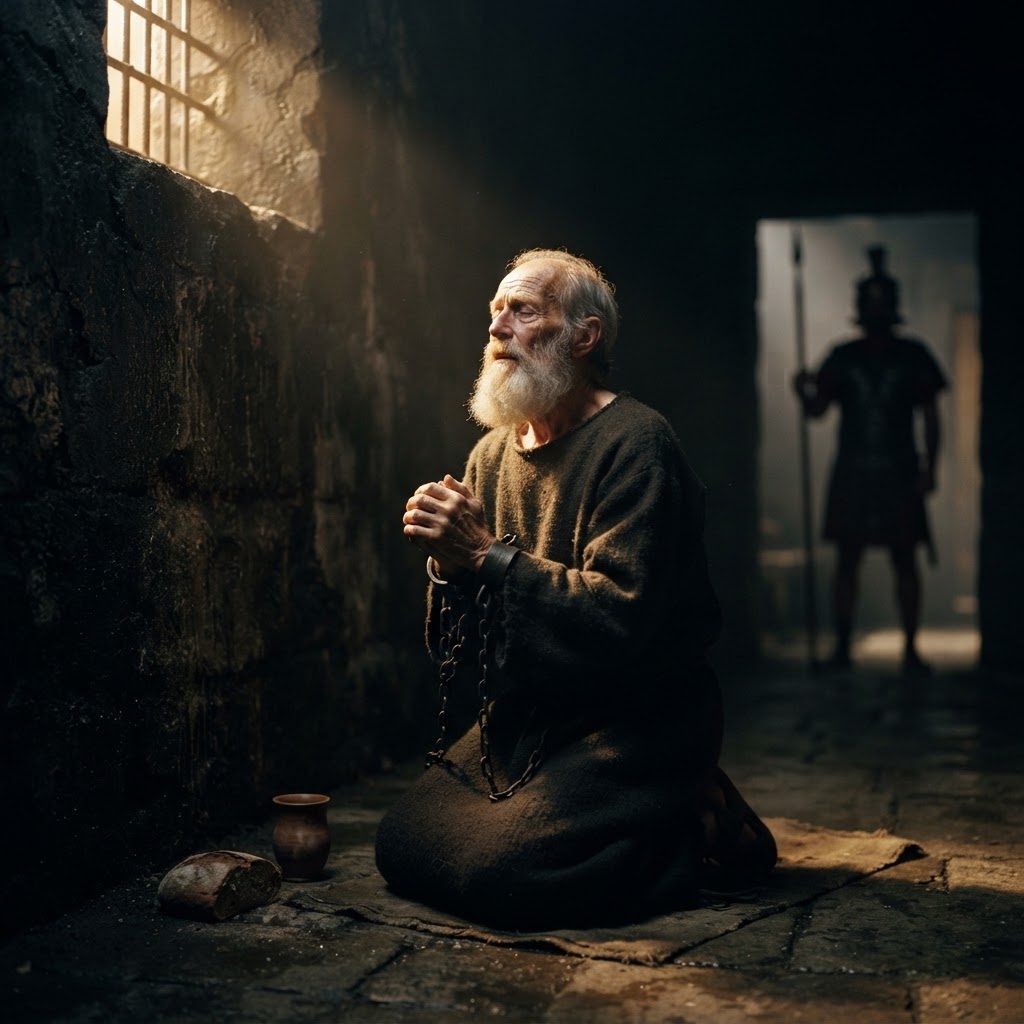
✦ Ignatius of Antioch, chained and on his way to the beasts in Rome, writing seven letters about one altar and one Eucharist.
Now put the chronology in order, because it settles the argument about authority. The Church is worshipping in AD 33. The first New Testament book is written in the 50s. The last is written around 100. The twenty-seven books are listed by councils in 382, 393 and 397. Every stage of her worship — Sunday, the readings, the homily, the intercessions, the offering, the consecration, the Amen, the communion of the absent, bishops, deacons and the Eucharistic sacrifice — is attested in writing long before the table of contents in your Bible existed. So the Catholic asks only this: what was the Church doing for three and a half centuries, with the apostles' own authority in her hands, if not worshipping as He told her to? Whatever that was, it was not a tradition of men invented later. It was the way of life of the people who wrote the book.
“I am the wheat of God, and am ground by the teeth of the wild beasts, that I may be found the pure bread of Christ.”
St. Ignatius of Antioch, to the Romans, 4
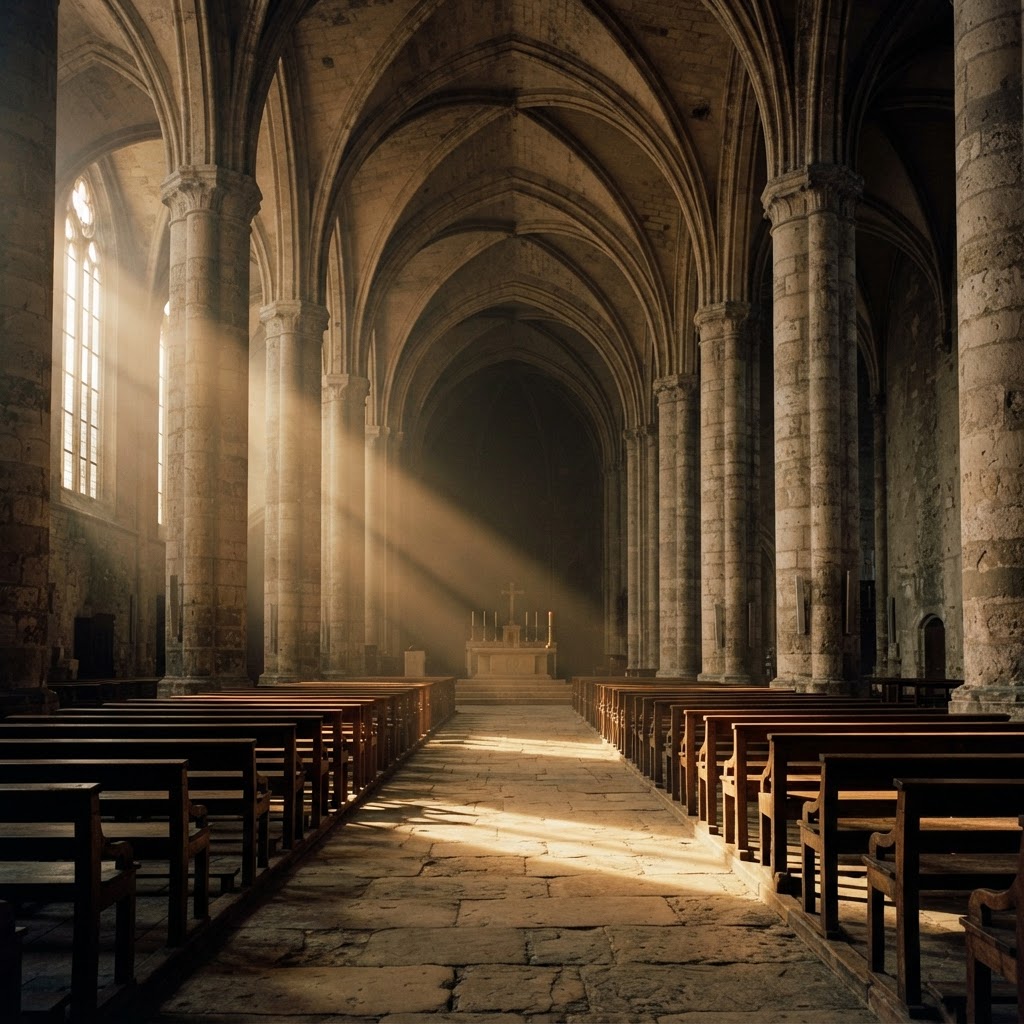
✦ The nave the Reformers inherited and, in many places, kept on using — with the Mass still said in it.
The Witnesses
They Kept More Than They Are Given Credit For
The Reformation was not a single clean break. The men who left Rome kept the Trinity, the Creeds, the sacraments, the Real Presence, private absolution, the honour of Mary, and a visible Church with real authority — and then their successors, three or four generations later, quietly dropped what the founders had defended. Read them in their own words. These are not Catholic quotations of Protestant authors as a debating trick; they are the confessional texts those churches still print.
✦ The desk, the candle, the Latin Bible: what they kept, they kept on purpose.
The Eucharist
“It is the true body and blood of our Lord Jesus Christ, under the bread and wine, for us Christians to eat and to drink, instituted by Christ himself.”
Martin Luther
Small Catechism, The Sacrament of the Altar (1529)
The man who would not bend on justification never doubted that the bread and cup are Christ's body and blood. He spent his later years arguing against those who called the Supper a mere sign. If the Catholic doctrine of the Real Presence is idolatry, Luther is the first defendant.
Confession & Absolution
“Confession comprises two parts: the first, that we confess our sins; the other, that we receive absolution from the confessor as from God himself, and in no way doubt that our sins are thereby forgiven before God in heaven.”
Luther abolished compulsory confession as a burden on the conscience. He did not abolish confession. He kept private absolution and told people to hear it as God's own voice — which is precisely the Catholic claim the Church is accused of inventing.
Confession & Absolution
“Concerning confession they teach that private absolution ought to be retained in the churches.”
This is the founding confession of the Lutheran churches, presented to the Emperor. It does not say private absolution is a matter of indifference. It says it ought to be retained — the same instinct that later centuries would call a Roman invention.
Baptism
“It is not merely water, but water included in God's command and combined with God's word.”
Luther taught baptismal regeneration and the baptism of infants, and called baptism a washing of rebirth that remains valid for the whole of life. The Anabaptists were closer to modern evangelical practice than Luther was.
The Eucharist
“We do not abolish the Mass, but religiously keep and defend it. Masses are celebrated among us every Lord's Day and on the other festivals.”
The Reformers did not replace the altar with a bare preaching hall. They kept the Mass every Sunday and every feast, in Latin in many places for a generation, with vestments, chant and elevation. The stripped-down service came later, and came from other hands.
The Eucharist
“They teach that the body and blood of Christ are truly present, and are distributed to those who eat in the Supper of the Lord; and they disapprove of those who teach otherwise.”
Note the verb. Not remembered, not symbolised: distributed. The Augsburg Confession disapproves of those who deny the true presence — a sentence that lands on modern memorialism, not on Rome.
The Church
“Concerning the saints they teach that the saints are to be remembered, that we may imitate their faith and good works according to our calling.”
Melanchthon's objection was never to remembering the saints; it was to invoking them as though Christ were reluctant. The communion of the saints, the calendar, and the imitation of the martyrs were all retained — which makes the modern suspicion of 'dead religion' a later development.
Our Lady
“It is a sweet and pious belief that the infusion of Mary's soul was effected without original sin; so that in the very infusion of her soul she was also purified from original sin and adorned with God's gifts.”
Martin Luther
Sermon on the Conception of the Virgin Mary (1527)
Weimarer Ausgabe 17/II: 288 (Luther's Works, American Edition, sermon of 1527)
Luther preached this ten years after the Ninety-Five Theses. He also retained the Hail Mary, called Mary the Mother of God without hesitation, and said her Magnificat should be read as the song of the Church. The Reformation did not begin as a war on Our Lady; it became one.
The Church
“There is no other way to enter into life unless this mother conceive us in her womb, give us birth, nourish us at her breast, and lastly, unless she keep us under her care and guidance.”
The doctrine of the invisible Church was never Calvin's. For him the Church is a mother with a womb and a breast — visible, nourishing, and necessary. The claim that the Church is an optional society of the like-minded is not the Reformation's doctrine; it is a modern one.
The Trinity
“By 'person' then I mean a subsistence in the divine essence — a sort of character or property that is peculiar to each of the three.”
The whole of Institutes I.13 is a defence of the Nicene word homoousios against Servetus, whom Calvin had condemned for denying the Trinity. Whatever else separated Geneva from Rome, the dogma of Nicaea did not: the Trinity is not a Roman accretion, and no Protestant who says the Creed on Sunday is worshipping a different God.
Justification
“The doctrine of justification is the principal hinge on which religion turns.”
Calvin made justification the hinge of everything — which is why the 1999 Joint Declaration matters more than any other ecumenical text of the century: the hinge is the one thing Catholics and Lutherans have now formally agreed upon. Read the Declaration next.
“A sacrament is an outward sign by which the Lord seals on our consciences the promises of his good will toward us, in order to sustain the weakness of our faith.”
Calvin's sacraments are not bare memorials. They are seals annexed to a promise, given because our faith is weak — which is far nearer the Catholic account of sacramental grace than the word 'symbol' suggests. The gap was real; it was not the chasm the polemics claimed.
Charity across difference
“Though we cannot think alike, may we not love alike? May we not be of one heart, though we are not of one opinion?”
John Wesley
Sermon 39, Catholic Spirit (1749)
Sermon XXXIX, 'Catholic Spirit', §I.10
Wesley's 'catholic spirit' is the Methodism that later signed the Joint Declaration in 2006. It is not indifference — Wesley insists on the essentials and on a heart right with God. It is the refusal to make every secondary difference a reason to withhold love.
The Church
“Where you see this done, there is certainly the holy Christian people and the Church, even if there were no pope and no councils.”
Martin Luther
On the Councils and the Church (1539)
Luther's Works (American Edition) 41: 154 (WA 50: 632)
Luther's marks of the Church were not invisible: the word preached, baptism, the Supper, the keys, the ministry, worship, and the cross. He wanted a visible Church with real marks — a claim that makes 'just me and my Bible' a departure from him, not a return to him.
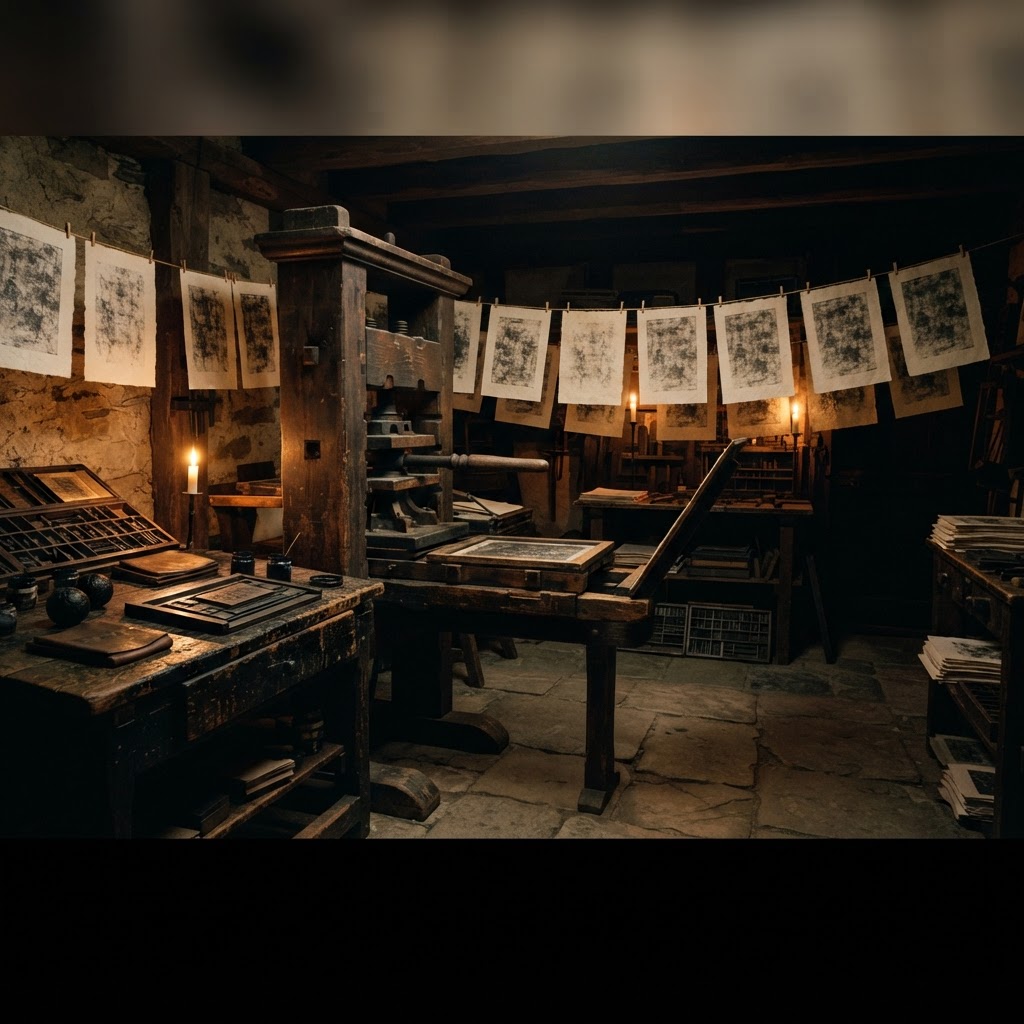
✦ The press that spread the Reformation also spread the confessions that preserved the Catholic faith.
Why this is more than a quotation collection
A quotation proves a man said something; it does not prove he was a Catholic. Luther denied the sacrifice of the Mass in the sense Trent defined it, rejected papal jurisdiction, and called the pope antichrist. Honesty requires saying that. But there is a difference between a disagreement and a different religion, and the difference is measured by the Creeds, the Trinity, the sacraments, and the person of Christ — all of which the Reformers confessed with us and much of which their descendants have since abandoned. If the men who started it would not recognise the memorialism, the invisible church, or the suspicion of the sacraments that now passes for Protestantism, then the argument between us has moved, and it has not moved in Rome's direction.
For the sake of honesty
They did not reject the Trinity, the Creeds, Chalcedon, or the first four councils.
They did not reject baptismal regeneration, infant baptism, or the Real Presence.
They did not abolish confession, absolution, the Mass, or the Church's visible authority.
They did reject papal jurisdiction, the sacrifice of the Mass as Trent defined it, indulgences as sold, and the invocation of the saints as they understood it.
Citations are to the official confessional texts and to the standard critical editions (Weimarer Ausgabe for Luther; the Beveridge and Battles translations of the Institutes for Calvin). Verify every line at the source before you quote it in an argument.
V. The Test
What Actually Makes a Tradition “of Men”.
The phrase comes from Our Lord Himself, and He was not squeamish about it: “You leave the commandment of God and hold to the tradition of men” (Mark 7:8). Notice what made the tradition corrupt. It was not that it was unwritten — the charge he answered was about washing hands, and the tradition he condemned had a specific failure: it was used to set aside a command of God, and it was taught as binding doctrine (Mark 7:7, 9–13). On that definition, a tradition is not “of men” because it is old, or because it is not quoted in a text. It is “of men” when it displaces the word of God or binds the conscience where God has not spoken.
✦ A Bible that has been lived in — and the question of who taught the reader how to read it.
Does it contradict Scripture?
The test of Mark 7: does this practice set aside a command of God, or does it carry one out? Candles and calendars do not; a doctrine that makes grace a wage does. This is why the Church has councils — to say which is which, publicly, and be corrected by the whole body if she speaks amiss.
Does it bind the conscience?
Here is the distinction most arguments miss. A Catholic is bound to the faith and to the sacraments; he is not bound to a novena, a particular statue, a holy-water font, or the way his grandmother said the Rosary. Plenty of Catholic practice is custom and is happy to be called custom. No one's salvation turns on it, and no Protestant is being asked to adopt it.
Is it everywhere, always, and by all?
Vincent of Lérins, writing about 434, gave the Church a rule for telling a development from an innovation: that which has been believed everywhere, always, and by all. It is a hard test, and it is the reason a Catholic can name the century in which a doctrine was defined and still claim it is apostolic — the definition names the date, the faith it defines is older than the argument that forced it.
Does it develop, or does it replace?
Newman's argument in 1845 was that a living thing develops as it lives — the acorn does not become an oak by ceasing to be an acorn. A development keeps its type, keeps its proportions, and remains faithful to its origin; a corruption trades the original for something else. The canon, the creeds and the episcopate look like the first. A Christianity that can do without the Eucharist, the priesthood, or the visible Church looks like the second.
Sacred Tradition is not the Church inventing. It is the Gospel handed over.
And this is why the Catholic answer to “the traditions of men” is not a denial that we have customs. It is a distinction. Sacred Tradition is not the Church inventing additions to the Gospel; it is the Gospel handed over — the same word paradosis that Paul uses when he commands, “hold to the traditions which you were taught by us, either by word of mouth or by letter” (2 Thessalonians 2:15), and again, “I commend you because you maintain the traditions even as I have delivered them to you” (1 Corinthians 11:2). The apostles taught before anything was written, and the Church has never stopped teaching. Scripture is the norm of that teaching, its judge and its heart — but Scripture itself says the Church is “the pillar and bulwark of the truth” (1 Timothy 3:15), and a pillar holds up something that is already standing.
So test us. Take the three questions above and walk them through the Catholic list, and then walk them through the contents of your own Sunday. Where we are bound we can show you the chain: the text, the Fathers, the liturgy, the council. Where we are only customary, we will happily say so — and you are not obliged by it.
Read it in the sources
Dei Verbum 8–13 (Vatican II, 1965)Catechism of the Catholic Church 74–1412 Thessalonians 2:15 · 1 Corinthians 11:2 · 2 Timothy 2:2 · 1 Timothy 3:15Mark 7:1–13 · Acts 8:30–35 · Luke 24:27, 44–45St. Irenaeus, Against Heresies III.3.2; II.22.4 (c. 180)St. Justin Martyr, First Apology 65–67 (c. 155)The Didache 7–8 (1st century)St. Vincent of Lérins, Commonitorium 2 (c. 434)John Henry Newman, An Essay on the Development of Christian Doctrine (1845)Council of Trent, Session IV (1546)
31 October 1999 · Augsburg
The doctrine that split Europe has been formally agreed.
In 1999 the Catholic Church and the Lutheran World Federation signed a Joint Declaration on the Doctrine of Justification. It says, in their own words, that the condemnations of the sixteenth century no longer apply to what the other church now teaches. Here is what both sides actually affirm — with the paragraph numbers, and the official documents.
You may finish this page still persuaded that we have added to the Gospel. But you cannot finish it thinking that we have merely added rules. What is described here is a way of life that believes the Bible is so true that it must be lived in the body, in the calendar, in the week, in the family and at the deathbed — and that the Church which recognised the canon has some claim to teach it. If that is a tradition of men, it is a strange one: it has cost its adherents everything, for two thousand years, and asked nothing of them but repentance.
Read the Fathers. Read the liturgy of the earliest centuries and see how much of what you call Catholic was already there, sung and prayed, before any of our disagreements existed. Then ask the question the whole page has been circling: if the Spirit has been with this Church from the beginning, guiding her into all truth as He promised, what exactly is the ground on which we are to assume He stopped?