The Foundation · Scripture & Prayer
Know the Truth.
Proclaim It Boldly.
A two-fold school of the Faith. Theology — the inheritance of dogma and doctrine, beginning with the Most Holy Trinity. Scripture — the art of breaking open the Word, reading Israel's story as the type of the Church, and hearing the prophets who still call us back to holiness.
Part I
Theology
An online resource for basic theology, Catholic dogma and doctrine — the unchanging inheritance of the Church handed down from the Apostles, clarified by the Fathers, defined by the Councils, and taught by the Doctors. We begin where the Faith begins: the Most Holy Trinity.
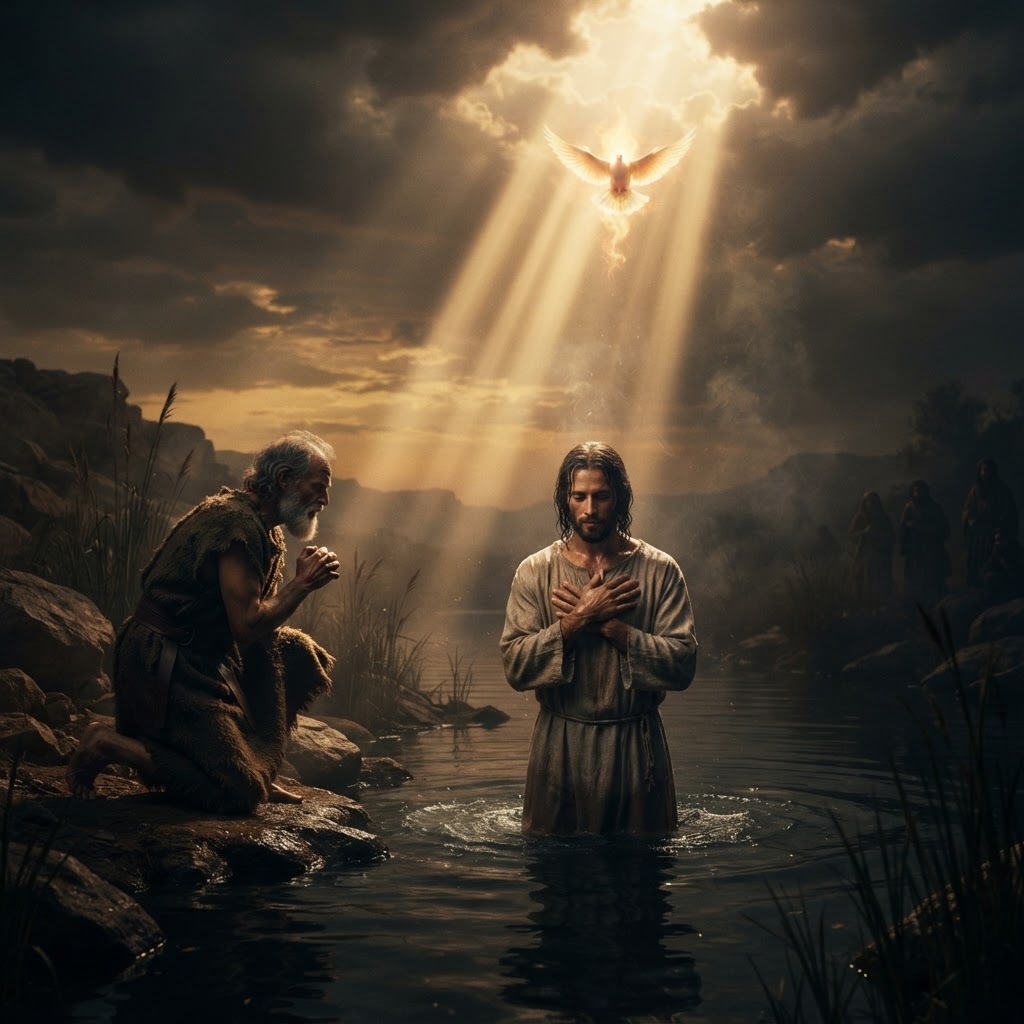
Begin With the First Mystery
The Triune God
One God in three Persons — Father, Son and Holy Spirit. Not a philosophical construct but the deepest truth of who God is, revealed in the Baptism of Christ, confessed at Nicæa and defended by Athanasius. The consubstantial Trinity, the Shield of the Faith, the twin analogies of the triple point of water and the mind–word–breath of God.
Enter the Mystery
An Online School of Catholic Dogma
Think with the Church. Speak with Courage.
Theology is not the opinions of scholars but the mind of Christ given to His Church. Here you will find the foundational doctrines — the Trinity, the Incarnation, the sacraments, the moral law — set out faithfully and without compromise, that ordinary Catholics may engage the world with intellectual clarity and evangelical fire.
The Triune God
One God, three Persons — consubstantial, coeternal. The Athanasian confession, the Councils, and two luminous analogies (the triple point of water; mind, word and breath).
The Paschal Mystery
The Incarnation, Passion, Death, Resurrection and Ascension of Christ — the source and summit of all doctrine.
The Sacraments
The seven sacraments instituted by Christ — visible signs of invisible grace, the ordinary means of salvation.
Moral & Cultural Clarity
Natural law, the Ten Commandments, the Beatitudes — moral truth applied to the signs of our age.
Foundations
Four Pillars of Theological Formation
Sacred Scripture
Lectio Divina, biblical theology, typological reading of the Old Testament in light of Christ.
Sacred Tradition
The living memory of the Church — Fathers, Councils, Doctors, Creeds — as the interpretive context of Scripture.
Natural Law
The rational foundation of morality inscribed in human nature — the bridge between faith and culture.
Cultural Analysis
Reading the signs of the times through the lens of Revelation, not ideology. Truth applied to history.
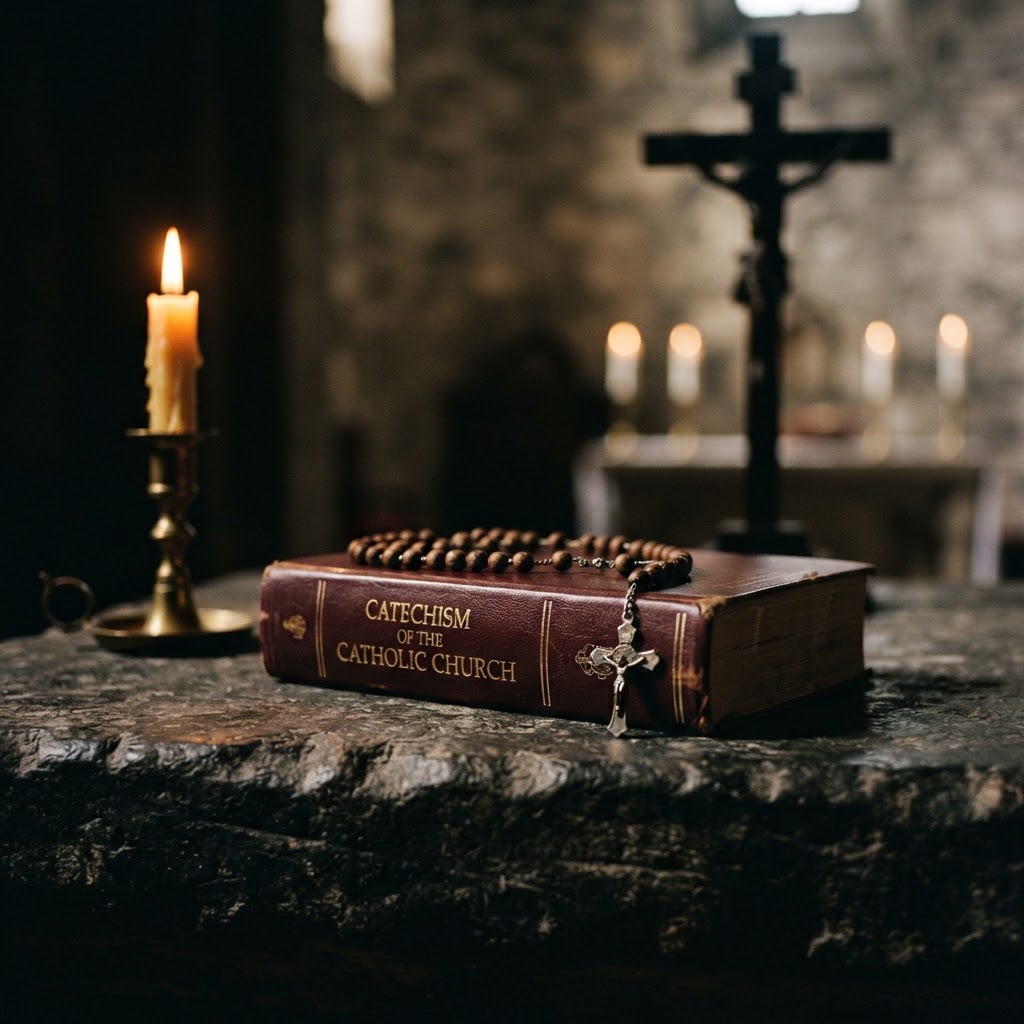
Catechism of the Catholic Church
Core Doctrinal Themes
The Most Holy Trinity
The central mystery of the Faith: one God in three Persons, Father, Son and Holy Spirit.
Jesus Christ
The Incarnation — God became man to save us. The heart of all Catholic theology.
The Church
The mystery, sacramental structure, hierarchy, and mission of the one, holy, catholic, apostolic Church.
Sacred Scripture
The Bible is the Word of God in the words of men — inspired, inerrant in what pertains to salvation.
The Virtues & Sin
The cardinal and theological virtues against the seven deadly sins — the path of holiness.
Christian Prayer
Meditation, contemplation, the Lord's Prayer — the full tradition of Catholic prayer.
Apologetics
“Always be ready to give a reason for the hope that is in you.”
1 Peter 3:15. Catholic apologetics is not polemics — it is an act of love. To give someone the truth they need to move from darkness to light.
Prophetic IssuesKey Topics Addressed
Part II
Scripture
A basic biblical study and learning: breaking open the Word, learning the four narrative styles of Scripture and the literary techniques that carry its meaning — above all the chiastic structure, prominent throughout the Old Testament and still alive in the New.
And at its heart: the prophetic theology that reads the People of Israel under the Old Covenant as a type of the New Israel, the Church — that we may learn from Israel the dangers of infidelity, and recognise how God still raises prophets and saints to call His people back to holiness.
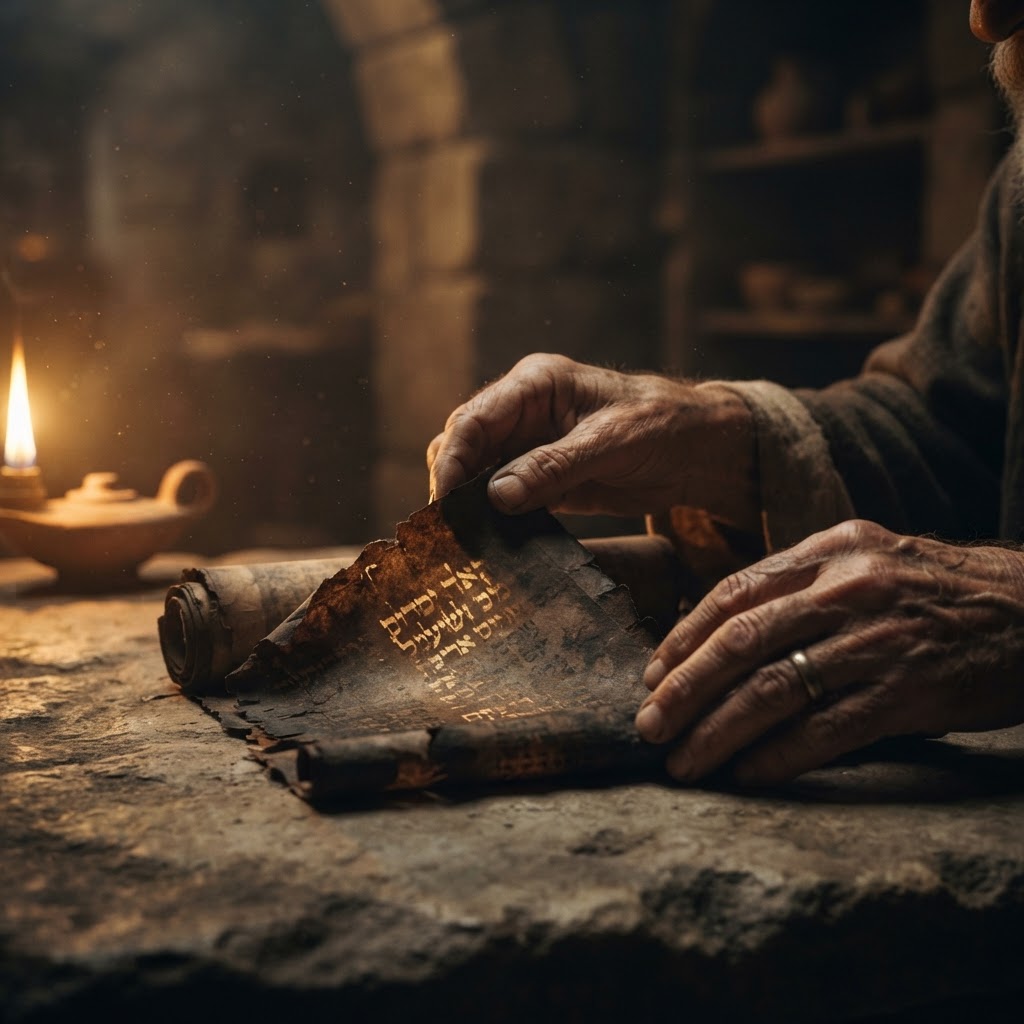
Lectio Divina · The Sacred Page
Breaking Open the Word
The Church does not read the Bible as an archive of dead letters but as the living voice of the living God. To break open the Word is to enter the ancient practice of lectio divina: lectio (read), meditatio (meditate), oratio (pray), contemplatio (contemplate) — until Scripture reads us, and the Word takes flesh in our lives.
St. Jerome warns: “Ignorance of Scripture is ignorance of Christ.” The Word is a sword that divides soul from spirit (Hebrews 4:12); it is living and active, and the Catholic who handles it daily will never be defenceless in the age of confusion.
Reading the Word Well
The Four Narrative Styles of Scripture
Scripture is a library, not a single genre. To read faithfully we must learn to hear each book in its own voice — for God condescended to speak not only His truth but through the very forms of human literature. The Church Fathers and the great scholastic tradition recognise four principal modes in which the Word is communicated.
Narrative / Historical
The story of salvation history — Creation, the Patriarchs, the Exodus, the Kings, the Gospels, Acts. The Bible is first a story God tells.
Gen · Exod · 1–2 Sam · Lk · Acts
Prophetic
God's covenant lawsuit against Israel — calling kings and priests back to fidelity, foretelling both judgement and the coming Messiah.
Isa · Jer · Ezek · Minor Prophets · Rev
Wisdom & Poetry
The cry of the human heart before God — psalms of lament and praise, the fear of the Lord, the way of wisdom.
Psalms · Proverbs · Job · Sirach · Wisdom
Apocalyptic
Symbolic visions unveilling the unseen war behind history — the victory of God over the empires of the world.
Dan · Ezek 37–48 · Zech · Rev
Literary Techniques
The Tools of the Hebrew Author
- Parallelism — the rhythmic echoing of one line by another (synonymous, antithetic, synthetic), the heartbeat of Hebrew poetry.
- Typology — Old Testament persons and events prefiguring Christ and the Church (Adam–Christ, Eve–Mary, Passover–Eucharist).
- Inclusio — a 'bookend' framing device that marks off a unit by repeating a phrase or motif at start and end.
- Repetition & Leitwort — a recurring key word that carries the theological weight of a passage.
- Midrash & intertextuality — later Scripture interpreting and re-reading earlier Scripture in the light of Christ.
- Chiastic structure — the master-form of Hebrew composition.
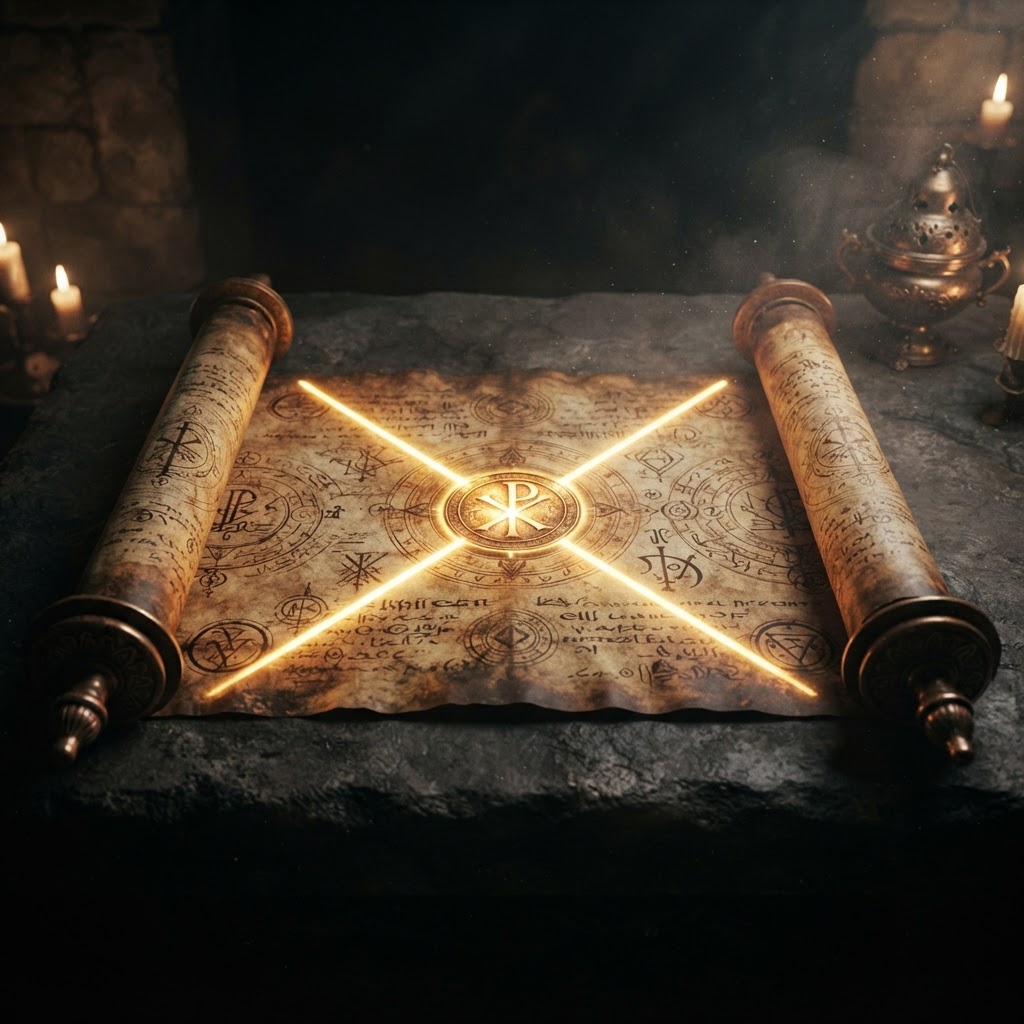
The Master-Form of Hebrew Composition
Chiastic Structure · The Cross of the Page
Chiastic structure (chiasmus, from the Greek letter Χ) is the form in which a passage is built in concentric symmetry: A · B · C · X · C′ · B′ · A′. The matching outer panels lead the reader inward to a single central pivot — the theological heart of the whole. The form is prominent throughout the Old Testament (the flood narrative of Genesis, the whole book of Jonah, many a psalm) and still alive in the New (the death of John the Baptist in Mark 6, the opening of John's Gospel).
The chiastic form does more than decorate. It teaches: that the meaning of Scripture is found not at the edges but at the centre — at the cross, at the turning of the covenant, at Christ Himself. To read chiastically is to read Christologically, with the mind of the Church.
A Worked Example · Mark 6:17–29
The Beheading of John the Baptist
The outer panels mirror inward; the central act — the death of the prophet — stands as the turning point of the narrative, and the prophecy of his own death that the Baptist spoke over Christ.
Prophetic Theology · The Two Israels
Israel and the New Israel
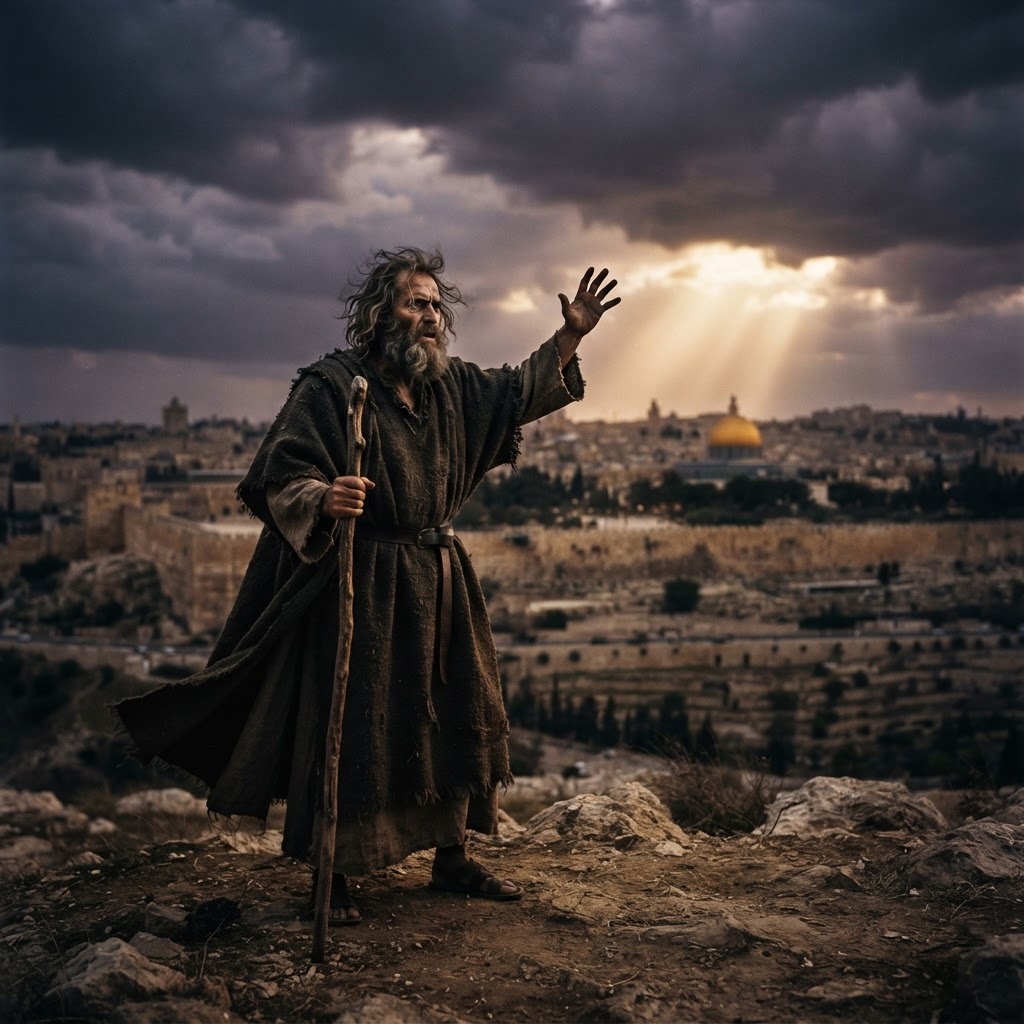
The Old Covenant is the type; the New is the fulfilment. St. Paul calls the Exodus and the wilderness “written down for our instruction” (1 Corinthians 10:11). The People of Israel under the Old Covenant prefigured the New Israel — the Church — and what was acted out in Israel's history is being acted out again in ours.
God raised up prophets against Israel's apostasy — against her idols, her false shepherds, her alliances with pagan empires, her forgetting of the poor. The Church has repeated these very sins: worldliness among her leaders, the toleration of error, syncretism with the spirit of the age, the neglect of the least. And as God raised prophets for Israel, so He has never ceased to raise saints for the Church — prophets and Doctors who confront apostasy, call her back to holiness, and warn of the threats both within and without.
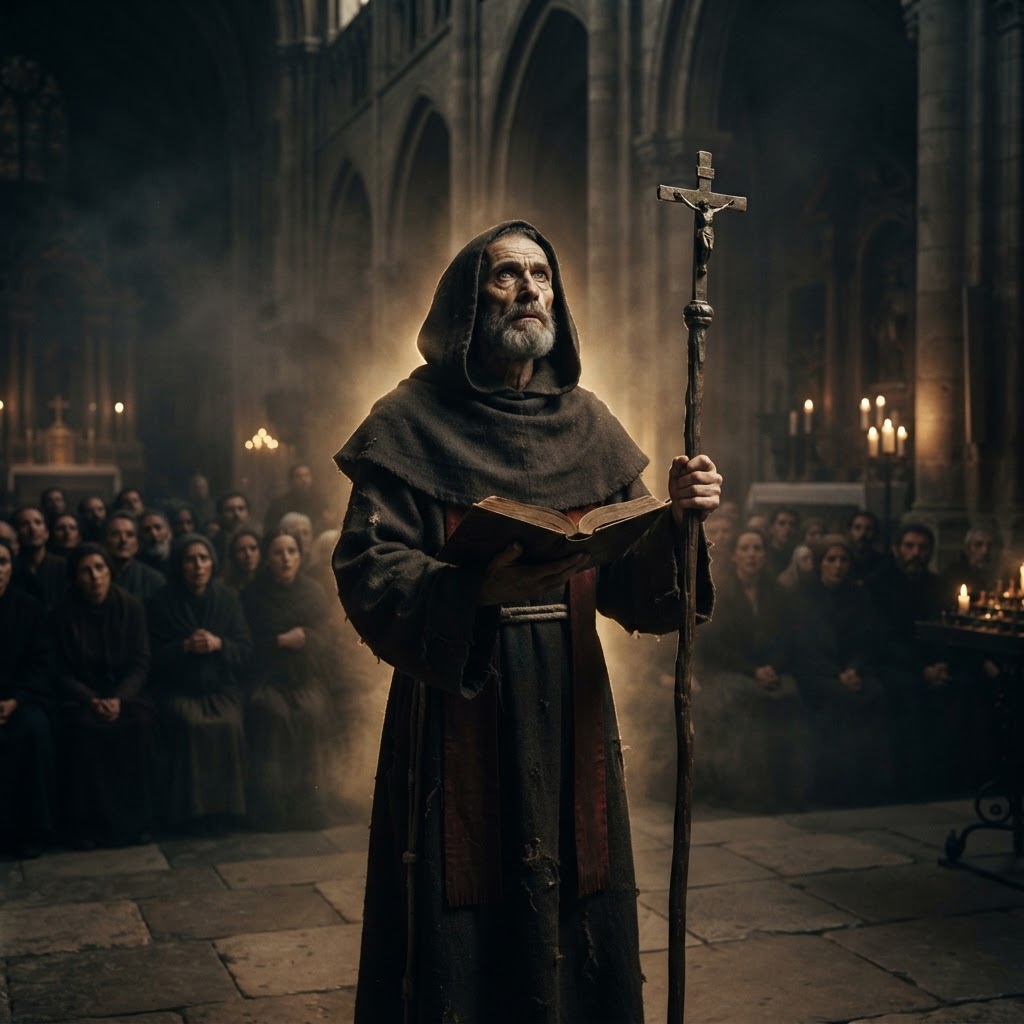
The Prophets Still Speak
When the Church Falls, God Raises a Saint
As Elijah stood before Ahab, as Jeremiah wept over the Temple, so the Lord has never left His Church without witnesses in her darkest hours. He raises the obscure to confound the powerful, the holy to shame the complacent, the contemplative to defend the truth when bishops tremble. The pattern of Israel's prophets is the pattern of the Church's saints.
They warn of threats within — heresy, clerical corruption, the loss of faith among shepherds — and of dangers without — the empires and ideologies, the false prophets and the seductions of the world. They are not the Church's enemies but her truest friends, for they refuse to console her in her sin.
St. Athanasius
c. 296–373
Stood almost alone against the Arian hierarchy to defend the full divinity of the Son — 'a pillar of the Church' when the world turned.
St. Catherine of Siena
1347–1380
Called popes back to Rome and summoned priests to holiness, rebuking corruption with the fire of a prophet.
St. Francis of Assisi
1181–1226
Rebuilt a ruined Church by evangelical poverty, confronting the worldly wealth that had captured her shepherds.
St. Teresa of Ávila & St. John of the Cross
16th c.
Reformed a sleeping Carmel from within — met suspicion and prison, yet restored contemplative fire.
St. Maximilian Kolbe
1894–1941
Confronted the world's idolatry of race and state, founding the Militia Immaculatae; died a martyr in Auschwitz.
The Prophetic Vocation of the Catholic Reader
Read With the Church. Become a Prophet.
To study Scripture and theology in the Catholic tradition is not an academic hobby — it is a prophetic vocation. We read to be formed, and we are formed to be sent. The Church does not need another critic; she needs sons and daughters so soaked in the Word that, like the saints, they can recognise the apostasy of the age and cry out against it with the love of God.
Begin with the Trinity. Return to the Word. Learn the faith of Israel renewed in the Church. And take your place, however small, among the witnesses God is still raising in our day — for the world is not won by clever arguments but by saints.
A guided pilgrimage through the Word of God.
Let Fr. Mike Schmitz walk with you, day by day, through the whole counsel of Scripture and the fullness of Catholic doctrine.
The Bible in a Year
with Fr. Mike Schmitz
Journey through the entire Catholic Bible in 365 days — daily readings and reflections weaving the story of salvation history into your life.
The Catechism in a Year
with Fr. Mike Schmitz
A guided pilgrimage through the Catechism of the Catholic Church — unpacking the creed, sacraments, moral life, and prayer with clarity and pastoral warmth.
"Your word is a lamp to my feet and a light to my path." — Psalm 119:105