Metanoia Faith
☩

The Foundation · Sacramental Life

The Heart
of Metanoia Faith.

"This is my body, given for you." — Luke 22:19

The sacraments are not rituals. They are encounters. They are power. They are the life of God poured into the soul.

Introduction

The Sacraments as Encounters

The sacraments are not rituals. They are encounters. They are power. They are the life of God poured into the soul.

In Catholic theology, the sacramental life is not one ministry among many. Yet the summit it serves is not the sacramental life in general: the Eucharist is the source and summit of the Christian life (CCC 1324; Lumen Gentium 11). Every other sacrament exists to lead the soul to that altar and to carry its grace back out into the world — Baptism opens the door to it, Confession restores us to it, Anointing strengthens us for it, Holy Orders serves it, and Matrimony is ordered toward it. The sacramental life is therefore not the summit. It is the road that climbs to it.

Everything else — repentance & reconciliation, deliverance & healing, walking in the Holy Spirit, the armour of God, the prophetic saints — flows from the Eucharist, Confession, Baptism, Confirmation, Anointing, Holy Orders, and Matrimony.

The sacraments are the engine of renewal, not one of the "topics." The sacramental life should not replace a pillar — it should undergird all five pillars.

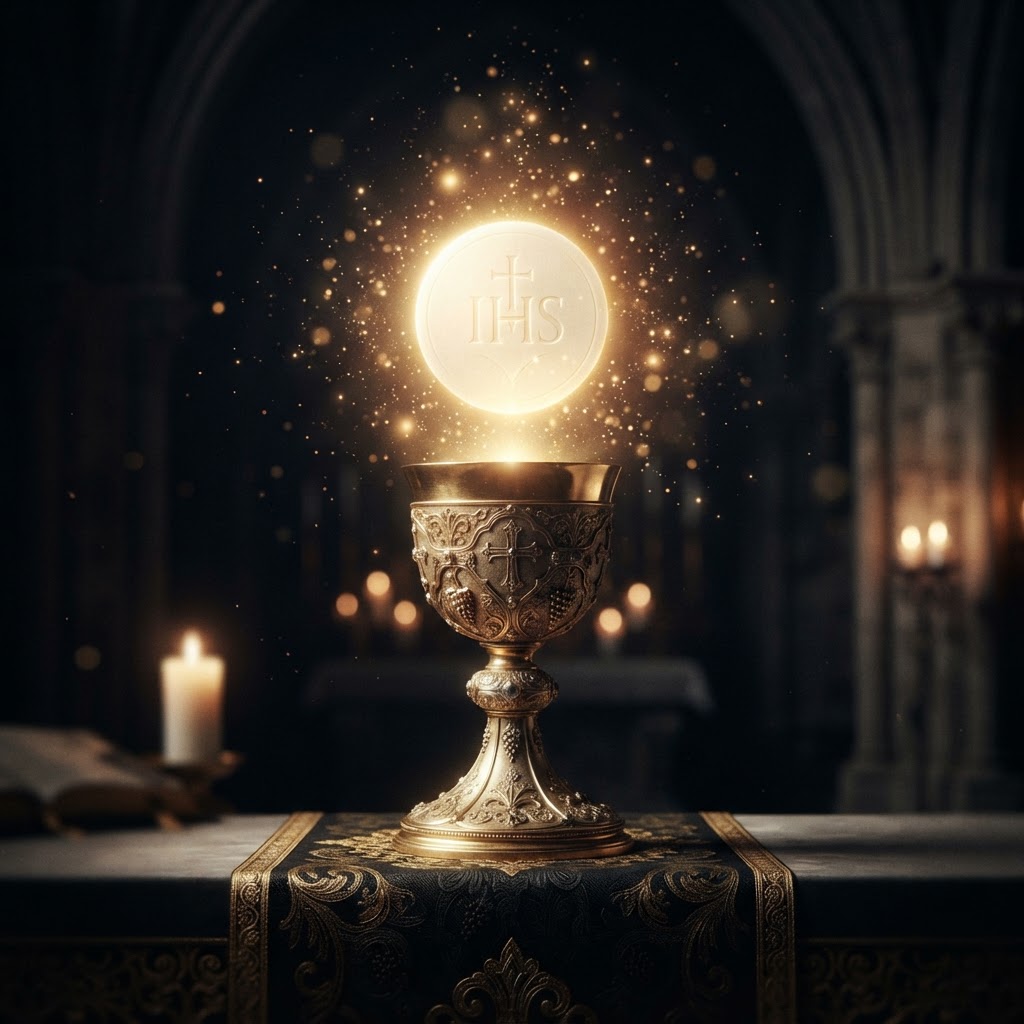
A glowing Eucharistic host above a chalice, symbolic sacramental imagery
BaptismConfirmationEucharistConfessionAnointingHoly OrdersMatrimony

The Earliest Witnesses

The Eucharist Was Never a Symbol

That the Eucharist is the source and summit of the Christian life (CCC 1324; Lumen Gentium 11) is not a medieval invention. Five witnesses — a Church manual written within a generation of the Resurrection, a disciple of the apostles on his way to martyrdom, an apology addressed to a Roman emperor, a hearer of Polycarp writing from Gaul, and the baptismal catechesis of fourth-century Jerusalem — all assume the Real Presence the way a man assumes the air he breathes. None of them argues for it. They legislate about it, fence it, and describe it plainly, because no one had yet thought to deny it.

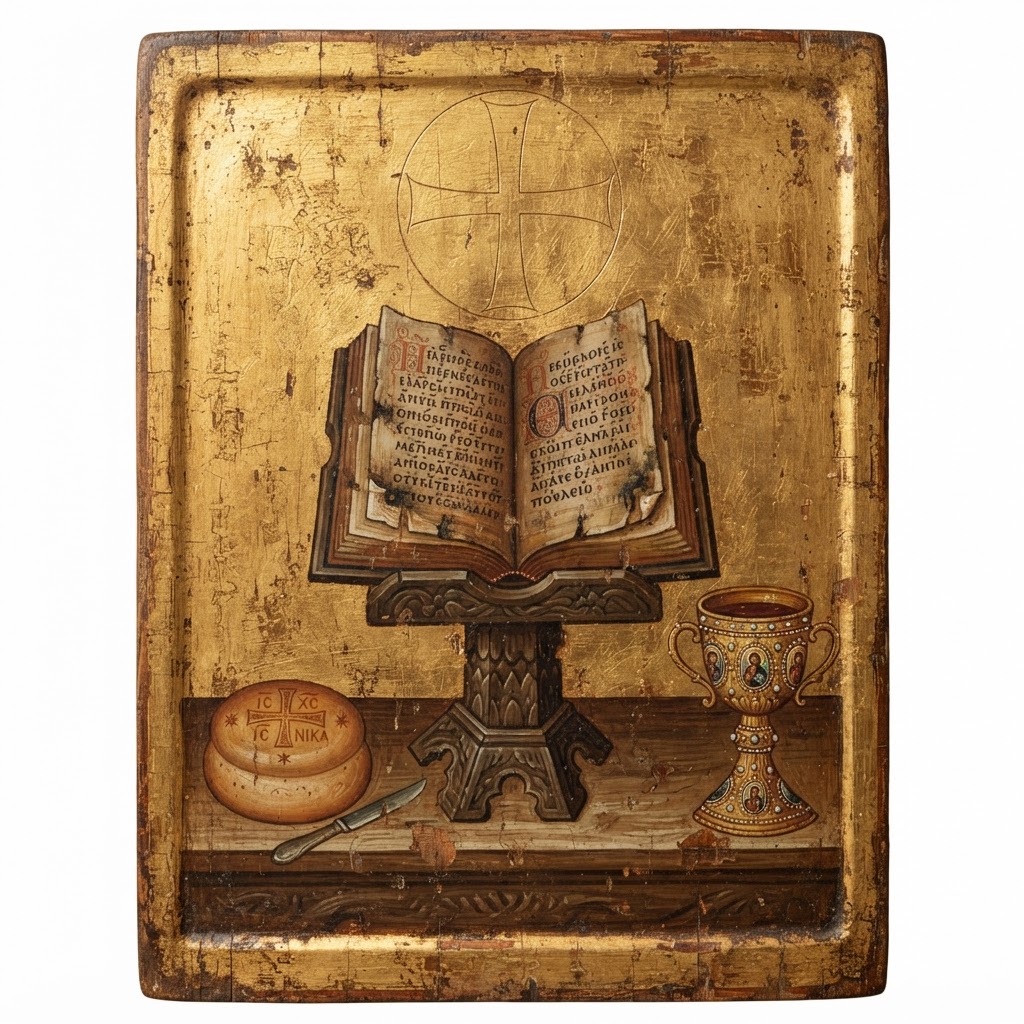
Icon panel of an ancient Christian manuscript open on a lectern beside a loaf of bread and a chalice

The Didache

c. AD 70 — Syria

Didache 9:5

“Let no one eat or drink of your Eucharist except those who have been baptised into the name of the Lord; for concerning this also the Lord has said: 'Give not that which is holy to the dogs.'”

Didache 14:1

“But on the Lord's own day, when you have assembled together, break bread and give thanks, having first confessed your transgressions, so that your sacrifice may be pure.”

Within a generation of the Resurrection, the earliest surviving Christian manual already treats the Eucharist as the Church's fixed weekly act, commanded on the Lord's own day, offered as a sacrifice, and fenced off from the unbaptised. Nothing in the text argues for the doctrine: the writer assumes it, and legislates only about who may receive. That silence is the evidence. There is no dispute to record because there was nothing yet disputed.

Didache 9:5; 14:1-2
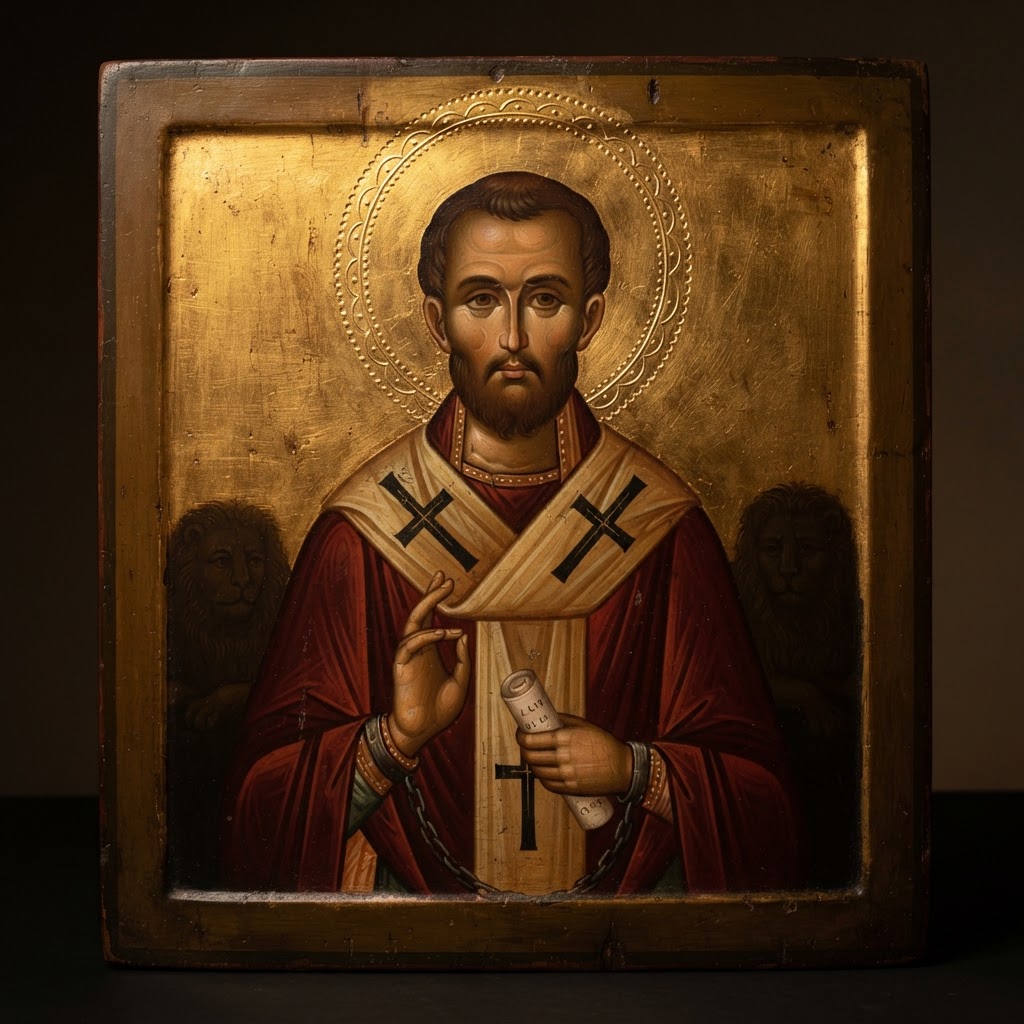
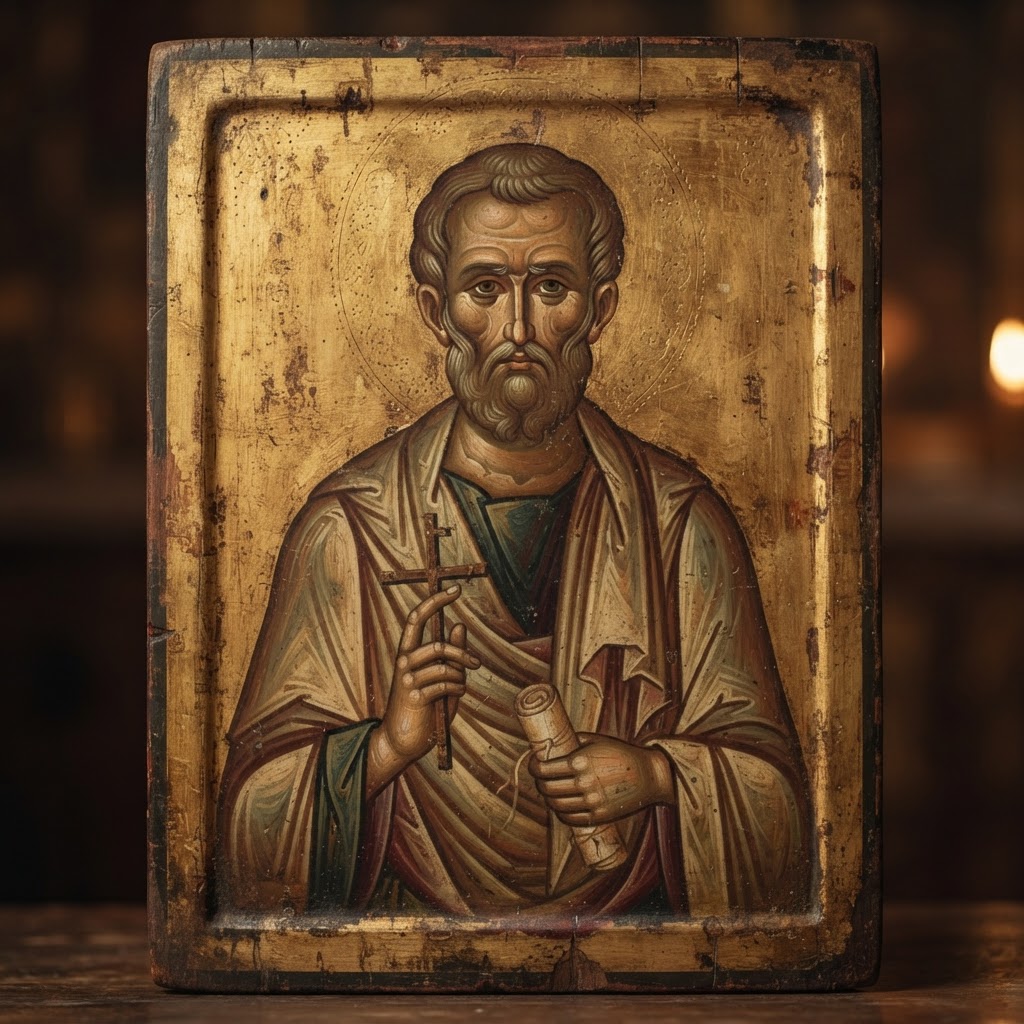
Icon of St Ignatius of Antioch in chains holding his letters

St Ignatius of Antioch

c. AD 107 — a disciple of the apostles, on his way to martyrdom in Rome

Letter to the Smyrnaeans 7:1

“They abstain from the Eucharist and from prayer, because they do not confess that the Eucharist is the flesh of our Saviour Jesus Christ, which flesh suffered for our sins, and which the Father of His goodness raised up again.”

Letter to the Ephesians 20:2

“Breaking one and the same bread, which is the medicine of immortality, the antidote that we should not die, but live for ever in Jesus Christ.”

Ignatius had sat at the feet of the apostles, and he writes seven letters in the week before his execution. Every one of them takes the Eucharist for granted as the Church's sacrifice and its bond of unity. Against the Docetists, who denied that Christ had real flesh, he does not argue from philosophy — he points to the altar and says that they abstain from the Eucharist because they will not confess that it is the flesh of the Saviour. The earliest post-apostolic writer in the record stakes the reality of the Incarnation on the realism of the sacrament.

Smyrnaeans 7:1; Ephesians 20:2; Philadelphians 4:1

Icon of St Justin Martyr holding a scroll and a small martyr's cross

St Justin Martyr

c. AD 155 — Rome, in an apology addressed to the emperor

First Apology 66

“For not as common bread and common drink do we receive these; but in like manner as Jesus Christ our Saviour, having been made flesh by the Word of God, had both flesh and blood for our salvation, so likewise have we been taught that the food which is blessed by the prayer of His word, and from which our blood and flesh by transmutation are nourished, is the flesh and blood of that Jesus who was made flesh.”

First Apology 65

“The president takes bread and a cup of water and wine, and offers praise and glory to the Father of all, through the name of the Son and of the Holy Spirit, and gives thanks at length that we have been accounted worthy of these gifts.”

Justin writes to a pagan emperor and explains, in the plainest possible terms, what Christians do when they assemble. He says what the food is, why it is not common bread, and how the Sunday liturgy runs: the memoirs of the apostles read aloud, the homily, the prayers, the bringing of bread and wine, the thanksgiving, and Communion for those present. It is a description of the Mass written before the New Testament canon existed — and there is nothing symbolic about the way he describes the elements.

First Apology 65-67

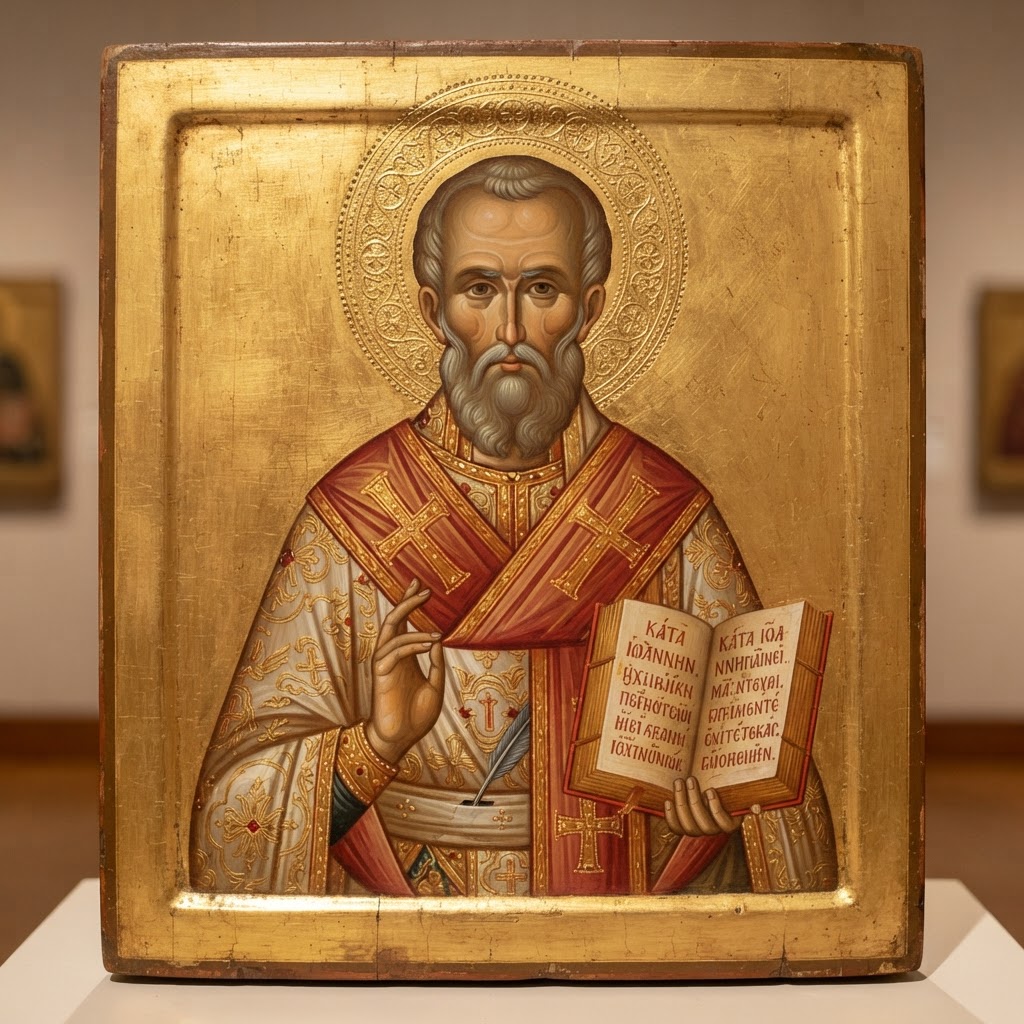
Icon of St Irenaeus of Lyons holding an open book with a quill at his belt

St Irenaeus of Lyons

c. AD 180 — a hearer of Polycarp, who had known the apostle John

Against Heresies IV.18.4

“He took bread, which is from creation, and gave thanks, saying, 'This is my body.' And the cup likewise, which is from creation, and which is proper to us, He confessed to be His blood, and taught the new oblation of the new covenant; which the Church, receiving from the apostles, offers to God throughout all the world.”

Against Heresies IV.18.5

“He has declared the cup, a part of creation, to be His own blood, from which He causes our blood to flow; and the bread, a part of creation, He has established as His own body, from which He gives increase to our bodies.”

Irenaeus was taught by Polycarp, who was taught by John. Writing in Greek from Gaul against the Gnostics, he builds an argument that only works if the bread and the cup are what Christ said they are: creation itself is taken up into the offering, and our bodies receive increase toward immortality from a food that is no longer common. The Eucharist, for him, is why the resurrection of the body is credible. He is two generations from the upper room and he treats the Real Presence as the ordinary premise of Christian life.

Against Heresies IV.18.4-5; V.2.2-3

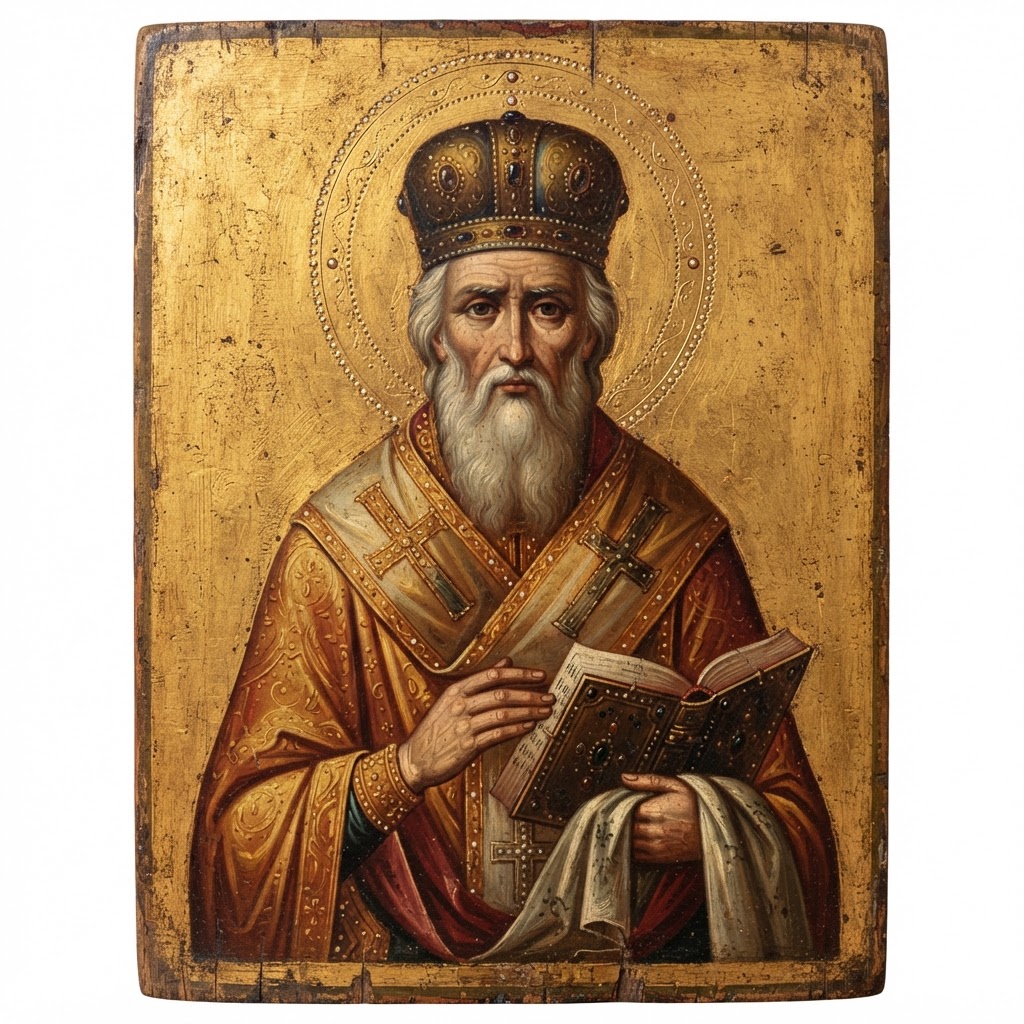
Icon of St Cyril of Jerusalem as a white-bearded bishop holding an open book

St Cyril of Jerusalem

c. AD 350 — instructing candidates for baptism

Mystagogical Catechesis 4.2

“Since then He Himself has declared and said of the bread, 'This is My Body', who shall dare doubt any longer? And since He has affirmed and said, 'This is My Blood', who shall ever hesitate, saying that it is not His blood?”

Mystagogical Catechesis 4.3

“He once in Cana of Galilee turned water into wine, which is akin to blood; and is it incredible that He should have turned wine into blood?”

Cyril taught the newly baptised in Jerusalem in the weeks after Easter, taking them through the sacraments they had just received. His method is disarming: he does not prove the Real Presence, he asks who would dare deny it, given who said the words. And he answers the pagan objection in advance with the argument from Cana — if Christ turned water into wine at a wedding, unbelief about wine becoming blood is not a difficulty, it is an evasion.

Mystagogical Catechesis 4.2-3

Read them in order and the testimony becomes an inventory. The Eucharist is the Church's weekly sacrifice, offered on the Lord's own day and fenced from the unbaptised (Didache). It is the flesh of our Saviour, so real that to deny it is to deny that He came in the flesh (Ignatius). It is the flesh and blood of the Word made flesh, explained without embarrassment to a pagan emperor (Justin). The bread that receives the invocation of God is no longer common bread, which is why the resurrection of our bodies is credible at all (Irenaeus). And to the newly baptised in Jerusalem it was not a theory to be weighed but a fact to be adored: “Since He Himself has declared of the bread, ‘This is My Body’, who shall dare doubt any longer?” (Cyril). The doctrine was not defined late because it was doubted. It was attacked, and so it was confessed.

Foundation of Renewal

The Sacraments as the Foundation of Renewal

Every renewal in Church history began with a return to the sacramental life. The sacraments are the engine of conversion — metanoia.

Deeper Eucharistic devotion

Radical Confession

Reverence for Baptismal identity

Bold Confirmation mission

Healing through Anointing

Fidelity in Marriage

Holiness in Holy Orders

The sacramental life is not one pillar. It is the ground beneath all five pillars.

One Bloodstream, Five Pillars

How the Sacramental Life Powers Each Pillar

Repentance & Reconciliation

Confession is the sacrament of metanoia — the spiritual reset where sins are forgiven, legal rights broken, and the soul restored to grace.

Deliverance & Healing

Confession, Eucharistic adoration, and Anointing of the Sick are the core healing sacraments. Deliverance flows from sacramental grace.

Walking in the Holy Spirit

Baptism and Confirmation imprint the Spirit. The sacraments sustain the Spirit-filled life and open the soul to His gifts.

Putting on the Armour of God

The sacraments are the primary weapons of warfare. Confession breaks legal rights. The Eucharist strengthens the soul for battle.

Encouragement from The Saints

Every prophetic saint was radically sacramental. Their clarity and courage came from Eucharistic intimacy and frequent Confession.

The sacramental life is the bloodstream of all five pillars.

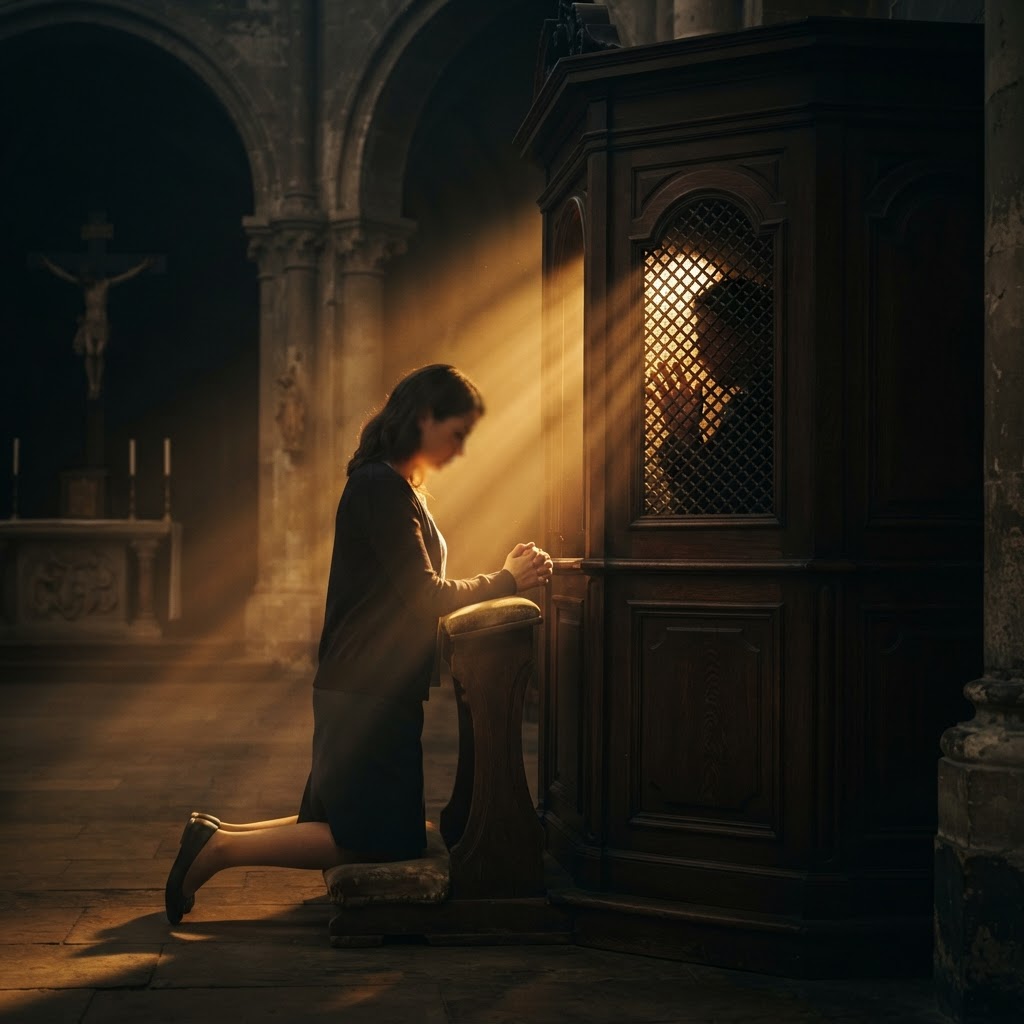
The Sacrament of Reconciliation — a penitent kneeling in golden light beside a confessional

Rooted in Scripture

The Scriptural Foundation of Confession

The Sacrament of Reconciliation is not a human invention — it is a direct command of Jesus Christ, given to the apostles on the evening of the Resurrection.

In the locked room, Jesus breathes the Holy Spirit onto the apostles and gives them divine authority:

"Whose sins you forgive are forgiven them, and whose sins you retain are retained." (John 20:23)

This moment is the birth of the Sacrament of Confession.

Here, Jesus establishes apostolic authority, gives juridical power to forgive sins, breathes the Holy Spirit for this mission, and continues His mercy through His Church.

Confession is not symbolic. It is sacramental. It is apostolic. It is supernatural.

Confession is the engine of metanoia, the spiritual reset of the soul, and the doorway to deliverance, healing, and holiness.

Personal Conversion

The Sacraments and Personal Metanoia

They are the source of spiritual warfare. They are the norm of supernatural life. They are the foundation of deliverance and healing.

They are the fire behind prophetic saints. They are the anchor of moral clarity. It is the heartbeat of holiness — the place where heaven touches earth.

Prophetic Reflection

The sacramental life is not one pillar.

It is the ground beneath all five pillars.

It is the bloodstream of the Church.

It is the heartbeat of holiness.

It is the place where heaven touches earth.

A Guide for Protestants and Honest Questioners

Seven Means of Grace — Objections and Answers

The sacraments are where Catholic faith becomes physical: water, oil, bread, wine, words, hands. If God really became flesh, matter is exactly the kind of thing He uses. Here is the scriptural case for each of the seven, and the honest replies to the usual charges of ritualism.

Objection · “Sacraments are works-righteousness — grace plus something.”

Reply · A sacrament is not a work you offer God; it is a work God offers you. Trent anathematised anyone who said the sacraments confer grace by the merit of the act performed rather than by the grace of Christ (Session 7). The water does nothing; Christ does everything, and He chooses to do it there. Faith is required of the recipient — the Church says so explicitly (CCC 1127-1128) — but faith is not what makes the sacrament effective; Christ is.

Objection · “Baptism is only a symbol of a decision already made.”

Reply · The New Testament says baptism saves (1 Peter 3:21), forgives sins (Acts 2:38), buries and raises us with Christ (Romans 6:3-4), and washes us (Acts 22:16, Ephesians 5:26). The consistent pattern is baptism then the gift of the Spirit (Acts 2:38; 8:14-17; 10:44-48), not the reverse. And household baptisms in Acts assume infants were included.

Objection · “Confessing sin to a priest steals Christ's place as mediator.”

Reply · Christ is the mediator; the priest is the minister of His word, exactly as the apostle was. Jesus breathes on the disciples and says “if you forgive the sins of any, they are forgiven” (John 20:22-23), and Paul describes the ministry of reconciliation as one of entrusting the word of reconciliation to men (2 Corinthians 5:18-20). James commands confession to one another and prayer for healing (James 5:14-16).

Objection · “Only two sacraments were instituted by Christ.”

Reply · Baptism and the Supper are the two the Reformers retained; the Church counts seven, and all seven have a dominical or apostolic root: baptism (Matthew 28:19), confirmation (Acts 8:14-17), Eucharist (Luke 22:19), penance (John 20:23), anointing of the sick (James 5:14-15), orders (1 Timothy 4:14; 2 Timothy 1:6) and marriage (Ephesians 5:31-32). The number was fixed in the twelfth century; the practices are patristic.

Objection · “Ritual kills real religion — the prophets condemned empty sacrifice.”

Reply · They condemned sacrifice without a heart, and so does the Church: unworthy reception is “eating and drinking judgement” (1 Corinthians 11:29). But the prophets also promised a day when the nations would stream to the house of the Lord and He would feed them (Isaiah 25:6-9; Malachi 1:11). The sacraments are that promise in the Church's hands, not a return to the old covenant's shadows.

Your Research Path

  1. 1

    Read the institution of each

    Matthew 28:16-20 · Acts 2:37-42 · Acts 8:14-17 · John 20:19-23 · James 5:13-16 · 1 Timothy 4:14 · Ephesians 5:25-33.

  2. 2

    Read the Fathers on baptism

    Didache 7 · Justin, First Apology 61 · Tertullian, On Baptism · Cyril of Jerusalem, Catechesis 3 · Augustine, On the Merits and Remission of Sins.

  3. 3

    Read the Church's own limits

    Catechism nn. 1113-1131 and 1210-1666; Council of Trent, Session 7 (1547). Note how much the Church actually forbids: simony, magic, unworthy ministry.

  4. 4

    Read the Reformation confessions

    Augsburg Confession IX-XIII, the 39 Articles, the Westminster Confession XXVII-XXIX. Then ask how much of the disagreement is about the number of sacraments and how much about the theology of grace.

  5. 5

    Read a convert's account

    Scott Hahn, Rome Sweet Home, on the sacraments; or C. S. Lewis, Mere Christianity, Book IV on baptism and the “good infection.”

Common ground: both traditions hold that grace comes from Christ alone, that baptism and the Supper were commanded by Him, and that they must be received in faith. The differences concern how many there are and how objectively they convey grace.

Call to Holiness

Return to the sacraments.
Return to the fire.
Return to the heart of the Church.

Share this page

Share this page with anyone who needs to hear it.