
Dogma · Eschatology · The Last Things
The Four Last Things
Death, Judgment, Heaven & Hell — the compass by which a whole life is ordered
Every civilisation has tried to answer the same four questions, and every evasion of them has made men cruel or careless. The Church answers them plainly: you will die, you will be judged by love, you are made for the vision of God, and you are free to refuse Him forever. This is a study guide for the returning Catholic, and an honest invitation to the one who has never been inside a church.
“Teach us to number our days that we may get a heart of wisdom.” — Psalm 90:12
Section I — The Four Words
Four realities that no one avoids by not thinking about them
The novissima — the “last things” — are the four final realities the Church has always taught together: death, judgment, heaven and hell. They are taught together because they only make sense together. Death is not a biological accident but the closing of a decision; judgment is not a tribunal of arbitrary power but the truth of a life told by Love; heaven is not a vague reward but the vision of God in a risen body; hell is not a torture chamber but the refusal of that vision, honoured forever. Read any one of the four alone and you will distort it.
I
Death
The door through which every soul must pass, and the end of the time for choosing.
It is appointed for men to die once, and after that comes judgment. — Hebrews 9:27
II
Judgment
Twice: privately at death, and publicly when Christ returns in glory.
We must all appear before the judgment seat of Christ. — 2 Corinthians 5:10
III
Heaven
Not a long church service in the clouds, but the vision of God and a risen body.
We shall see him as he is. — 1 John 3:2
IV
Hell
The state of a soul that has refused God finally, and is given what it chose.
They will go away into eternal punishment. — Matthew 25:46
What the doctrine is not
Not fate
The last things are not a script written over your head. Death is certain; the shape of your eternity is decided by grace and freedom, and grace is offered to the last breath.
Not a threat to frighten children
The Church's motive in teaching them is not terror but sobriety — the same motive as a doctor telling you the truth about your body.
Not a map of the afterlife
The Church defines states, not geography. She has never defined where heaven is, what hell's fire physically is, or the length of any purification.
Not a list of who is in hell
The Church has canonised saints; she has damned no one by name. She teaches that hell exists and that God predestines no one to it (CCC 1037).
In plain words
You will die, and you will be known completely by a God who loves you. That knowledge is either your healing or your refusal, and it is decided by what you do with grace now. Heaven and hell are not two places God assigns at random; they are the two possible outcomes of a freedom He refuses to cancel.
Section II — Death
The Door No One Skips
Modernity has done something no previous civilisation attempted: it has hidden death behind hospital curtains, euphemism and a change of subject. The Church refuses the concealment. Death is the one appointment no wealth, medicine, youth or distraction has ever cancelled, and the Church speaks of it not to frighten but because a person who has not faced it cannot be free.
Scripture is unembarrassed: death entered through sin (Romans 5:12), it is an enemy (1 Corinthians 15:26), and it is the moment when the time for choosing ends — “the time of grace and mercy which God offers him so as to work out his earthly life” (CCC 1013). But the same Scripture says the enemy has been conquered from inside. Christ died, and in dying He walked into the one place no one escapes and came out the other side. For the baptised, death is no longer a wall but a doorway with a lamp burning on the far side.
Genesis 3:19
“You are dust, and to dust you shall return.”
Death enters with sin — not as God's revenge, but as the ruin sin works in a creature made for life.
Psalm 90:12
“Teach us to number our days that we may get a heart of wisdom.”
The one prayer in the Psalter that asks for arithmetic. Counting your days is a form of wisdom.
Luke 23:43
“Today you will be with me in Paradise.”
Spoken to a thief, hours from his own death. Nobody dies too late and nobody dies too early for mercy.
Philippians 1:23
“My desire is to depart and be with Christ, for that is far better.”
Paul does not expect a sleep between death and Christ, but presence.
2 Corinthians 5:8
“We would rather be away from the body and at home with the Lord.”
The body is a tent, not a prison. To leave it is to be at home.
1 Corinthians 15:26
“The last enemy to be destroyed is death.”
Death is an enemy, and it loses. Christians do not pretend it is a friend.
What the Church actually teaches · CCC 1006-1013
- “It is in regard to death that man's condition is most shrouded in doubt.” Scripture and Tradition agree that death entered the world through sin.
- Death is the end of earthly life and of the time of grace and mercy God offers a person “so as to work out his earthly life” (CCC 1013).
- Because Christ died and rose, death is now a passage: “for the Christian, death is the end of earthly life… a birth into eternal life.”
- The Church encourages the faithful to prepare for the hour of death — in hope, not in dread, and with the sacraments.
A practice, not a theory
Say this once, slowly, before you close this page: “I will die, and it may be sooner than I think. Christ has been through it before me. What am I doing today that I would not want to be found doing?” The saints called this the remembrance of death. It is not gloom; it is the beginning of freedom.
In plain words
You are going to die, and God is not embarrassed about saying so. The only question that matters is whether death finds you facing Him or facing away. Everything the Church asks of you between now and then is aimed at that single moment.
Section III — Judgment
Twice Judged, and Both Times by Love
The modern mind finds judgment offensive because it imagines a courtroom: an irritable deity, a ledger, a sentence. The Church's doctrine is stranger and better than that. Judgment is the moment when a person is finally known — completely, without distortion, by the One who made him and who died for him. What terrifies us is not being condemned; it is being seen. And it is precisely being seen that saves, because the One seeing us is Love.
There are two judgments, and they are one act of truth in two moments. Death settles a life privately; the return of Christ reveals it publicly. Nothing is overlooked in either. Christ says plainly that we will give an account for every idle word (Matthew 12:36), and just as plainly that the standard will be mercy: “blessed are the merciful, for they shall obtain mercy” (Matthew 5:7).
First · At the moment of death
The Particular Judgment
The soul stands before Christ alone. Its whole life is seen truly, without disguise or exaggeration, and its fundamental orientation is fixed: heaven — through purification if needed — or separation. This is what Christ promised the thief: “today you will be with me.”
CCC 1021-1022
Second · When Christ returns in glory
The Final Judgment
The resurrection of the body, and a public judgment in which the meaning of history and of every hidden deed is revealed. Nothing good done in secret is lost; nothing hidden is left unhealed or unaccounted for. The Last Judgment does not revise the particular one — it publishes it.
CCC 1038-1041
Luke 12:20
“Fool! This night your soul is required of you.”
The particular judgment: a single night divides a man's plans from his eternity.
Hebrews 9:27
“It is appointed for men to die once, and after that comes judgment.”
No reincarnation, no second probation. Death fixes the direction of a life.
2 Corinthians 5:10
“For we must all appear before the judgment seat of Christ, so that each one may receive good or evil, according to what he has done in the body.”
Paul writes this to Christians, about Christians. Judgment begins with the household of God.
Matthew 25:31-32
“When the Son of man comes in his glory… he will separate them one from another as a shepherd separates the sheep from the goats.”
The final judgment is a public act of the Shepherd, not a private audit.
Matthew 25:40
“Truly, I say to you, as you did it to one of the least of these my brethren, you did it to me.”
The criterion is charity, and charity has a face. Christ identifies Himself with the poor.
Revelation 20:12
“And the dead were judged by what was written in the books, by what they had done.”
Nothing is lost, nothing is hidden, and nothing is exaggerated.
What the Church actually teaches · CCC 1021-1022, 1038-1041
- “Death puts an end to human life as the time open to either accepting or rejecting the divine grace manifested in Christ” (CCC 1021).
- “Each man receives his eternal retribution in his immortal soul at the very moment of his death, in a particular judgment that refers his life to Christ” (CCC 1022).
- The resurrection of all the dead “will precede the Last Judgment” (CCC 1038), when Christ returns in glory.
- The Last Judgment “will reveal even to its furthest consequences the good each person has done or failed to do during his earthly life” (CCC 1039).
This is why the Church calls the judgment good news. A world where nothing was ever accounted for would be a world where the martyrs' blood meant nothing and the torturer's cruelty meant nothing equally. The judgment is the promise that truth wins — and that the one who repents is not destroyed by it, but healed.
In plain words
You will be seen completely, by Someone who loves you completely. If you have confessed what you know, judgment will be the moment you stop being afraid of being known. If you have hidden it, that same love is still waiting to forgive you now, while there is still time to answer.
Section IV — Heaven
The Vision That Makes a Body Worth Raising
Heaven is the least-preached and most sentimentalised of the four. Popular religion offers clouds, harps and an endless service — a picture so thin that no sane person would trade a good dinner for it. The Church's doctrine is almost unbearably larger: heaven is the direct knowledge of God, face to face, in a body raised and glorified, among the whole family of the redeemed in a creation made new.
“This is eternal life,” Christ prays, “that they know thee the only true God” (John 17:3). Everything else in Scripture's imagery — the banquet, the wedding, the city, the garden, the wiping away of tears — is the vocabulary of creatures trying to describe what it is like to be fully alive in the presence of the One who is Life. The essence is the vision of God; the setting is resurrection, friendship and a healed world.

John 17:3
“This is eternal life, that they know thee the only true God, and Jesus Christ whom thou hast sent.”
Heaven defined by its Author: knowledge of God, not merely a location.
1 Corinthians 2:9
“What no eye has seen, nor ear heard, nor the heart of man conceived, what God has prepared for those who love him.”
Every image of heaven in Scripture is an admission that the reality exceeds it.
1 Corinthians 13:12
“For now we see in a mirror dimly, but then face to face. Now I know in part; then I shall understand fully.”
The beatific vision: the end of every partial knowing, including our knowing of ourselves.
1 John 3:2
“We are God's children now; it does not yet appear what we shall be, but we know that when he appears we shall be like him, for we shall see him as he is.”
Vision and transformation are one act. To see God is to become like Him.
Philippians 3:21
“He will change our lowly body to be like his glorious body.”
Heaven is not escape from the body. It is the body's glorification.
Revelation 21:4
“He will wipe away every tear from their eyes, and death shall be no more.”
The tenderness of the last page of the Bible: God Himself does the wiping.
What the Church actually teaches · CCC 1023-1029, 1042-1050
- “Those who die in God's grace and friendship and are perfectly purified live for ever with Christ… for they ‘see him face to face’” (CCC 1023).
- This “blessed communion” is beyond human understanding; Scripture speaks of it in images of life, light, peace, banquet, wedding feast and the New Jerusalem.
- Heaven is not a disembodied rest: “we shall all… rise again with our own bodies” (CCC 1054) and creation itself will be renewed.
- “In the glory of heaven the blessed continue joyfully to fulfil God's will in relation to other men and to all creation” (CCC 1029).
“There we shall rest and see, see and love, love and praise. Behold what shall be in the end and shall not end.”
Note what this does to the present life. If heaven is a risen body in a renewed creation, then the body is not a disposable container and the material world is not a passing illusion. If heaven is the vision of God, then no earthly satisfaction can be the point. Both truths together are the Catholic architecture of desire: use the world gratefully, refuse to worship it, and let every good thing become a signpost rather than a home.
In plain words
Heaven is not a reward for being good and not a long hymn in the clouds. It is God Himself, seen at last, loved without distraction, in a body He has raised — and you were made for exactly that.
Section V — Hell
The Doctrine We May Only Hold on Our Knees
Of the four, this is the one that must be spoken most carefully. Two errors fight over it. The first denies it — a God of love, we are told, could not permit such a thing. The second uses it: hell becomes a weapon for winning arguments, a stick for frightening children, a comfortable certainty that our enemies are going there. The Church rejects both. She teaches that hell is real, that it is eternal, that God predestines no one to it, and that no human being has been declared by name to be in it.
Hell's essence is not fire but loss — the absence of God, and therefore of everything that made existence sweet: love, beauty, memory gathered into meaning, the face of Christ. Scripture calls it the second death, outer darkness, exclusion from the presence of the Lord. Whatever the imagery, its content is this: a person exists forever in the state they definitively chose, and God honours the choice because He will not pretend that a creature's freedom was a fiction.
Matthew 25:41
“Depart from me, you cursed, into the eternal fire prepared for the devil and his angels.”
Hell was prepared for the devil. A human being arrives there only by choosing his company.
Matthew 25:46
“And they will go away into eternal punishment, but the righteous into eternal life.”
The same word — aiōnios — describes both destinies. You cannot empty one without emptying the other.
Mark 9:48
“Where their worm does not die, and the fire is not quenched.”
Christ quotes Isaiah 66:24 and repeats it three times in one breath. He spoke of hell more than anyone in Scripture.
2 Thessalonians 1:9
“They shall suffer the punishment of eternal destruction and exclusion from the presence of the Lord.”
The essence of hell is not a torture chamber but exclusion — the loss of the presence that makes anything good.
Luke 16:24
“I am in anguish in this flame.”
The rich man's agony is set beside Lazarus at the banquet. The parable is about a reversal, not a geography lesson.
Revelation 21:8
“Their lot shall be in the lake that burns with fire and sulphur, which is the second death.”
Scripture calls it death, and calls it eternal. Both words are true, and neither cancels the other.
What the Church actually teaches · CCC 1033-1037
- “The teaching of the Church affirms the existence of hell and its eternity. Immediately after death the souls of those who die in a state of mortal sin descend into hell” (CCC 1033).
- The chief punishment is eternal separation from God — the loss of the vision for which the person was made.
- “God predestines no one to go to hell; for this, a wilful turning away from God is necessary, and persistence in it until the end” (CCC 1037).
- The teaching is a call to responsibility: “we cannot love God if we sin gravely against him, against our neighbour or against ourselves.”
Three things this doctrine forbids
- It forbids us to name any human being, living or dead, as damned. The Church canonises saints; she has damned no one publicly. Judgement belongs to Christ alone.
- It forbids triumph. Anyone who contemplates hell with satisfaction has not yet understood that Christ went to the Cross to prevent it — and that we ourselves were among the candidates.
- It forbids presumption in either direction: neither 'I am certainly saved, whatever I do' nor 'I am certainly lost, so why try'. Both are forms of unbelief.
Benedict XVI puts the whole matter in its proper place: a mercy that overlooked evil would not be mercy but indifference, and a justice without the Cross would not be justice but coldness. The judge is the One who took the judgment into Himself. That is why the Church can preach hell without despair — and why she prays, every single day, for the conversion of sinners, beginning with her own.
In plain words
Hell is real, and it is chosen. It is what is left when a person finally and freely refuses God — and God, having made him free, will not unmake him to save him. You are not asked to be afraid of a torturer. You are asked to stop walking away.
Section VI — The Fathers and the Councils
They Buried Their Dead Singing
The four last things were not assembled by medieval schoolmen looking for something to frighten people with. They were preached in the catacombs, at the graveside, and in plague-time sermons when half a city was dying. The Fathers speak of death with a directness that is almost shocking to a modern reader — and with a hope that is more shocking still.

St. Ignatius of Antioch
to the Romans, 4-6, c. 107
In substance: writing on his way to the beasts in Rome, the bishop asks the Christians not to hinder his martyrdom. Death is not an end he fears but a threshold he presses toward: “Let me be food for the beasts… then I shall truly be a disciple.”
The earliest Christian attitude to death is not resignation but desire.
Tertullian
On the Crown, 3, c. 211
In substance: Tertullian records that the offering for the dead on the anniversary day was already an established custom, received from tradition.
Because prayer cannot help the damned and the blessed need no help, this universal early practice presupposes a third state.
St. Cyprian of Carthage
On Mortality, 3-5, 253
In substance: written during a plague, Cyprian tells the faithful not to grieve like those without hope. For the servant of God, death is a departure, a release, a passage to his own country — the reason Christians ask that God's will be done and not our own.
Pastoral realism: he does not deny sorrow, he reorders it around hope.
St. Ambrose of Milan
On the Good of Death, 2-4, c. 387
In substance: Ambrose argues that for the just, death is good. It ends sin, ends the struggle, and begins the rest. It is not the destruction of life but the passage of the soul out of the body into Christ.
Written to console, and to correct the pagan terror of death still lingering among converts.
St. John Chrysostom
Paschal Homily (Catechetical Homily for Holy Saturday)
“Let no one fear death, for the death of our Saviour has set us free. He has destroyed it by enduring it.”
Read aloud in the Eastern churches every Pascha. The Church's answer to the tomb is a shout.
St. Augustine of Hippo
City of God XXII.30, 426
“There we shall rest and see, see and love, love and praise. Behold what shall be in the end and shall not end.”
The most quoted sentence in Western eschatology: the rest, the vision, the love, the praise — in that order.
St. Augustine
City of God XXI.9-13; Enchiridion 111-113
In substance: Augustine holds that the punishment of the damned is eternal, and warns against those who would soften it out of a false tenderness — while insisting that the Church does not claim to know the number of the saved or the lost.
Severity about doctrine, reticence about the census of hell.
St. Irenaeus of Lyons
Against Heresies V.27-28, c. 180
In substance: the souls of the just await the resurrection in a place fitted to them, and the ordering of the dead is not chaos but apprenticeship — the disciple is not above the Master, and where the Master has gone, the servant's path runs after Him.
An early witness that the dead are neither asleep nor already at the end of the story.
St. Teresa of Ávila
Life, 32, 1565
In substance: Teresa recounts being shown, in prayer, the place in hell she would have deserved. She does not describe spectacle but the soul's suffocation apart from God — and says she could not afterward fear any suffering of this life by comparison.
The mystics never speak of hell as a doctrine, but as a mercy that produced gratitude.
St. Faustina Kowalska
Diary, 741, 1936
In substance: Faustina writes of being led to the abyss of hell, and says she records it so that souls may be moved to prayer for those who are losing themselves — not to frighten, but to invoke mercy.
The vision ends in intercession. Every authentic revelation of hell sends the soul into prayer.
How the doctrine was clarified
c. 33
The Resurrection
The last things cease to be speculation. A tomb is empty and the Church is born with a body-based hope of resurrection.
c. 155
The Martyrs' Witness
Ignatius, Polycarp and the Roman Christians face death publicly. Their serenity is the first apologetic for Christian eschatology.
c. 211
Prayer for the Dead
Tertullian attests the established offering for the dead — practice before definition.
c. 253
The Plague Sermons
Cyprian teaches a whole Church how to face mass death with hope rather than despair.
426
City of God
Augustine sets the two cities in opposition and fixes the vocabulary of eternal punishment and beatific vision for the Latin West.
1336
Benedictus Deus
Benedict XII defines that the souls of the saints, fully purified, see God face to face immediately after death — a particular judgment, not a sleep until the end.
1439
Council of Florence
Laetentur Caeli restates the four last things for the reunion council: immediate beatitude, purification, and eternal punishment for unrepented mortal sin.
1547-1563
Council of Trent
Against novel doctrine, Trent defends judgment according to works, the reality of eternal punishment, the value of prayer and the Mass for the dead, and rules out presumption on salvation.
1962-1965
Vatican II
Lumen Gentium 48-51 and Gaudium et Spes 18-22 recover the eschatological dimension of the whole Christian life: the pilgrim Church, the resurrection of the body, the new creation.
1992
The Catechism
CCC 1020-1060 gathers the doctrine of the last things into one continuous exposition — the first of its kind for the whole Church in centuries.
2007
Spe Salvi
Benedict XVI restores the last judgment to the pulpit by calling it the very place where hope becomes definitive: truth revealed, and truth that does not destroy the repentant.
Notice the pattern: the practice precedes the definition, and the definition comes only when the practice is denied. Christians prayed for their dead before anyone wrote a treatise on the intermediate state; they faced martyrdom before anyone defined the immediate vision of God; they anointed the dying before anyone argued about the particular judgment. Doctrine in the Church is usually a map drawn after the road has been walked for centuries.
Section VII — The Magisterium, Old and New
What the Church Has Defined, and What She Has Refused to Define
The Church's teaching on the last things is remarkably disciplined. She has defined much — the existence of heaven and hell, their eternity, the immediate vision of the saints, the reality of purification, the resurrection of the body, judgment according to works. She has deliberately left much undefined — the location, the physical nature of the fire, the number of the saved, the duration of any purification. Where she is silent, speculation is not forbidden, but it may never be preached as faith.
1336
Benedict XII, Benedictus Deus
Defined that the souls of the saints, once purified, are received into heaven and see the divine essence face to face — immediately after death, before the resurrection of the body.
Heaven is not postponed until the end of the world.
1439
Council of Florence, Laetentur Caeli
Taught the immediate lot of the purified in heaven, the reality of purification after death, and the eternal punishment of those who die in unrepented mortal sin.
The four last things as one coherent doctrine.
1547-1563
Council of Trent, Sessions VI, XXIV, XXV
Against presumption and against despair: the justified may be confident, but must not consider themselves absolutely certain of final perseverance. Affirmed judgment according to works, the sacrificial character of the Mass, and prayer for the dead.
A confident Catholic is not an unquestioning one.
1964
Second Vatican Council, Lumen Gentium 48-51
The Church is pilgrim and eschatological at once. United with Christ, she awaits the resurrection of the body; the faithful departed are not cut off from the Church but are in her communion.
Eschatology is not an appendix to ecclesiology — it is its horizon.
1965
Second Vatican Council, Gaudium et Spes 18-22
Confronts the riddle of death honestly, refuses the evasion of denial, and answers it with Christ — who by His death has destroyed death and brought life to light.
The Church does not explain death away; she names it and outlives it.
1992
Catechism of the Catholic Church 1020-1060
The definitive modern synthesis: death, particular judgment, heaven, hell, purgatory, final judgment, the resurrection of the body, and the new creation.
One continuous exposition, so that no part is taught without the others.
July-August 1999
St. John Paul II, General Audiences on the Last Things
A catechesis on heaven (21 July), hell (28 July) and purgatory (4 August). Heaven is the vision of God, not a place in the sky; hell is eternal separation, and the Church does not say that anyone is there; purgatory is “not a place, but a condition of existence.”
Three audiences that changed how the Church speaks of the four last things.
2015
Pope Francis, Misericordiae Vultus
Mercy is not an amnesty at the expense of truth. The judge who is Jesus Christ has a face the Church has seen — and His justice is inseparable from the mercy that calls the sinner to conversion.
Mercy and justice meet in Christ, not over His head.
Benedict XVI on the Last Things
The theologian who put hope back into the pulpit
Joseph Ratzinger wrote on eschatology for forty years before he was pope, and in Spe Salvi (2007) he gave the modern Church its clearest treatment of death, judgment and eternal life since the Catechism. His central move is unexpected: he does not begin with punishment, but with hope — and then shows that hope requires a judgment, because a world without one would be a world where nothing finally mattered.
Spe Salvi 44 · on the last judgment
In substance: Benedict argues that the last judgment is not a theatrical scene but the unveiling of truth — the moment when all of history and every life is seen as it truly is, and nothing is permitted to remain hidden from love. That is why the first thing a person feels before it is not panic but relief at being known exactly.
Spe Salvi 40 · on the two judgments
In substance: he distinguishes the particular judgment, which settles a life at death, from the definitive last judgment in which the whole meaning of history is revealed. The second does not contradict the first; it opens it out so that the cross and the resurrection are seen to be the centre of everything.
Spe Salvi 46-47 · on justice and mercy
In substance: a mercy that ignored evil would be a lie, and a justice that ignored the Cross would be coldness. Benedict holds the two together: the judge is the One who took the judgment into Himself on Good Friday. Grace does not suspend justice; it heals the person into it.
Spe Salvi 48 · on hope
In substance: he closes the encyclical by refusing to speak of salvation as a solo achievement. Every life is interwoven; the Church, the saints, and the prayers of the living for the dead all contribute to the final healing of the family of God.
Deus Caritas Est 1
“Being Christian is not the result of an ethical choice or a lofty idea, but the encounter with an event, a person, which gives life a new horizon and a decisive direction.”
The last things are not the end of a moral system; they are what happens to a person who has met someone.
Spe Salvi 6
“Man is redeemed by love.”
The shortest sentence Benedict XVI ever wrote on salvation, and the one that governs his whole eschatology.
“Being Christian is not the result of an ethical choice or a lofty idea, but the encounter with an event, a person, which gives life a new horizon and a decisive direction.”Deus Caritas Est, 1
A Learning Guide for the Returning Catholic
Six Sessions with
the Last Things
One session a week, a pen and a quiet half hour. Read the passages first, answer the questions honestly, and finish each session in prayer. This is the doctrine that reorganises a life if you let it.
Read · Hebrews 9:27; Genesis 3:19; Psalm 90:12; CCC 1006-1014.
Questions to answer in writing
- When did I last seriously consider that I will die? What happened inside me?
- Do I live as though my time is unlimited, or as though it is a gift with an expiry?
- What am I postponing that I would regret indefinitely if this were my last week?
- Death is a consequence of sin — what difference does it make that Christ has changed it from a wall into a doorway?
Main insight
Numbering your days is not morbidity. It is the only way to stop wasting grace, and the only way to see what you actually believe.
Six habits of those who remember their end
Memento mori, daily
A single sentence each morning: 'Lord, I will die. Today is not yet that day — let me use it.' The saints wore this on their desks in skulls and rings; a line of prayer does the same work.
Confession, monthly
The single greatest preparation for the particular judgment is the tribunal of mercy, where you hear the sentence now so that you need not be surprised by it later.
Pray for the dead, by name
Ask God for the souls of your grandparents, a friend, the forgotten ones. The Church has never stopped doing this, and it is the practice from which the doctrine of purgatory grew.
Live the present as though it were accountable
Matthew 25 does not ask whether you felt compassionate. It asks whether you fed, clothed, visited, welcomed. Do one concrete act of charity this week that no one will see.
Give something away
Almsgiving is the discipline of the creature who expects to die and cannot carry anything. Give until it slightly hurts, and you will find that death has lost an argument.
Prepare your soul, not only your affairs
Make a will, reconcile a debt, write the letter. Then receive the anointing and the Eucharist in sickness. Death's practical side is a form of spiritual seriousness.
A prayer to close every session
Lord Jesus Christ, You have gone ahead of me through death and have come out the other side. Teach me to number my days. Give me the grace to be found faithful, the humility to confess my sins, and the hope that does not disappoint. When the door opens, let me not be a stranger to You. Amen.
Then pray for one person who has died, by name. You have just done the oldest thing the Church does.
Read · Repent · Receive · Persevere
Section VIII — A Guide for Protestants, Seekers and the Wounded
Eight Objections, Answered Without Caricature
If you are not Catholic, you are not trespassing on this page. The four last things are not a Catholic possession — they are the plain sense of Scripture, and you will find much here that your own tradition already teaches. What follows are the real objections a serious Protestant makes, each with what honest ground it stands on before the Catholic answer. Where the Church has not defined something, we have said so.
What to concede first
Concede: Scripture uses sleep freely for the dead, and the resurrection of the body is central, not decorative.
The Catholic answer
But the same Scripture has Christ telling a thief, 'today you will be with me in Paradise' (Luke 23:43); has Paul longing 'to depart and be with Christ' as something 'far better' (Philippians 1:23); and shows the martyred souls in heaven crying out and being addressed (Revelation 6:9-11). The sleep is a metaphor of the body's rest, not of the soul's suspension. CCC 1022 teaches a particular judgment at death: the dead are not in a queue but in a state.
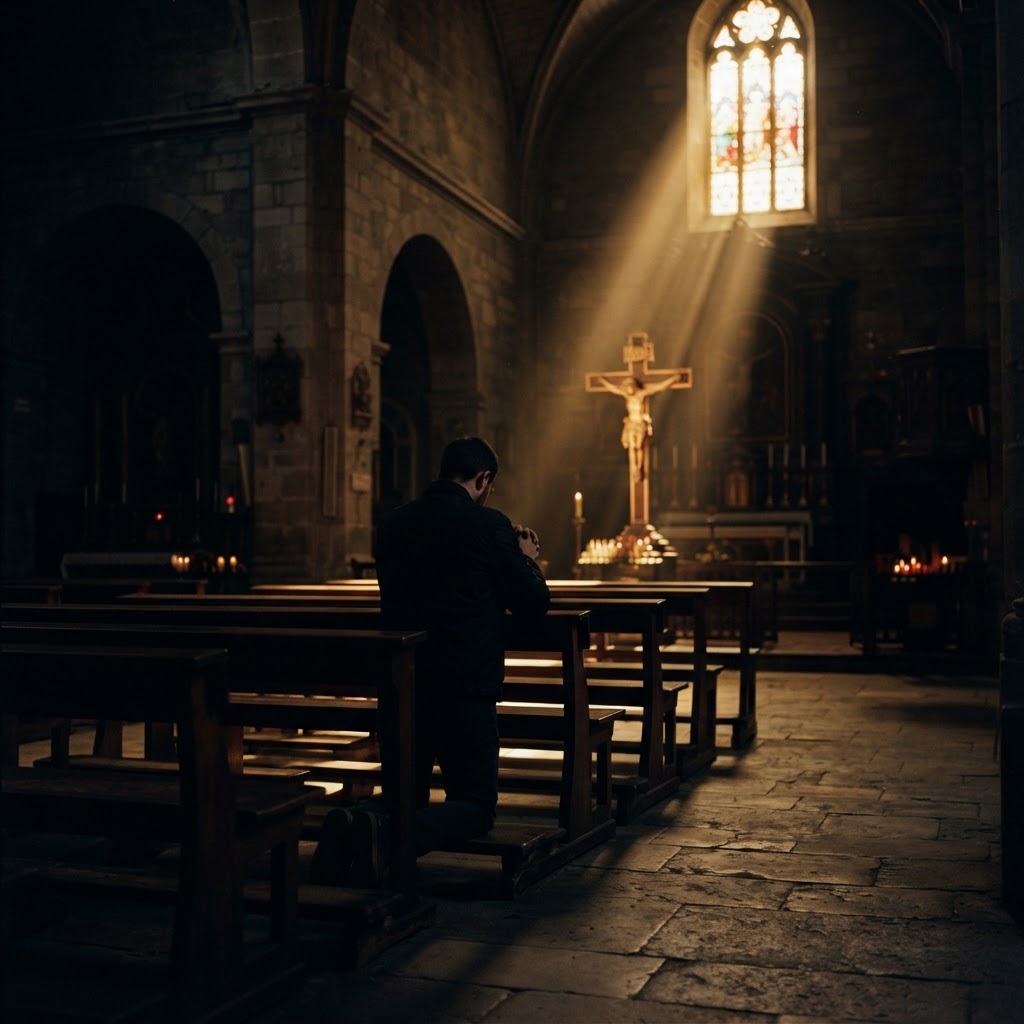
Your Research Path
- 1
Read the primary texts, not the arguments about them
Scripture first: Hebrews 9, Matthew 25, 1 Corinthians 15, Revelation 20-21. Then CCC 1020-1060, all of it, in one sitting. It is shorter than a magazine.
- 2
Then read Benedict XVI, Spe Salvi
The 2007 encyclical on hope is the best modern treatment of judgment, hell and eternal life written at a level that repays a full evening's attention.
- 3
Go back to the Fathers on death
Cyprian's On Mortality and Ambrose's On the Good Death were written to a world where death was constant. They are pastoral, not abstract — and they are the answer to the charge that the Catholic doctrine of death is morbid.
- 4
Test the doctrine in a cemetery, not on the internet
Read the graves in an old Catholic cemetery. You will find the doctrine on the stones — rest, mercy, resurrection, and prayer for the dead — long before you find it in a textbook.
If you are not Catholic
You do not need to resolve the doctrine of purgatory or the papacy before you may pray. Begin where the first Christians began: ask the God you are not sure about to show Himself; go and stand at the back of a Mass on a weekday; speak to a priest — he has heard worse questions than yours, and he will not be scandalised. If you ever want to go further, ask about the OCIA, the Church's unhurried way of welcoming adults, with no obligation to finish. The door of this doctrine is a door, not a wall.
Note on method: where the Church has not defined a matter — the population of hell, the location of the intermediate state, the physical nature of its fire — this page says so rather than filling the gap with opinion.
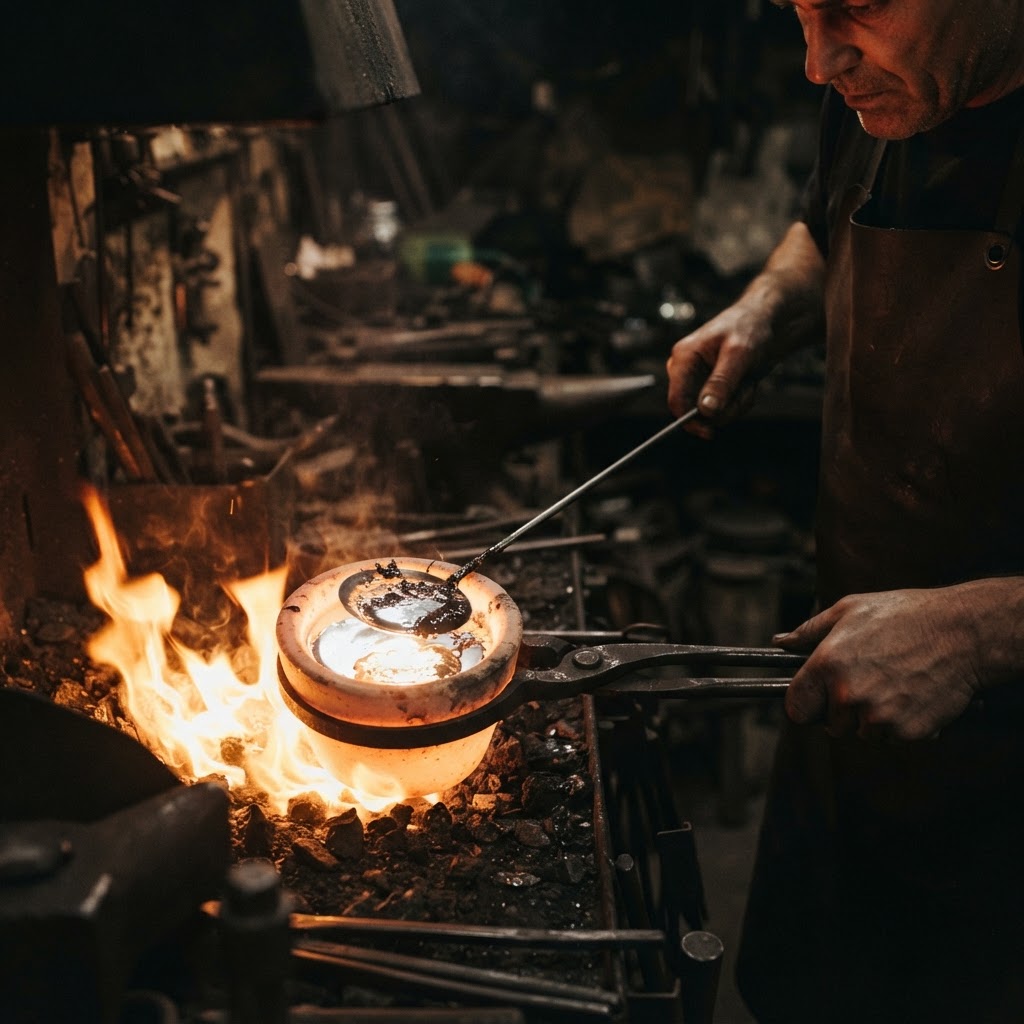
The Doctrine That Follows From This One
Purgatory: the Fire Before the Gate
If death fixes a soul's direction and nothing unclean enters the New Jerusalem, what becomes of the person who dies loving God but not yet wholly? The Church's answer is the final purification of the saved.
Read the Purgatory StudyWhere this study leads next
Purgatory
What happens between death and the vision of God — the doctrine that follows directly from the particular judgment.
ContinueThe Communion of Saints
Why the dead are not cut off from us, and why praying for them is the oldest practice in the Church.
ContinueRepentance & Reconciliation
The tribunal of mercy where the judgment to come is anticipated, and the sentence of absolution is heard now.
ContinueReferences
- Scripture quotations follow the Revised Standard Version, Catholic Edition (Ignatius Press), except where noted.
- Catechism of the Catholic Church, English translation (Libreria Editrice Vaticana, 1994), nn. 1006-1060.
- Benedict XVI, Encyclical Letter Spe Salvi (30 November 2007), nn. 38-48, in particular 44-47.
- Benedict XVI, Encyclical Letter Deus Caritas Est (25 December 2005), nn. 1-18.
- Benedict XII, Constitution Benedictus Deus (29 January 1336), DS 1000-1002.
- Council of Florence, Decree Laetentur Caeli (6 July 1439), DS 1304-1306.
- Council of Trent, Session VI (On Justification, 1547), Session XXIV (On the Sacrifice of the Mass) and Session XXV (On Purgatory), DS 1520-1583.
- Second Vatican Council, Dogmatic Constitution Lumen Gentium (1964), nn. 48-51.
- Second Vatican Council, Pastoral Constitution Gaudium et Spes (1965), nn. 18-22.
- St. John Paul II, General Audiences on the Last Things: Heaven (21 July 1999), Hell (28 July 1999), Purgatory (4 August 1999).
- Pope Francis, Bull of Indiction Misericordiae Vultus (11 April 2015), nn. 19-21.
- St. Augustine, De Civitate Dei XX-XXII; Enchiridion de Fide, Spe et Caritate, 109-113.
- St. Cyprian of Carthage, De Mortalitate, 3-5 (PL 4, 583-591); St. Ambrose, De Bono Mortis, 2-4 (PL 14, 567-577).
- St. John Chrysostom, Paschal Homily (Catechetical Homily 15, for Holy Saturday).
- St. Teresa of Ávila, Libro de la Vida, 32; St. Faustina Kowalska, Diary, 741.
By Justin Poor. Catholic Prophetic Apologist, drawing from Sacred Tradition, the Fathers, Doctors, and the Full Magisterium.