
“My people perish for lack of knowledge.” — Hosea 4:6
The Collapse of
Catholic Education.
When Catholic identity is lost, the next generation is lost.
Catholic education was once the beating heart of parish life. Today, many Catholic schools have become secular institutions wearing a Catholic name. This is not a minor drift — it is a collapse of mission.
What the Issue Is
Catholic education was once
the heart of parish life.
A place where children learned the Gospel, received the sacraments, and were formed in holiness. Today, that mission has collapsed in many Catholic schools. Today, many Catholic schools have:
abandoned Catholic identity in favour of secular branding
embraced ideologies incompatible with the Gospel
prioritised prestige and funding over discipleship
replaced formation with compliance and performance metrics
become corporate institutions rather than missionary ones
This is not a minor drift.
It is a collapse of mission.
Train up a child in the way he should go.
Proverbs 22:6
Where the Confusion Comes From
Why the collapse is
so hard to see.
Catholic schools still carry the name 'Catholic' — creating a false sense of security
branding and symbols replace genuine Catholic identity
government funding shapes curriculum away from doctrine
secular ideology fills the vacuum left by weak catechesis
teachers are hired without doctrinal fidelity or personal faith
parents assume Catholic schools form disciples — but many no longer do
Catholic Teaching
What the Church Affirms & Rejects
The Church Affirms:
Parents are the primary educators — the school serves the family, not the state.
Catholic schools must transmit the faith, not merely religious sentiment.
Catholic identity is not optional — it is the reason Catholic schools exist.
The Gospel must shape every subject, every policy, every relationship.
The dignity of the human person must be taught clearly and without compromise.
The moral law cannot be watered down for cultural acceptance.
The Church Rejects:
moral relativism dressed as pastoral sensitivity
gender ideology taught under the banner of inclusion
secular anthropology replacing Catholic anthropology
replacing Catholic rituals and prayer with political ones
silencing Catholic doctrine to maintain government compliance
"Train up a child in the way he should go; even when he is old he will not depart from it." — Proverbs 22:6Formation is not supplementary. It is the entire mission.
Prophetic Diagnosis
The collapse is not accidental.
It is the result of choices.
The collapse of Catholic education is the cumulative result of institutional decisions made over decades:
abandoning Catholic anthropology — the foundation of all formation
replacing formation with performance metrics and accreditation
adopting secular ideologies under the guise of relevance
losing the parish-school unity that once sustained Catholic identity
hiring teachers who neither know nor live Catholic doctrine
prioritising government funding over doctrinal fidelity
This is not simply an institutional failure. It is a spiritual crisis. The battle for Catholic education is ultimately a battle for the souls of the next generation.
Structural Causes
Why the System Is Broken
Dependence on state funding creates compliance pressure that shapes curriculum away from Catholic doctrine.
External accreditation bodies impose secular frameworks that conflict with Catholic anthropology and moral teaching.
Mandatory secular content — including gender ideology and moral relativism — is imposed through state curriculum requirements.
Diocesan schools run as corporations lose their missionary identity and become institutions managed for prestige and market share.
Without strong, doctrinally-committed episcopal leadership, Catholic schools drift without correction or accountability.
Teachers who are not personally formed in the faith cannot form students in it — regardless of curriculum documents.
Spiritual Consequences
The fruit of
compromised formation.
Children Enter Catholic School:
But Many Graduate:
"This is the fruit of compromised formation. The Church cannot afford to lose another generation."
The Foundational Remedy
Aeterni Patris & the
Restoration of Christian Philosophy
The collapse of Catholic education is not, at root, a failure of resources or branding or governance. It is a philosophical collapse. When the Church abandoned the scholastic philosophy of St. Thomas Aquinas - the intellectual grammar that made Catholic doctrine intelligible - Catholic schools lost the capacity to teach the faith as a coherent whole. Catechesis became experiential, therapeutic, and finally relativistic, because there was no longer a philosophy beneath it capable of saying what is true.
The remedy was given to the Church a century and a half ago. On 4 August 1879, Pope Leo XIII issued the encyclical Aeterni Patris - On the Restoration of Christian Philosophy - calling the Church back to the perennial wisdom of St. Thomas Aquinas as the foundation of Catholic education and theology. What he prescribed then is precisely what Catholic education must recover now: a philosophy that does not merely describe the world, but orders the mind toward the Truth who is Christ.
"We must restore, if it be possible, the philosophy of the ancients, and especially of St. Thomas Aquinas, to its former dignity and splendour, that by it the youth may be formed to sound and useful learning, and confirmed in the truth." - Leo XIII, Aeterni Patris
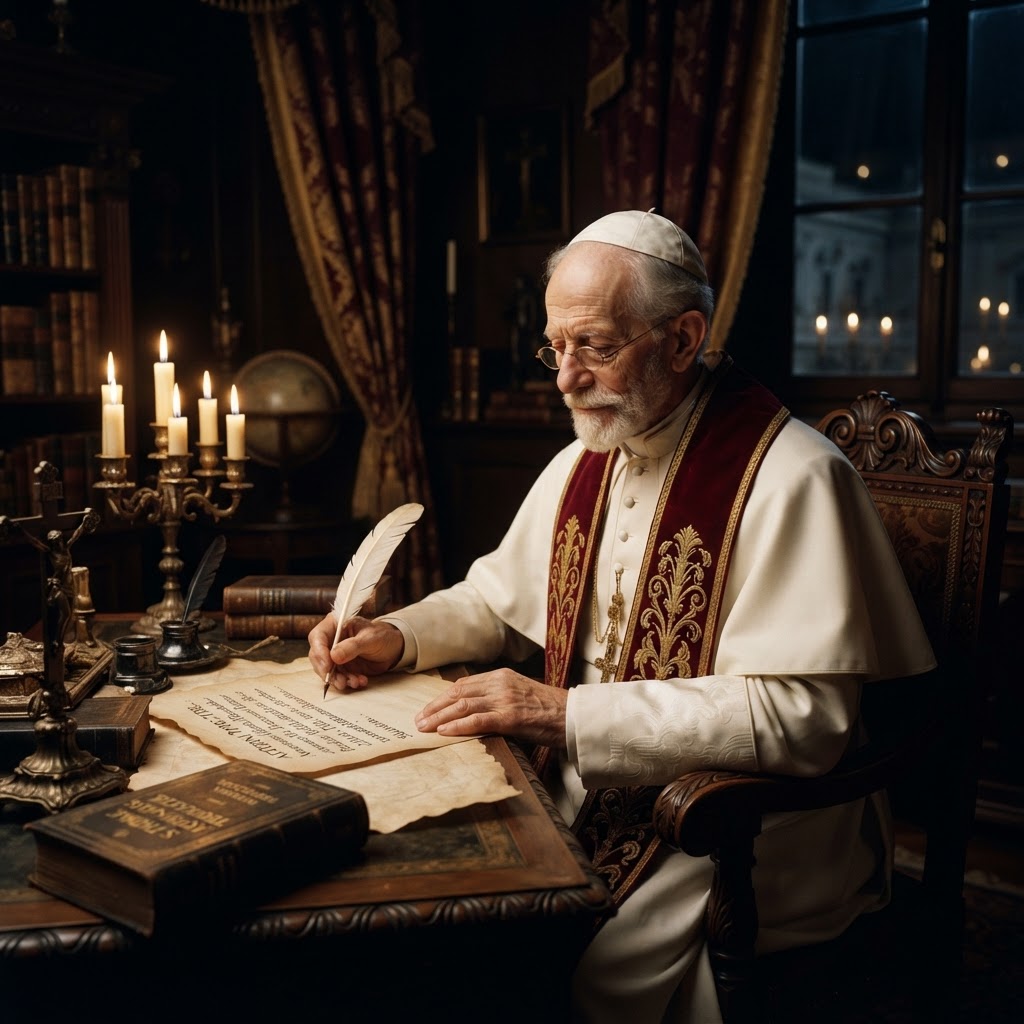
The philosophy of St. Thomas stands as the securest and widest foundation of human studies.
Aeterni Patris - Leo XIII, 1879
The Wound It Treated
A philosophy void of God cannot form a Catholic mind.
Leo XIII saw that modern philosophy had severed reason from faith, casting revelation aside and reducing truth to private opinion. Once the intellect was cut off from God, moral relativism followed as surely as night follows day.
The philosophies of the age - rationalism, materialism, Kantian idealism - presented themselves as 'neutral' and 'objective', but they were void of God. A school built on their foundations cannot form a Catholic mind, because its premises deny the very God the Catholic mind seeks.
When philosophy collapses, catechesis has nothing to stand on. Doctrine becomes a list of propositions to be memorised, then forgotten - because the student was never given the intellectual grammar that makes the Creed intelligible.
The crisis of 1879 is the crisis of today. The names of the philosophies have changed - postmodernism, critical theory, gender ideology - but the disease is the same: a reason that has closed itself to God, and so cannot finally say what is true, what is good, or what a human being is. The remedy Leo XIII gave the Church is the remedy Catholic education must take up again.
The Prescription of Aeterni Patris
Restore the Perennial Philosophy of St. Thomas
Restore St. Thomas Aquinas
Leo XIII did not merely 'recommend' the Angelic Doctor. He prescribed the philosophy of St. Thomas as the normative philosophical curriculum of Catholic schools - the master whose principles, method, and conclusions are the standard against which all others are measured. The scholastic tradition is not one option among many; it is the philosophia perennis, the perennial philosophy of the Church.
Faith and Reason Are Two Wings
Aeterni Patris recovers the central Catholic principle: grace does not destroy nature, it perfects it. Faith and reason are not rivals but two wings on which the human spirit rises to the contemplation of truth. Reason purged of faith goes blind; faith unformed by reason grows irrational. Thomism holds them together - and that unity is the oxygen of a Catholic mind.
Objective Truth as the Atmosphere of Formation
The Thomistic realist begins from what is - the intelligibility of being, the transcendental honesty that truth is not made but found. The student formed in this realism does not 'construct' his truth; he receives it, measures himself against it, and is measured by it. This is the atmosphere in which doctrine can breathe and in which a young soul can encounter Christ, who said 'I am the Truth'.
Leo XIII's Principle
Grace does not destroy nature; it perfects it. Reason and faith are not enemies but two wings on which the human spirit rises toward truth. A Catholic school that tears out one wing teaches its children to fall.

I am the Way, and the Truth, and the Life.
John 14:6
The Fruit for Young Minds
What a Thomistic education forms
When Christian philosophy is restored as the spine of Catholic education, it forms three things in the young - the three things the present generation has most lost.
01
Minds Attuned to Truth
Against modernism's moral relativism - which teaches that truth is personal preference and morality is a social contract - Thomistic philosophy forms the mind to recognise objective reality. The student learns that a thing is what it is, that the law of non-contradiction is not negotiable, and that 'your truth' and 'my truth' must finally answer to the Truth. This is the first immunity the Catholic school owes its children.
02
A Foundation for Catholic Doctrine
Doctrine is not a collection of disconnected propositions; it is a living, intelligible whole. Thomistic philosophy supplies the grammar - act and potency, essence and existence, the transcendentals of truth, goodness and beauty - that makes the Creed coherent. A student grounded in this grammar does not merely assent to doctrine; he understands it, and understanding is the difference between a faith that endures and a faith that collapses at the first challenge.
03
Openness to Personal Encounter with Christ
Christ did not say 'I teach the truth'; He said 'I am the Truth'. The mind formed to love truth is the mind already prepared to meet Him. The Thomistic ascent - from the visible effects to the First Cause, from the order of the world to the Mind that orders it - is not a detour from encounter but its road. Formation in truth is not the enemy of encounter with Christ; it is the soil in which encounter takes root and bears fruit.
From Truth to the Person of Truth
The end of Christian philosophy is not a clever student. It is a soul that has learned to love truth, and so is ready to meet the One who is Truth. Formation in Thomistic realism is the road by which the modern mind - sceptical, relativistic, suspicious of all claims - is made capable once more of the personal encounter with Christ. The school that forms the intellect toward truth forms the heart toward Him who said I am the Truth.
The Work Before Us
Restore the philosophy, and the school will follow.
A Catholic school cannot teach what its teachers no longer know. The restoration begins with the formation of teachers in the philosophy of St. Thomas, with the recovery of scholastic curricula, and with the courage to measure every subject against the perennial philosophy the Church has always called her own. Aeterni Patris is not a museum document. It is the charter of Catholic education - and the apostolate takes it up as one of the remedies the present collapse most urgently needs.
By Justin Poor - Catholic Apologist, drawing from Sacred Tradition, the Fathers, Doctors, and the Full Magisterium.
Catholic Response
How Catholics Must Respond
Reclaim Catholic Identity
Catholic schools must recover their identity — not as a brand, but as a mission. Every policy, every hire, every curriculum decision must be measured against fidelity to Christ and the Church.
Reform Teacher Hiring
Teachers in Catholic schools must be personally formed in the faith. Doctrinal fidelity is not a secondary consideration — it is the primary qualification.
Restore Parish-School Unity
The Catholic school divorced from its parish community loses its formative power. The Eucharist, sacraments, and parish life must be central to the school's identity.
Raise Up Evangelists
Catholic education needs teachers who are missionaries — who see their vocation as the formation of disciples, not the delivery of content.
Remove Secular Ideology
Gender ideology, moral relativism, and secular anthropology have no place in a Catholic school. Their removal requires courage, episcopal support, and parental engagement.
Demand Episcopal Leadership
Bishops are responsible for the Catholic identity of schools in their diocese. Catholics must hold their bishops to account for the doctrinal integrity of Catholic education.
Common Questions
Frequently Asked
Q: Are all Catholic schools compromised?
A: No — but many are drifting, and the drift is accelerating. There are faithful Catholic schools. But the systemic pressures are real, and parents must discern carefully before assuming a Catholic school name guarantees Catholic formation.
Q: Can Catholic education be restored?
A: Yes — through reform, courage, and fidelity. It requires episcopal conviction, teacher formation, parental engagement, and the willingness to choose mission over market share.
Q: What role do parents play?
A: Parents are the primary educators of their children — not the state, not the school system. The Catholic school is a partner in the parents' mission, not a substitute for it. Parents must be engaged, informed, and willing to act.
Q: What if our local Catholic school is compromised?
A: Parents have options — homeschooling, alternative Catholic programmes, or choosing to supplement their children's formation through parish, family, and authentic Catholic resources. The formation of children is too important to outsource entirely to any institution.
Catholic Education Series
Read the Full Series — In Order
These four issues form a connected analysis. Each builds on the last.
The Collapse of Catholic Education
The broad overview — how and why Catholic education lost its mission.
The Crisis in Catholic Schools
The on-the-ground reality — what is happening inside Catholic classrooms today.
The Infiltration of Catholic Education
The mechanism — how secular ideology entered and took hold.
The Betrayal of Catholic Formation
The deepest wound — the abandonment of genuine formation from within.
Related Issues
Explore the Full Picture
A Prophetic Word
Rebuild the walls.
Restore the mission.
Catholic education must return to Christ —
or it will lose the next generation.