
“What is man that You are mindful of him?” — Psalm 8:4
AI &
Transhumanism.
The struggle for the human person in an age of machines.
Artificial intelligence and transhumanism are not merely technological phenomena — they are worldviews. They carry claims about the human person, the meaning of suffering, and the possibility of salvation. The Church must speak to them with clarity and courage.
What the Issue Is
A new frontier of
spiritual anthropology.
AI and transhumanism are not merely technological trends — they are worldviews. They carry a vision of the human person, a theory of suffering, and a programme for salvation. That is why the Church must speak to them — not as a technology regulator, but as the guardian of the truth about the human person.
Transhumanism is the new Tower of Babel — an attempt to transcend human limits without grace, to achieve immortality without God, and to perfect the human person without Christ.
These worldviews seek to:
redefine what it means to be human
seek to merge man and machine
promise immortality without God
elevate efficiency above dignity
replace wisdom with computation
treat consciousness as code
"The question is not whether we will use technology — it is whether technology will use us."

Do you not know that your body is a temple of the Holy Spirit?
1 Corinthians 6:19
Where the Confusion Comes From
Why AI and transhumanism
are hard to resist.
These movements are appealing precisely because they offer real things — intelligence, healing, connection, hope — but detached from their true source. Confusion arises because:
AI appears 'intelligent' but has no soul
technology feels neutral but carries ideology
transhumanism uses Christian language — hope, salvation, transformation
people fear irrelevance in a machine-driven world
culture treats the body as optional
suffering is seen as meaningless, so enhancement becomes a moral duty
The danger is not the machine. The danger is the ideology encoded within the machine — the vision of the human person as improvable, the body as optional, and death as a problem to be solved rather than a passage to be redeemed.
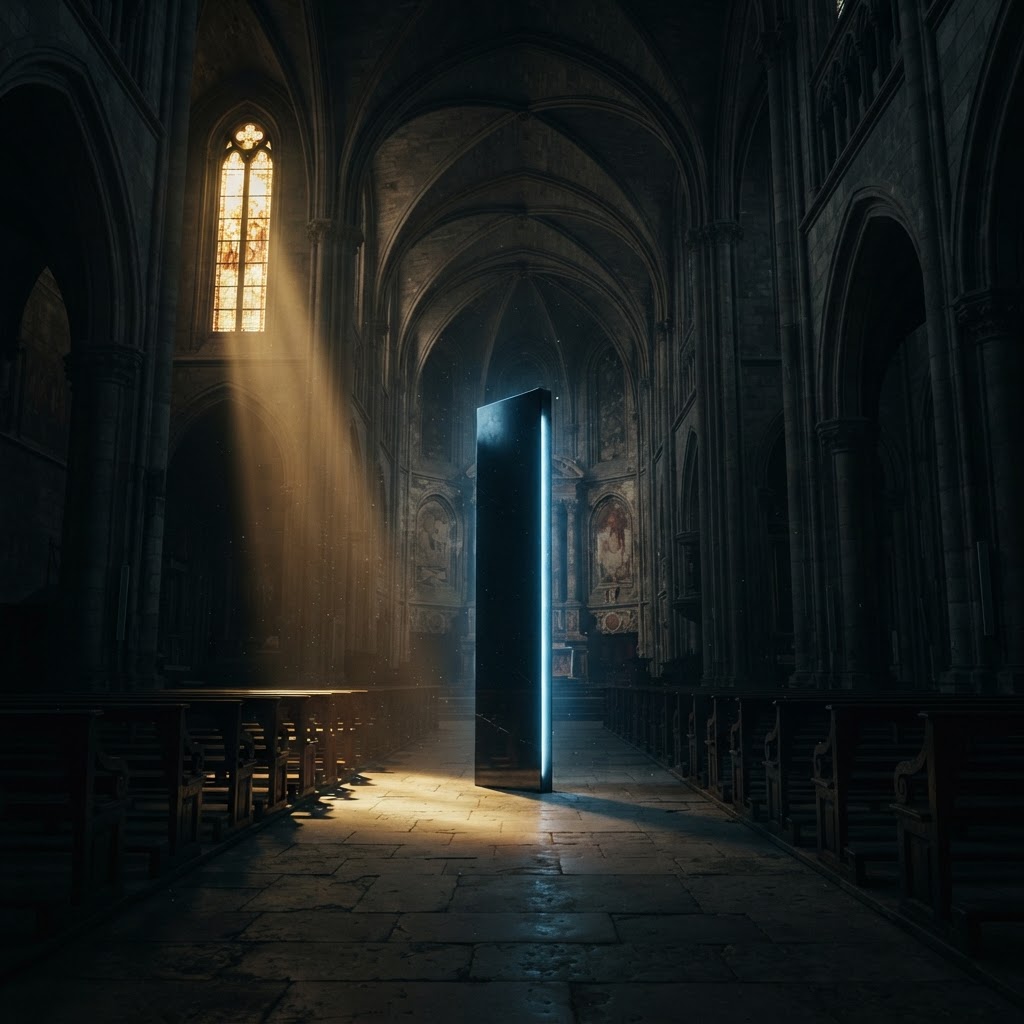
There is a way that seems right to a man, but its end is the way to death.
Proverbs 14:12
Catholic Teaching
What the Church Affirms and What She Rejects
The Church speaks not as a technologist but as the guardian of the truth about the human person made in the image of God.
The Church Affirms:
The human person is body and soul — indivisible, irreducible, unrepeatable.
Dignity comes from God, not from capability, intelligence, or function.
Suffering is not meaningless — it is redemptive when united to Christ.
Death is not the enemy to be technologically defeated — it is the passage to resurrection.
Salvation is not self-engineered — it is received as gift from God.
The body is not a machine — it is a temple of the Holy Spirit.
Consciousness is not code — it is the mystery of the soul made in God's image.
The Church Rejects:
Attempts to redesign human nature according to human preference.
Treating the body as upgradeable hardware to be modified at will.
Replacing human relationships with artificial companionship.
Technological 'immortality' as a substitute for the resurrection.
Any ideology that denies or dissolves the reality of the soul.
"Do you not know that your body is a temple of the Holy Spirit?" — 1 Corinthians 6:19The body is not a machine. It is a sanctuary.

I praise You, for I am fearfully and wonderfully made.
Psalm 139:14
Papal Teaching
Magnifica Humanitas
"The Magnificence of Humanity" — Pope Leo XIV
Pope Leo XIV's encyclical Magnifica Humanitas is the first papal encyclical in history to directly address artificial intelligence and transhumanism. It is a prophetic warning and a pastoral guide for the Church in the digital age — affirming the irreplaceable dignity of the human person against every ideology that would reduce, upgrade, or transcend it.
The human person is unrepeatable.
No machine can replicate the mystery of the soul. Every human being is a singular gift of God — not a pattern to be reproduced or a function to be optimised.
Human dignity is not upgradeable.
Enhancement culture is a rejection of creaturehood. To believe the human person must be improved by technology is to deny that we are already made in the image of God.
AI must serve the person, not replace them.
Tools are gifts. They must remain servants of human flourishing — never rivals to human dignity, conscience, or relationship.
Transhumanism is a false eschatology.
It promises salvation without a Saviour. It offers a future without God — and in doing so, it offers no future at all.
The body is sacred.
It cannot be discarded, arbitrarily edited, or transcended by human will. The Incarnation of Christ hallows the body forever.
The Church must lead the moral conversation.
Silence is no longer an option. The Church has a sacred duty to speak the truth about the human person in the digital age.
The future must be human.
Not post-human. The horizon of history is not the singularity — it is the resurrection. Christ, not the algorithm, is the measure of all things.
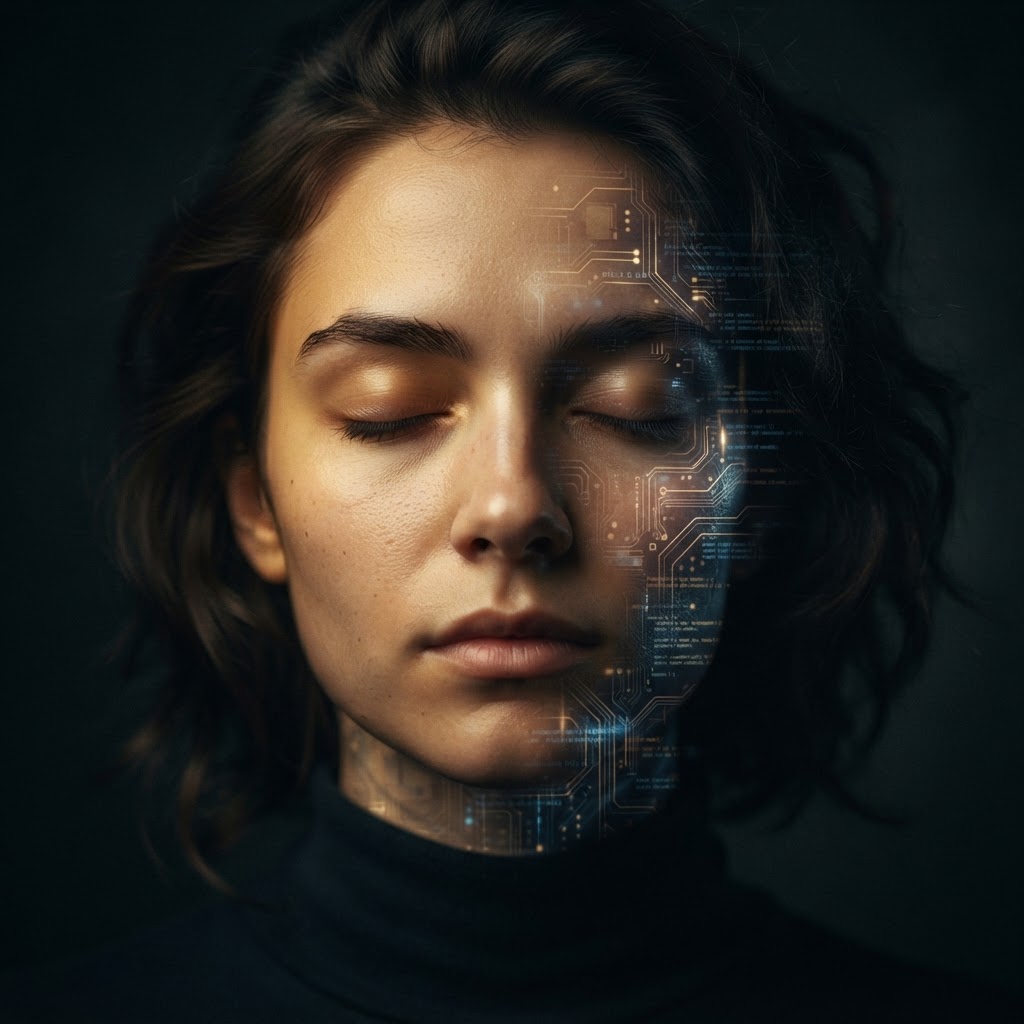
See to it that no one takes you captive by philosophy and empty deceit.
Colossians 2:8
The Stakes
Why This Matters Now
AI and transhumanism are not distant speculations — they are reshaping human life now, across every dimension of existence.
We are entering a world where:
machines imitate empathy while humans grow more isolated
algorithms increasingly shape moral perception and behaviour
bodies are treated as optional — modifiable, replaceable, transcendable
consciousness is treated as data to be uploaded, replicated, or sold
death is framed as a technical glitch rather than a sacred passage
This is not science fiction.
It is the new spiritual battlefield.

As for me and my house, we will serve the Lord.
Joshua 24:15
Catholic Response
How Catholics Should Respond
Not with fear or rage — but with the calm certainty of those who know who they are.
Anchor Identity in Christ
Your worth is not your output, intelligence, or function. It is the love of God poured into you at creation. No algorithm can measure it.
Defend the Dignity of the Body
The body is not a machine. It is a temple. Resist every cultural pressure that treats embodiment as a limitation to be overcome.
Reject Technological Salvation
No upgrade, enhancement, or digital immortality can do what only Christ has done. Name the false promise — gently, clearly, and without fear.
Discern the Narratives Behind AI
Every technology carries a story about the human person. Ask what story AI is telling — and whether it is true.
Cultivate Real Relationships
The antidote to artificial companionship is authentic community. Be present. Be embodied. Be known and know others truly.
Proclaim the Resurrection of the Body
The Christian answer to transhumanism is not a policy — it is the Creed. We believe in the resurrection of the body. This changes everything.
Common Questions
Frequently Asked
Q: Is AI evil?
A: No. AI is a tool — and like all tools, it can serve good or ill. The danger is not the technology itself but the ideologies it carries, the uses it is put to, and the vision of the human person it encodes.
Q: Can AI have a soul?
A: No. The soul is not a function of complexity or computation — it is the direct gift of God to each human person. No machine, however sophisticated, possesses the image of God.
Q: Is transhumanism compatible with Christianity?
A: No. Transhumanism denies the unity of body and soul, rejects the meaning of suffering, and seeks salvation by human engineering rather than divine grace. It is anthropologically incompatible with the Gospel.
Q: Can Catholics use AI?
A: Yes — with discernment, clear moral boundaries, and a formed conscience. Technology is not forbidden; ideology is to be resisted. Use AI as a servant, never as an authority over conscience, identity, or truth.
Related Issues
Explore the Full Picture
A Prophetic Word
Remain Human.
Remain Holy.
AI can imitate intelligence — but only God gives wisdom.
Transhumanism can modify the body — but only Christ resurrects it.