
“Where the Spirit of the Lord is, there is freedom.” — 2 Corinthians 3:17
Neo-
Communism.
The return of an old ideology in a new disguise.
It does not arrive with tanks and flags. It arrives through language, institutions, education, and compassion — reshaping the human person from within. The Church has always resisted it. She must do so again.
What the Issue Is
Neo-Communism is not the communism
of the 20th century.
It is a new ideological movement — softer in its methods, subtler in its language, but identical in its anthropology: the person is subordinate to the collective, freedom is a threat, and the State or movement is the source of moral truth.
It is a spiritual ideology, not just a political one. It seeks to reshape culture, morality, and the human person from within — through education, media, institutions, and the redefinition of virtue itself.
It is a movement that:
rejects objective truth
dissolves personal identity into collective identity
elevates the State, the system, or the 'collective good' above the person
replaces religion with political morality
uses language of compassion to justify control
frames dissent as harm

You will know the truth, and the truth will set you free.
John 8:32
Where the Confusion Comes From
Neo-Communism spreads not by force —
but through language.
It does not announce itself as an ideology. It arrives dressed as compassion, justice, and inclusion — making it harder to name and easier to absorb.
moral language detached from Christian anthropology
redefining justice as enforced equality
weaponising compassion to justify coercion
dissolving the family into the State
replacing virtue with compliance
framing freedom as dangerous
treating disagreement as violence
This is not a partisan diagnosis. Neo-Communism is not owned by one political party or nation. It is a global ideological current that crosses borders and party lines — identifiable by its anthropology, not its flag.
Case Study: The World Economic Forum
"You Will Own Nothing
and Be Happy."
"By 2030, you'll own nothing, and you'll be happy."
— World Economic Forum, promoted under Klaus Schwab's 'Great Reset' agenda
The World Economic Forum — convened annually in Davos — is the institutional vehicle of what its founder Klaus Schwab calls the "Fourth Industrial Revolution" and "Great Reset." It is not merely a talking shop. It trains and places "Young Global Leaders" in positions of government and corporate power across the world. Its agenda is explicit: dismantle the structures of independent national economies and personal property, and replace them with a centrally managed global system governed by unelected technocratic elites.
"You will own nothing and be happy."
Klaus Schwab's World Economic Forum promoted this vision explicitly in its 'Great Reset' agenda — a world where private property is abolished, assets are rented from centralised institutions, and compliance is the price of participation.
Centralised global economic control
The WEF's agenda explicitly targets the dismantling of national sovereignty and independent economies in favour of a globally managed system governed by unelected technocratic elites.
Public-private fusion
The WEF model — 'stakeholder capitalism' — merges the power of multinational corporations with state authority, bypassing democratic accountability and concentrating control in the hands of a global managerial class.
Digital surveillance infrastructure
Central Bank Digital Currencies (CBDCs), social credit systems, and biometric ID programmes are all components of the WEF's Fourth Industrial Revolution — creating the infrastructure for total economic and social control.
Managed 'equity' over earned freedom
Under the WEF model, equity is engineered from above through redistribution, not pursued through freedom and personal striving. The result is dependency, not dignity.
The Catholic Response: Rerum Novarum
Pope Leo XIII's 1891 encyclical Rerum Novarum — the foundational document of Catholic social teaching — directly and explicitly addresses this agenda. Written against the socialism of the 19th century, it speaks with prophetic precision to the neo-collectivist agenda of the 21st.
Private property is a natural right
Pope Leo XIII teaches that every person has the right to hold private property as their own — not merely to use what the State assigns. This right precedes civil society and cannot be stripped by any government or global body.
The family has prior rights to the State
The family — not the State, not the corporation, not the global institution — is the foundational unit of society. Any system that dissolves the family's independence into collective management inverts the natural order.
Socialism is condemned as unjust
Leo XIII explicitly condemns the socialist programme of abolishing private property as harmful to workers, contrary to natural law, and an assault on the rights and freedom of every human person.
The State must protect, not replace, personal initiative
Government exists to safeguard the conditions in which persons and families can flourish freely — not to manage, engineer, or redistribute every outcome according to ideological preference.
Stewardship, not collective ownership
The Catechism affirms the right to private property while insisting on its social dimension — goods are to be used for the common good, not seized by centralised authorities who claim to know better.
"It is unjust and inhuman to grind men down with excessive labour as though they were things to be used for profit, and not free beings endowed with reason."— Pope Leo XIII, Rerum Novarum §31
Catholic Teaching
What the Church Affirms and What She Rejects
The Church's social teaching is not a political programme. It is the proclamation of the truth about the human person.
The Church Affirms:
The human person has inherent dignity that no state can grant or remove.
Freedom is essential for love — coerced virtue is not virtue.
The family is the foundational cell of society, prior to the State.
The State exists to serve the person, not replace them.
Every person has a natural right to own private property — this is a cornerstone of Catholic social teaching (Rerum Novarum §4).
Truth is objective, not constructed by political consensus.
Justice is rooted in God, not in ideology.
The Church Rejects:
Collectivism that erases the individual person in favour of the group.
The abolition of private property — explicitly condemned in Rerum Novarum as unjust and contrary to natural law.
Systems that suppress religious freedom and the rights of conscience.
Ideologies that redefine human nature according to political utility.
Enforced equality that destroys legitimate diversity and subsidiarity.
Unelected global governance bodies claiming authority over the economic and social lives of nations and persons.
"We must obey God rather than men." — Acts 5:29The apostolic principle that stands against every ideological absolute.
The Stakes
Why This Matters Now
Neo-Communism is rising because the conditions for it have been prepared. A culture without a shared moral foundation is fertile ground for any ideology that promises clarity, belonging, and purpose.
Secular culture has lost its moral foundation and craves a replacement.
People hunger for belonging and purpose — and ideologies offer a counterfeit.
Fear makes control seem attractive and freedom seem dangerous.
Technology enables unprecedented surveillance and social conformity.
Identity politics fragments society, making collectivist unity appealing.
Truth has become subjective, leaving no ground to resist ideological pressure.
It is not a political party — it is a spiritual counterfeit of Christian community.
It offers a counterfeit of:
"Neo-Communism offers a world without God — but Christ offers a freedom no ideology can imitate."
Catholic Response
How Catholics Should Respond
With clarity, charity, and the courage of those who know the end of the story.
Anchor Identity in Christ
Your identity is not ideological — it is theological. You are a child of God, not a unit of the collective. No movement can give you what only Christ can.
Defend the Dignity of the Person
Every human being is made in the image of God. This is non-negotiable. Every policy, movement, and idea must be measured against this irreducible truth.
Protect the Family
The family is the primary community — prior to the State, prior to ideology. Strengthen it, defend it, and live it faithfully.
Speak Truth with Charity
The antidote to false ideology is not rage or politics — it is clear, calm, courageous witness to the truth, spoken in love.
Refuse Ideological Coercion
When culture demands you affirm what is false, the Catholic response is firm, charitable refusal. We obey God rather than men (Acts 5:29).
Cultivate Authentic Community
The Church is the true alternative — a community of love, freedom, and truth. Live it visibly. It is the greatest apologetic.
Common Questions
Frequently Asked
Q: Is Neo-Communism the same as historical communism?
A: No. It uses new language, new methods, and new cultural tools — but the same underlying worldview: the person is subordinate to the collective, truth is constructed, and the State is the source of moral authority.
Q: Is this a political issue?
A: No. It is a spiritual and anthropological issue, not a partisan one. The Church does not endorse political parties. She proclaims the truth about the human person — and any ideology that contradicts it must be examined.
Q: Is the World Economic Forum promoting Neo-Communism?
A: The WEF's 'Great Reset' agenda — including its promotion of a world where people 'own nothing' and are 'happy' — mirrors the core logic of collectivism condemned by the Church. Whether we call it Neo-Communism, technocratic globalism, or stakeholder capitalism, the anthropology is identical: the person is a unit to be managed, not a free being made in the image of God.
Q: What does Rerum Novarum say about property ownership?
A: Pope Leo XIII's 1891 encyclical is explicit: the right to own private property is a natural right grounded in human dignity, prior to any state. It condemns socialism's abolition of private property as unjust and harmful — a condemnation that applies directly to any modern agenda that would strip individuals of property rights in favour of centralised management.
Q: Why is it appealing to young people?
A: It offers belonging, purpose, and moral clarity — but without God. It mimics the communal and missionary dimensions of the Church while severing them from their foundation in Christ.
Q: Does the Church oppose justice movements?
A: No. The Church has a rich and ancient tradition of social justice rooted in the dignity of the person. She opposes ideological distortions of justice that divorce it from truth, freedom, and God.
Related Issues
Explore the Full Picture
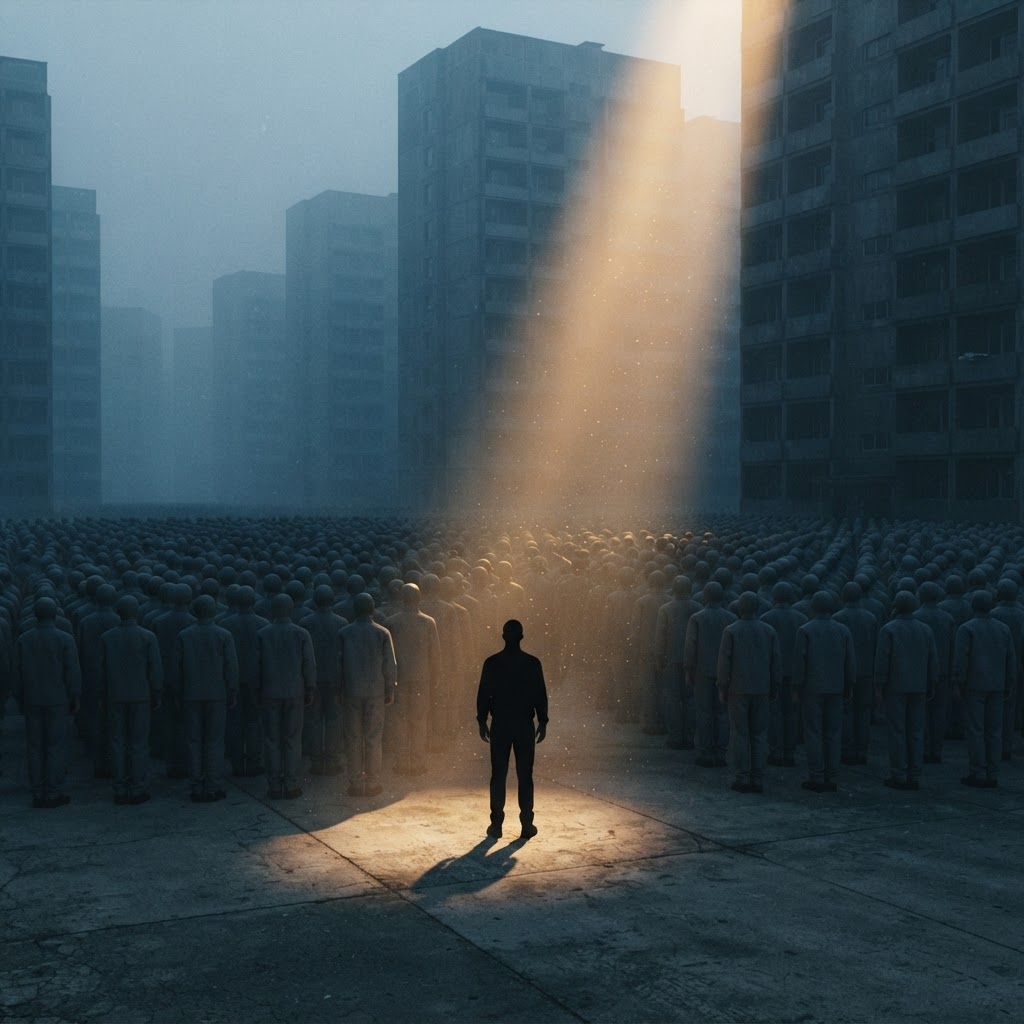
A Prophetic Word
Stand in Truth.
Walk in Freedom.
Neo-Communism offers a world without God —
but Christ offers a freedom no ideology can imitate.