
Abortion and
the Vote.
Which Australian parties have stood consistently against abortion, and which sit closest to the Magisterial teaching on the matter.
Weighed from the recorded parliamentary voting patterns and the stated platforms of the parties, with the first non-negotiable placed where it belongs: first.
Why This Question Comes First
A Non-Negotiable Among Negotiables
Catholic social teaching holds up a whole architecture of goods: the dignity of labour, the family, private property, subsidiarity, the stewardship of creation, the common good, peace among nations. Faithful Catholics can and do disagree prudently about how best to secure many of them. The direct and deliberate killing of the innocent is not among those questions. It is the one good on which the rest depend, because every other right is a right of a person who must first be permitted to live.
This is why the Church calls the defence of life a non-negotiable. It does not mean that Catholics may own no other political concern. It means that when a party, a platform, or a candidate presents the taking of unborn life as a right to be expanded, the Catholic conscience is not free to give that programme its consent, whatever else the party may promise.
"In the case of an intrinsically unjust law, such as a law permitting abortion or euthanasia, it is therefore never licit to obey it, or to take part in a propaganda campaign in favour of such a law, or to vote for it."
Evangelium Vitae 73, St. John Paul II
At the same time the Church does not hand the faithful a party card. She forms the conscience and leaves the prudential judgement to the lay faithful, who alone can weigh the local field, the candidates, the preference flows, and the practical consequences of each vote. What she forbids is consent to evil. What she asks is a conscience formed well enough to see which way the harm lies, and to vote as though the unborn were real.
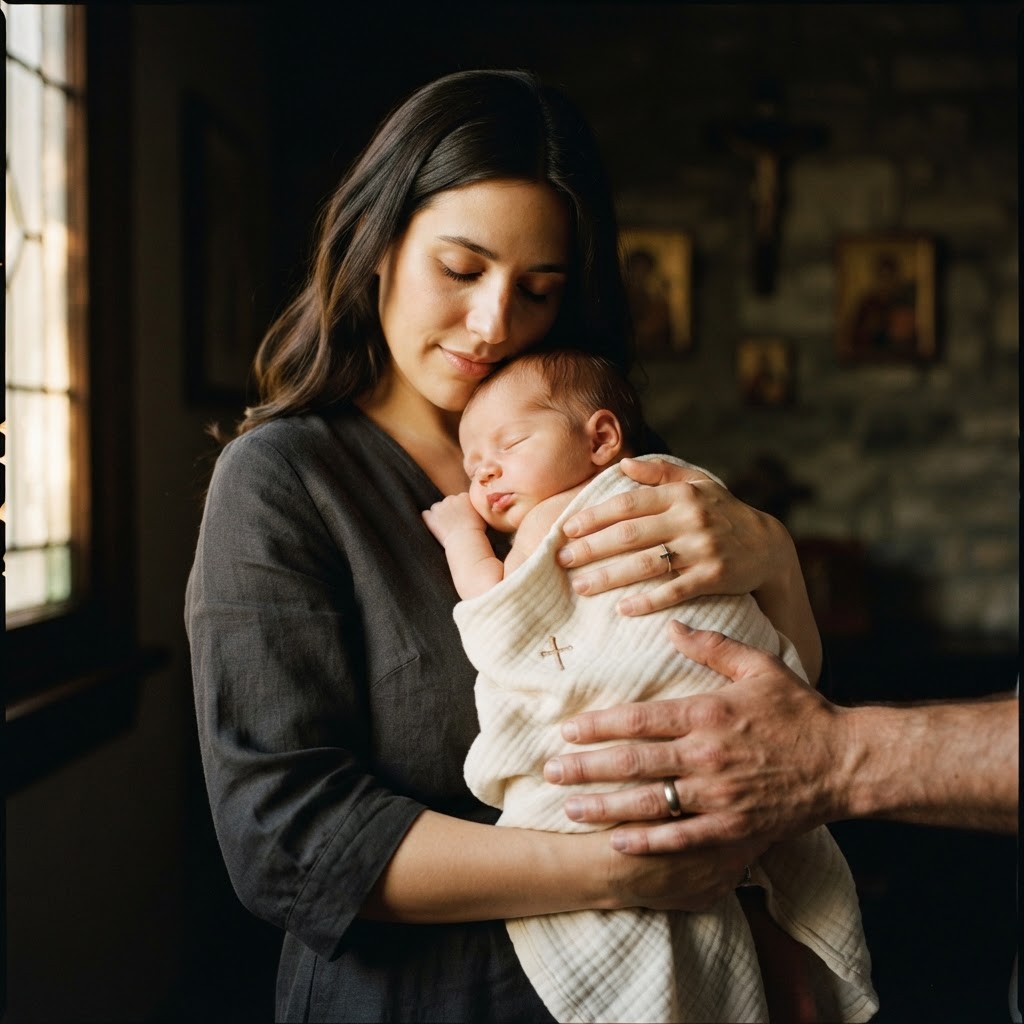
Human life must be respected and protected absolutely from the moment of conception.
Catechism of the Catholic Church 2270
The Record and the Platforms
Where the Parties Stand on the Unborn
What follows is a ranking on the question of life alone, drawn from what each party has actually voted for and from what its current platform states. It is deliberately narrow: a party ranked lower here may be stronger than a party ranked higher on economics, energy, or religious liberty. This list answers one question only, and it is the question that comes first.
Australian Christians
Consistent against abortion
Unambiguously pro-life
The platform commits to defend the sanctity and dignity of human life from conception to natural death.
The strongest pro-life platform in the field, with no hedging and no conscience carve-out that leaves the unborn unprotected.
Its instincts have not yet been tested by the compromises of office, and it has limited experience of the burdens of executive government.
One Nation
Consistent against abortion
Consistent and specific
The 2026 pro-life policy pledges to roll back extreme late-term abortion, ban sex-selective abortion, and mandate care for babies born alive.
Pledges to restore the doctor's conscientious objection to abortion and to ban the harvesting of foetal organs.
Consistent public opposition to the culture of death, the area in which the secular project most directly attacks the non-negotiables.
Its positions are reactive and populist rather than rooted in Catholic social principles, so consistency across every question cannot be presumed.
National Party of Australia
Consistent against abortion
Reliably socially conservative
The National wing broadly defends life, marriage, and the family against metropolitan progressivism.
Two of the only four House votes against the 2017 redefinition of marriage were Nationals: Keith Pitt and David Littleproud.
In 2022 the Nationals resisted the amendment that stripped the religious-school exemptions, and the party continues to push back on gender-ideology expansions.
Its social conservatism has not been expressed as a positive legislative program for the unborn, and its consistency often follows political expediency.
Liberal Party of Australia
Silent on the unborn
Silent on the first non-negotiable
The platform is silent on abortion: the tradition treats it as a matter for individual conscience or for the states.
There is no coherent defence of the unborn in the party's program, which is a serious deficiency on the Gospel of Life.
Its strength on economics, energy, and national sovereignty cannot compensate: prudence in secondary matters does not purchase the right to kill the innocent.
Individual Liberal members have voted against abortion expansions, but the party as a body offers no protection in law.
Teal Independents / Crossbench
Committed to abortion access
Committed to expanding access
The running platform of several teal members commits to defend and expand reproductive rights.
No teal member has advanced the protection of the unborn as a crossbench priority.
Their 'progressive social values' on reproductive rights and gender identity sit in direct conflict with Evangelium Vitae.
Some members vote independently of the major parties, but not on the question of life.
Australian Labor Party
Committed to abortion access
Structural conflict
The party's program is the consistent expansion of abortion access, including late-term and Medicare-funded abortion.
Euthanasia is deferred to a conscience vote while abortion is treated as settled party policy.
Its dependence on the Greens to hold office converts a partial conflict into a structural one, since the price of power is paid in concessions the Church cannot bless.
Individual Labor members, particularly from the Catholic and ethnic heartland, have dissented, but the party line admits no amendment.
Australian Greens
Committed to abortion access
Systematic opposition
The platform treats abortion and euthanasia as rights and calls for expanding Medicare-funded abortion access.
The party advances the culture of death systematically rather than incidentally, which is directly contrary to Evangelium Vitae.
It is the most aggressive force in the parliament against the Church's freedom to teach and to operate.
Its concern for creation and for the marginalised echoes Caritas in Veritate, yet the good it intends cannot outweigh its programme against the innocent.
Three conclusions follow. First, the parties that have been consistent against abortion are all outside the two-party duopoly: Australian Christians, One Nation, and the National wing. Second, the party with the strongest record on the economy and the climate question, the Liberal Party, is silent on the first non-negotiable, which is not neutrality but an abdication. Third, the parties most committed to expanding abortion, Labor, the Greens, and the teal crossbench, are prepared to legislate their position and are doing so.
Note also what the record shows about preference and coalition arithmetic. The Greens do not need to win seats in your electorate to shape the law you live under; they need only the preferences and the Senate numbers that keep a government in office and dependent on them. A vote is never only a vote for the name at the top of the paper.
Forming the Vote
How a Catholic Weighs the Ballot
A well-formed conscience does not arrive at the polling booth empty. These are the principles the Church places at the disposal of the lay faithful, who must then make the prudential judgement themselves.
Weigh the non-negotiable first
A party's strength on the economy, energy, migration, or national sovereignty cannot compensate for a settled programme against the innocent. On the unborn the question is not one item among many; it is the floor of justice on which every other good depends.
Judge the record above the rhetoric
Where a platform is silent, look at what the party has actually voted for, and at what its members have done in the chamber. A pledge is a promise; a division record is a fact.
Treat your preferences as moral acts
In Australia your preferences direct real power. They decide which parties hold seats and which party holds office. There is no neutral way to fill in a ballot paper, and a preference given to a party committed to abortion is a preference for the law that permits it.
The local candidate outranks the brand
A pro-life member can hold a party line in the parliament; the best party platform cannot save an electorate whose local member votes to expand abortion. Know where your candidates personally stand before you know their colours.
Never lend your conscience to an unjust law
A law permitting abortion can never be obeyed, promoted, or voted for as a good. Where the field offers no fully acceptable option, the moral task is to discern which vote best serves the defence of life and the common good, and to refuse to give consent to evil.
Voting is the floor, not the ceiling
The Church asks more of the lay faithful than a vote. It asks for public witness, for support of the distressed, for the practical help that makes a pro-life choice possible, and for the patient work of changing the law itself.
Where the Duty Does Not End
Political responsibility is not discharged by a ballot paper. The same conscience that refuses to vote for an unjust law is asked to make the good it votes for possible: to support mothers in difficulty, to give to the pregnancy support and adoption services that make a pro-life choice liveable, to pray and fast for the conversion of the nation, and to speak the truth in charity wherever the culture of death is being normalised.
Metanoia Faith does not endorse a party, a candidate, or a preference ticket. It assesses, and it forms. The judgement, and the vote, remain yours, and they will be made before God.
A Prophetic Word
The Unborn Cannot Vote.
You Can.
Every generation is asked the same question in a different form: will the strong be permitted to dispose of the weak? Our generation answers it at the ballot box, every three years, in a thousand small decisions about preferences, candidates, and parties. The Church has given you the teaching. The rest is yours to carry to the booth in a formed and fearless conscience.