

Metanoia Faith
Catholic Voter Formation
Metanoia Faith - The Nation

'Render to Caesar the things that are Caesar's, and to God the things that are God's.' - Matthew 22:21

Catholics & the BallotForming Conscience for Australia's Elections

A rigorous examination of the major political parties under the light of Sacred Scripture, Tradition, the major papal documents, and their actual voting records.

Truth over tribe. Doctrine over party.

Snapshot - Alignment at a Glance

Ranked by Historical Voting Record, Measured by Platform

The Church grades conduct, not intentions. Each party is ranked by what it has actually voted (the fruit); its current platform is shown as a secondary line. A wide gap means the promises outrun the record - a credibility warning, not a credit.

Historical Voting Record (active) Current Platform+N Promise exceeds fruit
Historical Voting Data Period2011–2026

Voting scores are drawn from recorded parliamentary votes; platform scores from the current stated platform not yet eventuated. Ranking by voting record - the fruit - is the doctrinal default. A party label is an imperfect guide; always examine the specific candidate.

The Principle

We Do Not Endorse. We Measure.

Metanoia Faith does not tell you how to vote. We tell you how to judge. A Catholic voter owes no party a loyalty the Church has not authorised - only Christ and His teaching command that.

So each major Australian party is held to the same fixed standard: the social encyclicals of the popes, weighed against their actual voting record. The same categories apply to every party, so the comparison is honest and the criticism is the Church's, not ours.

'The lay faithful... are called to carry out their role in the political life of the nation in a manner consistent with the faith.' (Christifideles Laici 42)

The lay vocation is not to flee the public square but to sanctify it. Vatican II and Christifideles Laici affirm that Catholics have a serious duty to participate in political life, forming conscience by the full teaching of the Church and working for a temporal order worthy of the human person. No party is perfect; the task is to judge each by the same fixed standard and to act - above all through the preferential vote - to limit harm and advance the good.

Christifideles Laici (1988) - John Paul IIGaudium et Spes (1965) - Vatican II

By Justin Poor - Catholic Apologist, drawing from Sacred Tradition, the Fathers, Doctors, and the Full Magisterium.

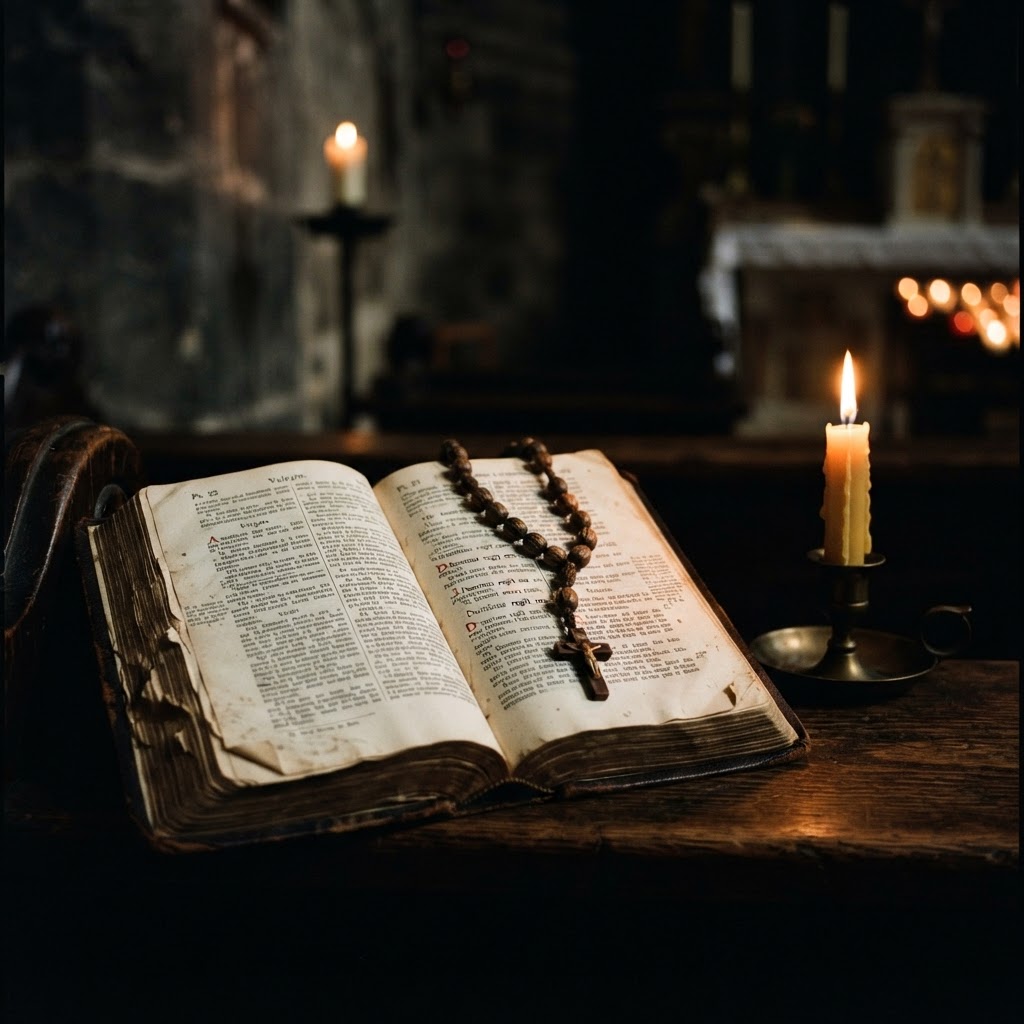
An open Bible with a wooden rosary and a beeswax candle in a darkened Catholic chapel, warm golden candlelight

Thy word is a lamp to my feet, and a light to my path.

Psalm 119:105

The Non-Negotiable Criteria

The Papal Documents That Measure Every Party

Some teachings the Church calls non-negotiable. A party's stance on these is not one among many issues - it is the first test of whether its platform is reconcilable with the faith.

The Gospel of Life

Evangelium Vitae (1995)

'The direct and voluntary killing of an innocent human being is always gravely immoral.' (EV 57)

Abortion and euthanasia are intrinsic evils no Catholic may formally cooperate with. This is the first test of any party: does it defend the inviolable dignity of every life, from conception to natural death?

Marriage & the Human Person

Familiaris Consortio (1981)Amoris Laetitia (2016)

'The family is the first and vital cell of society.' (FC 42)

The family founded on the marriage of man and woman is the domestic church and the measure of every anthropology. A party that redefines marriage, dissolves sex into ideology, or overrides parental rights strikes at the foundation of the social order.

Property, Subsidiarity & the Economic Order

Rerum Novarum (1891)Centesimus Annus (1991)

'The socialist error... does grave harm to the human person.' (CA 13)

Socialism's anthropological error is rejected; private property, subsidiarity, solidarity, and the moral limits of both market and state are affirmed. A party may not subordinate the person and the family to the collectivity.

Integral Ecology & Human Ecology

Caritas in Veritate (2009)Laudato Si' (2015)

'The book of nature and the book of humanity are one.' (Caritas in Veritate 51)

Care for creation is a real Catholic duty - inseparable from the dignity of the human person and the moral law. Benedict XVI teaches that a true 'human ecology' precedes environmental ecology: the family, the sanctity of life, and sexual morality come first (CV 48-51; Compendium of the Social Doctrine 451-487). Stewardship is owed to the Creator - it is never the secular climate cult, and it never binds Catholic conscience to disputed models and ideological alarmism.

The Line Against Collectivism (Socialism & Communism)

Quod Apostolici Muneris (1878)Rerum Novarum (1891)Quadragesimo Anno (1931)Divini Redemptoris (1937)Centesimus Annus (1991)

'No one can be at the same time a good Catholic and a true socialist.' (Quadragesimo Anno 120)

From Leo XIII onward the popes have condemned socialism and communism as a settled moral error, not a prudential policy preference. Rerum Novarum warns that the socialist remedy 'is against natural justice' because it destroys the family and property; Quadragesimo Anno calls it a mortal error and forbids a Catholic from being a socialist at the same time; Divini Redemptoris names atheistic communism an intrinsic evil and a fixed line no party may cross and remain reconcilable with the faith; Centesimus Annus confirms the diagnosis after the Wall fell - 'the socialist error... does grave harm to the human person' (CA 13). The test for any party is not its label but its programme: does it subordinate the person and the family to the state, seize or socialise property, dissolve subsidiarity, or centralise economic life in the bureaucracy? Democratic socialism and soft collectivism are the same error taken at a slower pace. A party that crosses this line fails the test of the social order itself.

The Sounder Catholic Framework

Benedict XVI on Creation: Human Ecology Before Environmental Ecology

Long before Laudato Si', Benedict XVI gave the Church a theologically rigorous ecology rooted not in climate modelling but in the human person. This is the Catholic teaching Metanoia Faith stands on.

"The book of nature is one and indivisible: it takes in not only the environment but also life, sexuality, marriage, the family, social relations: in a word, integral human development."

Caritas in Veritate 51 - Benedict XVI

The Church Has Always Taught

  • Creation is a good gift from God, entrusted to human stewardship and ordered to His praise (CCC 299; 339-345).
  • An authentic 'human ecology' precedes environmental ecology: the family, the sanctity of life, and sexual morality come first (Caritas in Veritate 48-51).
  • Nature is not divine; the Creator is never to be confused with creation (Compendium of the Social Doctrine 463).
  • Resources are entrusted to the human person for the common good, with a preferential concern for the poor (Compendium 481-484).
  • Stewardship is exercised through prudence, solidarity and subsidiarity - never through panic, guilt, or top-down coercion (Compendium 467-468).

She Refuses to Bind Conscience To

  • Binding Catholic conscience to disputed scientific models whose predictions have repeatedly failed.
  • Treating environmental concern as a 'new gospel' that replaces Christ and conversion with activism.
  • Eco-centrism and pantheism that dissolve the distinction between Creator and creation (Compendium 463).
  • Population-control and anti-natalist agendas dressed in environmental language (Caritas in Veritate 50).
  • Subordinating the human person - made in the image of God - to the biosphere as a 'cancer' or 'plague' on the earth.

The Documents to Stand On

Caritas in Veritate (2009) - Benedict XVI, nn. 48-51Compendium of the Social Doctrine of the Church, Ch. X (nn. 451-487)Catechism of the Catholic Church, nn. 339-345 & 2415-2418World Day of Peace 2010 - Benedict XVIWorld Day of Peace 1990 - St. John Paul IIGaudium et Spes, nn. 34 & 69

We do not stand on a single contested encyclical. We stand on Benedict XVI, the Compendium of the Social Doctrine of the Church, the Catechism, and the constant teaching of St. John Paul II - none of which depends on climate modelling that has repeatedly failed to predict the climate. Where Laudato Si' drifted into the assumptions and language of the age, this is the doctrinal anchor the Church already possesses.

The Church's Settlement with Socialism & Communism

The Line Against Collectivism

From Leo XIII to John Paul II the popes have condemned socialism and communism not as a bad idea but as a settled moral error. This is the second non-negotiable test for any party: does its programme subordinate the person and the family to the state, seize or socialise property, dissolve subsidiarity, or centralise economic life in the bureaucracy? Democratic socialism and soft collectivism are the same error taken at a slower pace.

The Fixed Line

"Whether considered as a doctrine, or an historical fact, or a movement, Socialism, if it remains truly Socialism — no one can be at the same time a good Catholic and a true socialist."

Quadragesimo Anno 120  |  Pius XI (1931)

The Encyclicals

A Settled Teaching, Not a Modern Opinion

1878

QAM

Quod Apostolici Muneris

Leo XIII

Leo XIII's first major encyclical against socialism. He condemns the 'mortal error' of socialists who 'despoil the living of their goods and the dead of their good name' and who aim to level the social order, dissolve property into the collectivity, and strike at the family as the foundation of the polis.

1891

RN

Rerum Novarum

Leo XIII

The charter of Catholic social teaching rejects the socialist remedy as 'against natural justice' because the state cannot do for the worker what the family, property, and voluntary association were made to do. Private property is affirmed as a natural right with the obligations of solidarity; the family, not the state, is the first society.

1931

QA

Quadragesimo Anno

Pius XI

The strongest line in the entire corpus: 'Whether considered as a doctrine, or an historical fact, or a movement, Socialism, if it remains truly Socialism... no one can be at the same time a good Catholic and a true socialist.' (QA 120). Pius distinguishes the legitimate concern for the worker from the collectivist error, and names subsidiarity as the structural principle that resists both the unbounded market and the unbounded state.

1937

DR

Divini Redemptoris

Pius XI

Atheistic communism is named as an intrinsic evil, 'intrinsically perverse', whose programme is 'a system full of errors and lies' that makes the person a mere means of production and bares the fields of the faith. Divini Redemptoris is the fixed line: a party that crosses it cannot be reconciled with the faith, however much it promises social justice.

1991

CA

Centesimus Annus

John Paul II

After the Wall fell, John Paul II confirmed the diagnosis: 'the socialist error... does grave harm to the human person' (CA 13) because it mistakes the human being as a bundle of needs and the state as the dispenser of satisfaction. He affirms the free economy ordered to the common good, and warns that the welfare state can reproduce the same error if it absorbs what the person, the family, and civil society are meant to do.

The Test Applied

Not the party label - the programme. Does it subordinate the person and the family to the state? Seize or socialise property? Dissolve subsidiarity? Centralise economic life in the bureaucracy? Democratic socialism and soft collectivism are the same error taken at a slower pace.

Measured Against the Line

How Each Party Stands Under the Anti-Collectivism Test

Greens

Crosses the Line in Principle

Stance: Wealth taxes, rent controls, socialised energy, centralised planning, abolition of the market economy and contraction of private ownership in the name of 'ecological justice'.

Encyclical reading. The line Divini Redemptoris and Centesimus Annus draw is crossed in principle. The Greens' programme is not property-ordered liberty but the collectivist redistribution of the same error the popes named. Economy and property categories already score at the floor; the encyclical line names why.

Labor

Partial - Tension With the Line

Stance: Honours labour and the poor (a real CCA merit) but carries a centralising drift: expanding state provision, weakening subsidiarity, top-down industrial and energy diktats, and redistributive strain on property and enterprise.

Encyclical reading. Not atheistic communism. But Quadragesimo Anno's warning against a state that absorbs what the family and civil society are made to do has live application. The Greens-alliance dynamic intensifies the pressure. A serious deficiency, not a line-crossing.

Liberal (Taylor Coalition)

Stands on the Rejection Side

Stance: Free enterprise, low and simple taxes, permanent instant asset write-off, debt discipline, subsidy restraint, and rejection of the collectivist climate-finance machine.

Encyclical reading. Closest among the parties to Centesimus Annus's vision of a free economy ordered to the common good. The remaining caution is that an unbounded market is not the answer either; but against the specific error the encyclicals name, the Liberal position stands on the rejection side.

Nationals

Partial - Tension With the Line

Stance: Agrarian subsidies and rural protection; defence of the family farm as the proper measure of the rural economy; sceptical of metropolitan capital.

Encyclical reading. Agrarian support is not the socialism the popes condemn - it concerns ownership, the stewardship of land, and the dignity of the small producer, all more Rerum Novarum than Marx. The qualification is that subsidy-dependence itself weakens the subsidiarity it is meant to protect.

One Nation

Partial - Tension With the Line

Stance: Economic populism and protection: tariffs and industry protection, foreign-ownership bans, fuel-excise cuts, interventionist cost-of-living relief.

Encyclical reading. Not collectivist at the level of doctrine - it defends property and small enterprise - but Centesimus Annus and Quadragesimo Anno also warn against the state 'fixing' the market by hand. One Nation's economic posture is prudential instinct, not principled, so it can cut either way; the test under the encyclical line is partial, not aligned.

Note on the ranking. The doctrinal ranking still orders the parties by voting record on the non-negotiables — life, family, religious liberty — where life and family carry first weight. The anti-collectivism test is the second non-negotiable; it does not displace the first, but where a party crosses it the resident economic and property scores already record the conflict. The Greens, whose programme crosses the line in principle, remain at the floor; Labor's centralising drift, not yet a crossing, sits in serious deficiency; the Liberal Party's free economy stands on the rejection side closest to Centesimus Annus's vision.

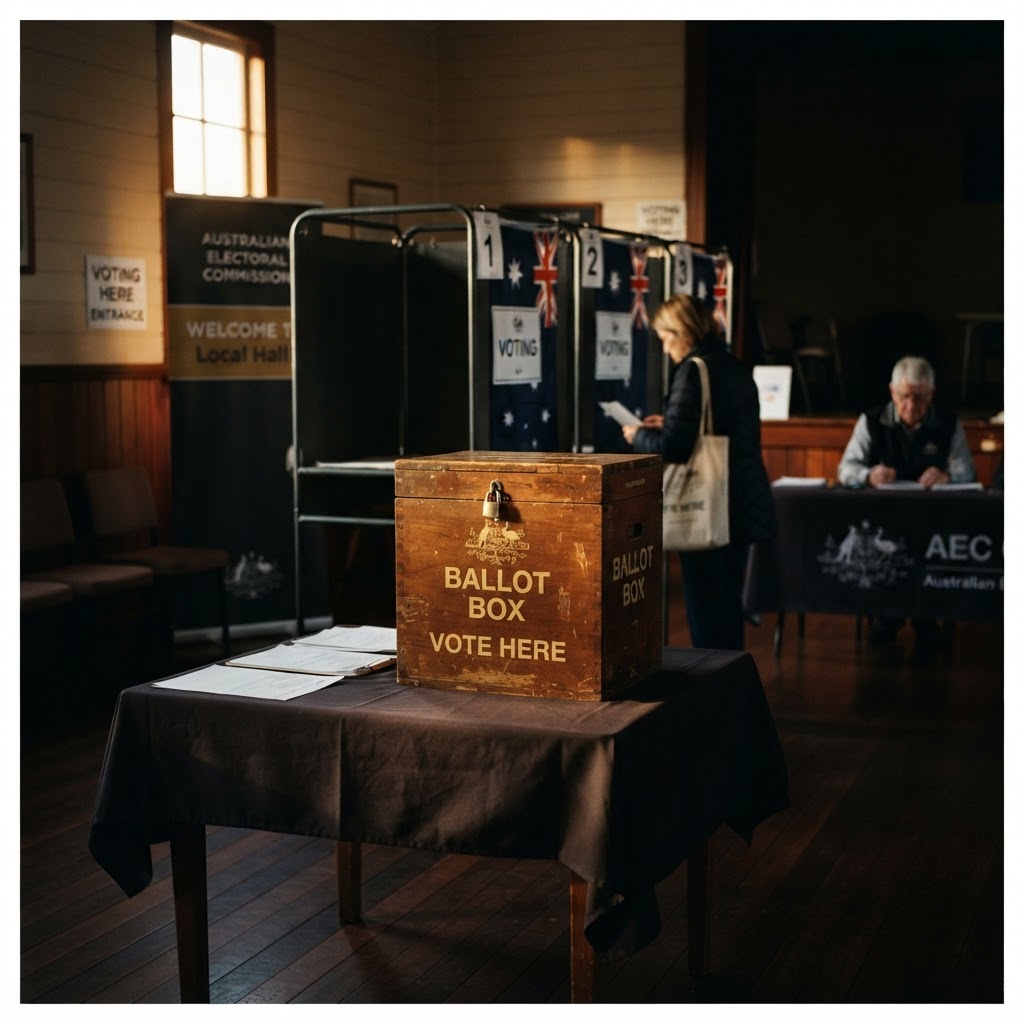
People across a civic square in golden hour light

The common good is the reason the political community exists.

Pacem in Terris - St. John XXIII

Voting Record & Alignment Scores

Measured by How They Actually Voted

These scores are drawn from actual parliamentary votes and consistent policy positions - not rhetoric - measured across four tests.

1

Religious Freedom & Faith-School Exemptions

Staffing, enrolment, and ethos protections for Catholic and other faith-based schools.

2

Marriage & the Natural Family

Defence of the definition of marriage as the permanent union of one man and one woman.

3

Gender Ideology & Parental Rights

Resistance to self-ID laws and curricula that dissolve biological sex and override parents.

4

The Church's Freedom to Operate

Legislation that restricts the Church's ability to act according to her doctrines.

Historical Voting Data Period2011-2026
Voting Record (headline) Current Platform+N Promise outruns fruit
1

Right-populist / nationalist; socially traditional

OneNation

Voting
80%
Platform
92%
Pledge outruns fruit+12
2

Christian democratic / social conservatism

AustralianChristians

Voting
72%
Platform
88%
Pledge outruns fruit+16
3

Agrarian conservatism; socially traditional

National Partyof Australia

Voting
70%
Platform
70%
Pledge matches fruit0
4

Classical Liberal / Free-Market Conservative (Taylor Coalition, 2026)

Liberal Partyof Australia

Voting
48%
Platform
72%
Pledge outruns fruit+24
5

Independent / progressive centrist - climate, integrity, 'progressive social values'

Teal Independents /Crossbench

Voting
20%
Platform
30%
Pledge outruns fruit+10
6

Social democracy; progressive social policy

Australian LaborParty

Voting
18%
Platform
30%
Pledge outruns fruit+12
7

Progressive Socialism

AustralianGreens

Voting
4%
Platform
8%
Pledge outruns fruit+4

Hansard Sources - Verify the Record Yourself

These scores draw on the actual parliamentary record. The official Parliament of Australia pages below let you read the bills, the debates, and the divisions for yourself.

Individual MPs can and do deviate from their party - always check the specific candidate's electorate and voting history on the Parliament of Australia site.

An empty Australian parliamentary chamber at dusk, a single shaft of golden light across the green leather benches

Do not be deceived; God is not mocked. Whatever a man sows, that he will also reap.

Galatians 6:7

Broader Patterns

Where Each Party Actually Stands

The same issues, the same parliamentary record - so the comparison is honest. Party labels matter less than the votes; always examine the specific candidate.

Issue
Strongest Defenders
Progressive Push
Traditional marriage definition
Australian Christians; Littleproud, Pitt, Broadbent, Katter; One Nation senators
Almost all Labor & Greens; majority of Liberals; teal independents
Religious-school exemptions (s 38(3))
Australian Christians; One Nation; most Nationals + conservative Liberals
Archer, Zimmerman, Martin, Allen, Sharma + Labor/Greens + teal independents (Pocock, Daniel, Ryan, Spender, Tink, Scamps, Chaney)
Resistance to gender ideology in education
Australian Christians; One Nation; many Nationals; conservative Liberals
Greens (most aggressive), Labor, Liberal moderates, teal independents
Overall religious-liberty package
Australian Christians; One Nation; Coalition conservatives
Labor, Greens, the Liberal floor-crossers, teal independents
Pro-life / defense of the unborn
Australian Christians (strongest platform); One Nation; some Nationals & conservative Liberals
Greens, Labor, teal independents (defend reproductive rights)

The Parties

Measured Against the Same Standard

Honest strengths. Serious deficiencies. The non-negotiables - life, family, the economic order, religious liberty - carry first weight.

1

Australian Christians

Christian democratic / social conservatism

Founded 2011 (WA), expanded NSW / Federal

Aligned with Church teaching

A confessionally Christian minor party dedicated to life, the natural family, religious liberty, and Christian-values education. Its platform is the most directly aligned with the non-negotiables of any party running in Australia, but its small parliamentary footprint means the platform outruns the fruit - the pledge is strong, the votes are few. The apostolate measures both honestly.

Voting
72%
Platform
88%
Talks more Catholic than it has voted.+16

Voting Record

  • WA Legislative Council - Palliative Care motion (2026). A motion on palliative care advanced by Australian Christians passed the WA Parliament in August 2026, a measured step toward the end-of-life support that upholds dignity without resorting to euthanasia.
  • Party platform - Pro Life (2011). Pro-life from conception to natural death is a binding platform position; all endorsed candidates pledge to vote accordingly where conscience or life bills arise.
  • Party platform - Family & Marriage (2011). Marriage defined as the union of one man and one woman; party candidates commit to defend the natural family and to oppose the progressive redefinition of marriage in any future plebiscite or amendment.Verify in Hansard
  • Religious Freedom & Christian Education (2011). The party's Religious Freedom position commits all endorsed MPs to protect faith-based schools, the freedom of the Church to preach, and the right of parents to form their children in the faith.
  • Federal electoral presence (2022). The party has contested Senate and lower-house seats without yet winning a federal seat; consequently its federal voting record is limited, and the platformScore carries the measure of its alignment.

Platform Highlights

  • Defend the sanctity and dignity of human life from conception to natural death (Australian Christians, Pro Life position).
  • Uphold marriage as the bond of union between one man and one woman, as husband and wife (Family position).
  • Defend freedom of religion, expression, worship, assembly, and thought (Religious Freedom position).
  • Implement a positive curriculum focused on core basics, including Judeo-Christian values (Education position).
  • Introduce ISP filtering on all devices to protect children from harmful content (Social position).
  • Improve housing affordability with zero stamp duty for eligible first home buyers and elderly downsizers (Economy position).
  • Champion regional and rural communities by endorsing regional AC candidates (Regional Australia position).
  • Wisely steward the environment God has given us (Environment position).
  • Work alongside First Nations to improve outcomes for Aboriginal communities and children (First Nations position).

Scored Across Five Categories

Politics & the Common Good4/5
Human Dignity & the Gospel of Life5/5
Economics & Labour3/5
Property & Universal Destination of Goods3/5
Individual Freedoms & Religious Liberty5/5

Where It Aligns

  • Unambiguous defense of the unborn from conception to natural death - the strongest pro-life platform in the field.
  • Defense of marriage as the union of one man and one woman, and of the natural family as the foundational cell of society.
  • Robust religious-liberty and religious-education platform, defending faith-based schools and parental rights.
  • Child-protection commitment (ISP content filtering) protecting the young from the predatory content economy.

Where It Conflicts

  • Small parliamentary footprint: platform is strong, but the votes of Australian Christians MPs are few, so the measured federal record is thinner than the pledge.
  • Limited experience of the burdens of executive government; its pro-family and pro-life instincts have not yet been tested by the compromises of office.
  • A broad single-issue tendency risks underweighting the full breadth of Catholic social teaching (economic ordering, immigration, the common good) beyond the non-negotiables.

Encyclical Assessment

Australian Christians offers the most confessionally Catholic-aligned platform among Australian parties: life from conception to natural death, marriage as the union of one man and one woman, robust religious liberty, and Christian-values education. In Evangelium Vitae and Familiaris Consortio terms its platform reads as a near-direct application of the non-negotiables. The honest qualification is parliamentary: a minor party without federal seats has cast few votes, so the fruit is thinner than the pledge. The apostolate credits the pledge fully while naming the gap - platformScore outranks votingScore precisely because the votes are few. A Catholic may support Australian Christians with a clear conscience where a candidate stands, crediting the platform without pretending to a legislative record the party has not yet had the numbers to build.

2

One Nation

Right-populist / nationalist; socially traditional

Founded 1997

Partial with Church teaching

A right-populist, nationalist party whose 2026 platform is written pro-life, pro-parent and pro-free-speech, opposes gender ideology and net-zero climate targets, and backs local industry - while its hard-line immigration stance and nationalist economics sit in tension with Catholic social teaching.

Voting
80%
Platform
92%
Talks more Catholic than it has voted.+12

Voting Record

  • Marriage Amendment (Definition and Religious Freedoms) Act, 2017 (2017). One Nation largely abstained on the marriage bill, having sought stronger religious-freedom protections that were already defeated in earlier amendments. The four explicit House 'No' votes came from Russell Broadbent (Lib, McMillan), Keith Pitt (Nat, Hinkler), David Littleproud (Nat, Maranoa) and Bob Katter (Kennedy).Verify in Hansard
  • Religious Discrimination Bill, 2022 (2022). Defended religious exemptions and the freedom of faith-based schools to maintain their ethos, opposing the progressive push to strip section 38(3) of the Sex Discrimination Act.Verify in Hansard
  • Current context (2025-2026) (2026). Barnaby Joyce (now One Nation, New England) carries a long Nationals record of seeking stronger religious protections during the 2017 debate and consistent social conservatism on family issues; his move to One Nation places him with the party currently scoring highest on these issues. One Nation senators and MPs continue to oppose gender-ideology expansions and defend religious institutions more consistently than the major parties.

Platform Highlights

  • Pro-life: roll back extreme late-term abortion laws, ban sex-selective abortion, restore doctors' conscientious objection to abortion, mandate care for babies born alive, and ban the harvesting of foetal organs.
  • Family law: support both fit parents' and grandparents' involvement in a child's life; a fairer child-support system; less adversarial court action.
  • Education: restore reading, writing, arithmetic and discipline; remove ideological 'Western/white/gender/guilt' shaming; defend merit and free inquiry.
  • Free speech: seek constitutional protection for free speech and repeal censorship and government speech controls.
  • Immigration: cap visas at 130,000/year, deport unlawful non-citizens, reintroduce Temporary Protection Visas, impose an 8-year welfare wait, and withdraw from the UN Refugee Convention.
  • Energy: withdraw from the Paris Agreement, end 'net zero' targets, back baseload coal, gas and nuclear, and aim to cut household power bills by 20%.
  • Cost of living: halve the fuel excise, raise the tax-free threshold for self-funded retirees, allow income splitting for families, and lift Medicare rebates.
  • Jobs & housing: a 75%-50%-25% apprenticeship wage subsidy and a five-year GST moratorium on new-home building materials.
  • Foreign ownership & farming: ban further foreign purchase of freehold farmland and keep essential services and housing off-limits to foreign investors.
  • Government waste: abolish the Department of Climate Change and the NIAA, withdraw from the UN/WHO/Paris Agreement, reform the NDIS, and target $90 billion in savings.

Scored Across Five Categories

Politics & the Common Good3/5
Human Dignity & the Gospel of Life4/5
Economics & Labour2/5
Property & Universal Destination of Goods3/5
Individual Freedoms & Religious Liberty5/5

Where It Aligns

  • Consistent opposition to the culture of death and to gender ideology - the two areas where the modern secular project most directly attacks the non-negotiables. The 2026 pro-life policy pledges to roll back extreme late-term abortion, ban sex-selective abortion, restore doctors' conscientious objection, and mandate care for babies born alive.
  • Defence of parental rights, free speech and conscience protects the domestic church and the Church's public witness; the free-speech policy seeks constitutional protection against censorship.
  • Education policy rejects ideological shaming and returns to discipline, merit and free inquiry - closer to the Church's vision of education ordered to truth and the parents' prior right.
  • Energy and climate policy rejects the net-zero alarmism the apostolate also identifies as a false gospel, backs reliable baseload power, and targets honest cost-of-living relief for families.

Where It Conflicts

  • The immigration posture is defensible at its prudential core - ordered integration, a measured intake, and the protection of the inherited moral and religious culture are stands the Church's own tradition, from Aquinas on the limits of toleration (Summa Theologiae II-II.10) to the memory of Lepanto and Vienna, does not condemn and may commend. The deficiency is not the policy but the manner: where rhetoric or implementation treats the migrant as an enemy rather than a person, it fails the charity and the dignity of the person that Pacem in Terris and Caritas in Veritate still require.
  • Nationalist framing can, at its edge, subordinate the universal common good to sectional interest. The Church honours a people's right to order its own common life and to prefer its own in care (Pius XII), yet not the absolutising of nation against the solidarity the faith still demands beyond the border.
  • Its energy platform is not a rejection of stewardship. Fossil-fuel baseload is advanced as a short-term fix for an acute crisis - surging data-centre demand that risks an unsustainable grid and the cost-of-living burden on households - while One Nation backs the lifting of Labor's nuclear moratorium to open clean nuclear power as the long-term answer. The remaining prudential question is whether the transitional reliance on coal and gas is clearly framed as a bridge to nuclear, rather than an end in itself; the lack of that explicit stewardship frame is the gap, not the underlying policy.
  • Positions are reactive and populist rather than rooted in Catholic social principles; the party has shown it can cut both ways, so consistency cannot be presumed.
  • The conduct of its office-holders - provocative rhetoric and parliamentary stunts - has frequently cut against the comity and stewardship of public office that Aquinas's regnative prudence (Summa Theologiae II-II.50) and the Compendium of the Social Doctrine require; spectacle is not statesmanship.

Encyclical Assessment

On the non-negotiables of life and family, One Nation currently stands closer to Catholic doctrine than any other party assessed here - and at the non-negotiable level the Church says these matter most. Its 2026 platform puts this in writing: rolling back extreme abortion, banning sex-selective abortion, restoring conscientious objection, defending parental rights, and rejecting gender-ideological shaming in schools, while seeking constitutional protection for free speech and opposing the net-zero 'false gospel' the apostolate also names. Its immigration posture, often read as the sharpest conflict, is in fact defensible at its prudential core: ordered integration, a measured intake, the protection of the inherited moral and religious culture, and the refusal of compacts that compromise the sovereignty of the polis are stands the Church's own tradition - from Aquinas on the limits of toleration (Summa Theologiae II-II.10) to the memory of Lepanto and Vienna - does not condemn and may commend. What the Church does measure is the manner: where rhetoric treats the migrant as enemy rather than person, or stunt replaces statesmanship, charity and the dignity of the person (Pacem in Terris; Caritas in Veritate) and the comity of office (Aquinas, regnative prudence, II-II.50) are strained. One Nation is not a Catholic party: its nationalism can tip into sectionalism, its economics are populist rather than principled, and its energy stance - a serious prudential case (short-term fossil baseload for the acute, data-centre-driven energy crisis and the cost-of-living burden, with the lifting of Labor's nuclear moratorium to open clean nuclear power as the long-term answer) - still needs to articulate the stewardship frame Benedict XVI's Human Ecology asks explicitly. At the ballot, a Catholic may credit its defence of the unborn and the family, its prudential caution on borders, and its honest energy realism, while refusing its excess and its inconsistency. Highest relative alignment here does not mean endorsement; it means least in conflict with the non-negotiables.

3

National Party of Australia

Agrarian conservatism; socially traditional

Founded 1918

Partial with Church teaching

The junior coalition partner representing rural and regional Australia; agrarian, socially traditional, and sceptical of metropolitan progressive social policy.

Voting
70%
Platform
70%
Pledge matches fruit.0

Voting Record

  • Marriage Amendment (Definition and Religious Freedoms) Act, 2017 (2017). Two of the four House 'No' votes were Nationals - Keith Pitt (Hinkler, Qld) and David Littleproud (Maranoa, Qld). Barnaby Joyce then led the Nationals but abstained; David Gillespie also declined to vote Yes.Verify in Hansard
  • Religious Discrimination Bill, 2022 (2022). The Nationals broadly defended the section 38(3) exemption and resisted the Sharkie amendment that the five Liberal floor-crossers carried 65-59. Without the National wing the package's religious guards would have had almost no defender.Verify in Hansard
  • Current context (2025-2026) (2026). Nationals MP Alison Penfold's 2026 private member's bill seeks to restore biological sex-based language and protections in the Sex Discrimination Act, reflecting continued National Party resistance to gender-ideology expansions; the Nationals' voting record on religious liberty and the family remains stronger than the Liberal wing's.

Platform Highlights

  • Rural infrastructure, water and agricultural policy, and regional services.
  • Generally socially conservative positions on life and family.
  • Distrust of urban progressive agendas; defence of regional communities and livelihoods.
  • Agrarian economic support, including subsidies and protection for primary producers.

Scored Across Five Categories

Politics & the Common Good3/5
Human Dignity & the Gospel of Life4/5
Economics & Labour2/5
Property & Universal Destination of Goods3/5
Individual Freedoms & Religious Liberty4/5

Where It Aligns

  • Social conservatism that more reliably defends life, marriage, and the family against metropolitan progressivism.
  • Rootedness in land, family, and community resonates with the dignity of rural labour and place.

Where It Conflicts

  • Agrarian socialism (subsidies, protection, state support for producers) jars the free-market and subsidy discipline of Centesimus Annus.
  • Populist and sectional posture can narrow the universal horizon of the common good and Catholic charity (Caritas in Veritate).
  • Consistency varies; positions often follow political expediency rather than principle.

Encyclical Assessment

The Nationals stand closer to the Church on the non-negotiables of life and family than their Coalition partners, and their rootedness in family and land echoes real Catholic themes. But their economics lean agrarian-socialist and sectional, straining the property and subsidiarity principles their rural constituents in fact depend upon. At their best they defend the family; at their worst they defend a region. Their alignment is partial and more credible on the non-negotiables than on the economic order.

4

Liberal Party of Australia

Classical Liberal / Free-Market Conservative (Taylor Coalition, 2026)

Founded 1944

Partial with Church teaching

The Liberal Party of Australia (Taylor Coalition, 2026) is the major party most aligned with the Church's economic teaching and the clearest opponent of Net Zero climate-alarmist policy - but it remains silent on the defence of the unborn, has not restored marriage, and failed the 2022 test of religious liberty for Catholic schools.

Voting
48%
Platform
72%
Talks more Catholic than it has voted.+24

Voting Record

  • Marriage Amendment (Definition and Religious Freedoms) Act, 2017 (2017). Russell Broadbent (McMillan, Vic) cast the only Liberal 'No' in the House. The other three No votes were Keith Pitt (Nat, Hinkler), David Littleproud (Nat, Maranoa) and Bob Katter (Kennedy). High-profile conservatives abstained - Tony Abbott, Barnaby Joyce, Scott Morrison, Kevin Andrews, Andrew Hastie, George Christensen (LNP), Michael Sukkar, Rick Wilson, Stuart Robert, Bert van Manen and others.Verify in Hansard
  • Religious Discrimination Bill, 2022 (2022). Five Liberal MPs crossed the floor for the Sharkie amendment stripping section 38(3) of the Sex Discrimination Act - Bridget Archer (Bass, Tas), Trent Zimmerman (North Sydney), Fiona Martin (Reid), Katie Allen (Higgins) and Dave Sharma (Wentworth). The amendment carried 65-59 and the government shelved the package; moderate Liberal senator Andrew Bragg was expected to oppose a weakened version in the Senate.Verify in Hansard

Platform Highlights

  • Scrap Net Zero mandates and the Safeguard Mechanism carbon tax; lift the ban on nuclear power; back affordable, reliable energy - coal, gas, hydro, nuclear and renewables 'in the right places' (Our Plan for Cheaper Power).
  • Double Australia's fuel reserves to 60 days; $800m Australian Fuel Security Facility; more Australian gas and oil for Australians - 'more digging, more drilling, more diesel' (Our Plan for Energy).
  • Tax Back Guarantee: index income-tax thresholds to inflation to end bracket creep; axe Labor's taxes on start-ups (CGT), trusts and negative gearing (Our Plan for Tax).
  • Permanent $50,000 instant asset write-off for small business (turnover under $10m); consult on a new Small Business Act; slash red tape (Our Plan for Tax).
  • Cap net overseas migration each year below the number of new homes completed; make Australian Values compliance a binding visa condition; Safe Country List; restore Temporary Protection Visas (Our Plan for Migration).
  • $5 billion Housing Infrastructure Fund to unlock up to 400,000 homes; First Home Buyers 5% Deposit reserved for citizens; axe the Housing Australia Future Fund (Our Plan for Migration).
  • Future Generations Fund: bank 80 cents of every dollar of windfall resource revenue to pay down the $1tn debt; speed limit on spending; restore the tax-to-GDP cap (Our Plan to Put Australians First).
  • Reserve 17 welfare payments and future NDIS eligibility for Australian citizens only from 1 July 2028, grandfathering existing recipients (Our Plan to Put Australians First).
  • At least 3% of GDP on defence; whole-of-government National Security Strategy; dedicated National Security Adviser; deliver AUKUS (Our Plan for Security).
  • $20 billion Regional Australia Future Fund; protect the Murray-Darling Basin; end Labor's water buybacks (Our Plan).

Scored Across Five Categories

Politics & the Common Good2/5
Human Dignity & the Gospel of Life2/5
Economics & Labour5/5
Property & Universal Destination of Goods4/5
Individual Freedoms & Religious Liberty2/5

Where It Aligns

  • Strongest economic alignment of any major party: free enterprise, low and simple taxes, private property, subsidiarity (small business, red-tape reduction) and disciplined spending to pay down debt - squarely in the line of Rerum Novarum, Quadragesimo Anno and Centesimus Annus.
  • The clearest break from climate-alarmist policy in the parliament: scrapping Net Zero mandates and the Safeguard Mechanism carbon tax, supporting affordable coal, gas and nuclear, and prioritising energy independence. This aligns with Benedict XVI's 'human ecology' (Caritas in Veritate 48-51) - the economy, jobs and families of real people are put before ideological green targets whose modelling has repeatedly failed.
  • Affirmation of national sovereignty and the common good ordered to the universal destination of goods: debt discipline, the Future Generations Fund, secure borders, and protecting the regional communities that 'fuel, feed and power' the nation (Pacem in Terris).
  • Family subsidiarity in childcare, health and aged care; backing educational basics (reading, writing, maths, attendance) and trades; encouraging work over welfare - consonant with Familiaris Consortio on the family as the first society.
  • Linking skilled migration to genuine need and to housing capacity, and requiring Australian Values compliance, are prudential judgments well within the Church's teaching on the common good and an ordered political community (Pacem in Terris).

Where It Conflicts

  • No coherent defense of the unborn. The platform is silent on abortion; the Liberal tradition treats it as a matter for individual conscience or the states. On the first non-negotiable - the Gospel of Life (Evangelium Vitae) - the Liberal Party remains in serious deficiency.
  • In 2017 the parliamentary Liberals voted overwhelmingly to redefine marriage; only Russell Broadbent voted No, while Abbott, Morrison, Andrews, Hastie and Christensen abstained. The 2026 platform does not commit to restoring marriage as the union of one man and one woman (Familiaris Consortio).
  • Weak on religious liberty: in 2022 five Liberal MPs (Archer, Zimmerman, Martin, Allen and Sharma) crossed the floor to strip the s 38(3) exemptions of faith-based schools, shelving the Religious Discrimination Bill. The current platform contains no Religious Discrimination Bill and no conscience protections for Catholic and other faith-based institutions (Pacem in Terris / Divini Redemptoris).
  • Silent on gender ideology and parental rights - no commitment to resist self-ID laws or to protect children from contested gender curricula.
  • The plan to reserve welfare and the NDIS to citizens, while fiscally prudential and grandfathered, must be measured against the universal destination of goods and the Church's insistence that the poor and the stranger are not to be abandoned (Compendium of the Social Doctrine 481-484).

Encyclical Assessment

The Liberal Party under Angus Taylor presents the strongest economic alignment of the major parties, and the clearest break from the green-ideological capture the Church names under Laudato Si'. Against Rerum Novarum, Quadragesimo Anno and Centesimus Annus it champions private property, free enterprise, a just tax burden, the dignity of small business, and the moral limits of state spending - paying down a trillion-dollar debt rather than loading it onto the next generation. Against Benedict XVI's 'human ecology' (Caritas in Veritate 48-51) it puts the economy, jobs and families of real Australians before Net Zero targets whose modelling has repeatedly failed; scrapping the Safeguard Mechanism carbon tax, lifting the nuclear ban, and restoring energy independence are, on Metanoia Faith's own standard, sound stewardship under the Creator rather than the secular climate cult. Yet on the non-negotiables the Liberal Party remains seriously deficient. It offers no coherent defense of the unborn (Evangelium Vitae); its 2017 majority voted to redefine marriage and its 2026 platform does not restore it (Familiaris Consortio); and its 2022 record on religious liberty - five Liberal MPs crossing the floor to strip the exemptions of faith-based schools - is a pivotal failure for Catholic education, uncorrected in the current platform. On Pacem in Terris and Divini Redemptoris its protection of sovereignty and security is commendable, but the freedom of the Church to operate according to her doctrine is not secured. A Catholic may credit the Liberal Party's economics and its resistance to climate alarmism; the defence of life, marriage and religious liberty is largely left to the conscience of the individual candidate. As always, examine the specific MP's record - the preferential vote lets the Catholic limit harm where no party is whole.

5

Australian Labor Party

Social democracy; progressive social policy

Founded 1901

Conflict with Church teaching

A social-democratic party of the labour movement, balancing workers' interests with socially progressive policy and a larger role for the state - and, in office, increasingly bound to the Greens, whose platform stands in direct opposition to Catholic teaching on life, family and religious liberty, so that legislation is consistently compromised in the pursuit and retention of power.

Voting
18%
Platform
30%
Talks more Catholic than it has voted.+12

Voting Record

  • Marriage Amendment (Definition and Religious Freedoms) Act, 2017 (2017). The Labor caucus voted almost uniformly Yes in the House; only in the Senate did Chris Ketter and Helen Polley record No votes. Dissenters within the party were offered no space to vote together against the bill.Verify in Hansard
  • Religious Discrimination Bill, 2022 (2022). Labor supported the Sharkie amendment removing section 38(3) of the Sex Discrimination Act, joining the five Liberal floor-crossers to carry it 65-59, and opposed the package in its religious-freedom form.Verify in Hansard
  • Ongoing pattern (2024). Consistent push to remove religious exemptions for Catholic and other faith-based schools and to embed gender-ideology curricula and self-identification law.
  • Greens alliance & power-bargaining (2026). In minority-Senate and preference arrangements Labor has repeatedly bargained with the Greens to hold office and pass legislation, yielding concessions on gender-ideology curricula, the stripping of religious-school exemptions, and the stalling of religious-discrimination law - the predictable price of staying allied to a party in direct opposition to Catholic teaching on life, family and religious liberty.

Platform Highlights

  • Strengthening workers' rights, wages, and public services (health, education).
  • Medicare-funded abortion access and reproductive rights; euthanasia a matter of conscience.
  • Support for the Voice, climate targets, and emissions reduction.
  • Redistributive tax-and-spend economic management.

Scored Across Five Categories

Politics & the Common Good2/5
Human Dignity & the Gospel of Life1/5
Economics & Labour2/5
Property & Universal Destination of Goods3/5
Individual Freedoms & Religious Liberty1/5

Where It Aligns

  • Historical defence of labour, the wage-earner, and the poor resonates with Rerum Novarum's core concern.
  • Protective social safety net and public healthcare can serve the common good and solidarity.

Where It Conflicts

  • Consistent expansion of abortion access (including late-term and Medicare-funded) places Labor in conflict with Evangelium Vitae.
  • In practice, progressive social policy on gender and family often outpaces any robust defence of the domestic church.
  • Economic tendency toward an enlarged, centralising state weakens subsidiarity.
  • Labor increasingly binds itself to the Greens to retain office and Senate numbers - a party whose platform stands in direct opposition to Catholic teaching on life, family and religious liberty, and, on the apostolate's measure, on the defence of the innocent and public order. Preference deals, Senate bargaining, and legislative trade-offs with the Greens turn a partial alignment into a structural one: power is preserved by conceding ground to a party the Church cannot bless.
  • The cost of that bargain is consistently compromised legislation. Concessions on gender-ideology curricula, the stripping of religious-school exemptions, the erosion of conscience protections, and the stalling of religious-discrimination law are the predictable price of staying allied to the Greens. Aquinas holds that the prudence of the ruler is ordered to the common good, never to the retention of office at the expense of the innocent (Summa Theologiae II-II.50; II-II.47 on prudence).

Encyclical Assessment

Labor carries the legitimate inheritance of Catholic social teaching on labour and the poor, but has chosen the culture of death on the non-negotiable of life and accepts the progressive anthropology on family. When its social-democratic impulse drifts toward collectivism, it strains against Centesimus Annus. The deeper structural failing is its binding to the Greens to keep power: a party in direct opposition to Catholic teaching on life, family and religious liberty, whose support Labor courts in the Senate and at the ballot, so that legislation is consistently compromised toward positions the Church condemns. Aquinas holds that regnative prudence is ordered to the common good, not to the retention of office at the cost of the innocent (Summa Theologiae II-II.50). A Catholic may honour Labor's pro-worker origins while refusing its systematic advancement of intrinsic evils and its Greens bargain; the preferential vote lets one credit the good without endorsing the whole.

6

Australian Greens

Progressive Socialism

Founded 1992

Conflict with Church teaching

The Greens advocate ecological justice, social equality, and progressive social policy, pursuing them through an expanded state and redistributive economics.

Voting
4%
Platform
8%
Talks more Catholic than it has voted.+4

Voting Record

  • Marriage Amendment (Definition and Religious Freedoms) Act, 2017 (2017). The Greens voted unanimously Yes - Adam Bandt (lower house) and all senators.Verify in Hansard
  • Religious Discrimination Bill, 2022 (2022). The Greens strongly supported removing section 38(3) of the Sex Discrimination Act and expanding progressive anti-discrimination measures.Verify in Hansard
  • Ongoing pattern (2024). Most aggressive party on gender ideology in education, self-identification law, and restricting the Church's freedom to operate according to her doctrines.

Platform Highlights

  • Strong climate and environmental action; rapid transition away from fossil fuels.
  • Expanding Medicare-funded abortion access and voluntary assisted dying (euthanasia).
  • Championing gender self-identification and progressive LGBTI+ policy.
  • Wealth taxes, rent caps, free tertiary education, and an enlarged public sector.

Scored Across Five Categories

Politics & the Common Good1/5
Human Dignity & the Gospel of Life1/5
Economics & Labour1/5
Property & Universal Destination of Goods1/5
Individual Freedoms & Religious Liberty2/5

Where It Aligns

  • Genuine concern for creation and the poor, which in principle echo Caritas in Veritate's call for integral human development.
  • Defence of refugees and the marginalised can witness to the universality of human dignity.

Where It Conflicts

  • Systematic advancement of the culture of death: abortion and euthanasia treated as rights, directly contrary to Evangelium Vitae.
  • Endorsement of gender ideology and the redefinition of the family, contrary to Familiaris Consortio and the Church's anthropology.
  • Economic program rooted in collectivism that strains against the private-property and subsidiarity principles of Rerum Novarum and Centesimus Annus.
  • Religious-liberty tensions where conscience conflicts with progressive orthodoxy.

Encyclical Assessment

Measured against the non-negotiables, the Greens consistently advance intrinsic evils the Church names as such: abortion, euthanasia, and the ideological reconfiguration of the human person and the family. Their ecological concern, however sincerely held, is severed from the moral law that alone can ground an integral ecology, and their economic program leans toward the collectivist error the popes have repeatedly condemned. A Catholic may support particular Greens policies (care for creation, the poor) without supporting the platform; a Catholic cannot in good conscience give the platform systemic support.

7

Teal Independents / Crossbench

Independent / progressive centrist - climate, integrity, 'progressive social values'

Founded 2022 election (community independents movement)

Conflict with Church teaching

A loose movement of community independents elected from affluent inner-suburban seats in 2022, speaking the language of integrity, climate action, and a 'progressive social values' conscience. Their voting pattern, however, tracks the progressive consensus: they voted to strip religious-school exemptions in the 2022 Religious Discrimination Bill, supported the COVID emergency and mandate framework, and have not advanced conscience protections as a crossbench priority. The rhetoric is centrist; the votes are progressive.

Voting
20%
Platform
30%
Talks more Catholic than it has voted.+10

Voting Record

  • Religious Discrimination Bill, 2022 (2022). The independents including David Pocock, Zoe Daniel, Monique Ryan, Allegra Spender, Kylea Tink, Sophie Scamps and Kate Chaney voted with Labor and the five Liberal floor-crossers to remove section 38(3) of the Sex Discrimination Act - the long-standing protection for religious schools to staff in accordance with their faith.Verify in Hansard
  • Biosecurity Act emergency determinations / COVID framework (2021). During the 2021-2022 emergency extensions the independents broadly supported the public-health order framework; Senator David Pocock supported the retention of mandate regimes for healthcare and aged-care workers and did not move a conscience exception.
  • Reproductive rights / abortion access (2022). The running platform of several teal MPs commits to defend and expand reproductive rights; no teal MP has advanced the protection of the unborn as a crossbench priority.
  • Religious Discrimination Bill reintroduction pressure (2024). Into 2024-2026 the crossbench called for a Religious Discrimination Bill while pairing it with the removal of the remaining religious-school exemptions, making the bill conditional on a progressive outcome the Church cannot bless.Verify in Hansard

Platform Highlights

  • Climate action and Net Zero emissions targets; the integrity-commission and federal anti-corruption agenda.
  • 'Progressive social values' on reproductive rights, gender identity, and the definition of the family.
  • Political-integrity reform, parliamentary transparency, and donations overhaul.
  • Conscience exceptions to medical mandates not advanced as a crossbench priority.

Scored Across Five Categories

Politics & the Common Good3/5
Human Dignity & the Gospel of Life1/5
Economics & Labour2/5
Property & Universal Destination of Goods2/5
Individual Freedoms & Religious Liberty1/5

Where It Aligns

  • Integrity and anti-corruption advocacy can serve the common good and the proper accountability of government.
  • Some concern for climate stewardship, though the policy is the alarmist Net Zero framework rather than a Human Ecology approach.
  • Independence from party machines frees the conscience to vote outside party lines on individual questions.

Where It Conflicts

  • Voted to strip religious-school exemptions in 2022 - placing progressive anti-discrimination goals ahead of the freedom of Catholic and other faith-based schools to staff in their faith.
  • No crossbench priority to restore conscience as a protected ground for medical refusal during the COVID mandate era.
  • 'Progressive social values' on reproductive rights and gender identity conflict with Evangelium Vitae and the Church's anthropology of the body.
  • Net Zero climate-alarmist policy conflicts with the Human Ecology frame and centrist economic prudence.
  • Large gap between stated civil-libertarian integrity rhetoric and the actual COVID-voting and conscience record.

Encyclical Assessment

The teal and independent crossbench speaks often of integrity, transparency, and human rights, but on the specific questions that measure a Catholic platform - life, the family, religious liberty, and conscience - its votes largely track the progressive consensus. The 2022 vote to strip religious-school exemptions, the support for reproductive rights, and the silence on medical-conscience exceptions during the COVID mandates reveal a gap between the stated civil-libertarian posture and the actual record. The apostolate credits the genuine integrity-reform impulse while naming the conflict: on the non-negotiables the crossbench votes with the culture that opposes the Church, not with the Church that formed the culture.

A worn Holy Bible and wooden cross resting on a folded Australian flag on a dark timber table, soft window light

We must obey God rather than men.

Acts 5:29

Current Federal Status (August 2026)

The Religious Discrimination Bill

The 2022 vote remains the clearest federal test - and the bill it concerned has not become law. Here is where the legislation actually stands.

There is no federal Religious Discrimination Act in force. The main bill remains shelved and has not become law.

Morrison Government (2021-2022)

  • The Religious Discrimination Bill 2021 (with related bills) was introduced to create standalone protections against discrimination on the ground of religious belief or activity.
  • It passed the House of Representatives in the early hours of 10 February 2022 after a marathon debate.
  • During that debate five Liberal MPs crossed the floor and, with Labor and the crossbench, forced amendments removing or severely limiting the long-standing exemptions for religious schools under the Sex Discrimination Act (section 38(3)).
  • The Morrison government then withdrew the package rather than send the weakened version to the Senate. The bill lapsed.

Albanese Labor Government (2022-present)

  • Labor has not reintroduced or passed a comprehensive Religious Discrimination Bill.
  • Prime Minister Anthony Albanese has repeatedly stated the government will only progress such legislation with broad, bipartisan support.
  • In 2024-2025 draft material was prepared and consultations held with faith groups, but Mr Albanese publicly ruled out proceeding while social cohesion was under pressure, saying Australia did not need 'a divisive debate about religion.'
  • As of 2026 the government maintains this position. Official responses to parliamentary reports on the 2021 bill note the passage of time and reiterate the need for a unifying, bipartisan approach.
  • Related work (e.g., Australian Law Reform Commission recommendations on religious educational institutions) has not produced legislation creating positive religious-discrimination protections.

The Current Legal Reality

  • Australia still lacks a dedicated federal law comprehensively prohibiting discrimination on the ground of religious belief or activity in the way other attributes (race, sex, disability, age, sexual orientation, gender identity) are protected.
  • Existing protections are incomplete and scattered across the Fair Work Act, general anti-discrimination principles, and state and territory laws.
  • Faith-based schools continue to rely primarily on the remaining federal exemptions in the Sex Discrimination Act, which themselves remain under political pressure.

Bottom line: The Religious Discrimination Bill is effectively dead in its previous form. No new comprehensive federal religious-discrimination legislation has been enacted, and the Albanese government has made clear it will not advance one without broad cross-party agreement.

Source: Australian Parliament Hansard; official government responses to parliamentary reports on the Religious Discrimination Bill 2021; public statements by the Prime Minister, 2024-2026.

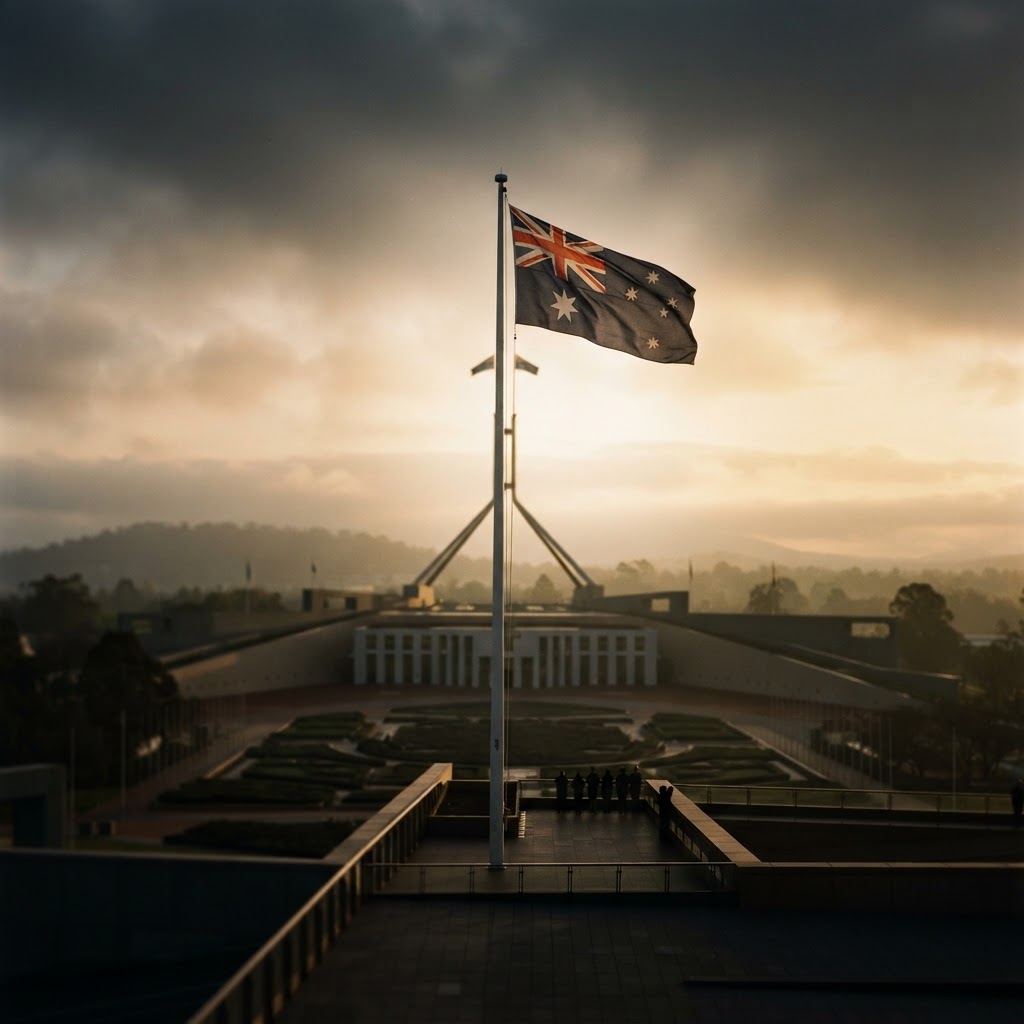
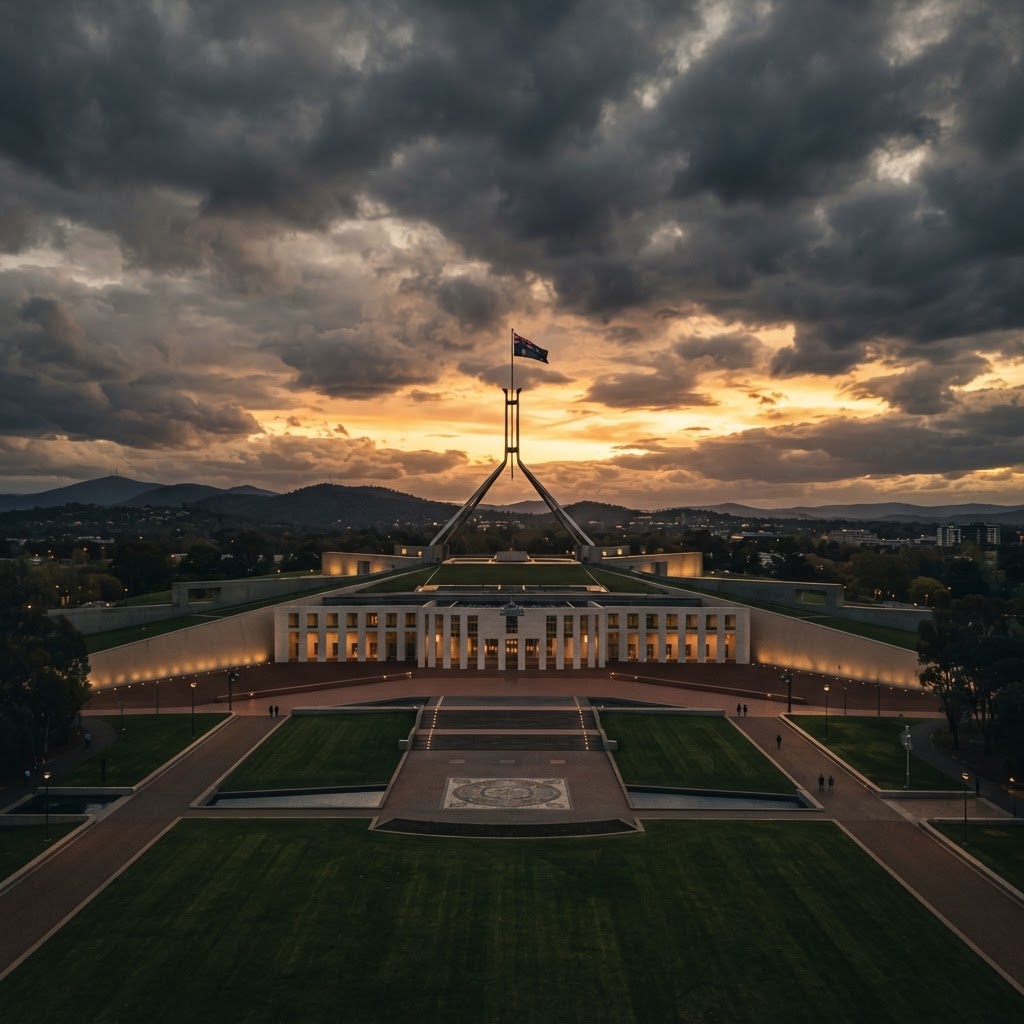
Australian Parliament House in Canberra at dusk

Let every person be subject to the governing authorities. For there is no authority except from God.

Romans 13:1

State & Territory Overview (August 2026)

Religious Discrimination Laws Across Australia

Australia has no uniform national religious-discrimination law. Protections and restrictions are set primarily at state and territory level, creating significant variation. Two issues matter most for Catholic institutions: positive protection of religious belief, and the institutional exemptions that allow churches, Catholic schools, and religious organisations to prefer staff and operate according to their doctrines - especially on marriage, sexuality, and gender.

Victoria

Most restrictive

Protected: Yes - religious belief or activity

Exemptions: Heavily restricted (2021 reforms). Schools can generally only discriminate on the ground of religious belief, not sexual orientation or gender identity for students or most staff.

ACT

Highly restrictive

Protected: Yes

Exemptions: Narrow. Significant limitations on religious schools and organisations regarding sexual orientation and gender identity.

Tasmania

Highly restrictive

Protected: Yes

Exemptions: Among the narrowest in Australia. Religious educational institutions may generally discriminate only on the ground of religious belief, affiliation, or activity - and only where it is a genuine occupational qualification or necessary to conduct the institution according to its tenets. The Act does NOT permit discrimination against students or staff on sexual orientation, gender identity, marital or relationship status. Cited with Victoria (post-2021) and the ACT as strongest protection for LGBTQ people against discrimination by religious schools.

South Australia

Mixed / intermediate

Protected: Limited / partial (mainly religious appearance or dress, not a full protected attribute)

Exemptions: Mixed / ambiguous. Students are protected from discrimination on sexual orientation and gender identity (s 37). A broad general religious bodies exemption (s 50) permits discrimination that 'conforms with the precepts of that religion or is necessary to avoid injury to the religious susceptibilities of adherents' - but its reach to religious schools (especially re: students) is contested. Teacher/employment exemptions are more limited. Private member bills have sought to narrow the religious bodies exemption further.

Queensland

Moderately restrictive

Protected: Yes

Exemptions: Mixed / under ongoing pressure. Some exemptions remain for religious educational institutions.

New South Wales

Relatively more protective

Protected: Limited (mainly 'ethno-religious origin'; broader religious vilification protections exist)

Exemptions: Broader exemptions still in place for religious schools and bodies.

Western Australia

Currently the least restrictive major jurisdiction

Protected: Yes (religious conviction)

Exemptions: Relatively broad exemptions remain in force (ss 66, 72, 73) allowing religious educational institutions and bodies to discriminate in good faith to adhere to the doctrines, tenets, or beliefs of the religion, or to avoid injury to the religious susceptibilities of adherents. Greater freedom to prefer staff and form communities consistent with ethos than more restrictive states. The WA Law Reform Commission recommended narrowing toward an 'inherent requirements' test; the Cook Labor Government has flagged reform as a 2026 priority, but no major narrowing has yet been enacted.

Northern Territory

More protective after recent changes

Protected: Yes

Exemptions: Broader exemptions recently restored (2025) by the Country Liberal government, allowing religious schools to hire on the basis of faith.

Conversion-practices bans

'Change or suppression' bans further constrain pastoral care, prayer, and counselling in Victoria, the ACT, NSW, and South Australia - a direct pressure on the Church's pastoral and sacramental freedom, on top of the staffing and enrolment constraints above.

Most restrictive for Catholic schools & churches

Victoria, followed by the ACT and Tasmania. These jurisdictions have narrowed or removed the ability of faith-based schools to maintain a coherent religious ethos in staffing and enrolment on matters of sexual morality and gender.

Least restrictive

Western Australia (currently), followed by New South Wales and the Northern Territory (after 2025 reforms).

Updated Comparative Ranking (August 2026)

Religious School / Institutional Freedom - Most to Least Restrictive

1

Victoria

Most restrictive

Most restricted (post-2021 reforms). Schools can generally only discriminate on the ground of religious belief, not sexual orientation or gender identity, for students or most staff.

2

Tasmania

Most restrictive

Very narrow exemptions - discrimination only on religious belief/affiliation/activity itself; no religious school discrimination on sexual orientation, gender identity, or marital status.

3

ACT

Most restrictive

Highly restricted. Significant limitations on religious schools and organisations regarding sexual orientation and gender identity.

4

Queensland

Intermediate

Intermediate. Strong student protections plus a limited genuine occupational requirement test for staff (s 25 Anti-Discrimination Act).

5

South Australia

Intermediate

Mixed / intermediate. S 50 religious bodies exemption remains broad but contested; broader student protections than NSW or WA; religion only partially protected.

6

New South Wales

Least restrictive

Broader exemptions still in place for private educational authorities (s 38 Sex Discrimination Act and state provisions).

7

Western Australia

Least restrictive

Currently among the least restrictive (ss 66, 72, 73). Widest remaining legal space for faith-based schools to operate by Catholic teaching - pending possible 2026 Cook Government reform toward an inherent-requirements test.

Key takeaway for Catholic analysis: WA currently offers the widest remaining legal space among the major states for faith-based schools to operate according to Catholic teaching on marriage, sexuality, and the formation of a coherent community. Tasmania sits at the opposite end, with exemptions largely confined to religious belief itself. SA occupies an intermediate and somewhat unsettled middle ground. Any future WA reforms moving toward an inherent-requirements model would significantly shift the national landscape.

Most states protect individuals from discrimination on the ground of their own religious belief to some degree. The bigger practical issue for the Church is the shrinking of the institutional exemptions that allow Catholic schools and agencies to operate according to Catholic teaching.

Practical Implications for Catholics

  • A Catholic school's legal ability to prefer practising Catholic staff, or to form a community consistent with Church teaching on marriage and gender, varies dramatically depending on the state.
  • Victoria remains the clearest example of a jurisdiction where progressive anti-discrimination reforms have significantly limited religious institutional freedom.
  • Western Australia currently offers the widest remaining space, though reform pressure exists.
  • Because federal law still contains broader exemptions under the Sex Discrimination Act, conflicts between state and federal law continue to create legal uncertainty.
  • These differences explain why the voting records of state MPs and parties on anti-discrimination amendments, school exemptions, and conversion-practices legislation are highly relevant when assessing alignment with Catholic teaching on religious liberty and education.

Source: State and territory anti-discrimination and equal-opportunity legislation (as at August 2026); public statements and reform proposals from respective state governments.

A Direct Comparison

Victoria vs Queensland vs New South Wales

Why is Victoria the most restrictive jurisdiction for Catholic institutional practice, NSW the least, and Queensland the middle path? Three legislative traditions over 2002-2022 tell the story.

Victoria - Most Restrictive

Equal Opportunity (Religious Exceptions) Amendment Act 2021

Passed December 2021. Most provisions commenced mid-2022 (14 June), with government-funded services provisions in December 2022.

Key Changes

  • Religious educational institutions (Catholic and other faith-based schools) can now discriminate in employment only on the ground of a person's religious belief or activity.
  • Even then, three strict conditions must apply: (1) conformity with the religion's doctrines must be an inherent requirement of the specific job; (2) the person cannot meet that requirement because of their religious belief/activity; (3) the discrimination must be reasonable and proportionate.
  • Schools cannot discriminate against staff or students on sexual orientation, gender identity, marital status, parental status, or lawful sexual activity under the religious exceptions.
  • Religious bodies receiving Victorian government funding face similar tight limits when providing goods or services.

A deliberate and significant narrowing of the previous broader exemptions. It substantially reduced the legal ability of Catholic schools to prefer staff who support Church teaching on marriage, sexuality, and gender, or to maintain enrolment and community expectations consistent with Catholic doctrine.

Queensland - Intermediate

Anti-Discrimination Act 1991 (Qld)

Sits between Victoria's 2021 reforms and NSW's broader exemptions. Student protections date from the 2002 reforms.

Current Framework

  • Schools may operate wholly or mainly for students of a particular religion and may exclude prospective students not of that religion at the point of enrolment.
  • Once enrolled, there is no special exemption allowing the school to discriminate against a student on sexuality, gender identity, relationship status, or similar attributes - a protection in place since the 2002 reforms.
  • Staffing exemptions are narrower than NSW's broad private-educational-authority model: a school may require staff to act consistently with its religious beliefs only where it is a genuine occupational requirement of the role, the staff member openly acts inconsistently with those beliefs, and the school's response is not unreasonable.
  • There are general exemptions for bodies established for religious purposes (ordination, training of clergy, acts done in accordance with doctrine and necessary to avoid offending religious sensitivities), but they do not extend as broadly into work and education as the older exemptions Victoria removed.

Queensland has long provided stronger protection for enrolled students than NSW, while applying a genuine-occupational-requirement test for staff that is narrower than NSW's broad exemptions but still allows religious schools more latitude than Victoria does after 2021.

New South Wales - Most Protective

Anti-Discrimination Act 1977 (NSW)

NSW did not pass equivalent reforms in 2021 or 2022 that narrowed religious school exemptions.

Current Framework

  • Broader exemptions remain in place under the Anti-Discrimination Act 1977 for 'private educational authorities' (which include religious schools).
  • These exemptions continue to allow religious schools to discriminate on grounds including homosexuality and transgender status in relation to both students and staff.
  • There is no 'inherent requirements' or 'reasonable and proportionate' test of the kind introduced in Victoria.
  • NSW has never fully protected 'religious belief or activity' as a general protected attribute in the same comprehensive way as some other states; protection is more limited and often linked to ethno-religious origin or vilification provisions.

Related Activity

  • A 2020 private member's bill (Anti-Discrimination Amendment (Religious Freedoms and Equality) Bill) sought to add positive protections against religious discrimination and strengthen religious institutional rights. It did not pass in a form that restricted school exemptions.
  • A formal review of the entire Anti-Discrimination Act 1977 by the NSW Law Reform Commission was announced later (around 2023) and remains ongoing.
  • NSW later enacted a Conversion Practices Ban Act (2024), a separate issue from school employment/enrolment exemptions.

Side by Side

Direct Comparison

Direction of reform

Victoria: Significant narrowing of exemptions (2021)

Queensland: Long-standing intermediate posture (since 2002 student protections)

NSW: No equivalent narrowing

Students - enrolment

Victoria: Limited to religious belief (strict conditions)

Queensland: May prefer students of the school's religion

NSW: Broad exemptions for private educational authorities

Students - once enrolled

Victoria: Strong protection (religious-belief-only)

Queensland: Strong protection (no SOGI exemption for enrolled students)

NSW: Broader exemptions remain

Staff employment

Victoria: Religious belief + inherent requirement + proportionality

Queensland: Limited 'genuine occupational requirement' test

NSW: Broader exemptions for private educational authorities

Sexual orientation / gender identity

Victoria: No longer a lawful ground for religious schools

Queensland: Protected for enrolled students; narrower staff test than NSW

NSW: Still covered by private-educational-authority exemptions

Overall for Catholic schools

Victoria: Most restrictive

Queensland: Intermediate

NSW: Least restrictive of the three

Summary

Victoria's 2021 reforms actively restricted the freedom of religious schools to operate according to their doctrines on sexuality and gender. New South Wales did not enact comparable restrictions and retained significantly broader exemptions for private (including religious) educational authorities. Queensland has long occupied the middle position: more protective of LGBTQ students once enrolled than NSW, while still allowing religious schools more latitude in staffing than Victoria does after its 2021 reforms - a genuine-occupational-requirement test narrower than NSW, but not the inherent-requirements-and-proportionality straitjacket of Victoria.

Deeper Analysis

Queensland's Genuine Occupational Requirement Test

The middle ground is set in statute. Section 25 of the Anti-Discrimination Act 1991 (Qld) gives religious schools a real but limited power to staff according to their ethos - more workable than Victoria, narrower than NSW.

Statutory Basis - s 25, Anti-Discrimination Act 1991 (Qld)

The general rule (s 25(1)) lets an employer impose genuine occupational requirements for a position. One of the statutory examples is \"employing persons of a particular religion to teach in a school established for students of the particular religion\". The specific rule for religious educational institutions and religious bodies (s 25(2)–(3)) applies to work for a body established for religious purposes, or other work where the role genuinely and necessarily involves adhering to and communicating the body's religious beliefs.

Discrimination is not unlawful where all three conditions are met:

  • 1The person openly acts in a way they know, or ought reasonably to know, is contrary to the employer's religious beliefs - during a selection process, in the course of their work, or in doing something connected with their work;
  • 2It is a genuine occupational requirement that the person, in the course of or in connection with the work, act consistently with the employer's religious beliefs; and
  • 3The discrimination is not unreasonable.

Unreasonableness factors (s 25(5))

Whether the action is not unreasonable depends on all the circumstances - including whether the action taken (or proposed) is harsh, unjust or disproportionate to the person's conduct, and the consequences for both the person and the employer if the discrimination occurs or does not occur.

Key Elements

What the Test Requires

Open conduct

Requirement: Must be open and known (or ought reasonably to be known)

Effect: Private sexual orientation or beliefs alone are generally not enough. The person must openly act contrary to the school's religious beliefs in a work-connected way.

Genuine occupational requirement

Requirement: Must be essential to the role in the context of the religious ethos

Effect: Schools can argue that modelling and supporting the school's faith - including on marriage and sexuality - is integral to many teaching and leadership roles.

Reasonableness / proportionality

Requirement: Action must not be harsh, unjust or disproportionate

Effect: Provides a safeguard. Extreme or purely punitive responses are less likely to be protected by the exemption.

Connection to work

Requirement: Conduct must occur during selection, at work, or be connected with work

Effect: Limits how far schools can police purely private life.

Compared with Victoria (post-2021)

Queensland's test is more workable for religious schools. Victoria largely confines discrimination to the single ground of religious belief and imposes a strict inherent-requirements + reasonable-and-proportionate test. Queensland focuses on open contrary conduct and allows a broader genuine-occupational-requirement argument.

Compared with NSW

Queensland is narrower. NSW still has broader exemptions for private educational authorities that do not require proof of open contrary conduct or a genuine occupational requirement in the same way.

Practical Implications for Catholic Schools in Queensland

  • Schools can lawfully prefer staff who support the Catholic ethos and can take action where a staff member openly acts contrary to that ethos in a work-related context - provided the requirement is genuine and the response is not unreasonable.
  • Purely private attributes (e.g. sexual orientation in itself) are harder to rely on without open conduct connected to the work.
  • Modelling and communicating the faith is reasonably arguable as a genuine occupational requirement for teaching and leadership roles, giving Catholic schools meaningful (though not unlimited) latitude to form a community consistent with Church teaching.
  • The reasonableness safeguard means disproportionate or punitive action risks falling outside the exemption - the prudent path is clear expectations, good process, and proportionate response.

Reform Status (as at 2026)

The test has been the subject of controversy - notably the 2022 Citipointe Christian College employment contract debate - with critics arguing it still enables discrimination on sexuality-related grounds when framed as conduct inconsistent with religious beliefs. The Queensland Human Rights Commission's Building Belonging review proposed narrowing or replacing the test, but as of 2026 those broader reforms have been delayed.

Overall assessment: the Queensland genuine-occupational-requirement test occupies the middle position. It gives religious schools more latitude than Victoria, while imposing clearer limits (open conduct + genuineness + reasonableness) than the broader exemptions still available in New South Wales.

Scrutinised Against Catholic Moral Teaching

Surrogacy in Australia - WA Reform & the National Picture

Western Australia's 2025 reform brought the state into closer alignment with the rest of the nation on surrogacy. The apostolate records the legal movement - and holds every jurisdiction's law against the Church's understanding of the dignity of the child, the meaning of marriage, and the rights at stake when life is commissioned.

Western Australia - Assisted Reproductive Technology and Surrogacy Act 2025

A Major Reform Bringing WA Into Line

3 December 2025

Assisted Reproductive Technology and Surrogacy Act 2025 (ARTS Act) passed both Houses of the WA Parliament with Labor government support.

18 December 2025

Royal Assent given.

Mid-2027 (expected)

Commencement following an ~18-month implementation period for regulations, guidelines and operational supports. Until then the Surrogacy Act 2008, Human Reproductive Technology Act 1991 and Artificial Conception Act 1985 remain in force.

Key changes under the new Act

  • Removes previous barriers that effectively restricted altruistic surrogacy largely to heterosexual couples with a medical need.
  • Opens access to same-sex couples, single people, and others regardless of sexual orientation, gender identity, or relationship status.
  • Removes the requirement for prior Reproductive Technology Council (RTC) approval for surrogacy arrangements.
  • Allows fertility clinics to advertise and help connect intended parents with potential altruistic surrogates.
  • Retains and strengthens the ban on commercial surrogacy, with expanded penalties for commercial arrangements, agreements, or recruitment for reward.
  • Lowers certain age thresholds (e.g. the minimum age for a surrogate).
  • Emphasises the best interests of the child, counselling, and legal-advice requirements.
  • Creates a more unified framework covering both ART and surrogacy.

Prior to the reform (and court challenges), WA was the last jurisdiction to maintain significant restrictions that excluded many same-sex couples and single men from altruistic surrogacy.

The National Picture

All States & Territories, As of 2026

Common Features Across Australia

  • Only altruistic surrogacy is legal - reimbursement of reasonable expenses only (medical costs, lost earnings related to the pregnancy, etc.).
  • Commercial surrogacy is prohibited everywhere; payment or reward beyond reasonable expenses is a criminal offence.
  • NSW, Queensland and the ACT make it an offence for their residents to engage in commercial surrogacy even overseas.
  • Legal parentage is transferred via court order after the birth (the surrogate is the legal mother at birth until transfer is completed).
  • Requirements typically include counselling, independent legal advice, written agreements, and (in many places) a demonstrated medical or social need.

NSW

Altruistic only. Strong extraterritorial ban on commercial surrogacy for residents.

Victoria

Altruistic only. Relatively detailed regulatory framework.

Queensland

Altruistic only. Extraterritorial commercial ban for residents.

Western Australia

Altruistic only; post-2025 reform opens broader access, full effect mid-2027.

South Australia

Altruistic only. Allows single intended parents in recent frameworks.

Tasmania

Altruistic only. Some residency restrictions on surrogates.

ACT

Altruistic only. Extraterritorial commercial ban for residents. Relatively streamlined in some respects.

Northern Territory

Altruistic surrogacy now regulated (Surrogacy Act 2022).

A national review by the Australian Law Reform Commission is underway, with a report expected in 2026. The stated goal is greater consistency while protecting the rights of the child, the surrogate, and intended parents.

Scrutiny Against Catholic Moral Teaching

The Church's Consistent Judgment

Catholic teaching on surrogacy is clear, consistent, and rooted in the Church's understanding of the dignity of the human person, marriage, and the transmission of life.

Donum Vitae (1987)

Congregation for the Doctrine of the Faith

The child has the right to be conceived and born within marriage through the personal and exclusive act of the spouses. Surrogacy introduces a third party into the generation of human life and separates procreation from the marital union.

Dignitas Personae (2008)

Congregation for the Doctrine of the Faith

Reaffirms that techniques which replace the marital act or instrumentalise the body in the generation of life are contrary to the dignity of the person and the unity of the spouses.

Catechism of the Catholic Church nn. 2376-2377

Full Magisterium

Techniques that entail the dissociation of husband and wife by intrusion of a person other than the couple are gravely illicit. Surrogacy represents an objective failure to meet the obligations of maternal fidelity and conjugal generosity.

Familiaris Consortio (1981)

St. John Paul II

Teaches on the family as the sanctuary of life and the inalienable rights of the child to be born of a father and mother known to each other and united in marriage.

Key Principles Applied

  • The child has the right to be conceived and born within marriage through the personal and exclusive act of the spouses.
  • Surrogacy - whether commercial or 'altruistic' - separates the unitive and procreative meanings of the marital act and introduces a third party into the generation of human life.
  • The child is treated, even if unintentionally, as a product to be transferred or commissioned rather than as a gift received.
  • The surrogate's body and the maternal relationship are instrumentalised.
  • Commercial surrogacy adds the further grave evil of commodification and the risk of exploitation of economically vulnerable women.
  • Even purely altruistic arrangements remain morally illicit, because the fundamental disorder lies in the separation of procreation from the marital union and the intentional creation of a situation in which a woman carries a child she does not intend to raise as her own.

Catholic teaching therefore holds that all forms of surrogacy are intrinsically immoral. The consistent national ban on commercial surrogacy is a positive (though incomplete) protection against one form of exploitation. However, the legalisation and facilitation of altruistic surrogacy, the removal of medical-need requirements, the opening of access to same-sex couples and single people, the lowering of age thresholds, and the facilitation of advertising and matching all move further away from the Catholic understanding of the nature of marriage, parenthood, and the rights of the child.

From a Catholic perspective, the proper response to infertility is compassionate support, moral means of medical assistance that respect the integrity of the marital act, and openness to adoption. Techniques that replace the marital act or introduce third parties into the generation of life are not morally acceptable.

Voting Records

How the Parliaments Voted

Full, exhaustive per-MP roll-calls for every jurisdiction's original surrogacy legislation are not fully reproduced in publicly summarised form. The record below summarises the documented passage.

Western Australia - 2025 ARTS Bill

Passed both Houses (Legislative Assembly and Legislative Council) with Labor government support. The Legislative Council stage involved significant amendment - dozens of changes, including government and opposition/crossbench proposals. Some conservative and crossbench members raised strong concerns about the lowering of the surrogate age threshold, reduced oversight, risks of exploitation, the best interests of the child, and the timing ahead of the national ALRC review. Protective amendments (higher minimum age for surrogates, stronger advertising restrictions, identity-disclosure requirements) were moved and in some cases defeated. The bill ultimately passed and received assent.

Other States and Territories

The original surrogacy Acts (mostly 2008-2012, with later amendments) generally passed with majority support in each parliament. Detailed per-MP historical division lists exist in Hansard but are not collated here as a complete national roll-call. Opposition was typically limited and often focused on specific safeguards rather than outright rejection of altruistic surrogacy.

Summary Catholic Assessment

Every Australian jurisdiction has chosen to legalise and regulate altruistic surrogacy while prohibiting commercial forms. The recent WA reform expands access and reduces previous eligibility barriers. From the standpoint of Catholic moral teaching, these laws - while containing some protective elements (especially the commercial ban) - ultimately endorse and facilitate practices that the Church judges contrary to the dignity of the human person, the nature of marriage, and the rights of the child. A Catholic voter measuring any party or MP on this issue weighs not the regulation of surrogacy but its facilitation; the consistent magisterial line is that the law should not license what the Church holds intrinsically illicit.

Sources: ARTS Act 2025 (WA); state and territory surrogacy legislation; Donum Vitae (1987), Dignitas Personae (2008), Catechism of the Catholic Church nn. 2376-2377; Australian Law Reform Commission national review (report expected 2026); Parliament of Western Australia Hansard records, 2025.

The vast Australian outback at golden hour

The earth is the Lord's, and the fullness thereof; the world and those who dwell therein.

Psalm 24:1

Legislative Deep Dive - The Nation

The Social Media Minimum Age Law

Online Safety Amendment (Social Media Minimum Age) Act 2024

A child-protection law advanced with unusual speed - but does a near-blanket state and platform ban honour the family the Church calls the first cell of society? A Catholic examination of the Act, its vote, and the prudence it demands.

What the Law Does

The Act amends the Online Safety Act 2021, requiring providers of age-restricted social media platforms to take reasonable steps to prevent Australian children under 16 from holding accounts. Civil penalties are substantial - up to roughly $49.5 million for corporations at the time of passage, later increased by follow-up enforcement legislation.

  • Captures age-restricted social media platforms whose sole or significant purpose is online social interaction allowing posting, linking and interacting - Facebook, Instagram, TikTok, Snapchat, X, YouTube, Reddit, Threads, Kick, Twitch and others added over time.
  • Providers must take reasonable steps to prevent Australian children under 16 from holding accounts.
  • Messaging services (WhatsApp, Messenger), many gaming platforms, and education, health and professional-networking tools were generally excluded.
  • Age assurance is required but no single method is mandated - compliance has driven various verification approaches.
  • Substantial civil penalties - up to roughly $49.5 million for corporations at passage, later increased by follow-up enforcement legislation.
  • The obligation took effect on 10 December 2025. Early 2026 compliance data and independent research showed significant numbers of under-16s still accessing restricted platforms, prompting further enforcement bills.
  • Introduced and passed with unusual speed in late November 2024 after National Cabinet endorsement, following earlier Coalition commitments and public pressure.

The Australian Human Rights Commission Position

The AHRC expressed serious reservations and recommended that the Bill not be passed in its current form. Acknowledging the real harms of social media for many children, the Commission argued a blanket age ban:

  • Acknowledged the real harms of social media for many children, but argued a blanket age ban significantly interferes with children's rights to freedom of expression, access to information, participation in cultural and social life, education, health and privacy.
  • Risks being disproportionate.
  • Was advanced with insufficient consultation and analysis of less restrictive alternatives (stronger platform duties of care, better education, parental tools, targeted regulation of harmful design features).
  • Preferred measures that protect children while preserving rights, rather than a near-total prohibition on account access for an entire age cohort - and recommended the Bill not be passed in its current form.

Criticisms of Scope, Process and Justification

A Legitimate Goal, a Disputed Means

Disguised as pure child protection while implementing a broad ban

The policy goal of reducing algorithmic exposure, addictive design, bullying and harmful content is legitimate. The chosen tool - a near-blanket account ban enforced via age assurance - is a blunt instrument that affects the rights of all users and is difficult to enforce cleanly.

Government intervention displaces the family as primary carer

The law shifts significant responsibility onto platforms and the state rather than primarily empowering and supporting parents - a core tension with the principle of subsidiarity.

Platforms beyond the most harmful

The definition captured a wide range of services. Messaging and some gaming tools were exempted, but the list expanded and core social platforms were treated similarly regardless of relative risk profiles.

Lobby and evidence base

High-profile cases of children harmed by online bullying and suicide were influential and the advocacy of affected parents was sincere and powerful. Yet the process was rushed, with limited time to scrutinise evidence on effectiveness, unintended consequences (isolation of vulnerable youth, workarounds, privacy impacts of age assurance) and alternatives. 2026 data suggested many under-16s continued accessing platforms.

Analysis Against Prudent Catholic Teaching

Measuring the Act by the Principles of the Church

Subsidiarity

Rerum Novarum, Quadragesimo Anno, Centesimus Annus, Compendium of the Social Doctrine

Higher authorities should not absorb functions that can be performed by lower ones - especially the family. The family is the primary educator and carer of children (Familiaris Consortio, Gravissimum Educationis). The state has a legitimate role when families or intermediate bodies cannot adequately protect the common good or the vulnerable, but it should support and empower parents rather than displace them. A broad statutory ban that treats all families identically and relies on platform enforcement and state regulation risks violating subsidiarity by assuming the state knows better than parents how to manage a child's digital life.

Duty to protect the vulnerable and the common good

Compendium of the Social Doctrine; Evangelium Vitae

The Church strongly affirms the duty to protect children from serious harm. Exposure to pornography, predation, cyberbullying, addictive design and content that undermines human dignity are real evils. Legitimate state action to restrain platforms that systematically exploit or endanger children is compatible with Catholic teaching. The question is proportionality and means.

Human dignity, freedom and the rights of the person

Dignitatis Humanae; Pacem in Terris

Children possess human dignity and developing rights - including to information, association and participation, exercised with parental guidance. Blanket prohibitions that treat 15-year-olds identically to much younger children, and impose age-assurance systems affecting everyone's privacy, require strong justification. Overreach can itself harm dignity and freedom.

Prudence and the preferential option for less restrictive means

Summa Theologiae II-II.47; Compendium of the Social Doctrine

Prudence demands evidence-based, effective and proportionate responses. If less intrusive measures - design regulation, stronger parental controls, education, targeted duty-of-care obligations on platforms, better enforcement against illegal content - can achieve the protective goal while better respecting subsidiarity and rights, they are to be preferred. A rushed, high-penalty, technology-dependent ban that subsequent data suggested was only partially effective raises legitimate questions under the virtue of prudence.

Balanced Catholic Assessment

The goal of protecting children from serious online harms is fully consistent with Catholic doctrine. The chosen means - a near-blanket statutory age ban enforced through platform obligations and age assurance - sits in tension with subsidiarity and risks disproportionate interference with parental authority and children's developing freedoms.

A more coherent Catholic approach would prioritise strengthening the family - parental tools, education, cultural formation - regulating the most harmful design features and content, and using targeted rather than universal prohibitions.

Voting Breakdown

How Parliament Voted (November 2024)

One of the clearer bipartisan consensus votes of the 47th Parliament on a high-profile social issue - opposed primarily by the Greens, most of the crossbench, and a handful of more liberty- or process-sceptical Coalition members.

House of Representatives - 27 November 2024

101 Ayes vs 13 Noes

Ayes (large majority)

  • Almost all Labor MPs
  • Almost all Coalition MPs
  • Independents: Chaney, Haines, Spender and others

Noes (notable)

  • All Greens present (Bandt, Bates, Chandler-Mather, Watson-Brown)
  • Independents: Zoe Daniel, Monique Ryan, Zali Steggall, Kylea Tink, Andrew Wilkie, Dai Le
  • Rebekha Sharkie (Centre Alliance)
  • Bob Katter
  • Bridget Archer (Liberal - the only Coalition cross-floor vote against)

Senate - 28 November 2024

34 Ayes vs 19 Noes

Ayes: Labor and the majority of Coalition senators.

Noes

  • The entire crossbench that voted (Greens, Jacqui Lambie, Tammy Tyrrell, Fatima Payman, Ralph Babet, David Pocock's pair counted against)
  • Coalition dissenters: Alex Antic (Liberal) and Matt Canavan (Nationals)
  • Other notable Noes: Gerard Rennick, Malcolm Roberts, and additional crossbench senators

Overall character of the vote: strong bipartisan major-party support, with opposition concentrated among the Greens, independents, and a small number of coalition conservatives concerned about state overreach, process, or effectiveness. This was a significant expansion of state and platform responsibility for childhood digital access; whether it ultimately reduces harm more than it creates new problems (workarounds, privacy costs, displacement of parental authority, isolation of some vulnerable youth) remains an empirical question that ongoing 2026 data and further legislative tweaks continue to test.

Sources: Online Safety Amendment (Social Media Minimum Age) Act 2024 (Cth); Parliament of Australia Hansard, divisions of 27-28 November 2024; Australian Human Rights Commission submission on the Bill; 2026 compliance reporting and independent research on under-16 platform access.

A Catholic Lens on Mass Migration & Political Islam

Migration, Islam & the Lessons of History

Mass migration from cultures that do not assimilate is not a new question for the Church. She has lived through it for fourteen centuries, and she has inscribed her deliverances into her liturgy. The Catholic response is neither contempt for the person nor naivete about the system - it is charity joined to the prudence that 'sees the wolf coming'.

The Church Holds

  • Every human person who may be born into Islam is made in the image of God and worthy of the Church's respect, charity, and evangelising love (Nostra Aetate 3; Catechism 841). The Catholic distinguishes the person from the system.
  • The state has the right and the duty to regulate immigration for the common good and the cohesion of the social order (Pacem in Terris; Compendium of the Social Doctrine). Ordered borders are not un-Christian; they are the precondition of a just polis.
  • Religious liberty must be reciprocal. The freedom to preach Christ and to leave Islam without the death sentence of Sharia apostasy law is non-negotiable in any genuinely free society.
  • True care for the migrant is ordered assimilation into a host culture that still knows what it is. Mass migration without assimilation abandons both the newcomer and the host.

The Church Rejects

  • Hatred of Muslim persons. The apostolate evangelises Muslims; it does not despise them. The wolf is named for what it is, never the sheep.
  • Equating any restriction of migration with uncharity. Prudence is a cardinal virtue; naivete is not. 'I am sending you out as sheep in the midst of wolves; so be wise as serpents and innocent as doves.' (Matthew 10:16)
  • A post-Christian, ideologically neutered 'multiculture' as a neutral host. Assimilation requires a host that still believes in something worth becoming.

Benedict XVI at Regensburg (2006)

In a now-famous lecture, Pope Benedict XVI pointed to the root of the difficulty. In Islam, God is seen as so wholly above and beyond us that He is not bound even by His own word - which means that violence done in the name of God cannot be called unreasonable on Islamic grounds alone. In Christianity, God is Logos - divine Reason itself - so faith and reason belong together, and forcing belief makes no sense. This is why Islam, read in its own founding texts and traditional law, does not naturally fit within a society built on the equal dignity and free conscience of every person. The Vatican's chief doctrinal officer later called the lecture 'prophetic.'

Reason that is deaf to God, and faith that casts reason aside, cannot truly meet - and a culture that shuts God out has nothing left to say to the rest of the world.

Thomas Aquinas - The Earlier Voice

Aquinas Named the Problem Seven Centuries Before Regensburg

In the Summa Contra Gentiles (I.6) Aquinas distinguished the Christian mode of holding the faith - by reason and miracle, never by force, because faith is of the will - from Islam's. He wrote that Muhammad "did not bring forth signs from on high, but only the testimony of his own words"; that he "seduced the people by promises of carnal pleasures" and "did not teach by any signs of divinity, but rather used the sword." This is not a modern polemic. It is the Catholic metaphysical diagnosis, settled in the thirteenth century and confirmed by Benedict in the twenty-first.

"He seduced the people by promises of carnal pleasure... he did not bring forth divine signs."

Summa Contra Gentiles I.6 - Thomas Aquinas

Law and the Common Good - Summa Theologiae I-II.90

Aquinas defines law as "an ordinance of reason for the common good, promulgated by him who has care of the community." Ordered borders, binding assimilation, and the refusal of parallel jurisdictions are not revenge - they are the regnative prudence (II-II.50) the ruler owes the polis.

Tolerate, but Not at the Cost of the Polity - Summa Theologiae II-II.10

Aquinas holds that unbelievers who never received the faith are not to be compelled to believe - faith is of the will - yet the rites and customs of infidels are not to be tolerated where they endanger the good of the community. The Church evangelises; the state protects the moral order.

Lessons of History the Church Knows Only Too Well

Fourteen Centuries, Inscribed in the Liturgy

632 - 732

The First Wave and the Lost Christian World

Within a century of Muhammad, Islam overran the Christian heartlands of North Africa - Augustine's Hippo, Cyprian's Carthage - and the Levant, and crossed into Spain in 711. The great Christian civilisations that gave the Church her Fathers were lost to a conquering religion.

1453

The Fall of Constantinople

The Christian Roman Empire, heir of a millennium, fell to the Ottoman Sultan. The Church remembers: the Ecumenical Patriarch still lives under constraint, and the ancient sees of the East remain diminished. This is not ancient trivia; it is living memory.

1529 / 1683

The Sieges of Vienna

Twice the armies of Islam stood at the gates of central Europe. In 1683 they were broken at the Kahlenberg by Jan Sobieski and the Winged Hussars. The Feast of the Holy Name of Mary was instituted in thanksgiving. The Church inscribed this deliverance into her liturgy.

1571

Lepanto

Pope St. Pius V formed the Holy League; on 7 October 1571 the Ottoman fleet was broken in the Gulf of Patras. Pius attributed the victory to the Holy Rosary. The Feast of Our Lady of the Rosary keeps the memory. This is not far-right nostalgia; it is the lived memory of the Church.

Ceuta, July 2026 - The Warning That Just Happened

Sixty Thousand at a Single Frontier in a Day

In July 2026, some 60,000 people - overwhelmingly young men - stormed across from Morocco into the tiny Spanish enclave of Ceuta in a single surge, a number equal to roughly 70% of the city's own population. Border controls broke down; thousands swam around the coastal fence; at least 57 people died in the chaos. Spain's Prime Minister called it a "violation of Spain's territorial integrity" and deployed the armed forces. The European Commission called the images "unacceptable"; Italy's Prime Minister Giorgia Meloni warned of a security threat to Europe; Germany's Chancellor Merz demanded Morocco take back the entrants "immediately"; the US President called it "a catastrophe."

This is not a hypothetical or a distant century. It is a sovereign breach of a European Union land border, on live footage, last month. The very pattern the Church has named for fourteen centuries - mass entry without control, without vetting, without integration - played out while the world watched. Australia has not yet crossed that threshold. Spain has. Her lesson is written before our eyes.

Source: BBC News, "Spain's PM blames traffickers after 60,000 migrants reach Ceuta from Morocco," 31 July 2026; Reuters, DW, and EU statements on the same event.

The Pattern Across the West Today

Europe Has Already Walked a Step Australia Has Not Yet Taken

Australia's Muslim population is still a small share of the nation. The point is not panic - it is prudence before the European threshold is reached. The figures below are drawn from national statistics agencies and independent research.

United Kingdom

Civitas (2009) counted at least 85 Sharia councils operating alongside British law; later parliamentary inquiries acknowledge the disputed number. The Rotherham, Telford and Rochdale grooming-gang inquiries identified the perpetrators as predominantly men of British-Pakistani Muslim heritage over many years and thousands of children.

France

Around 6.8 million Muslims - roughly 10% of the population (Insee). Since 2015 France has suffered repeated Islamist attacks (Bataclan, Nice, the 2020 beheading of Samuel Paty); the state now legislates openly against 'separatism'.

Sweden

Around 8% Muslim (~800,000). Swedish governments have effectively conceded integration 'failure': segregated suburbs, parallel societies, gang and grenade violence. Analysts project a radical Islamist party entering the parliament as early as the 2026 election (GIS).

Germany & Austria

The 2024 Solingen knife attack (claimed by Islamic State-Khorasan); the 2025 Mannheim catastrophe; the 2020 Vienna attack. Mainstream European governments now debate 'remigration' openly.

The Catholic Answer

The Church's first answer to Islam is not a policy paper - it is the Gospel. She evangelises, she baptises, she treats every Muslim as one for whom Christ died. But she pairs this charity with the prudence the Gospel itself commands: 'I am sending you out as sheep in the midst of wolves; so be wise as serpents and innocent as doves.' A nation may welcome the stranger and still refuse to import parallel laws, parallel jurisdictions, and a religious order whose founding text refuses the lordship of the crucified Christ. Ordered migration, binding assimilation to the Christian inheritance of Australia, refusal of Sharia, and the full freedom to evangelise and to convert - this is the Catholic position.

Measured Against This Lens

How the Parties Measure Up on Migration & Political Islam

Greens

Official Stance

Open borders; abolish mandatory detention; defund offshore processing.

Catholic reading. Categorically fails the common-good test. A state that cannot choose whom it admits cannot protect the family, the moral order, or religious liberty. The most reckless position on offer.

Labor

Official Stance

Net overseas migration of ~1.9 million under Albanese; an estimated 77,000 unlawful non-citizens present in Australia.

Catholic reading. A serious deficiency. Record intakes with declining vetting and integration standards repeat the European pattern the Church has already lived through.

Liberal (Taylor Coalition)

Official Stance

Cap migration to new homes completed; binding Australian Values visa condition; Safe Country List; restore Temporary Protection Visas; social-media vetting.

Catholic reading. The strongest practical assimilation-and-security package of the major parties. It directly answers the global-tensions concern and aligns with the state's right, named in Pacem in Terris, to regulate flows for the cohesion of the social order.

Nationals

Official Stance

Aligned with the Coalition's housing-linked migration cap and border-security stance, with a regional concern for cohesion and labour.

Catholic reading. Solid on the migration-integrity question - consistent with the Coalition and with the common good of rural and regional communities.

One Nation

Official Stance

Has longest and most directly named these concerns: a moratorium on immigration from Islamic countries, opposition to Sharia, defence of the Christian inheritance.

Catholic reading. Substantively closest in principle, though its language has at times lacked the charity the Church requires. The substance - ordered migration, refusal of Sharia, defence of the Christian inheritance - is defensible Catholic ground.

The Church carries no party card. She carries fourteen centuries of memory, the Lord's command to evangelise, and the cardinal virtue that sees the wolf before it is at the gate.

A quiet Australian polling station

You will know them by their fruits. Are grapes gathered from thorns, or figs from thistles?

Matthew 7:16

A Measure the Magisterium Demands

MP Character & Public Conduct

A party's platform is one measure; the conduct of its members is another. The Church holds public office to a standard of stewardship, peace, and courage in defence of the innocent. Here is the documented public record of MPs as activists, disruptors, and - at the margins - voices that fail to condemn political violence.

The Catholic Standard

  • Public office is a stewardship, not a stage. The Catechism (2240) binds citizens and rulers alike to the common good and to lawful authority; contempt for law is a sin against the peace of the city.
  • Aquinas names sedition - the stirring of disorder in the body politic - as a grave sin against peace, graver than private strife, because it wounds the whole community (Summa Theologiae II-II.42). The ruler's prudence (II-II.50) is ordered to the public good, never to faction or spectacle.
  • The Compendium of the Social Doctrine teaches that those who hold public authority must serve the common good and may not subordinate office to a private agenda or an ideological movement.
  • When an MP refuses to defend the innocent against terror, or treats lawful assembly as something to be disrupted, the office fails at both ends - in justice and in peace.

The Greens

Documented Public Record
  • Sen. Lidia Thorpe (formerly Greens, now Independent, Vic) - repeatedly disrupted proceedings; pulled to the ground by police while trying to disrupt an anti-trans rally outside Parliament House; confronted the King's representative at a public ceremony (2022-2024).
  • Sen. Dorinda Cox (Greens, WA) - joined a pro-Palestine protest that disrupted a Prime Ministerial business address at Crown Perth (May 2024).
  • Sen. David Shoebridge (Greens, NSW) - addressed and stood with disruptive protesters at the September 2024 Melbourne Land Forces Expo protest.
  • Sen. Mehreen Faruqi (Greens Deputy Leader, NSW) - sustained extra-parliamentary activism posture; party and senator publicly criticised over statements on Israel.
  • Federal Greens - refused to support the bipartisan Senate motion backing Israel's right to self-defence after the October 7 Hamas massacre, and moved to amend it (Hansard, 17 October 2023).
  • June 2025 - former Greens candidate Hannah Thomas seriously injured while resisting arrest at a Sydney picket of an alleged defence supplier (a candidate, not a sitting MP - flagged as the movement's tail).

Catholic reading. The clearest pattern in federal politics. Multiple sitting senators engage in disruptive protest, and the party as a whole refused to stand for a state's right to defend its citizens after a terrorist atrocity. Both disorder in person and a faltering duty in office.

Labor (ALP)

Documented Public Record
  • Prime Minister Anthony Albanese - in public podcast appearances made crude, sexualised jokes, including a vulgar remark about 'sleeping with women' and a lewd allusion to the Japanese Prime Minister's 'melons' (taken to mean breasts), degrading the dignity of the office he holds and at odds with the chastity the faith he claims asks of him.
  • Mr Albanese publicly identifies as Catholic, yet for years lived in cohabitation with a divorced woman (his former wife Carmel Tebbutt after their 2019 separation), sought no Church annulment, and in 2024 married his second wife Jodie Haydon in a secular civil ceremony at The Lodge - he could not marry sacramentally in a Catholic church because both he and Ms Haydon were previously divorced. A public Catholic life the Church's own marriage law cannot reconcile.
  • No comparable federal pattern of street activism by ordinary Labor MPs; ALP members have, in the main, conducted themselves within parliamentary norms.
  • Where ALP character has failed apart from the conduct of its leader it has been in factional and integrity scandals (branch-stacking; IBAC Victoria findings) - failures of integrity rather than of civic order, but still a measure of stewardship the apostolate weighs separately.

Catholic reading. For the most part Labor MPs are not street activists or disruptors. But the conduct of the man who leads them - and who publicly calls himself a Catholic - is gravely less on the measure the Church asks: vulgar, sexualised 'humour' on a podcast, and a marital life the Church's own law cannot reconcile (years of cohabitation with a divorced woman, no annulment, and a second marriage performed as a civil ceremony at The Lodge because both spouses were previously divorced). When a public Catholic's life visibly contradicts the vows of his Church, it trains the nation to treat the faith as a costume. Integrity of life is itself a measure of stewardship - the apostolate weighs it at least as heavily as faction or street disorder.

Liberal / National (Coalition)

Documented Public Record
  • No systematic street-activism pattern among Coalition MPs; conformity to parliamentary norms has generally held across both federal and state levels.
  • Where character has failed it has been in personal conduct and individual integrity lapses, not in the disruption of lawful assembly or the excusing of violence.
  • The 2022 Religious Discrimination floor-crossing (analysed above) was a matter of conscience over party - a different moral category from disorder.
  • Prime Minister Scott Morrison (Liberal, 2018-2022) secretly appointed himself to administer at least five additional portfolios - Health, Finance, Treasury, Home Affairs and Resources - in 2020-2021 without telling most of his own ministers, let alone Parliament or the public, until the appointments were revealed by press investigation in August 2022. The Governor-General administered the oaths on the quiet. A former judge's subsequent review (the Bell inquiry) found the conduct corroded trust in democracy and was 'corrosive' to responsible government - a profound failure of stewardship and transparency at the highest office.
  • Mr Morrison was central in constituting the 'National Cabinet' as the body that ran much of the COVID response. Established in March 2020 by agreement of the First Ministers and operating under an intergovernmental charter rather than statute, it had no legal jurisdiction in its own right, no public-record minutes for long stretches, and effectively displaced the ordinary constitutional machinery of Cabinet and the Federal Executive Council - a constitutional novelty legal scholars warned assumed executive power without the accountability Parliament is meant to provide.
  • Through 2021, as the states imposed 'no-jab, no-job' mandates that excluded Australians from their livelihoods on the ground of a personal medical choice, the Morrison government was largely silent. The Prime Minister did not stand for conscience or for the bodily integrity of citizens; his government left the moral question of coerced medical procedure to the states while benefiting from the resulting high vaccination rates. A duty of stewardship over the rights of the citizen - including the Catholic's right of refusal over his own body and conscience (Dignitatis Humanae) - went unmet at the federal level when it mattered most.

Catholic reading. Coalition MPs are not, as a pattern, disruptors, and on street conduct their record is largely clean. But the conduct of a Coalition Prime Minister - Scott Morrison - is among the gravest individual failings of stewardship this apostolate records. The secret self-swearing into five ministries behind colleagues' backs, the elevation of a 'National Cabinet' with no legal jurisdiction over accountable government, and the federal refusal to condemn coerced medical treatment of the citizen's own body are each a breach of the prudence and stewardship Summa Theologiae II-II.50-51 names as the ruler's duty to the common good - and the conscience Dignitatis Humanae says no authority may override. On policy the apostolate critiques the Coalition elsewhere; here, on conduct of office, the Morrison record cannot be counted clean.

One Nation

Documented Public Record
  • Sen. Pauline Hanson - provocative rhetoric and parliamentary stunts (e.g. wearing a burqa into the Senate chamber); a past conviction later overturned on appeal.
  • Recurring rhetoric that cuts against the comity the Church asks of public office, even where the underlying concern is legitimate.

Catholic reading. One Nation often raises questions others will not, but its manner has frequently been stunt and provocation. The Church rebukes spectacle in office as readily as it rebukes silence in the face of evil.

Teal Independents / Crossbench

Documented Public Record
  • October 2023 - teal MPs Sophie Scamps (Mackellar) and Kylie Tink (North Sydney) joined the Greens to amend the bipartisan Hamas-condemnation motion, seeking to accuse Israel of war crimes without parallel condemnation of the terror attack.

Catholic reading. The crossbench has, at moments, lent its votes to the positions the Greens advanced - a measure worth noting, kept distinct from the posture of the major parties.

Sourced from Parliament of Australia Hansard, ABC, Guardian, BBC, and public reporting. Conduct is recorded as documented; individuals are invited to correct the record where it errs. A party label is an imperfect guide - always examine the specific candidate.

The Australian flag raised at dawn

A nation that kills its own children is a nation without hope.

St. John Paul II

A Reckoning Still Owed

COVID & the Infringement of Human Rights

A whole-of-society emergency that became the largest peacetime expansion of state power in Australian history. The apostolate records what was done, what was assumed, what has since been debunked, and what a Catholic conscience owes to the dead and to those still injured - without bitterness, but without forgetting.

Authoritative Catholic Framework

The CDF Note (21 December 2020) & the Principles That Measure Every Response

Congregation for the Doctrine of the Faith

The most authoritative statement for the COVID response remains the CDF Note of 21 December 2020. It held that vaccines developed or tested using cell lines from aborted foetuses are morally acceptable for use (cooperation in the original abortion being remote), and declared:

  • Vaccination is not, as a rule, a moral obligation and therefore must be voluntary.
  • The morality of vaccination depends on both the duty to protect one's own health and the duty to pursue the common good.
  • In the absence of other means to stop or prevent an epidemic, the common good may recommend vaccination, especially to protect the weakest.
  • Those who refuse vaccines for reasons of conscience must still take other reasonable steps to avoid becoming vehicles of transmission.

This note does not endorse coercive mandates. Subsequent statements from Catholic bioethics centres emphasised that coercion undermines the voluntary character required by practical reason and the Church's teaching on informed consent.

Additional Principles Applied

  • Bodily integrity and informed consent. Medical interventions require free and informed consent. Coercion through job loss, exclusion from society, or financial penalty raises serious moral problems.
  • Proportionality. Restrictions on liberty - lockdowns, border closures, movement controls, capacity limits on worship - must be necessary, effective, time-limited, and the least restrictive means available.
  • Subsidiarity. Higher authorities should not absorb functions that families, local communities, and intermediate bodies can perform. Blanket, centralised controls often violated this principle.
  • Preferential option for the vulnerable. Special care is owed to the elderly, the sick, the poor, and children. Policies that protected some groups while imposing severe harms on others - especially the young and the working class - require scrutiny.

What Was Done in Our Name

Australians were subjected to border closures, lockdowns, the closure of churches, coerced medical procedures, police suppression of assembly, and the rule of unelected health officers under rolling emergency powers - much of it long after the actual risk had been quantified, and much of it now reviewed as having done greater harm than it prevented.

  • State border closures that separated families, stranded Australians abroad, and treated crossing a line on a map as if it were entering a plague colony - long after actual risk was quantified.
  • Lockdowns that shuttered small businesses, churches and the sacraments while large corporate retailers stayed open; the curfew era and the criminalising of ordinary human gathering, including funerals and worship.
  • The closure of Catholic churches and the suspension of the sacraments in some states - a deprivation of the means of grace the Church does not teach any civil authority has the right to impose.
  • 'No-jab, no-job' mandates that excluded citizens from their livelihoods, education and travel on the ground of a personal medical decision - a refusal the Church has long held no person may be coerced into against conscience.
  • Police crackdowns on lawful assembly - including the harsh policing of protests and the fining of worshippers - in a nation whose own Constitution protects the free exercise of religion.
  • Quarantine and detention at the discretion of chief health officers under emergency powers ordinary parliaments never properly scrutinised for two years.

The Federal Stewardship Failure

Scott Morrison's Three Failures of Office

The Liberal Prime Minister who led much of the response failed at stewardship in three distinct ways - each now on the public record.

Five secret ministries

Between 2020 and 2021 Scott Morrison had himself sworn in to administer Health, Finance, Treasury, Home Affairs and Resources without telling most of his own ministers, neither Parliament nor the public. Revealed only by press investigation in August 2022, the conduct was found by the subsequent Bell inquiry to be 'corrosive' to responsible government - a stewardship failure at the top of the nation.

A 'National Cabinet' with no legal jurisdiction

The body that effectively ran the COVID response was constituted in March 2020 by intergovernmental agreement, not by statute. It had no legal jurisdiction in its own right, operated largely outside the Federal Executive Council, and kept no full public record. Constitutional scholars warned it assumed executive power without the parliamentary accountability the Constitution provides.

Silence on coerced medical treatment

As the states imposed no-jab-no-job mandates that stripped Australians of their livelihoods for a personal medical decision, the Morrison government stood silent. It did not defend the citizen's conscience or bodily integrity; it left the moral question to the states while benefiting from the resulting compliance. A duty of stewardship over the rights of the citizen went unmet at the federal level precisely when it was needed.

The Strollout - What the Commonwealth Inquiry Found

Beyond the three failures of office sits the Commonwealth's own accounting of what the federal response cost the nation - in lives and in treasure.

The 'strollout'

The Commonwealth COVID-19 Response Inquiry estimated that the delayed procurement and rollout of vaccines prolonged reliance on lockdowns and cost lives, alongside approximately $31 billion in additional economic damage.

Hotel quarantine failures

Repeated breaches at hotel quarantine facilities seeded community outbreaks that triggered further lockdowns - an early systemic failure that produced some of the longest restrictions in the developed world.

National Cabinet fracturing

Coordination between the Commonwealth and the states eventually fractured, with inconsistent state measures undermining public confidence in a coherent national response.

Transparency & Accountability

Who Governed, Who Voted: A Party-by-Party Record on COVID

The COVID response was a patchwork of federal and state decisions, made by different parties in different parliaments. To be accountable, every major party's governing role and voting posture during the pandemic is laid out plainly below - who held office, what they did, and how they voted.

Liberal / National Coalition

Governing role during COVID

Federal Government (Morrison), May 2018 - May 2022

What they did

  • Constituted the extra-statutory 'National Cabinet' in March 2020; supported rolling emergency powers for two years under the Biosecurity Act.
  • Procured the mRNA and other vaccines on emergency authorisation; enabled and endorsed the no-jab-no-job framework.
  • Closed the international border in March 2020 and restricted the right of Australian citizens to return home.
  • Authorised JobKeeper and fiscal support while, in concert with the states, suspending small business and worship.
  • Remained silent on state conscience violations; did not advance a federal religious-freedom defence of the unvaccinated.

Voting posture

Coalition MPs voted repeatedly to extend the Biosecurity Act determinations and emergency declarations through 2021-2022; the Morrison Cabinet did not call a formal parliamentary review of the emergency powers.

Catholic reading. In federal government for the first two years of the response, the Coalition owned the framework: the National Cabinet, the emergency powers, the vaccine procurement, and the silence on coerced conscience. The apostolate credits JobKeeper's mercy and faults its stewardship - especially the five secret ministries and the refusal to defend the citizen's body. It was the party in government when the largest peacetime expansion of state power was set in place.

Labor (ALP)

Governing role during COVID

Federal Opposition 2018-2022; Federal Government (Albanese) May 2022 - present. State governments in VIC, QLD, WA, SA, TAS, NT, ACT across the period.

What they did

  • Victorian Labor (Premier Andrews) imposed six lockdowns including a curfew, and produced the longest cumulative lockdown of any major city in the world; ordered the suspension of Catholic Mass and the sacraments.
  • Western Australian Labor (Premier McGowan) kept the hard state border effectively closed for nearly two years, separating families and restricting citizens' right to return home.
  • Queensland Labor (Premier Palaszczuk) maintained some of the country's strictest border closures and a hard no-entry posture toward other Australians.
  • Federal Labor in Opposition supported the Morrison emergency framework; in Government from May 2022 it kept mandate regimes for aged-care, disability, and healthcare workers and did not convene a truth-and-reconciliation inquiry.
  • Did not restore conscience as a protected ground for medical refusal; left emergency legislation on the statute books rather than repealing it.

Voting posture

Federal Labor MPs voted with the Coalition to extend the emergency determinations; Victorian, WA, and Queensland Labor governments enacted and enforced the lockdown, curfew and mandate provisions by Ministerial direction.

Catholic reading. Labor owned the harshest end of the Australian COVID response. The Labor states imposed the hardest lockdowns, the longest border closures, and (in Victoria) the closing of the sacraments. Federal Labor has not called its own state colleagues to account and, once in government, kept the inherited framework and refused the reckoning the dead and injured deserve. On COVID Labor is not the party of conscience; it is the party that governed the strongest enforcement.

The Greens

Governing role during COVID

No federal government; crossbench / balance-of-power in the Senate. State upper-house balance in VIC, SA.

What they did

  • Consistently argued for harder, longer, and earlier restrictions than the governments of the day - more lockdown, more mandate, more enforcement.
  • Pressed for mandatory vaccination regimes, vaccine passports, and the exclusion of the unvaccinated from public life.
  • Opposed the easing of restrictions into 2022 even as evidence of harm mounted; criticised governments for 'reopening too early'.
  • Supported the suspension of in-person worship where public-health orders required it.

Voting posture

Greens Senators voted for the extension of state emergency declarations in the upper houses where they held balance, and moved amendments to strengthen mandates rather than soften them.

Catholic reading. The Greens were not the party in government, but they were the loudest voice demanding more. Where they held balance of power they voted to strengthen the restrictions, not restrain them. The apostolate records the Greens as the party most ideologically wedded to the expanded emergency state - the party whose instinct, when a citizen's conscience collided with a public-health order, was always to side with the order.

One Nation

Governing role during COVID

No federal government; Senate crossbench.

What they did

  • Were the earliest and most consistent federal voice against vaccine mandates and coerced medical treatment.
  • Opposed lockdown extensions into 2021-2022 and called for the restoration of work, worship, and assembly.
  • Senator Malcolm Roberts made the parliamentary case against the emergency-power framework and the suspension of normal constitutional government.
  • Pressed for inquiry and accountability over the official admitted-event record.

Voting posture

One Nation Senators voted against the repeated extensions of emergency determinations and against the mandate framework where divisions were taken; spoke regularly against the governing consensus.

Catholic reading. One Nation was the clearest parliamentary dissent from the COVID consensus. The apostolate does not endorse the party's wider platform, but on the narrow question of conscience, mandates, and the rolling state of emergency, One Nation stood where the Church's own teaching would have placed more leaders - against coerced medicine and for the restoration of normal government and worship.

Teal Independents / Crossbench

Governing role during COVID

No federal government; lower-house crossbench from May 2022.

What they did

  • Largely aligned with the public-health consensus on restrictions, mandates, and vaccine requirements.
  • Senator David Pocock and others supported the retention of mandate regimes for healthcare and aged care; voted with the major parties on most COVID-division questions.
  • Did not advance a conscience-exception to medical mandates as a crossbench priority in 2022-2023.

Voting posture

Crossbench MPs generally voted with the government of the day on COVID public-health orders and emergency extensions; some called for inquiries but did not move to restore conscience protections.

Catholic reading. The teal and independent crossbench speaks often of integrity and human rights, but on the specific question of COVID coercion its votes largely tracked the consensus. The apostolate notes the gap between the crossbench's stated civil-libertarian posture and its actual COVID voting record.

Compiled from Parliament of Australia records, state Ministerial directions and public-health orders, and public reporting across 2020-2026. The same fixed Catholic standard - conscience, subsidiarity, proportionality, and the sacraments - is applied to every party.

Labor State Governments

Emergency Powers & the Character of Enforcement

Catholic social teaching recognises the state's legitimate duty to protect the common good in a genuine emergency. That duty is not unlimited. It is bounded by proportionality, subsidiarity, respect for fundamental rights (movement, assembly, worship, bodily integrity), and the requirement that extraordinary powers remain temporary, necessary, and subject to genuine scrutiny. When emergency powers are repeatedly extended with minimal justification or oversight, and when enforcement becomes harsh and indiscriminate, the state's actions risk crossing into overreach Catholic tradition judges unjust.

The Clearest Australian Example

Victoria under the Andrews Labor Government

260+ days of lockdown in Melbourne

Melbourne experienced one of the longest cumulative lockdown periods of any major city in the democratic world - more than 260 days across multiple waves. The measures included:

Strict stay-at-home orders allowing only limited, named reasons to leave the home.

Nightly curfews confining citizens to their dwellings after dark.

Extensive police checkpoints and vehicle stops across metropolitan Melbourne.

High volumes of fines issued, frequently for minor or technical breaches.

The July 2020 hard lockdown of nine public-housing towers in Flemington and North Melbourne, imposed with almost no notice - residents, many from migrant and lower-income backgrounds, confined under police and protective-services guard, with reports of inadequate food, medication access and communication in the initial days. The action drew later criticism for its disproportionate impact on vulnerable communities.

Aggressive policing of protests, including pepper spray and rubber bullets in some instances and large-scale arrests.

Prolonged school closures and severe restrictions on religious gatherings - limits on Mass attendance and funerals that many Catholics experienced as a deep wound to the sacramental life of the Church.

Daily press conferences by Premier Daniel Andrews that became a dominant feature of public life - compliance maintained more by enforcement and social pressure than by transparent, continually updated risk assessment.

The Catholic Reading

The protection of the vulnerable - especially the elderly in aged care - was a legitimate goal. Yet the means employed raise serious questions of proportionality and justice: extended, population-wide confinement; the targeting of working-class and migrant communities; heavy use of police power. The preferential option for the poor was inverted when the burdens fell most heavily on those least able to work from home or absorb financial loss.

The Pattern Across Labor-Led States

Queensland

Annastacia Palaszczuk

Maintained some of the hardest internal border closures in the country - treating residents of other Australian states as potential threats and creating prolonged family separations across state lines.

Western Australia

Mark McGowan

Combined hard-border policies with a strong elimination strategy, producing long periods of relative internal freedom purchased at the cost of near-total isolation from the rest of the nation.

South Australia

Labor Government

Relied on extended emergency declarations and significant police involvement in compliance - the same pattern of repeatedly rolled public-health powers seen across Labor-led jurisdictions.

Emergency Powers Extended Without Adequate Warrant

  • Public-health emergency declarations were repeatedly extended for months at a time, through executive decision or abbreviated parliamentary processes - what began as temporary emergency authority hardened into a prolonged governance model.
  • Extensions frequently occurred with limited fresh evidence that the original conditions justifying the emergency still applied with the same force - particularly once vaccines were widely available and the acute threat to hospital systems had receded.
  • Parliamentary scrutiny was frequently limited; opposition amendments or calls for clearer sunset clauses and ongoing justification were often defeated along party lines.
  • Once granted, extraordinary powers proved difficult to relinquish. The continued use of broad coercive powers - rather than targeted protection of the vulnerable - became harder to justify under principles of necessity and proportionality.

Subsidiarity, in Catholic doctrine, holds that higher authority should not absorb functions that can be performed by lower levels or by free citizens. Indefinite or repeatedly extended emergency rule - especially coupled with expansive police powers and reduced legislative oversight - tends toward the concentration of power Catholic social doctrine has historically warned against.

Catholic Evaluation

What the Church Requires of Emergency Power

The Church does not deny the state's duty to act in a genuine public-health emergency. It insists that such action remain:

Proportionate to the actual threat

Restriction scaled to real, current risk - not assumed risk applied across the entire population.

Time-limited and subject to regular, transparent review

Sunset clauses and fresh evidence, not rolling extensions on executive say-so alone.

Respectful of fundamental rights and the freedom of the Church

Freedom of movement, assembly, worship, and bodily integrity - never suspended without genuine necessity and explicit justification.

Mindful of the unequal burdens placed on the poor, the young, workers, and families

The preferential option directs policy to protect those least able to absorb the harm - not to load it onto them.

In Victoria especially, and to a lesser but still significant degree in other Labor states, these limits were stretched and in some periods exceeded. The combination of prolonged emergency powers, harsh enforcement, and insufficient ongoing justification produced social division, eroded trust in institutions, and inflicted harms - educational, psychological, economic, and spiritual - that were not adequately weighed against the benefits. Catholic moral theology requires that such a record be examined honestly, without either minimising the real threat of the virus or excusing the excesses committed in the name of controlling it.

Damage Left in the Wake

What Two Years of Lockdown and Mandate Actually Cost

The true reckoning is not only the overreach but the human, developmental and institutional harm it left behind - documented now across inquiry after inquiry.

Children

Significant learning loss and developmental impacts from prolonged school closures and remote learning - the generation that bore no medical risk yet paid the steepest developmental price.

Mental health

Deterioration, especially among the young and those held in prolonged isolation - a quiet epidemic that long outlasted the virus it was meant to fight.

Excess non-COVID deaths

Periods of elevated mortality linked to delayed cancer and cardiac care, reduced screening, and prolonged social isolation - deaths not from the virus but from the response to it.

Small business

Widespread business failures, particularly among small businesses ordered to shutter while large corporate retailers stayed open.

Institutional trust

Severe erosion of trust in public institutions, health authorities, and media - a cost the nation has still to face honestly.

Social division

Lasting division created by vaccine-status segregation and the stigmatisation of citizens who declined vaccination for reasons of conscience.

Assumed, then Reviewed

Positions Now Debunked

The COVID response rested on a stack of claims presented as beyond question. Many have since been openly reviewed by independent scholarship and found not to hold.

Two weeks to flatten the curve

The famous '15 days' / two-week horizon became two years of rolling restrictions - a horizon assumed, not earned.

Lockdowns would stop the spread

By 2022-2023 international meta-analyses (including the Johns Hopkins-led Herby-Jonung-Hanke review) found lockdowns had little to no mortality effect while imposing enormous collateral harm.

Masks stop community transmission

The 2023 Cochrane review found no clear evidence that community masking materially reduced respiratory-virus spread; mandates rested on an assumption later not borne out.

The mRNA vaccines prevent infection and transmission

By late 2021 the CDC and other agencies conceded the vaccines did not stop infection or onward transmission - the original 'protect others' rationale for mandates collapsed.

Natural immunity offers no protection

Recovered immunity was real and durable; treating the previously infected as a public-health danger was an assumption, not evidence.

Spike-protein harm and cardiac risk were fringe fears

Myocarditis and pericarditis, especially in young men, were acknowledged by regulators worldwide; the TGA's own DAEN adverse-event database carries thousands of reports.

The mRNA Question

A Reckoning over the mRNA Vaccines

  • Coercion, not information. The original moral case for the vaccines rested on protecting others through transmission-blocking. That rationale collapsed by late 2021 when regulators conceded the products did not stop infection or onward spread. Once the 'protect others' claim fell, mandating or coercing a novel medical product over a person's conscience lost its public-health justification and became an act of authority without proportion.

  • Adverse events are real and recorded. The TGA's Database of Adverse Event Notifications (DAEN) holds tens of thousands of domestic reports since the mRNA rollout, including myocarditis, pericarditis, thrombosis and neurological events. Regulators have themselves acknowledged the cardiac-signal risk, especially in young men. These are not fringe inventions; they sit on the official record.

  • Excess mortality the authorities have not honestly answered. The Australian Bureau of Statistics and actuarial analyses recorded non-COVID excess deaths persisting above historical baselines into 2022-2024 - a pattern also observed in heavily vaccinated nations abroad. Honest inquiry into the contribution of the mass mRNA program, lockdown harms, and delayed care is owed to the families who have buried the dead, and has too often been refused rather than pursued.

  • Late-stage, rushed, never-before-used technology. The mRNA platforms were deployed at population scale on emergency authorisation with truncated trials and limited long-term safety data - a prudential risk the Church's own tradition of careful medicine and informed consent would have demanded be weighed, not waived for political speed.

The apostolate does not command any Catholic to refuse or accept the vaccines. It does command an honest reckoning - of the coercion that accompanied them, of the harms the official record contains, of the unexplained excess deaths that have followed, and of the prudence, conscience, and subsidiarity a Catholic response rightly demands.

Catholic Social Teaching

The State's Authority in Emergency - and Its Limits

Catholic social teaching recognises that the state possesses legitimate authority to protect the common good, including in genuine emergencies such as war, natural disaster, or serious public-health threats. That authority, however, is neither absolute nor unlimited. It is bounded by moral principles rooted in the dignity of the human person, the nature of political authority, and the proper ordering of society.

I.

Foundation

Legitimate Authority and the Common Good

Political authority exists to serve the common good - the sum of those conditions of social life that allow individuals, families, and groups to reach their fulfilment more fully and easily. In a true emergency, the state may adopt extraordinary measures that would be unjustifiable under ordinary conditions. The moral legitimacy of such measures depends on three conditions:

  • There must be a real and grave threat to the common good.
  • The measures must be ordered to overcoming that threat.
  • They must remain subordinate to the higher moral law and to the inalienable rights of persons.

Authority is not the source of rights; it is their guardian. When the state treats rights as privileges that may be suspended at will, it exceeds its proper competence.

Gaudium et Spes 26Compendium of the Social Doctrine of the Church 164-170
II.

Subsidiarity

Quadragesimo Anno 79-80Centesimus Annus 48Compendium 185-188

Higher authority should not absorb functions that can be performed adequately by lower levels - the family, local communities, intermediate associations, and individual citizens. Emergency powers that centralise decision-making, bypass ordinary institutions, and treat citizens as passive subjects rather than responsible agents tend to violate subsidiarity. The longer such centralisation lasts, the more serious the violation becomes.

III.

Proportionality and Necessity

Measures that restrict fundamental freedoms - movement, assembly, worship, work, education, bodily integrity - must satisfy strict criteria. A measure that was proportionate at the height of a crisis may become disproportionate once the acute danger has receded. Catholic teaching does not accept that an emergency, once declared, automatically justifies indefinite continuation of extraordinary powers.

  • They must be necessary - no less restrictive means would adequately address the threat.
  • They must be effective in achieving their stated purpose.
  • The harms they cause must not outweigh the goods they protect.
  • They must be limited in scope, duration, and intensity to what the concrete situation requires.
IV.

Temporariness and the Rule of Law

Summa Theologiae I-II, q. 96

Extraordinary powers must be temporary by their very nature. When emergency declarations are repeatedly extended with minimal fresh justification or reduced parliamentary scrutiny, the distinction between ordinary governance and emergency rule begins to collapse; the exception threatens to become the norm. Aquinas taught that human law is legitimate only insofar as it is in accordance with right reason and ordered to the common good - a law excessively burdensome, unnecessary, or prolonged beyond genuine need loses its moral force.

V.

Inalienable Rights and the Limits of State Power

Centesimus Annus

Certain rights are not created by the state and therefore cannot be abolished by it - the right to life, integrity of the person, religious freedom, the rights of the family, the right to seek truth and live according to conscience. Emergency conditions may justify temporary and limited restrictions on the exercise of some rights; they never justify the denial of the rights themselves. Centesimus Annus warns against both the totalitarian state and the bureaucratic state that absorbs civil society.

VI.

The Preferential Option and Unequal Burdens

Justice requires that the burdens of emergency measures not fall disproportionately on the poor, the working class, the young, or the marginalised. When restrictions protect some groups while imposing severe educational, economic, psychological, or spiritual costs on others, the preferential option for the vulnerable is inverted. Catholic teaching demands that such unequal impacts be weighed honestly.

VII.

Practical Criteria for Moral Evaluation

Seven Questions That Test an Emergency

When assessing any use of emergency powers, Catholic social teaching invites the following questions. If the answers turn negative, the moral legitimacy of the emergency regime is called into question:

  1. 1

    Is the threat real, grave, and current - or is the emergency being prolonged by inertia or political convenience?

  2. 2

    Are the measures the least restrictive available?

  3. 3

    Is there transparent, continually updated evidence that they remain necessary and effective?

  4. 4

    Are ordinary institutions of accountability - parliament, courts, free debate - still functioning?

  5. 5

    Are fundamental rights being respected in their substance, even if their exercise is temporarily limited?

  6. 6

    Are the burdens distributed justly?

  7. 7

    Is there a clear and credible path back to ordinary governance?

Conclusion

Catholic social teaching does not deny the state the authority to act decisively in a genuine crisis. It does insist that such authority remains limited, accountable, temporary, and ordered to the dignity of the human person and the true common good. Emergency powers are a concession to necessity, not a blank cheque. When extended indefinitely, enforced with excessive severity, or used to concentrate power while diminishing responsibility and rights, they cease to serve the common good and begin to undermine it.

The tradition stands as a permanent warning against the transformation of temporary emergency rule into a new ordinary form of governance.

Pope Pius XII (1939-1958)

On the Nature, Purpose, and Limits of State Power

Pius XII developed one of the most sustained teachings in modern Catholic social doctrine on state authority. Shaped by the catastrophe of totalitarianism - National Socialism, Fascism, and Communism - and by the Second World War, he insisted that political authority is real and necessary, yet strictly limited by the natural moral law, the dignity of the human person, and the common good.

I.

Origin and Purpose of State Authority

From God, for the Person - Not the Other Way Around

Pius XII taught that the state is not the source of rights or of moral order. Authority comes from God and is entrusted to human rulers for the service of the human person and the true common good. In Summi Pontificatus (1939) and subsequent addresses, he rejected both the liberal view that reduces the state to a mere referee of individual interests and the totalitarian view that absorbs the person into the collective. The state exists to:

  • Protect the natural rights of persons and families.
  • Maintain public order and justice.
  • Foster conditions in which individuals and intermediate communities - the family, the Church, voluntary associations - can flourish.
  • Defend the nation against external threats when necessary.

It does not exist to remake human nature, to redefine moral truth, or to claim absolute competence over every area of life.

II.

Primacy of the Human Person and Natural Law

Rights That Are Prior to the State

A central theme of Pius XII's teaching is that the human person possesses rights that are prior to the state and independent of it. These rights flow from the natural law written by God into human nature. Positive law - the law enacted by the state - is legitimate only insofar as it conforms to this higher law. In his 1942 Christmas Address, he listed fundamental rights the state must respect:

The right to maintain and develop bodily and spiritual life.

The right to worship God privately and publicly.

The right to marry and to family life.

The right to work and to a just share in the fruits of labour.

The right to the use of material goods, with due regard for duties to others.

When the state systematically violates these rights, it ceases to be legitimate authority and becomes a form of tyranny - even if it maintains the outward forms of law.

III.

Rejection of the Omnipotent State

The Root of Modern Totalitarianism

Pius XII was a consistent and forceful critic of the state that claims total competence and refuses to recognise any sphere of life - family, education, religion, conscience - as beyond its reach. He saw this claim as the root of modern totalitarianism. He taught:

  • The state is not the ultimate source of law or morality.
  • It may not treat persons as mere instruments of national, racial, or class policy.
  • It must respect the principle of subsidiarity - higher authority should not absorb functions that lower communities can perform.
  • Emergency powers or extraordinary measures, even when temporarily justified, must never become a permanent system of governance that extinguishes freedom and responsibility.

"True democracy requires recognition of the moral law and the inviolability of the person. A democracy that rejects these foundations can itself become totalitarian in practice."

Christmas Address, 1944

IV.

Authority, Obedience, and Resistance

The Limits of a Citizen's Duty

Pius XII upheld the duty of citizens to obey legitimate authority. At the same time, he taught that obedience has limits. When civil law commands what is contrary to the natural or divine law, it does not bind in conscience. In extreme cases, where the state systematically attacks fundamental rights and the common good, resistance may become not only a right but a duty. He drew a careful distinction:

Legitimate authority

Authority exercising its proper functions, even with firmness, ordered to the common good and bound by the moral law - it binds in conscience.

Abuse of power

Power that treats the state as an end in itself, commands what is contrary to the natural or divine law, and absorbs what it has no competence to govern - it does not bind.

This distinction was especially important in his wartime teaching, when he had to address Catholics living under regimes that demanded absolute loyalty.

V.

The State and Intermediate Communities

Family, Church, and Free Associations

Consistent with the broader tradition - and developing the teaching of Leo XIII and Pius XI - Pius XII insisted that the state must respect and support intermediate bodies: the family first of all, but also professional associations, local communities, and the Church. The totalitarian state seeks to eliminate or control these bodies; the just state recognises them as essential expressions of human social nature.

VI.

Relevance to Emergency Powers

Pius XII's Principles Applied Directly

Although Pius XII did not write a systematic treatise on "emergency powers" in the modern administrative sense, his principles apply directly:

  • Extraordinary measures may be justified by genuine necessity.
  • They remain morally limited by the natural law and the rights of the person.
  • They must be temporary and ordered to the restoration of normal conditions of justice and freedom.
  • The longer and more extensive they become, the greater the danger that the state will claim a competence it does not possess.
  • The concentration of power without corresponding accountability and moral restraint is always a threat to human dignity.

Summary

Pius XII taught that state power is real, necessary, and worthy of respect when it serves the human person and the common good under the natural moral law. He equally taught that the state becomes illegitimate when it claims absolute power, suppresses fundamental rights, absorbs intermediate communities, or treats persons as means rather than ends. His teaching stands as a clear rejection of both totalitarian dictatorship and the softer but still dangerous expansion of state control that gradually erodes freedom, responsibility, and the proper limits of political authority.

Measured by the Church

What Catholic Teaching Requires of a Pandemic Response

Conscience and bodily integrity

Dignitatis Humanae 3; Evangelium Vitae 74; Catechism 1738, 2289

The Church refuses that any human authority may override a person's conscience, or force a medical procedure upon an unwilling citizen. To coerce acceptance of a novel medical product - particularly once the transmission-blocking rationale had collapsed - is to treat the body as the property of the state. The Catholic is not bound to refuse; neither is he bound to obey. Both choices belong to the conscience formed before God.

The Sacraments are not negotiable

Sacrosanctum Concilium 7; Catechism 1127-1128; Evangelium Vitae 47

Closing churches and suspending the Mass and the sacraments treated grace as a non-essential service. The Church does not teach that any civil authority has the right to separate the faithful from the means of salvation by emergency decree. Worship is not a discretionary privilege the state grants or withdraws at the pleasure of a chief health officer.

Subsidiarity and proportionality

Quadragesimo Anno; Compendium of the Social Doctrine 186-188

Restrictive measures must be proportionate to the threat, taken at the lowest authority that can address them, and lifted as soon as the threat abates. Two years of rolling emergency powers, concentrated in unaccountable health officers and an extra-statutory National Cabinet, inverted both principles - and the harms of mass lockdown (delayed cancer diagnoses, suicide, collapse of small business, mental illness in the young) became the price of prudence assumed rather than proved.

Prudence and the duty to revise

Summa Theologiae II-II.47-49

Prudence is the virtue that rightly orders means to ends - and it includes the humility to revise when the facts change. Too many of the assumed positions of the COVID response, once examined, did not hold. To refuse to revisit them, to refuse an honest reckoning with excess mortality and vaccine injury, is not fidelity to public health; it is the very opposite of prudence - infidelity to evidence.

Balanced Catholic Assessment

The initial urgency of protecting the vulnerable justified significant temporary measures - the apostolate does not deny the reality of the pandemic, the gravity of the virus among the elderly and immunocompromised, nor the demonstrable benefit of the vaccines to those high-risk groups. But the duration, breadth, and coercive character of many Australian policies - especially the prolonged indiscriminate lockdowns and the vaccine mandates that conditioned basic participation in society, employment, and worship - raised serious difficulties under proportionality, subsidiarity, informed consent, and the voluntary character of vaccination the CDF itself affirmed. Closing the sacraments, mandating a novel medical procedure over conscience, governing by extra-statutory committee, and refusing honest inquiry into excess mortality and vaccine injury are not models of Catholic prudential governance; they are the very errors the principle of subsidiarity and the warning of Evangelium Vitae 74 exist to prevent.

The preferential option for the vulnerable was inconsistently applied - those who bore the disproportionate costs were the young, the working poor, small businesses shuttered while corporations traded, and those with conscientious objections stripped of livelihood. Catholic moral theology requires that ongoing scientific scrutiny be conducted in truth - without denial of the real harms of the disease, and without exaggeration of the harms of the response; without dismissive refusal to look, and without selective confirmation of every signal as causation.

A Catholic reckoning asks three things of the nation that still have not been given: a truth-and-reconciliation inquiry into the harms of the response and the dead it left; restoration of conscience as the inviolable ground of medical decision-making; and a permanent narrowing of the emergency powers that let fear drive two years of assumed authority unaccountable to the Parliament, the courts, or the faithful.

Sources: CDF Note on the morality of using anti-COVID-19 vaccines (21 December 2020); Commonwealth COVID-19 Response Inquiry; Australian Bureau of Statistics excess-mortality reports; the Bell inquiry into the Morrison ministries; TGA DAEN adverse-event notifications and Australian follow-up studies; Cochrane review on physical interventions (2023); Herby-Jonung-Hanke lockdown meta-analysis (Johns Hopkins, 2022); Parliament of Australia records; public reporting through 2026.

The Ranking

Final Ranking - Most to Least Aligned

Ordered by voting record - the fruit, not the pledge - on the non-negotiables and on the recorded votes that bear on life, family, and religious liberty. The secondary line shows each party's current stated platform; where platform outruns voting record, the promise outruns the fruit. This is not an endorsement: individual candidates can and do deviate - always check the specific person - and the preferential vote lets a Catholic limit harm when no party is whole.

1

One Nation

Voting80%
Voting
Platform
92%
Talks more Catholic than it has voted.+12

Most aligned across the voting record. One Nation's senators consistently voted to preserve the definition of marriage (2017), held the line on religious liberty and against gender ideology when few others would, and stood virtually alone among federal parties against the COVID coercion - opposing vaccine mandates, lockdown extensions, and the rolling state of emergency in line with Dignitatis Humanae on conscience and the bodily integrity no authority may override. Its nationalism and economic populism keep it partial - not an endorsement.

2

Australian Christians

Voting72%
Voting
Platform
88%
Talks more Catholic than it has voted.+16

The most confessionally Catholic-aligned platform in the field. Australian Christians defends life from conception to natural death, marriage as the union of one man and one woman, robust religious liberty and Christian-values education. Eight position statements (Pro Life, Family, Religious Freedom, Education, Economy, Health, Social, First Nations) each read as a direct application of the non-negotiables. The honest qualification is parliamentary: without a federal seat the party has cast few recorded votes, so the platformScore (88) outranks the votingScore (72) - the pledge outruns the fruit, because the fruit has had no chance to be cast. A Catholic may support Australian Christians with a clear conscience where a candidate stands, crediting the platform without pretending to a legislative record the party has not yet had the numbers to build.

3

National Party of Australia

Voting70%
Voting
Platform
70%
Pledge matches fruit.0

Reliably pro-life and pro-family. Two of the four House 'No' votes on the 2017 marriage redefinition were Nationals - Keith Pitt and David Littleproud - with Barnaby Joyce abstaining. On the 2022 Religious Discrimination Bill the Nationals held the liberty line more firmly than the Liberal wing. Shared stewardship, as the Coalition's junior partner during 2018-2022, of the COVID framework (the extra-statutory National Cabinet, the rolling emergency powers, and the federal silence on 'no-jab-no-job' mandates) is a real deficiency weighed here. Agrarian economics and sectionalism further limit its alignment on the economic order.

4

Liberal Party of Australia

Voting48%
Voting
Platform
72%
Talks more Catholic than it has voted.+24

Under the Taylor Coalition (2026) the Liberal Party is the major party most aligned with the Church's economic teaching and the clearest opponent of Net Zero climate-alarmist policy (scrapping the Safeguard Mechanism carbon tax, lifting the nuclear ban). But the non-negotiables remain largely unaddressed: in 2017 Russell Broadbent cast the only Liberal 'No' vote on redefining marriage; in 2022 five Liberal MPs - Archer, Zimmerman, Martin, Allen and Sharma - crossed the floor to strip religious schools' exemptions, shelving the bill; and the platform offers no defense of the unborn. The Morrison government's COVID conduct sits on the Liberal record - the five secret ministries, the extra-statutory National Cabinet, and the federal silence on coerced medical mandates - a stewardship failure at the highest office. A Catholic credits the economics and the climate clarity; the life, marriage and religious-liberty defence is left to conscience.

5

Teal Independents / Crossbench

Voting20%
Voting
Platform
30%
Talks more Catholic than it has voted.+10

Integrity and climate rhetoric across the crossbench; progressive substance. The teal independents (Pocock, Daniel, Ryan, Spender, Tink, Scamps, Chaney) voted with Labor and the five Liberal floor-crossers to strip section 38(3) of the Sex Discrimination Act in 2022 - removing the long-standing protection that let religious schools staff in accordance with their faith. Several teal MPs run on a 'progressive social values' platform defending and expanding reproductive rights. On the COVID emergency and mandate framework they voted with the consensus and did not advance a conscience exception as a crossbench priority. The integrity-reform impulse is credited; on the non-negotiables the votes are progressive, not centrist.

6

Australian Labor Party

Voting18%
Voting
Platform
30%
Talks more Catholic than it has voted.+12

Honours labour and the poor but advances the culture of death and the progressive anthropology. The caucus voted overwhelmingly to redefine marriage (2017) and supported amendments removing faith-based schools' exemptions (2022). Victorian Labor's six lockdowns - including a curfew - and the suspension of Catholic Mass and the sacraments, the WA and QLD Labor border closures, the 2021 Victorian stripping of religious-school exemptions, and the WA Labor-passed 2025 ARTS Act (expanding access to altruistic surrogacy the Church holds gravely illicit) together mark the harshest recorded pattern of laws restricting the Church's freedom to operate according to her doctrine.

7

Australian Greens

Voting4%
Voting
Platform
8%
Talks more Catholic than it has voted.+4

Systematic advancement of intrinsic evils - abortion, euthanasia, gender ideology and collectivist economics. Voted unanimously to redefine marriage (2017), opposed religious-freedom protections for faith-based schools in any form (2022), and pressed for harder, longer, earlier COVID restrictions than the governments of the day - the most ideologically wedded to the expanded emergency state. Its open-borders migration platform abolishes mandatory detention and defunds offshore processing, categorically failing the common-good test the Church names in Pacem in Terris. Its care for creation cannot redeem its direct conflict with the non-negotiables.

Aligned

Consistent with Catholic social teaching in this area.

Partial

Partially consistent - real tensions remain to be named honestly.

Conflict

In direct conflict with Catholic teaching in this area.

Practical Takeaways

For the Catholic Voter

Named records, not generalisations. A party label is an imperfect guide - the vote cast when the stakes were real is the truer measure.

1

Party labels are imperfect guides. An individual MP's voting history matters more than the party brand.

2

The 2017 'No' voters and the 2022 floor-crossers remain the clearest markers of where an MP stood when religious liberty and the definition of marriage and family were directly tested.

3

Conservative Nationals and One Nation MPs hold the strongest overall pattern of defending the positions closest to Catholic teaching on these specific issues.

4

The Liberal moderates who crossed the floor in 2022 showed a willingness to prioritise progressive anti-discrimination goals over the freedom of Catholic and other faith-based schools - a pivotal test for Catholic education.

5

Always cross-check the current sitting member in your electorate; a single candidate's record can differ sharply from the party average.

A single candle burning in a darkened room - the light of conscience

Seek the welfare of the city to which I have carried you into exile.

Jeremiah 29:7

A Voter's Examination

Questions to Ask Before You Vote

  1. 1

    Does this party defend the inviolable dignity of every human life, from conception to natural death?

  2. 2

    Does it protect the family as the foundational cell of society, or does it subordinate it to the state?

  3. 3

    Does its economic policy serve the worker and the poor, or merely the market or the bureaucracy?

  4. 4

    Does it uphold private property as a right ordered to the common good, including the claims of the poor?

  5. 5

    Does it defend the right of parents to educate their children in the faith, free of ideological coercion?

  6. 6

    Does it protect religious liberty and conscience - the right of the Church to preach Christ in the public square?

  7. 7

    Does it keep clear of the line Divini Redemptoris names - any embrace of atheistic communism or its analogues?

A Final Word

Vote as a Catholic. Judge as a Catholic.

Catholics must enter the public square with a heart founded in Christ. Form your conscience by the full teaching of the Church, and do not give your support to parties whose platforms and voting records systematically advance intrinsic evils, or restrict the freedom of the Church and Catholic education. The preferential vote is a practical tool for limiting greater harm when no perfect option stands - and the Australian bishops have long called the faithful to just such a formed and faithful conscience.

"When a vote would serve to limit grave harm, the elector may vote for the candidate who would reduce that harm - not to advance intrinsic evil, but to prevent greater evil. This is not cooperation with evil; it is a legitimate effort to reduce its advance."

Evangelium Vitae 73 (paraphrased)

METANOIA  FAITH

Converted Hearts. Transformed Culture.

Christ. Truth. Conversion. Metanoia.
Share this page

Share this page with anyone who needs to hear it.