
'You will know them by their fruits.' - Matthew 7:16
The Teal IndependentsOrigins, Backers & Interests
A factual and historical account of how the teal independents were created - from one rural seat in 2013 to a national wave in 2022 - the major financial backers behind them, and the clear political and financial interests their movement serves. A non-partisan Catholic examination.
Section I - How the Movement Was Created
From One Rural Seat to a National Wave
The teal independents did not arise in 2022. The movement was built, deliberately, over a decade - a community-organising template tested first in rural Victoria, refined in a Sydney by-election, then scaled into a national funding vehicle that identified, recruited and bankrolled candidates to unseat moderate Liberals in their own heartland. The five stations below trace that arc.
- 2013
Cathy McGowan
Division of Indi (rural Victoria)Voices for Indi - a community group formed after their MP Sophie Mirabella dismissed a local report - ran a grassroots campaign that raised $117,000 and unseated a sitting Liberal frontbencher. McGowan became the first independent in a generation to win a seat from the Coalition. The 'Voices of' template was born: community-driven, candidate-of-the-electorate, no party machine.
- 2018
Kerryn Phelps
Division of Wentworth (NSW)After the Liberal Party dumped Malcolm Turnbull as prime minister, Phelps won the 2018 Wentworth by-election on a 19% swing, taking the seat Turnbull had held. Climate change - where Liberal conservatives had weakened emissions policy - was a decisive factor. The result forced the Morrison government into minority. Holmes a Court later said he had 'under-invested' in Phelps' campaign; seven months later the Liberals' Dave Sharma retook the seat by a very narrow margin.
- 2019
Simon Holmes a Court
Climate 200 launchedHolmes a Court founded Climate 200 in the lead-up to the 2019 federal election as a 'community crowdfunding initiative' to back independents committed to climate action, integrity in politics and gender equality. Its early impact was modest - the breakthrough came when Zali Steggall unseated Tony Abbott in Warringah on a teal-coloured campaign in 2019.
- 2022
Six new crossbench MPs
The 'teal wave' electionClimate 200 raised over $12 million from about 11,500 donors across every electorate and backed 23 independent candidates. Six unseated sitting Liberals in the cities: Allegra Spender (Wentworth), Kylea Tink (North Sydney), Monique Ryan (Kooyong), Zoe Daniel (Goldstein), Sophie Scamps (Mackellar) and Kate Chaney (Curtin). Senator David Pocock (ACT) joined them on the crossbench. The seats were inner-suburban, affluent, and predominantly Liberal moderate heartland.
- 2025
Mixed retention
Second contestAt the 2025 election most teal MPs who re-contested retained their seats against Liberal challengers, though the Liberals retook North Sydney from Kylea Tink. The movement had by then established a permanent parliamentary footprint - but a contested one, not a guaranteed one.
Why 'teal'? Several high-profile candidates in 2019 and 2022 - Steggall, Spender, Ryan, Chaney, Daniel and Scamps - chose a teal campaign colour sitting visually between Liberal blue and Greens green. The colour named the whole movement, though not every candidate used it (Kylea Tink ran in pink). The branding said 'centrist'; the question this page examines is whether the votes were.
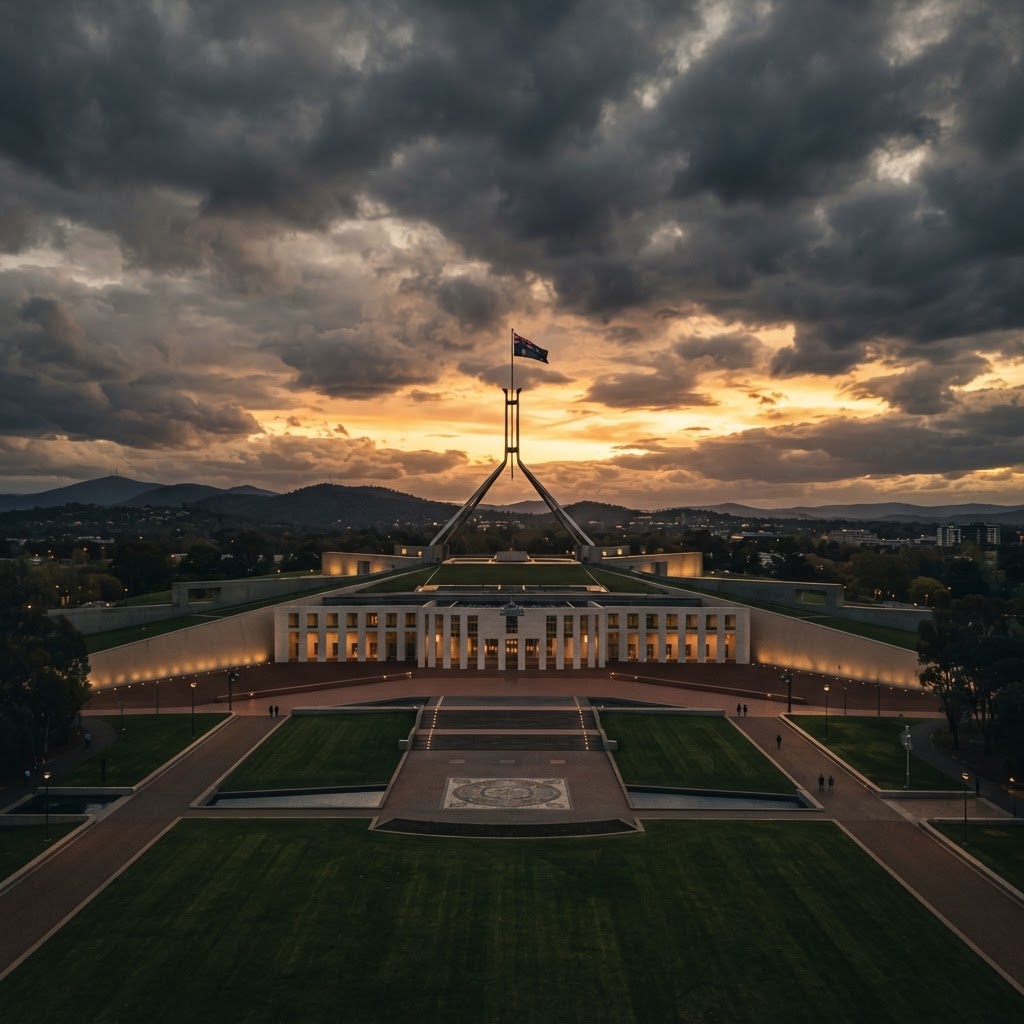
The colour was centrist. The question is whether the votes were.
Metanoia Faith
Section II - The Funding Vehicle: Climate 200
A Crowdfunded Army, Not a Single Benefactor
The infrastructure that turned a community template into a parliamentary force is Climate 200 - a pooled-donor vehicle founded by Simon Holmes a Court. It is the mechanism, not a personality. The five facts below are the apostolate's own honest baseline of what the numbers show.
- 1
Climate 200 describes itself as a 'community crowdfunding initiative' that supports community-backed independents to advance climate policy, integrity in politics and gender equality (Climate 200 FAQs).
- 2
For the 2022 campaign it reported raising over $12 million from approximately 11,500 donors across every electorate in the country (ABC News / RMIT FactLab).
- 3
Its convenor, Simon Holmes a Court, contributes his time voluntarily and receives no salary; his personal financial contribution represents about 2% of the total raised (Climate 200 FAQs). The model is a pooled donor community rather than a single wealthy benefactor.
- 4
The funds paid for direct candidate support and for one of the largest non-party social-media advertising spends of the 2022 campaign - more than any other non-party advertiser, prominently backing Zali Steggall, Zoe Daniel, Allegra Spender and Monique Ryan (QUT PoliDashboard, AEC ad-spend disclosures).
- 5
Following the 2022 result the major parties amended federal donation law; the AFR reported in 2026 that the new caps 'stymied the ability for individual candidates to fundraise,' materially constraining the model for future cycles (AFR, 2026).
Section III - The Major Backers and Where the Money Comes From
Named Interests, Not Anonymous Goodwill
A Catholic examination does not deal in rumour. It names the money and asks which political and financial interests the money serves. Three backer profiles follow - each factual, each tied to a named interest, each measured honestly. The apostolate does not accuse; it shines the light the prophets always shine on the question, 'where does the money come from?'
Simon Holmes a Court
Founder and convenor, Climate 200
Background: Son of Robert Holmes a Court - Australia's first billionaire, the corporate 'raider' who built Bell Group in the 1980s. The family wealth was made in resources and finance; the contemporary Heytesbury pastoral and finance settlement remains a substantial family interest.
Interest:
Honest measurement: He convenes and directs the movement more than he funds it personally (2% of pool). The structural interest is not that he buys votes but that the policy the movement exists to advance is the same policy his own investments depend on.
The pooled Climate 200 donor base
~11,500 donors, 2022 campaign
Background: Drawn overwhelmingly from the affluent inner-urban electorates the teals were contesting: professional services, finance, technology, university and philanthropic households. The donor profile is statistically the same voter base the candidates were seeking.
Interest:
Honest measurement: Because the money is pooled and disclosed through individual candidate returns rather than through Climate 200 itself, the donor base is large, dispersed and culturally homogeneous rather than a small cabal.
Graeme Wood
Long-standing progressive mega-donor
Background: Co-founder of the online travel company Wotif. In 2010 he gave approximately $1.6 million to the Greens - the largest single political donation in Australian history at the time (AEC disclosures).
Interest:
Honest measurement: He is not a Climate 200 principal, but his philanthropic footprint is the established river into which the teal movement's funding feeds. The relevance to the apostolate is the continuity: the money behind 'independent' climate advocacy in Australia frequently has a progressive-donor pedigree that the centrist rhetoric does not foreground.
You cannot serve God and mammon.
Matthew 6:24
Section IV - The Three Climate 200 Pillars, Measured
What 'Climate, Integrity, Equality' Actually Means - and Measures
Every teal candidate runs on the same three-word platform: climate, integrity, equality. The apostolate does not measure slogans. It measures what the words translated into when the votes were cast on the non-negotiables - life, family, religious liberty.
Climate action / Net Zero
Partial alignmentCare for creation is a real Catholic duty (Laudato Si'; Caritas in Veritate 48-51). But the teals' programme is the alarmist Net Zero framework - opposed to nuclear, hostile to the Safeguard Mechanism repeal - rather than Benedict XVI's 'human ecology' that places the family, the sanctity of life and the moral law first. Their climate policy is the policy environment in which their own backers' portfolios are invested.
Integrity in politics
Partial alignmentThe push for a federal integrity commission can serve the common good and the accountability owed to Caesar (Pacem in Terris; Christifideles Laici 42). The qualification is a structural one - the integrity brand benefits the 'independent' fundraising model of Climate 200 itself, so the campaign and the convenor's commercial position reinforce each other. Integrity rhetoric is not always integrity substance.
Gender equality
ConflictIn the teals' platform this means reproductive rights ('a woman's right to choose'), gender self-identification, and the progressive anti-discrimination agenda. This pillar - not the climate pillar - is where the teal voting record touched the non-negotiables directly: the 2022 vote to strip section 38(3) of the Sex Discrimination Act, removing the longstanding protection for religious schools to staff in accordance with their faith.
Section V - The Interests Behind the Votes
A Structural Reading, Backwards From the Fruit
The apostolate measures backwards. It does not ask whether the teals are sincere; sincerity cannot be weighed. It asks where the money came from, which interests the policy served, and how the recorded votes bore on the non-negotiables. The three areas below are the honest structural reading.
Renewable-energy portfolios
The interest: The central Climate 200 ask - Net Zero, the closure of coal and gas, and the refusal of nuclear - directly advances the commercial position of solar, wind and battery-storage investors, including the convenor. The political purity of the climate case is inseparable, in this case, from the financial position of those who fund it.
The doctrinal test: Benedict XVI teaches that a true 'human ecology' precedes environmental ecology - the family, the sanctity of life, and the moral law come first (Caritas in Veritate 48-51; Compendium of the Social Doctrine 451-487). Stewardship is owed to the Creator, never to the secular climate cult, and never binds Catholic conscience to disputed models or to the financial interest of the donor class.
The progressive social agenda
The interest: Several teal MPs ran on and voted for the removal of religious-school exemptions and the expansion of reproductive rights. The donor base is the cultural constituency that wants these outcomes; the votes follow the cultural position of the money.
The doctrinal test: Evangelium Vitae names the direct killing of the innocent as a grave intrinsic evil (EV 57); Familiaris Consortio calls the family 'the first and vital cell of society' (FC 42). A vote that places anti-discrimination doctrine ahead of religious schools' freedom to staff in their faith strikes at the foundation, not at the periphery.
The 'independent' fundraising model
The interest: Integrity reform that disadvantages party machines advantages the very pooled-donor independent model Climate 200 operates. The anti-corruption cause and the commercial position of the convenor are reinforcing, not independent.
The doctrinal test: The apostolate does not accuse the teals of corruption. It asks the structural question the prophets always ask: where does the money come from, and whose interests does the policy serve? Measurement of the answer is backwards - from the actual votes.

You will know them by their fruits. Are grapes gathered from thorns, or figs from thistles?
Matthew 7:16
Section VI - The Honest Measurement
Centrist Rhetoric, Progressive Votes
The teal independents speak a centrist language of integrity, transparency and a community voice. On the questions that measure a Catholic platform - life, the family, religious liberty, conscience - their recorded votes track the progressive consensus they were elected from.
The 2022 vote to remove section 38(3) of the Sex Discrimination Act - stripping the protection that lets religious schools staff in accordance with their faith - is the single clearest federal test of the crossbench on the non-negotiables, and the teals voted with Labor and the Greens to remove it. Their integrity rhetoric does not extend to a crossbench priority to restore medical conscience during the COVID mandates; several teal MPs defend and seek to expand reproductive rights.
The financial architecture of the movement is not, in itself, corrupt. It is, in itself, an interest. The same donor base that funds the campaign is the cultural and commercial constituency that benefits from the policy - renewable-energy investors, the progressive professional class, and a long-standing progressive mega-donor ecosystem. The apostolate names this openly because the faithful deserve to vote with their eyes open.
We do not endorse. We measure. The teal movement's integrity-reform impulse is credited; on the non-negotiables the crossbench votes with the culture that opposes the Church, not with the Church that formed the culture. A Catholic voter may credit the genuine good and still decline to entrust the non-negotiables to a movement whose financial interests are inseparable from its policy.
By Justin Poor - Catholic Apologist, drawing from Sacred Tradition, the Fathers, Doctors, and the Full Magisterium.
The Teals' Full Voting-Platform Profile
The complete doctrinal assessment of the Teal Independents / Crossbench - voting record, five-category scores, strengths, deficiencies, and encyclical assessment - sits on the main party-formation page, measured against the same fixed standard as every other party.
View the Teals' Profile on The NationSources
The historical and financial claims on this page are drawn from public reporting and the Climate 200 disclosures. Verify them yourself.
- Teal independents - Wikipedia (history, structure, colour)
- Climate 200 - Wikipedia
- Simon Holmes a Court - Wikipedia (background)
- Climate 200 - FAQs (donor model, convenor's contribution)
- RMIT ABC FactLab - Climate 200 and the 2022 campaign
- Australian Financial Review - donation-law effect on independents (2026)