
THE AUSTRALIAN GREENS
History. Ideology. Global Networks. Doctrinal Conflict.
Introduction
A Prophetic Examination
A movement can wear the language of compassion, justice, and care for creation. A movement can speak of liberation, equality, and ecological salvation. A movement can call itself peaceful, democratic, and green. But beneath the language, every movement carries an anthropology, a moral vision, and a spiritual centre. This module examines the Australian Greens through the lens of Catholic doctrine, Catholic anthropology, and prophetic discernment.
By Justin Poor - Catholic Apologist, drawing from Sacred Tradition, the Fathers, Doctors, and the Full Magisterium.
ORIGINS OF A MOVEMENT
From Franklin Dam to national political force.
History & Origins
Verified Origins
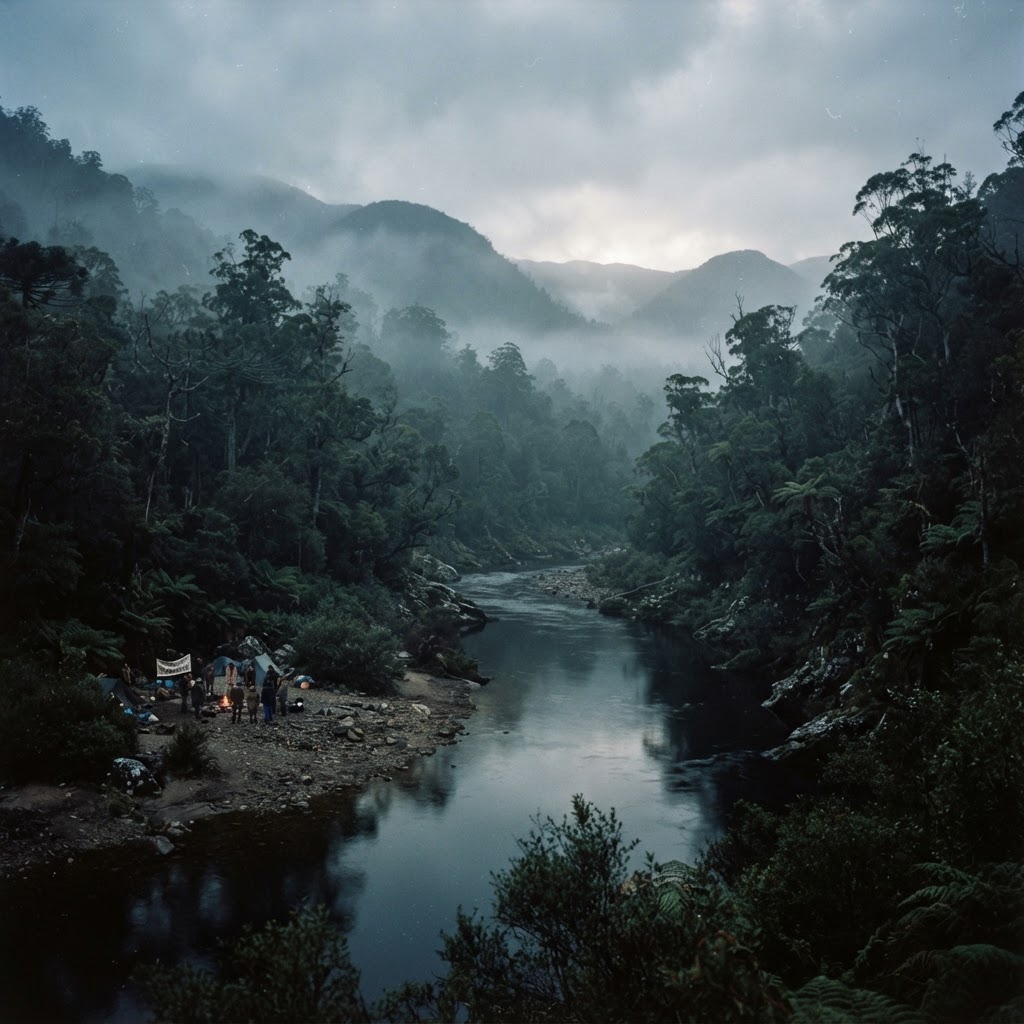
Authoritative sources describe the Greens' origins in the 1972 United Tasmania Group, the Franklin Dam protests, anti-nuclear activism, and the federation of state Greens in 1992. From the beginning, the Greens were environmental, anti-nuclear, anti-capitalist in orientation, left-progressive, and social-justice focused.
Sources: Australian Greens official history; ABC political archives; Britannica.

IDEOLOGICAL FOUNDATIONS
Eco-social justice, progressivism, and secular anthropology.
Their Published Identity
Ideological Foundations
The Greens publicly identify as left-wing, progressive, eco-social justice oriented, redistributive, and collectivist. Their four pillars - ecological wisdom, social justice, grassroots democracy, peace and non-violence - are interpreted through secular-progressive and post-Marxist frameworks. This is their published ideological identity.
PROGRESSIVE SOCIALISM
The economic programme the encyclicals name - and the democracy it cannot sustain.
The Wider Ecosystem
Global Networks & Ecosystem
Network Affiliations
The Australian Greens are part of Global Greens and the Asia-Pacific Greens Federation. These networks include parties and movements advocating strong state intervention, redistributive economics, gender ideology, abortion access, euthanasia, and secular moral frameworks.
Activist groups within the broader global progressive ecosystem include anti-capitalist collectives, radical climate-action movements, and secular-humanist organisations. There is no authoritative evidence of formal organisational ties between the Greens and ANTIFA. However, ANTIFA operates within the far-left activist ecosystem whose values often conflict with traditional Christianity.
Network affiliations are real; their policy consensus carries the same doctrinal tensions examined in this module.
DOCTRINAL CONFLICT
Life. Marriage. Gender. Religious Freedom.
Against the Magisterium
Doctrinal Conflict with Catholic Teaching
Sanctity of Life
Catechism 2270-2279
Greens policies support abortion access, euthanasia, and embryo research. This directly contradicts Catholic doctrine, which holds that direct abortion and euthanasia are gravely contrary to the moral law - the deliberate killing of an innocent human being is never permissible.
Marriage, Sexuality & Gender
Catechism 2331-2336; 2357-2363
Greens policies embrace LGBTQ+ ideology, gender self-identification, gender-affirming pathways, and state-driven gender education. This conflicts with Catholic anthropology, which receives the human person as created male and female, body and soul, and marriage as the covenant of one man and one woman.
Religious Freedom & Parental Rights
Catechism 2221-2231; 2106-2109
Greens policies support anti-discrimination frameworks that pressure religious schools and prioritise state curricula over parental ethos. Catholic teaching holds parents as the primary educators of their children and defends the right of religious institutions to form community according to their doctrine.
Economic & Social Vision
Rerum Novarum; Centesimus Annus
Greens economic positions emphasise strong state intervention and redistribution. These are prudential matters - Catholics may differ in good faith - yet they tend to depart from the personalism and the principle of subsidiarity the Church requires: that the higher order not absorb what the lower can do, and that the person and family not be subordinated to the collectivity.

CATHOLIC DISCERNMENT
Test everything; hold fast what is good.
Forming Conscience
Prophetic Catholic Discernment
1 Thessalonians 5:21
"Test everything; hold fast what is good."
The Church teaches that Catholics must oppose intrinsic evils - the sanctity of life, marriage, and family - and weigh prudential issues only after the non-negotiables. Catholics must avoid scandal by supporting platforms that promote grave moral error. This module is not a voting guide; it is a formation tool for conscience.
Oppose
Intrinsic evils: attacks on life, marriage, and the anthropology of the person come first and admit no formal cooperation.
Weigh
Prudential matters, such as economic redistribution, may be debated in good conscience - only after the non-negotiables.
Catholic Conscience Formation
Questions & Answers
How should Catholics evaluate policies on abortion or euthanasia?
Catechism 2270-2279 teaches that direct abortion and euthanasia are intrinsically evil. Catholics must form conscience accordingly and cannot formally cooperate with such acts.
How should Catholics evaluate policies on gender ideology?
Catechism 2331-2336 teaches that the human person is created male and female. Policies contradicting this order of creation require serious moral scrutiny.
How should Catholics evaluate policies affecting parental rights?
Catechism 2221-2231 teaches that parents are the primary educators of their children. Policies overriding parental authority must be examined carefully for the dignity of the domestic church.
How should Catholics evaluate policies affecting religious freedom?
Catechism 2106-2109 teaches that freedom of conscience and the free exercise of religion are essential. Policies limiting a religious ethos require careful discernment.
Is this telling Catholics who to vote for?
No. This is Catholic conscience formation, not political campaigning. Catholics must evaluate any party's platform against the doctrine of the Church, weighing non-negotiables before prudential matters.
Remember: This is conscience formation, not a directive. The Catholic voter forms judgement by the full teaching of the Church, weighs the non-negotiables above all, and acts to limit harm and advance the good.
By their fruits you will know them.
Matthew 7:16
METANOIA FAITH
Be Humble. Be Grateful. Be Faithful.