
“We beseech you on behalf of Christ: be reconciled to God.” — 2 Corinthians 5:20
Reconciliatio
et Paenitentia.
The exhortation that named the wound — and the door that heals it. On Reconciliation and Penance.
On 2 December 1984, Pope St John Paul II addressed a fractured world and named its deepest wound: the loss of the sense of sin. This is a prophetic study guide to the document that called the Church back to her mission of reconciliation.
By Justin Poor - Catholic Apologist, drawing from Sacred Tradition, the Fathers, Doctors, and the Full Magisterium.
On Reconciliation and Penance in the Mission of the Church
A world of fractures
— and the deeper one beneath them.
Vatican II called the Church to engage the modern world — but the world John Paul II inherited in 1978 was a world of fractures: East against West, rich against poor, old liberation theologies weaponizing the Gospel, and a new secularism quietly dissolving the very category of sin.
At the close of the 1983 Synod of Bishops on Reconciliation and Penance, the Pope saw beneath the political fractures a deeper one — the fracture between the human person and God, the fracture no treaty or revolution could ever heal.
On 2 December 1984, he issued Reconciliatio et Paenitentia — 'Reconciliation and Penance' — insisting that the Church's mission in our time is, at its heart, a ministry of reconciliation: to call a divided world back to the Father who runs to meet it.
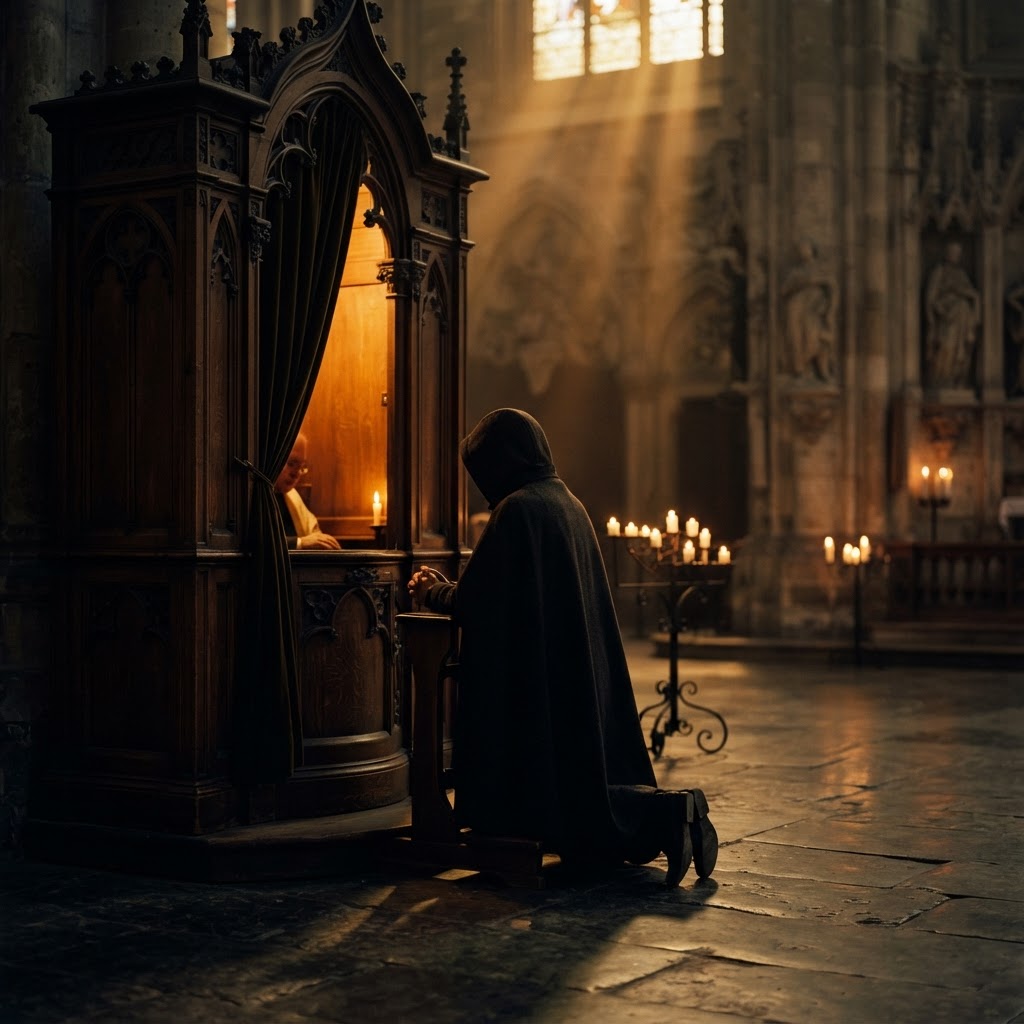
The sin of the century is the loss of the sense of sin.
Pius XII · cited in Reconciliatio et Paenitentia §18
What the Issue Is
Reconciliation is the Church's mission in our time.
John Paul II exposed four truths a therapeutic age has buried — and the four goods that hold reconciliation whole:
The Loss of the Sense of Sin
Pius XII named 'the sin of the century' the loss of the sense of sin. John Paul II reaffirms it: where conscience is dulled, reconciliation becomes unnecessary — and where reconciliation is unnecessary, mercy has no door.
Personal & Social Sin
Sin always begins in the human heart — but it hardens into the 'structures of sin': unjust institutions, ideologies, economies. The doctrine of social sin increases, never dissolves, personal responsibility.
Three Dimensions of Reconciliation
Reconciliation with God (the foundation), reconciliation within the Church (among her members), and reconciliation among peoples (justice and peace as fruits of grace).
The Sacrament Reclaimed
Penance is the ordinary means Christ established for the forgiveness of grave sin after Baptism — the 'sacrament of reconciliation' that heals the soul with God, the Church, and itself.
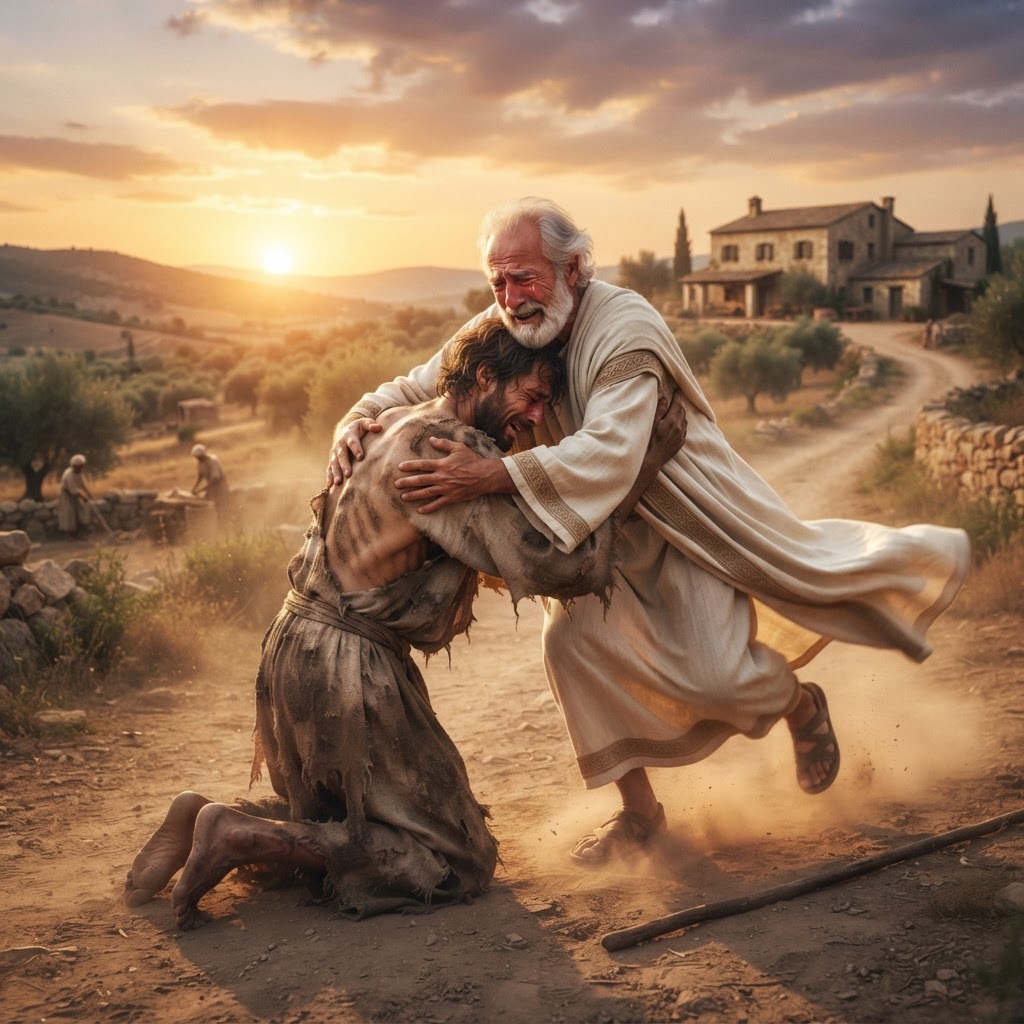
While he was yet at a distance, his father saw him and had compassion, and ran.
Luke 15:20 · The Mercy of the Father
Summary of the Exhortation
The main points of Reconciliatio et Paenitentia.
Reconciliation Is the Church's Mission
The Church exists to carry on Christ's own ministry of reconciliation (2 Cor 5:18–20). She is, in the world, the sacrament — the visible sign and instrument — of reconciliation with God.
The Loss of the Sense of Sin
John Paul II names the loss of the sense of sin as the deepest wound of the modern conscience — the 'sin of the century' that lies beneath every other fracture. Where sin is no longer named, neither is mercy; and the human person is left without a door.
Personal Sin and the Structures of Sin
Sin is always personal in its origin — an act of the free human heart. But it can become social, hardening into unjust structures and systems. The doctrine of social sin never excuses the person; it enlarges the call to conversion.
The Three Dimensions of Reconciliation
First reconciliation with God — the root and foundation. Then reconciliation within the Church — the unity wounded by the sins of her members. Then reconciliation among peoples — justice, peace, and the healing of nations as the fruit of grace.
The Sacrament of Penance
Christ gave His apostles the power to forgive sins (Jn 20:22–23). Confession is the ordinary means of reconciliation for grave sin after Baptism — not a devotion, not a burden, but Christ's own gift, healing the soul with God, with the Church, and with itself.
Pastoral Conversion & the New Evangelization
The Church herself must be converted: celebrate the sacrament worthily, preach the kerygma of mercy, form consciences to name sin again. The first step of every new evangelization is metanoia — the very name of this apostolate.
The Exhortation
“Reconcile, not merely comfort.”
John Paul II did not merely diagnose the fractures — he summoned the Church to heal them. He called her to recover the sacrament of Reconciliation from neglect, to name sin again from a dulled pulpit, and to become herself a sign of reconciliation in a divided world.
The remedy is always Christ: the Father who runs, the Son who reconciles, the Spirit who convicts of sin and convinces of righteousness. Reconciliation is not a technique or a sentiment — it is a Person. And the Church is His chosen instrument.
Hence the new urgency: a Church that has forgotten to confess cannot convert the world; a world that has forgotten to sin cannot be converted. The first step of every New Evangelization is metanoia — the conversion this apostolate is named for.
The new evangelization began here too — not with a new message, but with the old one released again: the Father's mercy is already running; the sinner has only to turn, to confess, and to be restored.
Read the Source
Reconciliatio et Paenitentia
The complete post-synodal apostolic exhortation, promulgated 2 December 1984, in the official English translation from the Holy See.
Open on the Vatican WebsiteThe Church is the sacrament — the sign and instrument — of reconciliation with God.
Reconciliatio et Paenitentia · §8
Prophetic Diagnosis
Why this document
is prophetic today.
Reconciliatio et Paenitentia was written for our hour. The fractures it named — the loss of the sense of sin, the collapse of confession, the hardening of injustice under the rhetoric of liberation — have only deepened. A therapeutic age has replaced contrition with self-affirmation and confession with self-celebration.
Every crisis this apostolate names — the collapse of formation, the silence of conscience, the hardening of injustice, the disunity among Catholics — is, at root, a reconciliation crisis. The door John Paul II opened is the door we have not yet walked through.
Reconciliatio et Paenitentia is not a museum document. It is the prophetic charter for the work of Metanoia: to name sin again, to recover the sacrament, and to become a Church that reconciles a fractured world to the Father who still runs to meet it.
Reconciliation is not a quarrel of the past. It is the forgotten mission of a Church that has learned to celebrate the world and forgotten to convert it. To preach Metanoia is to recover the door John Paul II opened — and to walk through it.

The world is divided — but the reconciliation of Christ is unshaken.
Reconciliatio et Paenitentia · The Three Dimensions
Reflect · Prayer Study
Reconciliation as a Way of Life
Three arenas where Reconciliatio et Paenitentia must be prayed and lived: in your own conversion, in the domestic church of your home, and in the parish and public square that still fracture without the sacrament.
Personal Metanoia
Practices
- Recover the sense of sin: name what is wrong in you by the commandments, the Sermon on the Mount, and the Church's moral teaching — not by your feelings.
- Return to frequent Confession this season; do not let months of unconfessed grave sin accumulate, and do not treat the confessional as an emergency room alone.
- Examine the three directions of reconciliation: with God (prayer and sacrament), with the Church (the unity you have wounded), with your neighbour (restitution and forgiveness).
- Pray for the gift of tears — the pentimento that is the seed of conversion. Ask the Holy Spirit to 'convict of sin' (Jn 16:8), that you may again know the joy of mercy.
Reflection Questions
- When did I last name my sin as sin — not as a mistake, a failure, or a wound, but as my own turning from God?
- Have I treated the confessional as the ordinary path of the disciple, or only as the last resort of the desperate?
- Whom do I still need to reconcile with — and what is keeping me from going to them?
The Domestic Church
Practices
- Make the home a school of forgiveness: teach children to confess, to repair, and to ask pardon. The first reconciliation they learn will shape every later one.
- Guard against the spirit of the age that dissolves guilt: name sin at home without shame but without evasion, forming conscience under the truth of the Gospel.
- Do not let the sun go down on anger — heal the small divisions before they harden into the structures that divide families for a generation.
- Build rhythms of family penance — Fridays, Lent, the nightly examination — that teach the body to repent, not only the mind.
Reflection Questions
- Does our home teach that sin is real and mercy is greater — or only that no one is ever truly at fault?
- Where has a family fracture hardened into a structure we no longer try to heal?
- What one practice of confession and forgiveness could we begin this season?
The Parish & the Public Square
Practices
- Recover the confessional in the parish: regular hours, reverent celebration, a visible invitation. The sacrament cannot be optional in a Church sent to reconcile.
- Preach the sense of sin again — for a dulled pulpit cannot form a contrite people. Preach mercy, but the mercy bought by truth, not the mercy that denies there was ever a wound.
- Build reconciliation into the social fabric: just structures, the forgiveness of debts and enmities, the healing of the fractures between peoples and classes — beginning in the parish's own charity.
- Be a sign of reconciliation where the world is divided: dialogue rooted in truth; unity rooted in Christ, not in a lowest common denominator.
Reflection Questions
- Would a visitor to our parish find the door of the confessional open — or only the doors of its programs?
- Which 'structures of sin' is our community still building, and which are we learning to dismantle?
- Is our parish a sign of reconciliation to a divided city — or merely one more faction within it?
A Prayer of Reconciliation
Father of mercy, You did not leave us in our fractures but came forth to meet us in Your Son. Restore in us the sense of our sin, that we may again know the joy of Your forgiveness. Send Your Spirit to convict us and to convince us; open the door of the confessional, and make of us a Church that reconciles a divided world to You. Through Christ our Lord. Amen.
After Reconciliatio et Paenitentia
Whose sins you forgive, they are forgiven.
John 20:23 · The Gift of the Sacrament
Common Questions
Frequently Asked
Q: Does 'sin' sound old-fashioned in a therapeutic age?
A: It is the only honest word there is. John Paul II's diagnosis is exactly that the loss of sin has not healed the human person — it has only hidden the wound. Therapy can comfort the conscience; only reconciliation can convert it. The document recovers sin not to crush, but to reopen the door of mercy.
Q: Does 'social sin' mean individuals are off the hook?
A: No. Reconciliatio et Paenitentia insists that sin is always personal in its origin — an act of the free human heart. 'Social sin' names the hardening of sin into structures and institutions, but the one who builds, sustains, or benefits from unjust structures is never excused. The doctrine increases, not decreases, personal responsibility.
Q: Is Confession really necessary if I am sorry in my heart?
A: For grave sin after Baptism, the Church teaches that sacramental Confession is the ordinary means Christ established (Jn 20:22–23; CCC 1446, 1497). Perfect contrition out of love obtains forgiveness, but it includes the resolve to confess. The sacrament is not a redundancy — it is Christ's own gift and the Church's ordinary door.
Be reconciled to God — the Father is already running.
2 Corinthians 5:20 · The Prophetic Word
A Prophetic Word
Be reconciled
to God.
The Father is already running.
That is Metanoia.