
“What does it profit a man, if he gain the whole world, and suffer the loss of his own soul?” — Matthew 16:26
Divini
Redemptoris.
The encyclical that named the lie — and the Lie's antidote. On Atheistic Communism.
On 19 March 1937, Pope Pius XI addressed the whole Catholic Church and condemned atheistic communism as intrinsically contrary to the natural and Christian order. This is a prophetic study guide to the document the age has buried — and must hear again.
By Justin Poor - Catholic Apologist, drawing from Sacred Tradition, the Fathers, Doctors, and the Full Magisterium.
On Atheistic Communism
A world rebuilt
without God.
In 1917 a revolution seized Russia and set itself an aim no throne had dared before: to build a world without God.
Within twenty years its doctrine had crossed continents, its propaganda had entered the schools, its terror had silenced the churches, and its lie had lodged in millions of hearts.
On 19 March 1937, Pope Pius XI published Divini Redemptoris — “Of Divine Redemption” — naming atheistic communism not merely as a political error but as a doctrine intrinsically contrary to the natural and Christian order of the human person.
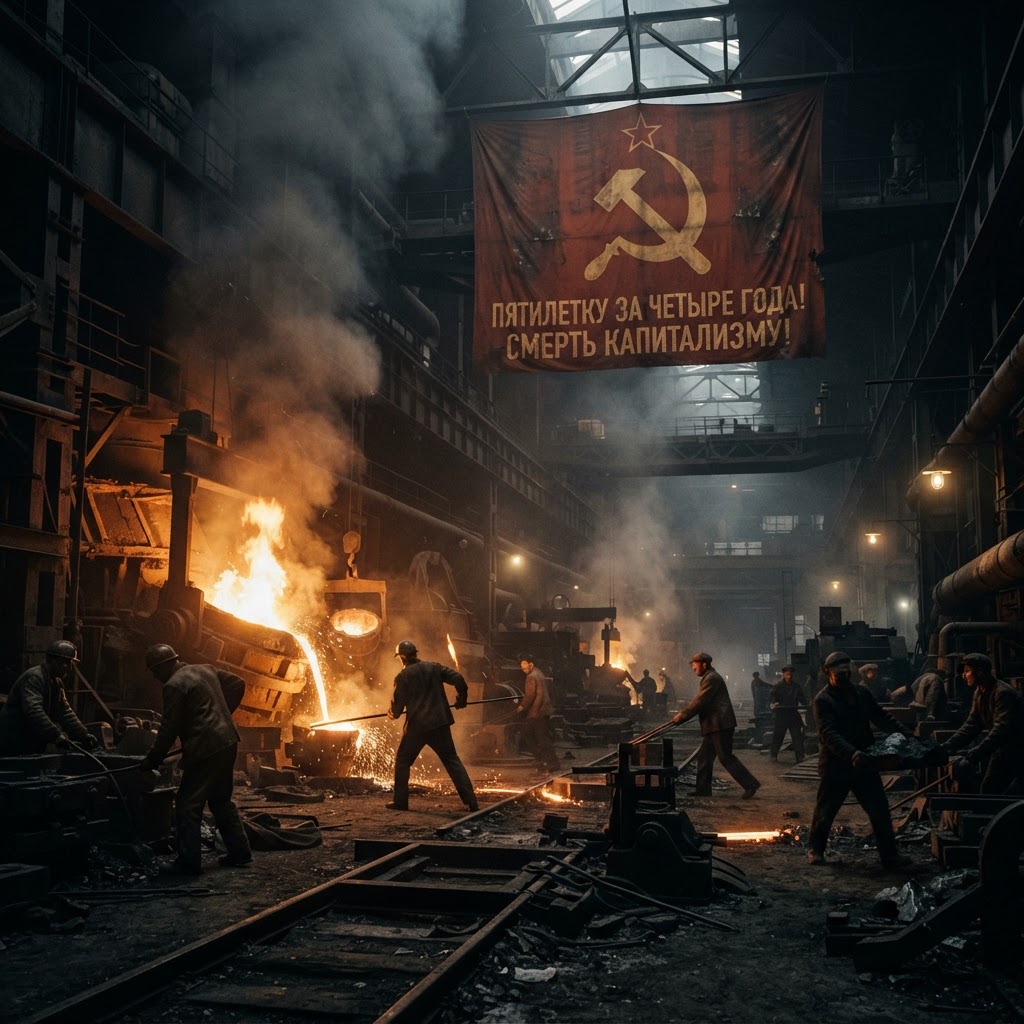
The lie did not die with the wall. It only changed its clothes.
Divini Redemptoris · Prophetic Reading
What the Issue Is
A doctrine intrinsically contrary to the natural order.
Pius XI exposed communism as a coherent machine — four errors that, together, dissolve the God, the family, and the dignity of the human person:
Atheistic Materialism
Communism begins by denying God. If matter is all there is, the soul is a fiction, conscience an illusion, and the human person a moment of economic forces to be marshalled.
The Abolition of Property
Private ownership is declared the root of all evil. By abolishing it, the system strips the worker and his family of every sphere of independence from the state.
Class Warfare
Society is reimagined as a permanent struggle between oppressor and oppressed. Hatred, not charity, becomes the engine of history — and a new tyranny is baptised in the wounds of the old.
The Family as State Property
Marriage, the home, and the formation of the young are subordinated to the regime. The family ceases to be the first society and becomes an instrument of the collective will.
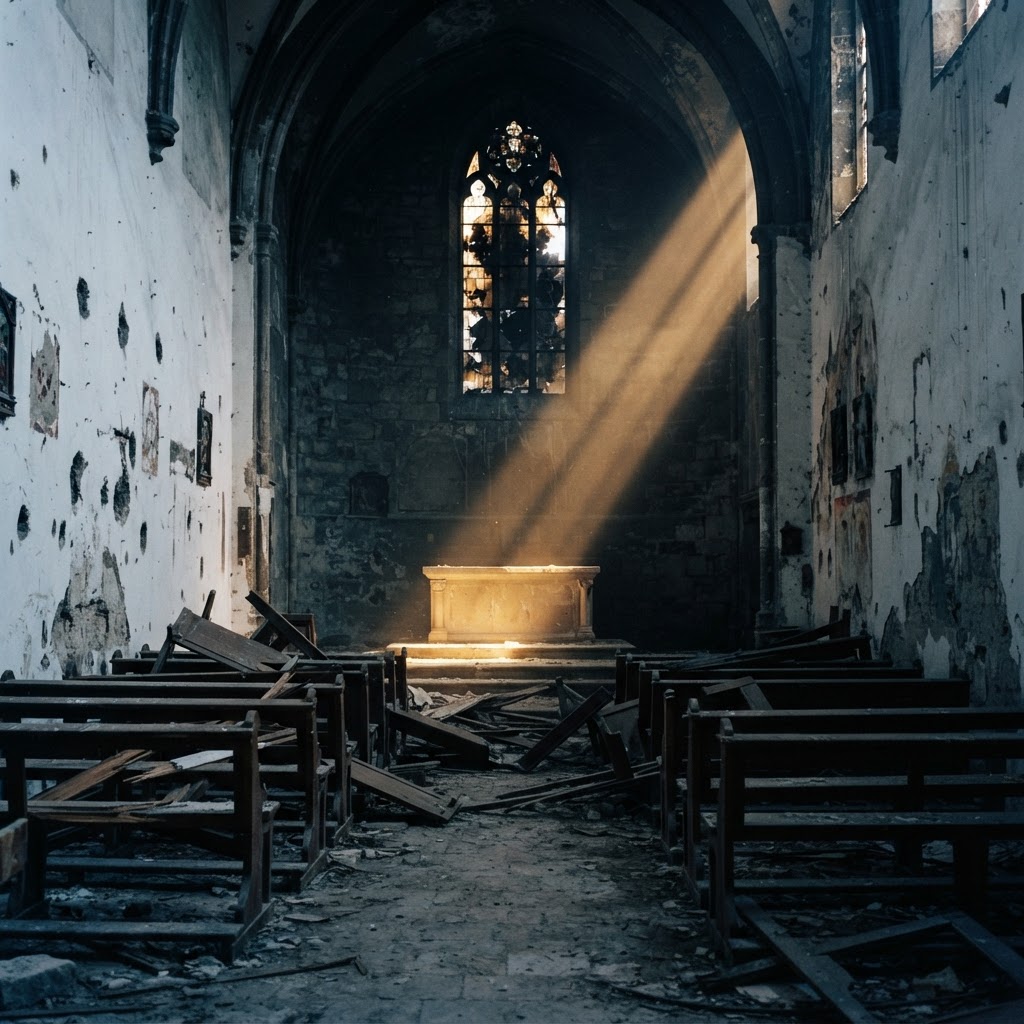
Where the family is dissolved, the person stands alone before the state.
Divini Redemptoris · Pastoral Charge
Summary of the Encyclical
The main points of Divini Redemptoris.
A Doctrine Intrinsically Evil
Pius XI did not treat communism as one regime among many to be judged by results. He named it as a system intrinsically contrary to the natural law and to Christian order — evil in its principle, before it is evil in its practice.
Materialism and the Denial of God
At the root lies atheism. Remove God and you remove the ground of the person's dignity: the soul becomes matter, conscience becomes conditioning, and the state may shape both at will.
The Assault on the Family
Communism strikes at the family first — at marriage, at the home, at the child. Where the family is dissolved, the person stands alone before the state, with nothing left to shelter him.
Property, Labour, and the Just Wage
The encyclical defends private property as a natural right and the just wage as a debt of justice — ordering both to the common good, and condemning both unbridled greed and the abolition of ownership.
The State, Education, and the Church
Communism claims the child for the state and silences the Church. Pius XI insists that parents are the first educators and that the Church's right to preach and to worship is not the state's to grant.
The Remedies and the Duty of Catholics
The cure is not merely argument but the full Christian life: the sacraments, Catholic action, just economic order, the defence of the family, and the formation of the young in truth.
The Exhortation
“Meet the lie with a life.”
Pius XI did not merely warn — he summoned. He called the faithful to build the alternative while there was still time: to order work, property, and family toward God before the lie claimed them entirely.
The remedy is always the same: a Church that forms her children, defends the family, honours the worker, and refuses to let any state claim the place that belongs to God.
Hence Catholic Action — laymen and women formed in the faith and sent into the world to sanctify the temporal order: the factory, the school, the home, the public square. The lie is met not by a slogan, but by a life.
Catholic Action placed formed laymen and women into the factory, the school, and the public square — not to flee the lie, but to sanctify the order it would devour. A lie is not defeated by argument alone, but by a life that makes the lie unbelievable.
Read the Source
Divini Redemptoris
The complete encyclical, promulgated 19 March 1937, in the official English translation from the Holy See.
Open on the Vatican WebsiteThe Magisterial Lineage
Key Papal Teachings
Against Communism.
Divini Redemptoris did not fall from a clear sky. It stood on a century of papal witness — and was sharpened by a later decree that drew the line the Church had always held.
Pope Pius XI
Divini Redemptoris
Pius XI's formal critique defined communism as a false messianism — a false-messiah promising a kingdom of equality while built on materialism, class struggle, and the outright rejection of God. He named it a doctrine intrinsically contrary to the natural and Christian order of the human person.
Pope Pius IX
Prior Denunciations
Decades before Pius XI, Pius IX had already condemned communist and socialist doctrines — in Qui Pluribus (1846) and again in Nostis et Nobiscum (1849) — for opposing natural law, assaulting the right to private property, and striking at the family, the Church, and the God-given order of society.
Approved by Pope Pius XII
The Holy Office Decree
Later, Pope Pius XII approved a strict Decree against Communism through the Holy Office. It declared that Catholics who knowingly and willingly professed or defended communist doctrine were to be considered apostates from the Christian faith and incurred excommunication specially reserved to the Apostolic See. Published in Acta Apostolicae Sedis 41 (1949), p. 334.
The reform of structures must flow from the reform of souls.
Divini Redemptoris · Metanoia
Prophetic Diagnosis
Why this document
is prophetic today.
Communism did not die in 1991. It changed clothes. Its instinct — that the person is a product of systems, that the family is a construct, that dissent is a disorder to be corrected, that the state may remake the human being — is the air our age breathes under new names.
Every crisis this apostolate names — neo-communism, the capture of education, the war on the family, the soft tyranny of the collective — is, at root, the communist instinct Pius XI diagnosed. The poison he named is the poison we still ingest.
Divini Redemptoris is not a museum document. It is the prophetic charter for the work of Metanoia: to convert the heart, restore the person, and rebuild a society that has forgotten that man is made for God, and not for the state.
Communism is not a quarrel of the past. It is the operating assumption of an age that treats the person as a product of systems, the family as a construct, and the state as the measure of conscience. To preach Metanoia is to refuse that assumption at the root.
For Personal Formation & Metanoia
A Reflective Prophetic
Study Guide.
Learn the document, understand its warning, and let it shape your conversion of heart.
Purpose & Approach
Divini Redemptoris — “Of Divine Redemption” — was promulgated by Pope Pius XI on 19 March 1937. It answers a political and spiritual revolution the pope named atheistic communism: a system that denies the existence of God, abolishes private property as a matter of principle, subordinates the family to the state, and reduces the human person to a moment of the collective and of matter.
A faithful study reads this encyclical in two ways at once — historically, as the measured response of the Church to the spread of Soviet communism across the world in the 1930s, and prophetically, as a warning about perennial temptations: materialism, the instrumentalising of the person, the ideological capture of the young, and the swallowing of family, faith, and conscience by the state and by the collective. Read prophetically, it becomes a manual for personal formation and Metanoia.
Prophetic Summary
Six principles to carry into formation
Man is made for God, not for the state
The human person has a destiny no power on earth can grant or repeal. When the state claims to be the highest authority over conscience, family, and labour, it has usurped a place that belongs to God alone.
The family precedes the state
The family is not a creation of the political order, to be reshaped at will. It is the first society, founded in nature and in marriage, with rights and duties the state must protect rather than absorb.
Private property is a natural right
Property gives the worker and his family a sphere of freedom and responsibility. The Church has always taught a social mortgage on its use — but communism abolishes the right itself, and with it the person's independence.
Labour is for the person, not the person for labour
Work is not a commodity and the worker is not a factor of production. The dignity of the human person requires just wages, rest, and the freedom to form a family and to worship God.
Class warfare is not the way of justice
Communism builds social order on the hatred of class for class. Hatred cannot build justice; it can only trade one injustice for another, baptising a new tyranny in the wounds of the old.
True renewal begins in conversion
No economic or political rearrangement can save a society whose heart is corrupted. The reform of structures must flow from the reform of souls — from Metanoia, the conversion of the human heart to Christ.
Key Concepts for Study
The vocabulary of the debate
Atheistic communism
Meaning in the debate
A political doctrine aiming to abolish private property and to organise all of life under a single party-state that denies God.
Catholic discernment
Pius XI calls it intrinsically contrary to the natural and Christian order — not a reform of society but a reconstruction of it without God and without the person's dignity.
Dialectical materialism
Meaning in the debate
The philosophy underlying communism: matter is ultimate, history is driven by material and class forces, and consciousness is their product.
Catholic discernment
Catholicism holds that matter is created by a personal God, that the soul is spiritual and immortal, and that history is governed by providence, not by blind material necessity.
Class struggle
Meaning in the debate
The doctrine that society is fundamentally conflict between oppressor and oppressed classes, and progress comes through that conflict.
Catholic discernment
The Church defends the just organisation of workers, but rejects hatred and revolution as the engine of justice.
Collectivism
Meaning in the debate
The subordination of persons and the family to the collective, organised by the state.
Catholic discernment
The human person remains prior to the state; the common good serves persons, it does not consume them.
Abolition of private property
Meaning in the debate
Communism treats private ownership as the root of all social evil and seeks its elimination.
Catholic discernment
Private property is a natural right ordered to the common good; its abuse is corrected, its existence defended.
State monopoly on education
Meaning in the debate
Communism places the formation of the young wholly in the hands of the state, excluding the Church and the family.
Catholic discernment
Parents are the primary educators of their children; the state serves, it does not own, the child.
The social mortgage
Meaning in the debate
The Catholic teaching that private property carries a duty to serve the common good.
Catholic discernment
Corrects both unbridled capitalism and communism — property is a right with a responsibility, not a right denied.
Subsidiarity
Meaning in the debate
Decisions should be made at the lowest competent level; the higher authority assists the lower, it does not absorb it.
Catholic discernment
The antidote to state overreach: the family, the parish, and the local community are not to be dissolved into a single collective will.
A Six-Session Study Guide
Walk through the encyclical, session by session
Tap a session to unfold its reading, reflection questions, and main insight.
Read · The opening sections of the encyclical.
Reflection Questions
- Why does Pius XI present communism as a doctrine, not merely as a regime?
- What responsibilities does the pope say rest on the bishops and the faithful?
- What is the difference between opposing a bad policy and naming a falsehood at its root?
- Why does the Church address political order at all?
Main Insight
The Church speaks to the political order because the human person lives in it. To stay silent before a system that denies God and devours the person would itself be an unfaithfulness.
Applying Divini Redemptoris to Contemporary Issues
Where the warning still speaks
Neo-communism and ideological conformity
The Soviet state fell; the communist instinct did not. It now appears as a softer, kinder demand for ideological conformity — enforced less by secret police than by reputation, employer, and platform. The instinct is the same: the person must bend to the collective, conscience to the cause.
Application
- Test a cause by what it does to the person who dissents.
- Distinguish solidarity from enforced uniformity.
- Watch how swiftly 'inclusion' becomes exclusion of the unconvinced.
- Ask whether the movement builds the person up or commandeers him.
Technocratic control and the digital collective
A new collectivism organises people by data and algorithm, treating the human being as a unit of output to be optimised. The face changes; the logic does not. The person is marshalled for an end he did not choose and may not question.
Application
- Order technology to the dignity of the person, not the person to the system.
- Defend spheres of life the algorithm cannot reach.
- Resist both technological fear and technological utopianism.
Cancel culture and the new self-criticism
The old regime demanded public recantation; the new one often asks the same. The pressure to recant one's beliefs or be unmade has the same shape as the confession the commissar once required — only the office has moved online.
Application
- Distinguish accountability from ideological purge.
- Refuse the demand to confess what you do not believe you did wrong.
- Protect the right to dissent without ruin.
- Meet error with truth and charity, not with cancellation.
The family under ideological pressure
Communism subordinated the family to the state. Newer ideologies subordinate it to identity, to preference, to the market, to the state again — but the move is the same: the family is no longer the first society to be protected but a construct to be renegotiated.
Application
- Defend marriage as the union from which the family is born.
- Guard the home as the first school of the person.
- Resist every policy that treats the child as the state's ward.
- Build domestic churches that can outlast the pressure of the age.
The dignity of work in an algorithmic economy
When labour is managed as pure data and the worker as a cost to compress, the person is reduced to a factor of production — the very reduction Pius XI named. The just wage, rest, and the chance to form a family remain debts of justice, not concessions of goodwill.
Application
- Honour the worker as a person, not a unit of output.
- Pay a just wage; defend the right to rest and to worship.
- Order enterprise toward the common good.
Education captured by ideology
Communism claimed the child for the state. Whenever formation is set against the family's rights, against the truth about the person, or against the faith of the parents, the same claim is being made in a new tongue. The school exists to serve the child, not to recruit him.
Application
- Defend parents as the primary educators.
- Curate curricula consciously against ideological smuggling.
- Form students who can reason with the Church, not be formed against her.
Property, greed, and the social mortgage
Divini Redemptoris does not baptise greed. It defends property precisely because it ordains it to the common good. Where wealth accumulates without responsibility, it invites the very communism it should have disarmed by justice.
Application
- Hold property as stewardship, not as acquisition.
- Use goods to serve the family, the poor, and the common good.
- Refuse both the abolition of the right and the abandonment of its duty.
Questions for Theological Discernment
Test any contemporary movement
What does it say about God?
Does it acknowledge the person's destiny toward God, or reduce life to material production and appetite?
What does it say about the family?
Does it protect the family as the first society, or remake it as an instrument of the state?
What does it say about the person?
Is the person treated as an end with a conscience, or as a moment of the collective to be deployed?
What does it say about property?
Does it defend ownership together with its duties — or abolish the right in theory or in practice?
What does it say about labour?
Does it honour the worker's dignity, wages, and rest, or instrumentalise labour for an end above him?
What does it say about conscience?
Does it respect the freedom to seek and to worship God, or impose ideological conformity?
What does it do with dissent?
Does it tolerate disagreement, or organise social pressure to silence the inconvenient?
Important Cautions
Divini Redemptoris should not be interpreted as condemning…
- all concern for the poor and for workers
- all critique of laissez-faire or unjust markets
- all collective or cooperative enterprise
- all legitimate functions of the state
- all secular efforts to relieve poverty
- every call for the reform of unjust structures
The central issue is not whether society should care for the worker and the poor. The Church insists it must. It is whether charity and justice can be built on the ruin of God, the family, and the dignity of the human person.
Concluding Synthesis
Divini Redemptoris offers a continuing warning against any order that treats the human person as matter to be organised, the family as a creature of the state, and faith as an obstacle to progress. Its positive vision is equally important: the human person is made for God; the family precedes the state; private property is a right ordered to the common good; labour dignifies the worker; and true social renewal begins not in revolution, but in the conversion of hearts — in Metanoia.
The prophetic message for today, in one sentence
A society may be ordered for the common good only when it is ordered toward the God who made the human person.
Putting It Into Practice
For Personal Metanoia & the Combat of the Lie
Three arenas where Divini Redemptoris must be lived: in your own conversion, in the domestic church of your home, and in the public square that orders the common good.
Personal Metanoia
Practices
- Examine where material worth has reshaped your sense of your own dignity or another's.
- Reclaim property as stewardship ordered to the common good, not as acquisition or as guilt.
- Form your conscience against the pressure of the collective — learn to stand with the truth when the room will not.
- Pray for those still inside the lie, and refuse to repay ideology with hatred.
Reflection Questions
- Where have I let the collective's judgment override my conscience?
- Do I treat the worker and the poor as persons, or as arguments and statistics?
- What one practice could make my home a refuge against the pressure of the age?
The Domestic Church
Practices
- Defend the family as the first society — prior to the state, not beholden to it.
- Protect the formation of your children from ideological capture; parents are the first educators.
- Build a domestic church of prayer, scripture, and the sacraments that can outlast the pressure of the age.
- Teach the dignity of work and the poor, the meaning of property and stewardship, in the home before the world does.
Reflection Questions
- Does our home shelter the person, or expose him to be shaped by the collective?
- Where have we let the family be renegotiated as an instrument rather than a first society?
- What one practice could make our home a refuge this season?
The Public Square & Institutions
Practices
- Build a just economic order: a just wage, the right to rest and to worship, and property ordered to the common good.
- Defend private property with its social mortgage — refuse both its abolition and its abandonment to greed.
- Resist technocratic overreach and every claim of the state over conscience, family, and faith.
- Form lay Catholics for public life — to sanctify the factory, the school, the courtroom, and the council.
Reflection Questions
- Would a society formed by our witness defend the person made for God?
- Where has the state or the market claimed a place that belongs to the family or the conscience?
- What standard of justice do we require of those who lead in the public square?
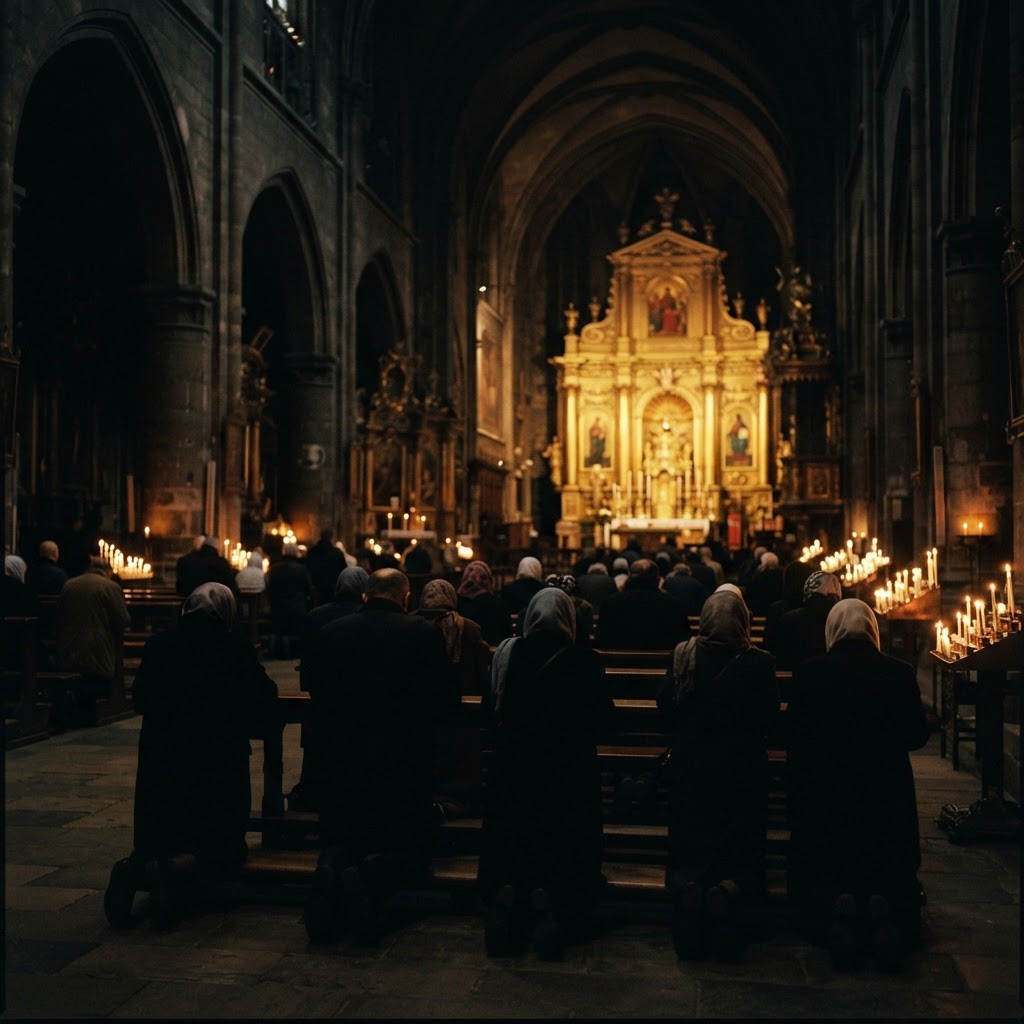
The lie is met not by a slogan, but by a life.
Study Guide · Catholic Action
Common Questions
Frequently Asked
Q: Was Divini Redemptoris just a defence of the old order for the rich?
A: No. Pius XI repeatedly condemned the injustices communism exploited — exploitative wages, the abandonment of workers, unbridled greed. The encyclical defends the worker and the poor; it refuses to accept that the only cure for injustice is the abolition of God, the family, and the person.
Q: Why call communism 'intrinsically' evil?
A: Because the error is not in this or that policy but in the principle. A doctrine that denies God, abolishes private ownership as a matter of theory, and subordinates the person and the family to the collective is contrary to the natural and Christian order in its root — not merely in its failures.
Q: Is a 1937 encyclical against Soviet communism still relevant?
A: The Soviet state fell; the communist instinct did not. It now wears the language of ideology, technology, and collective conformity. The principles Pius XI gave — the dignity of the person, the priority of the family, the rights of faith and conscience — judge every new mask the old lie wears.
Man was made for God — and not for the state.
Divini Redemptoris · The Prophetic Word
A Prophetic Word
Rebuild the world
toward the One.
Man was made for God — and not for the state.
That is Metanoia.