
Pillar II · Prophetic Saints
Voices of Fire.
Witnesses of Truth.
The saints are not merely holy — they are prophetic. They spoke truth to power, suffered for the Gospel, and left a trail of fire that still illuminates the path of conversion today.
Meet the SaintsSaint of the Day
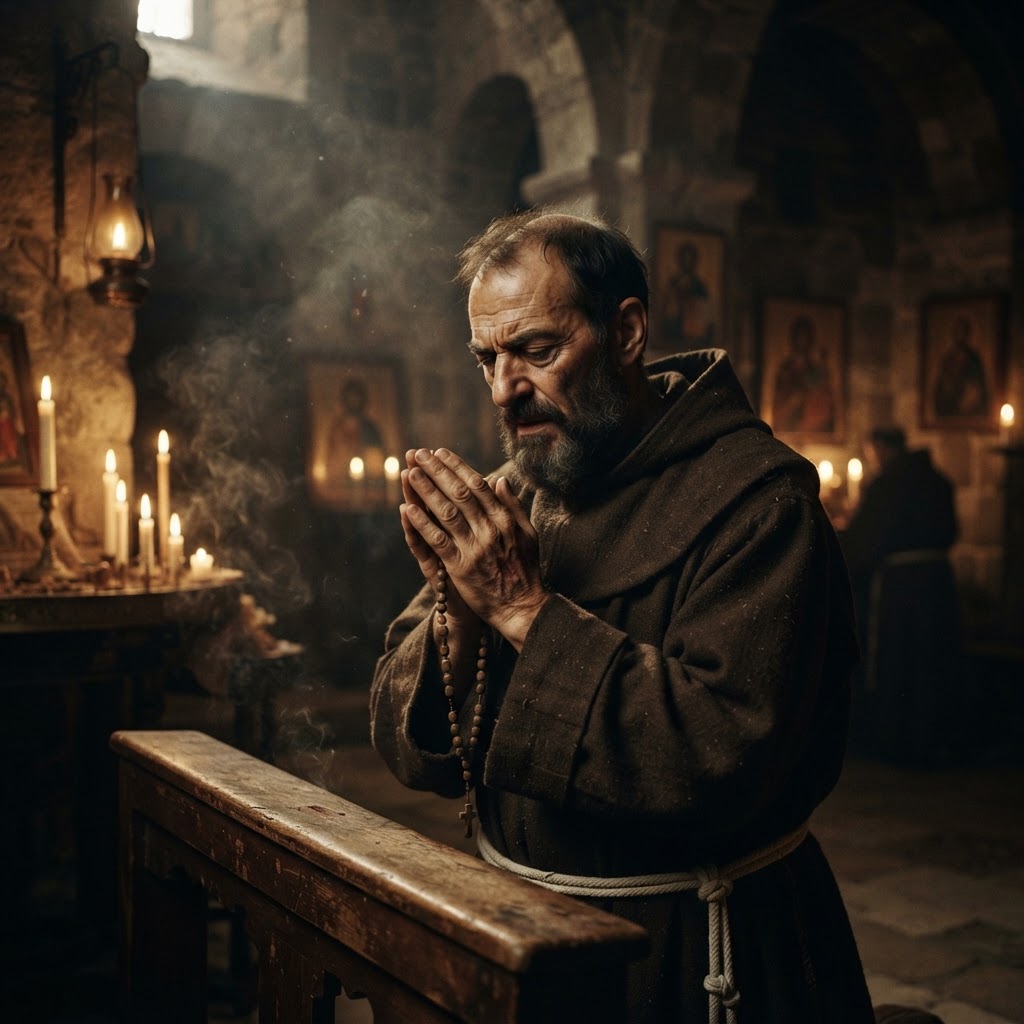
Saint Pius of Pietrelcina (Padre Pio), Priest
—
Saint Pius of Pietrelcina (Padre Pio), Priest
Section 1 — Prophetic Introduction
Saint Pius of Pietrelcina stands as a colossus of the twentieth century, a prophetic sign raised by the Holy Spirit to shatter the illusions of a secularized and decaying world. In an era where the Church began to trade the fires of divine zeal for the tepid compromises of human respect, Padre Pio emerged as a man of fire and blood, bearing the very wounds of the Savior. His mission was to drag the modern soul back to the foot of the Cross, stripping away the veneer of modern comfort to reveal the stark, urgent necessity of repentance. He is not a relic of a bygone age, but a fierce herald sent to confront our modern crisis of faith, proving that the supernatural is not a myth but the only reality that matters.
Section 2 — Their Prophetic Mission
- 1Confronted the apathy and lukewarmness of a Church drifting toward worldly assimilation.
- 2Resisted the demonic forces of rationalism and pride through the weapons of prayer, fasting, and obedience.
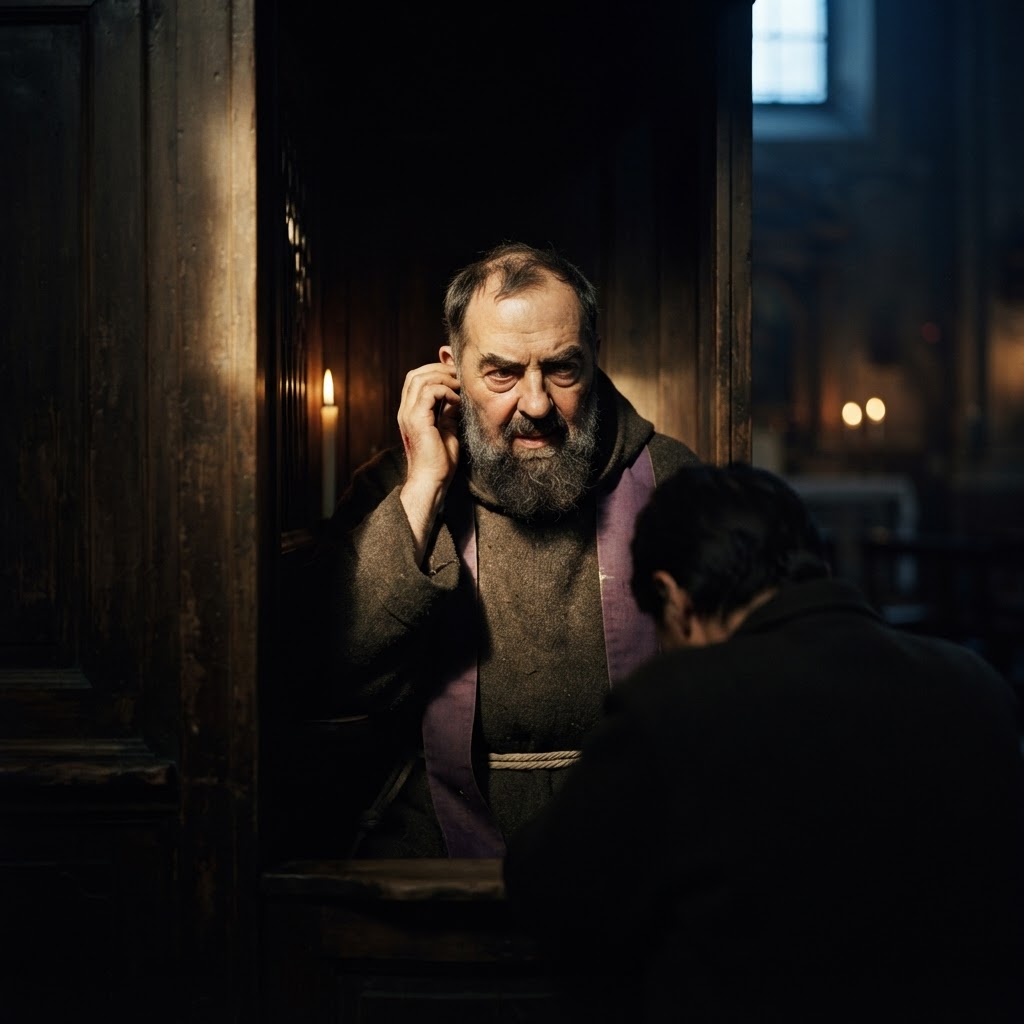
- 3Defended the sanctity of the Sacrament of Confession as the essential battleground for the salvation of souls.
- 4Restored the centrality of the Mass, demonstrating it as the actual, bloodless sacrifice of Calvary.
- 5Revealed the glory of Christ by embodying the paradox that suffering, when united to the Cross, is the highest form of love.
Section 3 — The Crisis They Faced
Padre Pio lived during a period of profound spiritual collapse, where the rapid advancement of technology and ideology sought to replace the sovereignty of God with the vanity of man. The Church faced the encroachment of modernism, which sought to dilute the dogmatic rigor of the faith and soften the call to holiness. Deception proliferated as the world abandoned the reality of sin and the necessity of penance, creating a culture of superficial piety that lacked the grit of genuine conversion. Today, we face a mirror of this crisis, amplified by an even greater loss of the sense of the sacred. The enemy now attacks the Church from within through the spirit of relativism, attempting to justify sin under the guise of compassion. Like the forces that interrogated and tested Padre Pio, modern voices seek to silence the prophetic call to holiness, demanding that the Church conform to the world rather than convert it.
Life in Brief
1887 - 1968
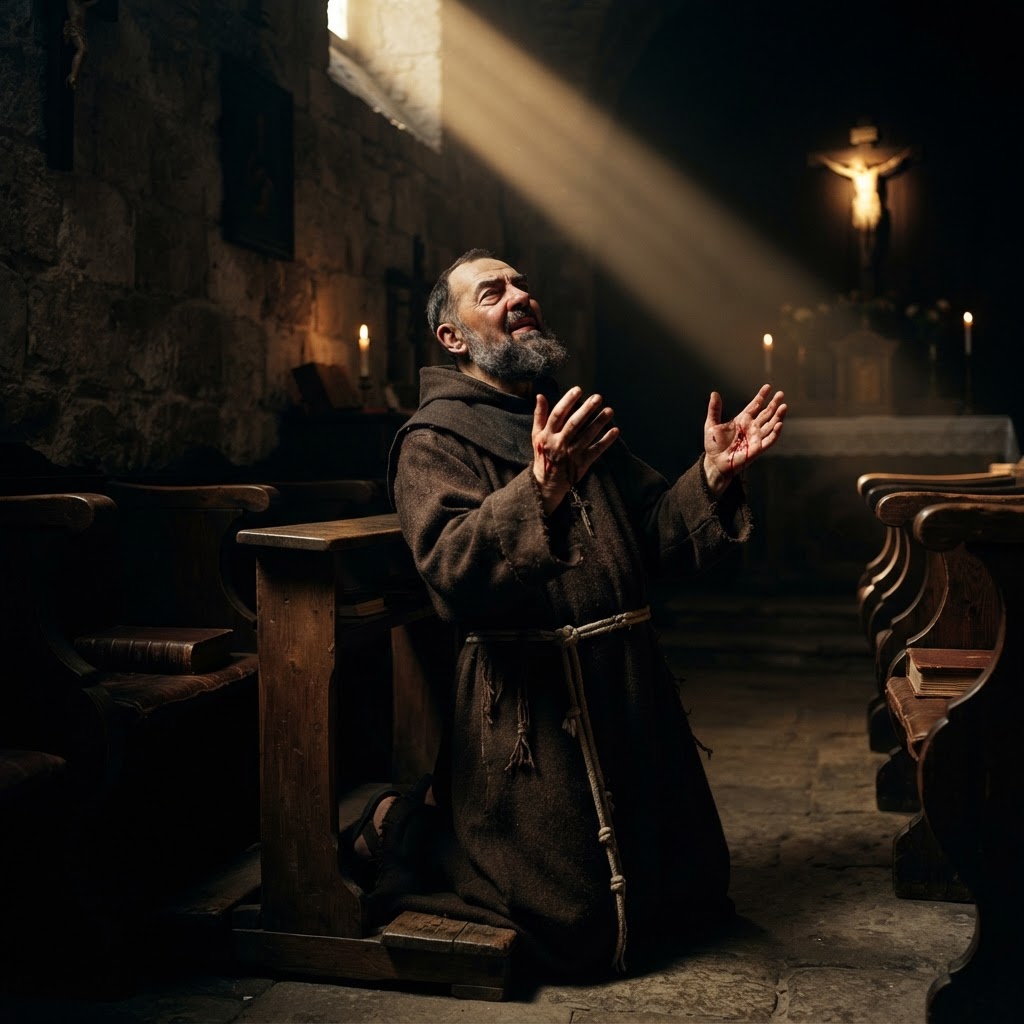
Born Francesco Forgione in Pietrelcina, Italy, Saint Pius entered the Capuchin Order, seeking the radical poverty and humility of the Poverello of Assisi. Ordained in 1910, his life was marked by supernatural phenomena, most notably the visible stigmata he bore for fifty years, a profound participation in the Passion of Christ. Stationed at San Giovanni Rotondo, he spent his days in unceasing prayer and long hours in the confessional, reading souls with divine clarity and calling sinners to authentic repentance. Despite intense physical suffering and periods of ecclesiastical suspicion, he remained unflinchingly obedient to the Church. He founded the Casa Sollievo della Sofferenza, a hospital built on prayer, proving that genuine charity is inseparable from the Cross. Padre Pio did not merely preach the Gospel; he became a living altar upon which the mystery of Christ’s redemption was re-enacted for a faithless generation.
- Entry into the Capuchin Order in 1903
- Reception of the stigmata in 1918
- Establishment of the Casa Sollievo della Sofferenza
- Decades of relentless ministry in the confessional
Scenes from the Life
Major Works
His legacy is written not in volumes of theology, but in the living sacrifice of his life, his constant adherence to the Rule of St. Francis, and his extensive correspondence that directed souls toward absolute union with Christ. He manifested the scriptural truth that the cross is the only path to glory, preaching Christ crucified through the very wounds in his body.
Spiritual Legacy
Padre Pio remains a thunderous rebuke to a comfortable, lukewarm Church, standing as a living icon of the sacrificial priesthood and the necessity of penance. His life continues to draw thousands to the Sacrament of Reconciliation, enforcing the reality that Christ’s mercy demands a total conversion of heart.
Section 4 — Their Witness to Christ
Padre Pio’s witness was not his own; it was the total transparency of Christ’s suffering love. By bearing the stigmata, he manifested the reality that the wounds of Christ are still active in the members of His Body, the Church. He corrected the falsehood that Christianity is merely a social doctrine or a path to earthly contentment, instead exposing the darkness of the human heart through his discernment in the confessional. His holiness was a radiant fire that exposed the rot of pride and vanity in his visitors, forcing them to choose between their comfortable sins and the Truth. Through the Holy Spirit, his life proclaimed that the Gospel is a radical surrender, proving that the only way to overcome the darkness of the age is to become a living host, poured out entirely for the salvation of souls.
Charisms of the Saints
Formation for Battle
Saint Charism Extraction
How Saint Pius of Pietrelcina (Padre Pio), Priest revealed Christ
Spiritual Warfare
Padre Pio engaged in direct, visible combat with the demonic, proving the reality of the invisible world. The Holy Spirit empowered him to discern and expel the influence of the enemy, protecting souls who were bound by sin and liberating them through the authority of the priesthood.
Love for the Eucharist
His celebration of the Mass was a prolonged, agonizing, and ecstatic immersion into the mystery of Calvary. He revealed to all who witnessed it that the Eucharist is not a meal, but the central, sacrificial event of human history, manifesting the real presence of Christ through his own union with the Victim.
Obedience
Despite being subjected to humiliating investigations and restrictions by his superiors, he submitted without bitterness or rebellion. This obedience proved his holiness was authentic, showing that the Holy Spirit acts through the order of the Church, even when that order is handled by fallible men.
Intercession
He acted as a bridge between heaven and earth, offering his physical and spiritual agonies for the conversion of sinners. His prayer was a relentless, divinely-empowered appeal that brought thousands back to the state of grace, revealing that the Church’s power is found in total self-offering.
Charisms for Today
These charisms are the medicinal cure for the current weakness of the Church. Without Spiritual Warfare, the Church is overrun by the enemy; without Love for the Eucharist, the center of the faith is lost to horizontal humanism; without Obedience, the Body of Christ is fractured by pride. Padre Pio confronts our modern confusion by showing that the supernatural, the sacramental, and the hierarchical are the pillars that hold back the encroaching darkness. To cultivate these, one must reject the spirit of the age, immerse oneself in the sacrificial life of the liturgy, and submit the ego entirely to the will of God.
Charisms of Saint Pius of Pietrelcina (Padre Pio), Priest:
- Spiritual Warfare — Engaging and resisting demonic forces to liberate souls for Christ.
- Love for the Eucharist — Living the Mass as the central, sacrificial mystery of salvation.
- Obedience — Surrendering the personal will to the authority of the Church as a testament of humility.
- Intercession — Offering personal suffering and prayer as a bridge for the salvation of others.
Section 5 — Prayer for Intercession
Saint Pius of Pietrelcina, you who bore the holy wounds of our Lord and wrestled with the powers of darkness for the sake of the Church, intercede for us. Obtain for us the grace of true contrition and a holy hatred for our sins. May the Holy Spirit stir within us your same burning love for the Eucharist and your unwavering obedience to the Chair of Peter. Help us to embrace our own crosses with courage, that we might be purified and made worthy of the promises of Christ. We offer this prayer in the name of the Father, and of the Son, and of the Holy Spirit. Amen.
Amen.
Section 6 — How to Imitate Their Example Today
How to Imitate Their Example Today
How to Imitate Their Example Today: To imitate Padre Pio is to abandon the safety of the world for the austerity of the Cross. First, cultivate a fierce commitment to the Sacrament of Confession, not as a routine, but as a battlefield where you strip away the masks of ego to receive God’s mercy. Second, embrace the virtue of obedience; in a culture that deifies personal opinion, offer your will to the Church’s teaching and the authority established by God, regardless of the cost to your pride. Finally, practice the poverty of spirit that turns away from the distractions of the digital age to focus entirely on the silent presence of the Lord. The crisis of our time is a crisis of presence—we have forgotten how to be with God. Stop seeking comfort and start seeking the fire of holiness. Be courageous, be repentant, and be entirely His.
Searchable Database
Explore Our Spiritual Heritage
Filter by era or charism to find the saints most relevant to your formation.
St. Catherine of Siena
1347–1380
"Be who God meant you to be and you will set the world on fire."
Bold prophetic voice to popes and cardinals; called the Church back to Rome.
St. John Paul II
1920–2005
"Do not be afraid!"
Called the Church to deep renewal against totalitarianism and relativism.
St. Padre Pio
1887–1968
"Pray, hope, and don't worry."
Signs of Christ's passion visible in his flesh — a sign for a disbelieving age.
St. Hildegard of Bingen
1098–1179
"I am the fiery life of the essence of God."
Visions, music, science, and bold rebukes of ecclesiastical corruption.
Bl. Anne Catherine Emmerich
1774–1824
"I see all things in God."
Detailed visions of the Passion that shaped devotion and film.
St. Francis of Assisi
1181–1226
"Preach the Gospel. If necessary, use words."
Radical poverty as prophetic sign against ecclesial worldliness.
St. Thomas Aquinas
1225–1274
"The things that we love tell us what we are."
Unified faith and reason; foundational to all Catholic intellectual life.
St. Teresa of Ávila
1515–1582
"Let nothing disturb you. Let nothing frighten you."
Interior castle of prayer; reformed the Carmelites with courage and clarity.
St. John of the Cross
1542–1591
"In the evening of life, we shall be judged on love alone."
The dark night of the soul — the purifying path to union with God.
St. Faustina Kowalska
1905–1938
"Jesus, I trust in You."
Vessel of the Divine Mercy message for a century of war and despair.
St. Louis de Montfort
1673–1716
"The more you honour Our Lady, the more you honour Jesus."
Total Consecration to Mary; prophetic Marian doctrine centuries ahead of its time.
St. Ignatius of Loyola
1491–1556
"Go forth and set the world on fire."
Spiritual Exercises; founded the Jesuits as a spiritual army for the counter-Reformation.
St. John Vianney
1786–1859
"The priesthood is the love of the heart of Jesus."
Transformed a godless village; drew thousands to confession and conversion.
St. Thérèse of Lisieux
1873–1897
"My vocation is love!"
The Little Way — holiness through ordinary fidelity; Doctor at 24.
St. Maximilian Kolbe
1894–1941
"The most deadly poison of our times is indifference."
Gave his life in Auschwitz; apostle of the Immaculate in a century of hatred.
St. Augustine of Hippo
354–430
"Our heart is restless, until it repose in Thee."
From sinner to saint to Doctor; shaped Western theology for 1,600 years.
St. Anthony of the Desert
251–356
"I saw the snares of the enemy spread over the world."
Father of Christian monasticism; pioneer of direct spiritual warfare.
St. Patrick of Ireland
387–461
"Christ with me, Christ before me, Christ behind me."
Returned enslaved to his captors to evangelize Ireland with fire and prayer.
St. Thomas More
1478–1535
"I die the King's good servant, but God's first."
Chose death over compromise — the model of fidelity in public life.
Bl. John Henry Newman
1801–1890
"To live is to change, and to be perfect is to have changed often."
Converted to Rome; prophetic voice against liberalism and conscience distortion.
Formation
The Marks of Prophetic Holiness
Holiness as Foundation
Every authentic prophet is first a saint. The prophetic word flows from union with God, not personality.
Truth with Charity
They confronted popes, kings, and heretics — never with hatred, always with burning love.
Suffering as Witness
Persecution, misunderstanding, and martyrdom authenticate the prophetic voice in every age.
Fidelity to the Church
Prophetic saints never left the Church. They suffered within her, loved her, and reformed her from within.
"The saints were not afraid of the world because they were more afraid of offending God."
— St. Thomas More