
“Jesus Christ, yesterday, and today: and the same for ever.” — Hebrews 13:8
Pascendi
Dominici Gregis.
The encyclical that named the poison — and the antidote. The Rise of Modernism.
On 8 September 1907, Pope St Pius X addressed the whole Catholic Church and condemned Modernism as the 'synthesis of all heresies.' This is a prophetic study guide to the document the Church forgot — and the age must hear again.
By Justin Poor - Catholic Apologist, drawing from Sacred Tradition, the Fathers, Doctors, and the Full Magisterium.
The Rise of Modernism
A poison that entered
the house on quiet feet.
At the dawn of the 20th century a movement had seeped into Catholic seminaries, journals, and pulpits — quietly remaking the faith from within.
Its name was Modernism. It did not deny the Creed outright; it quietly denied that the Creed could mean one thing for all time.
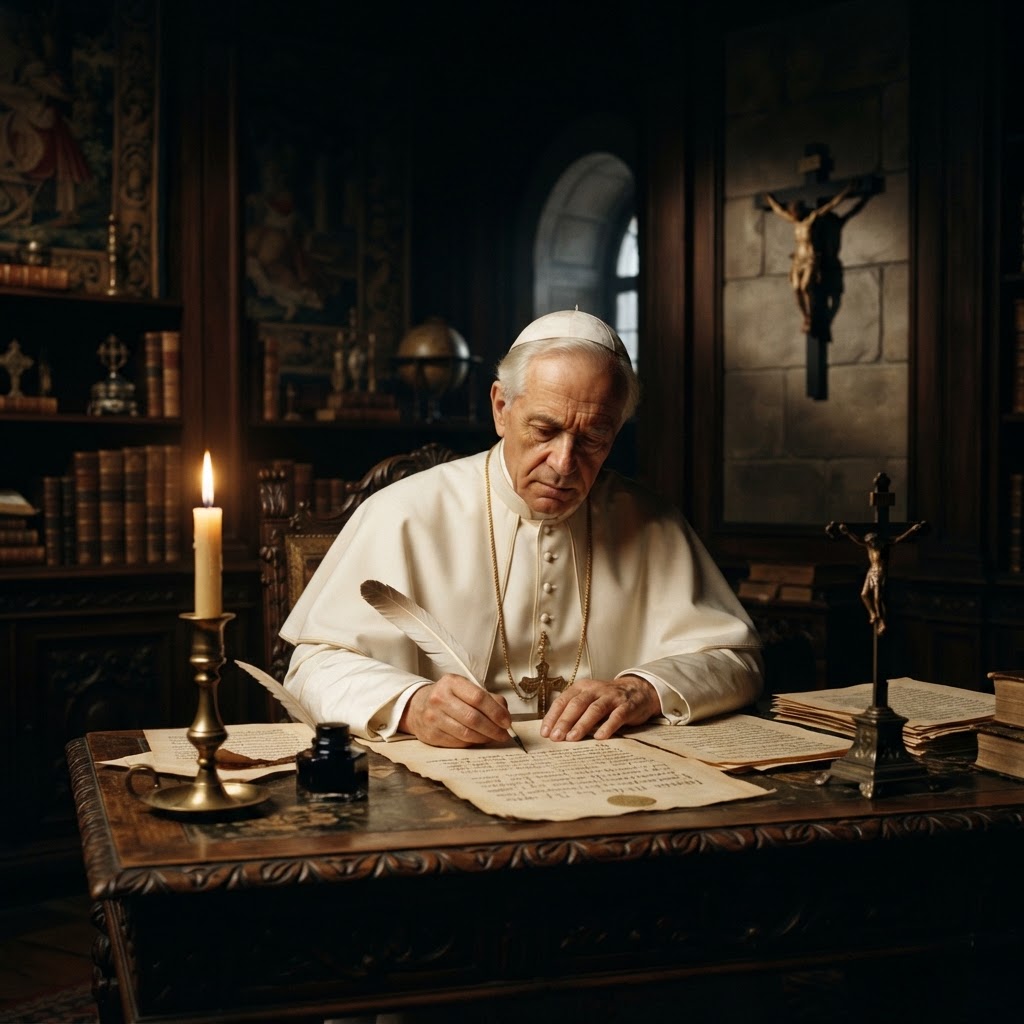
On 8 September 1907, Pope Pius X published Pascendi Dominici Gregis — “Feeding the Lord's Flock” — naming the poison, exposing its method, and prescribing the cure.
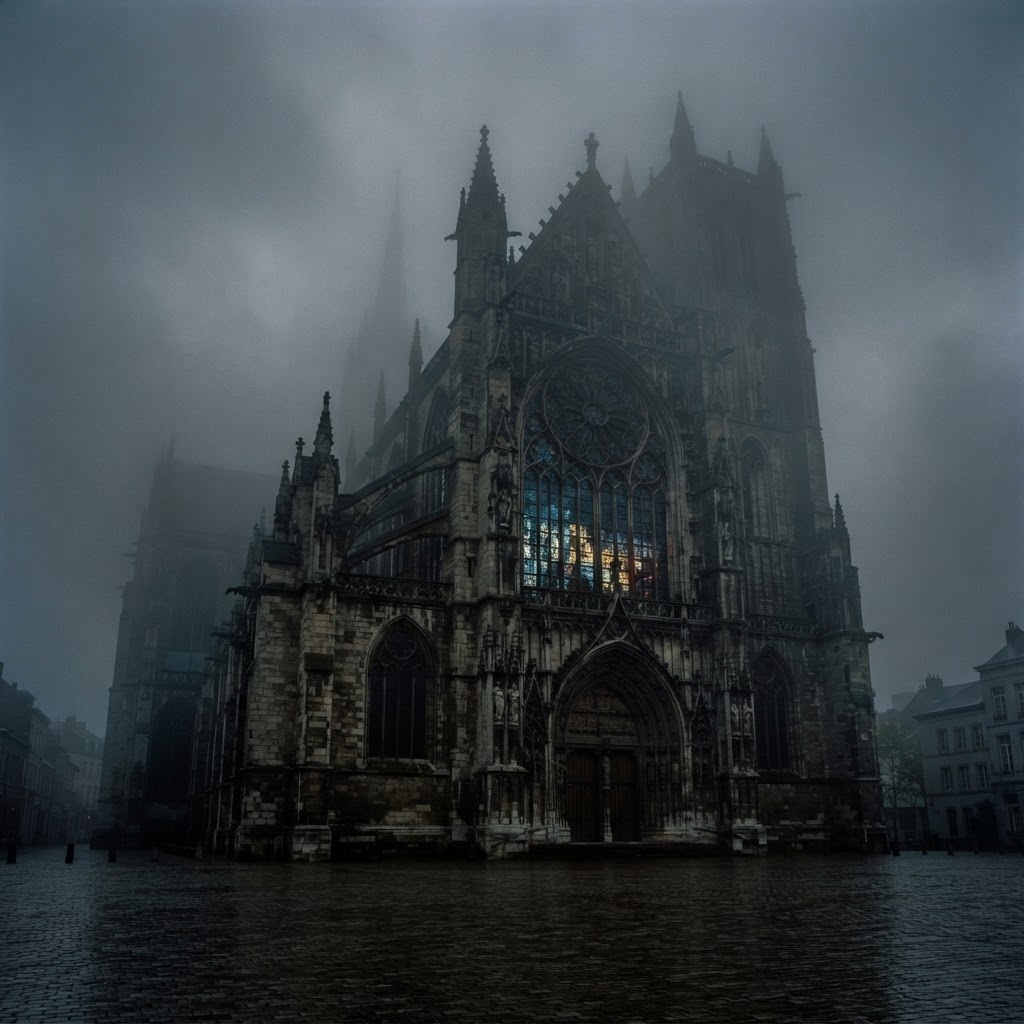
The truth does not evolve. The mind that receives it must.
Pascendi · Prophetic Reading
What the Issue Is
Modernism is the synthesis of all heresies.
Pius X exposed the modernist system as a coherent machine — three engines that, together, dissolve every fixed doctrine of the faith:
Agnosticism
Reason, the modernist claimed, can know only phenomena — not God or the supernatural. Faith becomes a felt experience, not a reasoned assent to revealed truth.
Vital Immanence
Religion is said to rise from an inner need of the human heart. Revelation is not God speaking from without, but the human soul's own religious sense welling up within.
Evolution of Dogma
If religion grows from within, then dogma is not fixed. It evolves with the believer's experience — the Creed means today what the Church needs today, not what she once defined.
The Double Truth
The modernist lives two truths at once: the savant who doubts, and the believer who feels — never bound by the same meaning twice. No doctrine is safe from future re-reading.
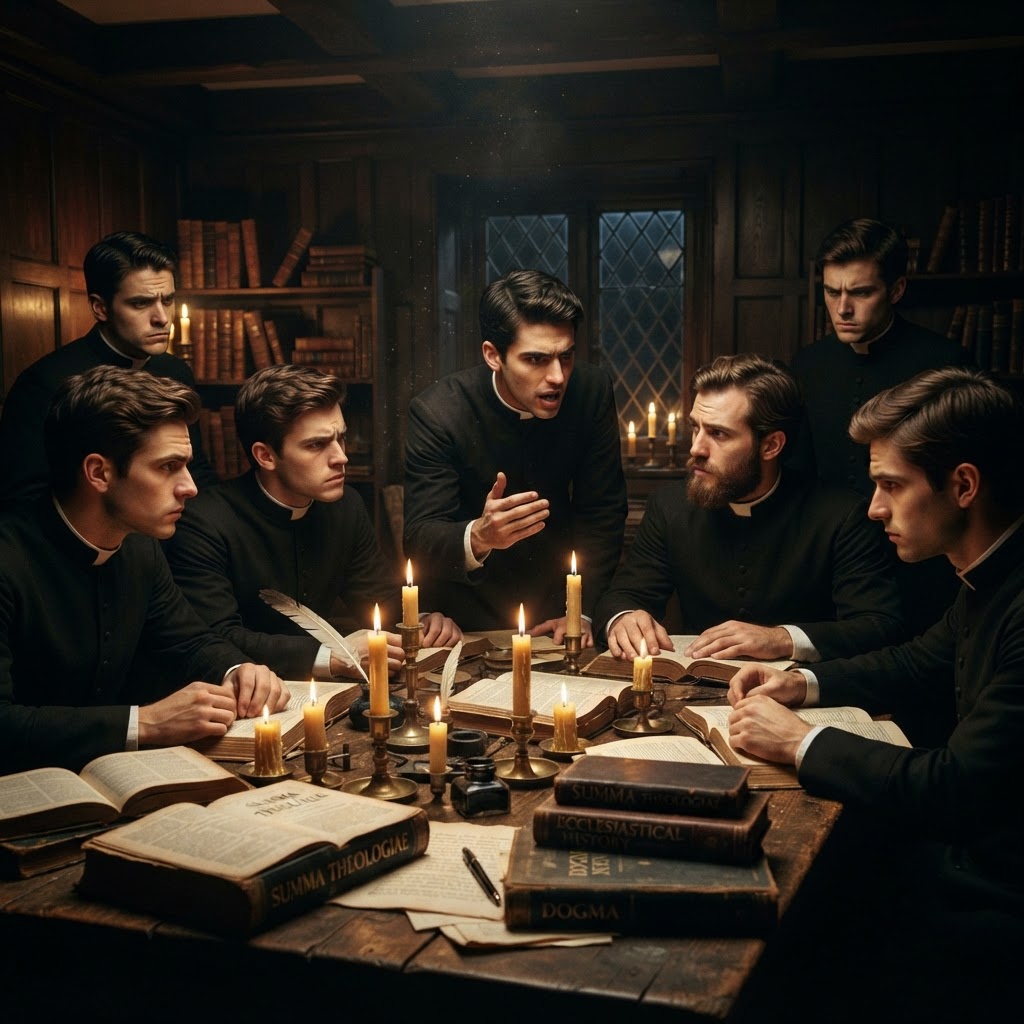
Whoever deceives the faithful concerning the truth poisons the very fountain of salvation.
Pascendi · Pastoral Charge
Summary of the Encyclical
The main points of Pascendi.
The Synthesis of All Heresies
Pius X named Modernism not as one error among many, but as the drain into which every previous heresy had flowed — because it dissolved the very principle by which truth is held.
The Philosophical Roots
Agnosticism severs reason from God; vital immanence makes man the source of religion; the evolution of dogma makes every definition provisional. These are the three engines of the modernist system.
The Assault on Scripture & the Supernatural
By treating miracles, inspiration, and prophecy as the projections of religious feeling, the modernist strips Scripture and the Sacraments of their divinely revealed character.
The Reform Programme Exposed
Pius X catalogues the modernist agenda for dogma, exegesis, worship, and the Church's relation to the state — each reform a quiet revolution meant to remake Catholicism into a human, evolving religion.
The Bishops' Duty of Vigilance
The encyclical is above all a pastoral charge. Bishops must know the danger, watch over seminaries and clergy, forbid poisonous books, and form the faithful in sound doctrine.
The Remedies Prescribed
Scholastic philosophy (the teaching of St Thomas) in all seminaries; careful selection and testing of candidates for orders; censorship of dangerous writings; an anti-modernist profession of faith from clergy and teachers.
The Exhortation
“Feed the flock of the Lord.”
Pius X did not merely condemn — he summoned. He called bishops to be shepherds, not spectators; priests to be rooted, not restless; and the faithful to receive the truth whole and undefiled.
The remedy is always the same: a Church that knows what she believes, teaches it without apology, and forms her children in the unchanging truth of Christ.
Hence the Oath Against Modernism — a solemn promise that those entrusted with sacred teaching would hold the faith as received, not as privately re-imagined. It is a standard the Church still needs.
The Oath Against Modernism (1910) bound clergy and teachers to hold the faith exactly as the Church has defined it — exposing the modernist habit of accepting a formula while re-meaning its content.

Read the Source
Pascendi Dominici Gregis
The complete encyclical, promulgated 8 September 1907, in the official English translation from the Holy See.
Open on the Vatican Website
Preach the word: be urgent in season, out of season.
2 Timothy 4:2
Prophetic Diagnosis
Why this document
is prophetic today.
Modernism did not die in 1907. It matured. Its instinct — that doctrine is negotiable, that experience trumps revelation, that the Church must adapt or vanish — is the air the modern world breathes.
Every crisis this apostolate names — the collapse of Catholic education, the betrayal of formation, the infiltration of our schools — is, at root, a modernist crisis. The poison Pius X diagnosed is the poison we still ingest.
Pascendi is not a museum document. It is the prophetic charter for the work of Metanoia: to convert the heart, restore the truth, and rebuild a Church that has forgotten how to think with her own mind.
Modernism is not a quarrel of the past. It is the operating assumption of our age — that doctrine bends, that truth evolves, that the Church must catch up. To preach Metanoia is to refuse that assumption at the root.
For Personal Formation & Metanoia
A Reflective Prophetic
Study Guide.
Learn the document, understand its warning, and let it shape your conversion of heart.
Purpose & Approach
Pascendi Dominici Gregis — “Feeding the Lord's Flock” — was issued by Pope St Pius X on 8 September 1907. It answers a theological tendency he named Modernism: the attempt to reinterpret Catholic faith chiefly through subjective experience, historical development, and changing human consciousness.
A faithful study reads this encyclical in two ways at once — historically, as a response to specific movements at the dawn of the twentieth century, and prophetically, as a warning about perennial temptations: reducing revelation to feeling, treating doctrine as endlessly malleable, and placing private judgment above the Church's authority. Read prophetically, it becomes a manual for personal formation and Metanoia.
Prophetic Summary
Six principles to carry into formation
The Church must guard the deposit of faith
The Church cannot remain faithful by abandoning the substance of the faith in order to appear intellectually or culturally acceptable. Development is permitted; the dissolution of what was revealed is not.
Faith cannot be reduced to religious feeling
A spirituality built only on interior experience eventually makes the self, rather than God, the measure of truth. Faith is a supernatural assent to God who reveals — not merely an emotion.
Revelation is not created by history
Historical consciousness is necessary for theology, but history alone cannot define the limits of God's self-revelation. God truly acts in history; history is not the final judge of revelation.
Dogma is not disposable symbolism
When doctrine becomes merely metaphorical, Christianity eventually loses its objective content. Dogma makes a real claim about God and his saving action.
Experience and symbolism can become a path to relativism
Respect for other religions must not become indifference about the uniqueness of Christ. The fullness of revelation has been given in Jesus Christ and entrusted to the Church.
Reason has a real role in faith
The heart must be open to God, but the heart must not be detached from truth. Faith involves the whole person, yet it is an act of the intellect assenting to divine truth under grace.
Key Concepts for Study
The vocabulary of the debate
Agnosticism
Meaning in the debate
The claim that God or metaphysical reality cannot be known.
Catholic discernment
Catholicism holds that reason can know God from creation, while revelation gives knowledge beyond reason.
Religious sentiment
Meaning in the debate
An interior feeling or need for the divine.
Catholic discernment
May dispose a person toward God, but is not itself revelation.
Vital immanence
Meaning in the debate
The idea that religion arises from the life and consciousness of the believer.
Catholic discernment
God is present to human beings, but God is not merely a projection of human consciousness.
Historical criticism
Meaning in the debate
The study of texts and events through historical methods.
Catholic discernment
Legitimate when used responsibly; inadequate when treated as the final judge of revelation.
Symbolism
Meaning in the debate
Interpreting religious doctrines and rites as expressions of deeper meaning.
Catholic discernment
Catholic symbols communicate real truths; they are not merely subjective representations.
Dogma
Meaning in the debate
An authoritative articulation of revealed truth.
Catholic discernment
Can develop in expression but cannot contradict the faith once delivered.
Relativism
Meaning in the debate
The view that truth varies according to persons, cultures, or religious systems.
Catholic discernment
Catholic truth is universal because it comes from God.
Private judgment
Meaning in the debate
Treating personal conscience or experience as superior to revelation and ecclesial authority.
Catholic discernment
Conscience must be formed by truth, Scripture, tradition, and the teaching Church.
A Six-Session Study Guide
Walk through the encyclical, session by session
Tap a session to unfold its reading, reflection questions, and main insight.
Read · The opening sections of the encyclical.
Reflection Questions
- What does Pius X understand to be the pope's responsibility?
- Why does he describe the danger as arising within the Church?
- What is the difference between defending the faith and merely defending an institution?
- What forms of false teaching are most difficult to detect?
Main Insight
The Church's pastoral mission includes doctrinal vigilance. Charity without truth becomes vague benevolence; truth without charity becomes a distortion of Christian witness.
Applying Pascendi to Contemporary Issues
Where the warning still speaks
Social-media spirituality
Many now receive religious teaching through short videos, posts, and testimonies. This can evangelise — but it can also build a faith on isolated statements and emotional impact, where “this speaks to me” is mistaken for proof of truth.
Application
- Is it consistent with Scripture and the Catholic faith?
- Does it represent the Church's teaching accurately?
- Does it lead to humility, conversion, charity, and sacramental life?
- Is the speaker presenting personal opinion as authoritative doctrine?
Doctrinal relativism
Contemporary culture often treats truth as dependent on identity, experience, or social location. The danger: if dogma is merely the changing expression of religious consciousness, no doctrine possesses permanent authority.
Application
- Distinguish changing pastoral strategies from legitimate development.
- Distinguish disciplinary change from contradiction of established doctrine.
- Not every change is Modernism — but not every appeal to “development” is authentic development.
The uniqueness of Jesus Christ
Religious pluralism can foster a sincere desire for peace and mutual respect — a good desire. The danger appears when dialogue requires Christians to deny that Christ is the fullness of revelation.
Application
- Respect the dignity and conscience of every person.
- Recognise truth and holiness outside the visible boundaries of the Church.
- Hold with confidence that salvation is definitively revealed in Jesus Christ.
Biblical interpretation
Modern scholarship can illuminate language, genre, and context. Yet Scripture cannot be read as though the Church's faith were irrelevant, nor as though every theological conclusion were a temporary cultural construction. A Thomistic account helps: a text has a real meaning shaped by its author, and later readers may draw out implications — constrained by the text, not projected onto it.
Application
- Integrate the historical and literal sense.
- Read in the unity of the whole Bible.
- Subject interpretation to the living Tradition of the Church.
- Keep the analogy of faith and the Church's authoritative teaching.
Liturgy and sacramental practice
Modernist tendencies appear when liturgy is treated primarily as an expression of the congregation's current identity — worship the community creates rather than an action received from Christ. Catholic sacramental theology resists reducing the sacraments to symbols of feeling: they objectively communicate grace by Christ's institution.
Application
- Seek fuller participation in Christ's worship — not greater conformity to contemporary taste.
- Let renewal draw from reverence, not from trend.
Conscience and moral teaching
A modern misuse of conscience treats sincerity as sufficient: “I believe this is right, therefore it is right.” Pascendi criticises a subjective conscience detached from objective truth and ecclesial authority. Catholic conscience is not a private law-making power — it is a judgment of reason formed according to truth.
Application
- What is objectively true?
- What does revelation teach? What does the Church teach?
- What virtues and duties are involved?
- How can this judgment be lived with charity?
Artificial intelligence and technological culture
Pascendi could not address digital technology, yet its principles illuminate a contemporary danger: treating human consciousness, data, or technical power as sufficient substitutes for wisdom. Technology processes information but cannot by itself disclose God, establish the meaning of existence, or replace moral responsibility.
Application
- Resist both technological fear and technological utopianism.
- Order technology to the dignity of the human person, the common good, and the truth about creation.
Questions for Theological Discernment
Test any contemporary proposal
What is its source of revelation?
Is revelation received from God, or generated by human religious consciousness?
What authority does it recognise?
Does it accept Scripture, apostolic Tradition, and the teaching authority of the Church?
What does it do with dogma?
Does it explain doctrine more clearly, or redefine it until it no longer means what the Church professes?
How does it understand Jesus Christ?
Is Christ truly the incarnate Son of God, or merely a symbol of religious experience?
What role does reason play?
Is reason used in service of faith, or excluded from theology altogether?
What role does experience play?
Is experience a place where faith is lived, or the final standard by which faith is judged?
What are its ecclesial fruits?
Does it foster communion, holiness, sacramental life, humility, and charity — or fragmentation and self-authorisation?
Important Cautions
Pascendi should not be interpreted as condemning…
- all modern philosophy
- all historical-critical biblical scholarship
- all theological development
- all adaptation of pastoral language
- all ecumenical or interreligious dialogue
- every legitimate question raised by contemporary culture
The central issue is not whether theology engages the modern world. It is whether it engages the modern world while remaining obedient to divine revelation and the apostolic faith.
Concluding Synthesis
Pascendi Dominici Gregis offers a continuing warning against a Christianity reduced to personal feeling, historical reconstruction, cultural symbolism, or private judgment. Its positive vision is equally important: God objectively reveals himself; Jesus Christ is truly the Son of God and the fullness of revelation; doctrine communicates real truth; reason can serve faith; and the Church has the responsibility to guard and transmit what she has received.
The prophetic message for today, in one sentence
The Church must speak intelligibly to every age without allowing any age to become the judge of the Gospel.
Putting It Into Practice
For Personal Metanoia & the Combat of Modernism
Three arenas where Pascendi must be lived: in your own conversion, in the life of your parish, and in the institutions that form the next generation.
Personal Metanoia
Practices
- Examine your faith for modernist habits: pragmatic belief, religious feeling without doctrine, doubt dressed as humility.
- Receive the Creed as a free, reasoned assent to revealed truth — not as a private symbol you are free to re-mean.
- Study the Catechism and Sacred Scripture; let the mind be renewed by objective truth, not inner experience alone.
- Make a habit of docility to the Church: where she has spoken, study before you judge; where she prays, pray before you critique.
Reflection Questions
- Where have I let my feelings reshape what the Church actually teaches?
- Do I treat doctrine as given — or as something I edit to fit my life?
- What is one truth of the faith I can study more deeply this week?
Parish Life
Practices
- Ground catechesis in the Catechism, not in vague spiritual themes or felt experiences.
- Preach the full truth in season and out of season — including the doctrines the age finds inconvenient.
- Restore reverent liturgy and Eucharistic adoration: the modernist cannot long survive where the Blessed Sacrament is honoured.
- Vigilance over formation programs, guest speakers, and small-group materials — charity without clarity is not love.
Reflection Questions
- Does our parish teach the faith as received, or as customisable?
- Where have we made the Gospel comfortable at the cost of the truth?
- What one practice could restore reverence in our worship this season?
Catholic Educational Institutions
Practices
- Hire teachers who hold and live the faith — doctrine, not credentials, is the first criterion for Catholic formation.
- Require a profession of fidelity from all who teach in the name of the Church; protect students from those who dissolve the faith.
- Teach Thomistic philosophy so students can reason with the Church, not merely feel about the Church.
- Curate the curriculum consciously — reject materials that smuggle in relativism, evolution of dogma, or ideological anthropology.
- Form students in reasoned apologetics so they can withstand — and winsomely answer — the modernist instinct of the age.
Reflection Questions
- Would a graduate of this school be able to defend the faith, or only to feel it?
- Where has modernist method entered our classrooms unnoticed?
- What standard of fidelity do we require of those who teach in Christ's name?
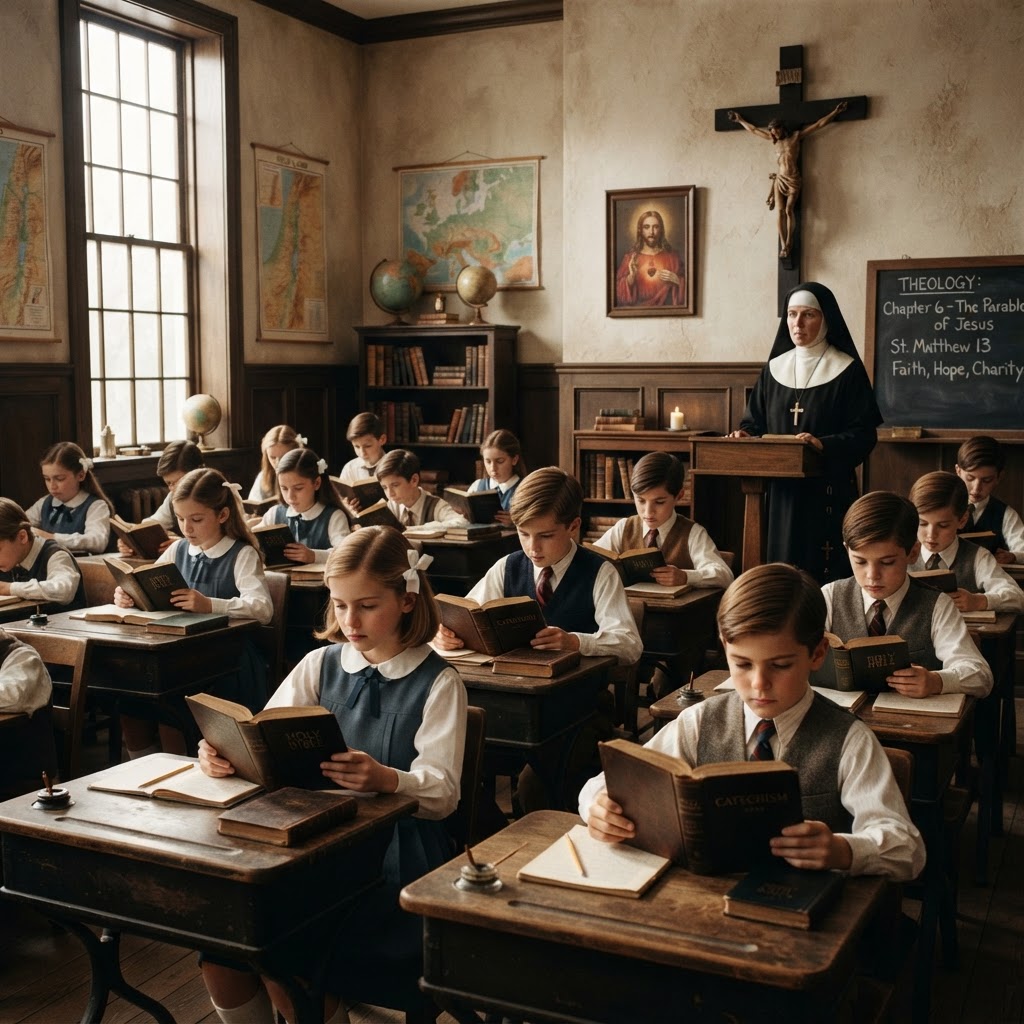
Form disciples who can defend the faith they have been handed.
Study Guide · Catholic Education
Common Questions
Frequently Asked
Q: Was Pascendi just a reactionary over-reaction?
A: No. The errors Pius X named were real and documented — they had entered seminary halls and Catholic journals. The encyclical exposed a coherent system operating beneath familiar Catholic phrases. Far from paranoid, it was precise: it named the method before it named the men.
Q: Why call Modernism the 'synthesis of all heresies'?
A: Because previous heresies denied this or that doctrine; Modernism denied the principle by which any doctrine is held. If dogma always evolves, then every past definition is provisional — and every future one is negotiable. One error swallows them all.
Q: Is the Oath Against Modernism still relevant?
A: The oath in its 1910 form is not universally required today, but the conviction behind it is permanent: those who teach in the name of the Church must hold the faith as received. Any Catholic educator should be able to say with honesty what the oath once demanded.
Restituit omnia in Christo — 'To restore all things in Christ.'
Motto of Pope St Pius X
A Prophetic Word
Hold the faith
as received.
The truth does not evolve — but the heart that receives it must be born again.
That is Metanoia.