
Metanoia Faith
← Prophetic Issues

Apologetics · The Unicity of Salvation

One Truth, One Saviour:
the Lie That All Religions Save

The spirit of the age whispers a false mercy: “Every path reaches the same summit.” The Catholic Faith answers with the love that tells the truth — that Christianity is not one road among many, but the road God Himself walked, in Christ, to carry us home. Every other religion is a man-made fracture of the one saving Truth.

The Seduction of the Age — Religious Pluralism

“All religions lead to God.”

This is the unspoken creed of the modern world — taught in classrooms, repeated in greeting cards, smuggled into catechesis. On the surface it appears humble and merciful: it seems to honour every seeker and spare every conscience. In truth it is a counterfeit mercy. It treats the Cross as optional, the Church as one option among many, and the Lord Jesus as a teacher among teachers rather than “the way, the truth, and the life” (John 14:6).

The Church never denied that other religions contain fragments of truth — “rays of that Truth which enlightens all men” (Nostra Aetate 2). But a ray is not the Sun; a fragment is not the whole. A religion that knows no Trinity, no Incarnation, no saving Cross, and no Risen Lord cannot, in itself, be a means of salvation — for salvation is the Trinity, the Incarnation, the Cross, and the Risen Lord. To call these equal paths is to make Christ a liar and the martyrs fools.

What the Church Actually Teaches

Fullness in Christ · The Narrow Gate

The Church proclaims what Christ Himself proclaimed: that He is the one mediator between God and man, that no one comes to the Father except through Him, and that outside His Name there is no other name given among men by which we must be saved. This is not triumphalism; it is the precise mercy of God, who did not leave us to our own paths but came down one of them — His own.

“Basing itself on Scripture and Tradition, the Council teaches that the Church, a pilgrim now on earth, is necessary for salvation… Hence they could not be saved who, knowing that the Catholic Church was founded as necessary by God through Christ, would refuse either to enter it or to remain in it.”

— Lumen Gentium 14 · CCC 846

  1. 1. John 14:6

    “I am the way, and the truth, and the life; no one comes to the Father, but by me.”

  2. 2. Acts 4:12

    “There is salvation in no one else, for there is no other name under heaven given among men by which we must be saved.”

  3. 3. 1 Timothy 2:5

    “There is one God, and there is one mediator between God and men, the man Christ Jesus.”

  4. 4. Matthew 7:13–14

    “Enter by the narrow gate; for the gate is wide and the way is easy that leads to destruction… For the gate is narrow and the way is hard that leads to life, and those who find it are few.”

The Three Great Fractures

Buddhism · Hinduism · Islam

Each of these religions preserves genuine fragments of natural truth — a moral instinct, a sense of the transcendent, a longing for release. Yet each fractures a specific aspect of saving Truth so decisively that, in itself, it cannot lead to salvation. They are not parallel paths up the one mountain; they are broken roads that turn away from the Cross.

Fracture 1

Buddhism

The extinguishing of the self — a path of release that has no Creator to reach and no self to save.

Buddhism — a cinematic prophetic image
A religion cannot save where it has no Saviour. Buddhism offers release from existence, not resurrection into life. It is a man-made fracture of the longing for peace — without the God who can give it.
Core Beliefs

  • Denies a personal Creator. There is no God who made the world; the cosmos is beginningless, causeless suffering.
  • Denies the soul (anattā). What we call “self” is an illusion of passing aggregates; there is no enduring person.
  • The goal is nirvāṇa — literally “extinguishing”: the blowing out of desire, of the self, into impersonal non-being.
  • Suffering is overcome by detachment and the dissolution of craving — not by redemption, forgiveness, or resurrection.

How It Fractures Truth

  • It fractures the truth that man is a beloved person made for communion with a personal God (Gen 1:27).
  • It fractures the truth that the body is good and destined for resurrection; the body is treated as the carrier of suffering to be shed.
  • It fractures the truth that salvation is union with God — Who is Being itself — not the extinction of being.

The Verdict

A religion cannot save where it has no Saviour. Buddhism offers release from existence, not resurrection into life. It is a man-made fracture of the longing for peace — without the God who can give it.
Fracture 2

Hinduism

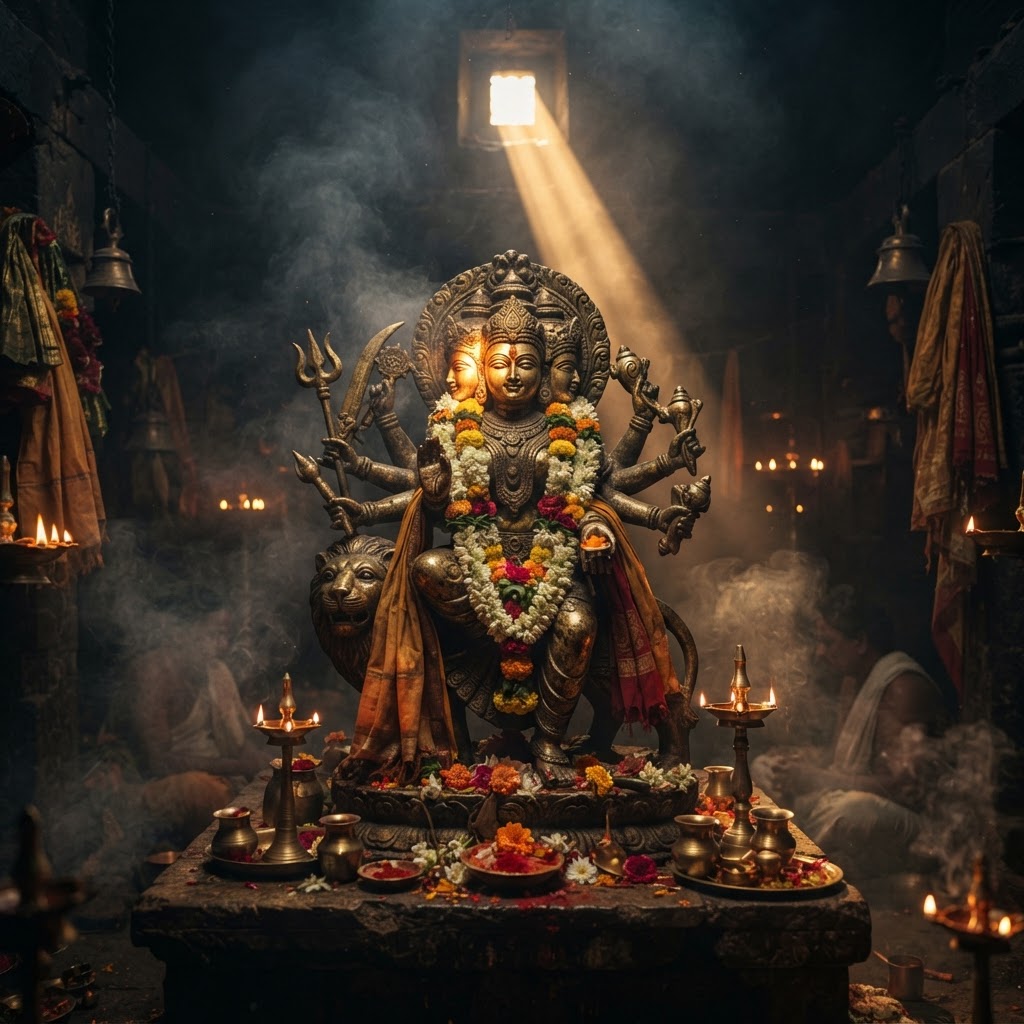
A sea of gods and a wheel of rebirth — the divine dissolved into all things, the soul trapped forever.

Hinduism — a cinematic prophetic image
A religion of many saviours cannot save; a god dissolved into all things is no God at all. Hinduism preserves echoes of the hunger for the divine, but its fractured truth leaves the soul on an endless wheel, never reconciled.

Core Beliefs

  • Overwhelmingly pantheistic or monistic: Brahman is the impersonal All; the self (ātman) is finally identical with it (tat tvam asi).
  • A vast plurality of deities and avatars — many saviours, many paths, none historically crucified and risen.
  • Karma and saṃsāra: an impersonal moral law traps the soul in an endless cycle of rebirth until release (moksha).
  • The material world is māyā — illusion or appearance — and the body is a weight to be transcended, not redeemed.

How It Fractures Truth

  • It fractures the truth that God is one and personal, the Creator distinct from His creation (not dissolved into it).
  • It fractures the truth of one Incarnation: the eternal Son becomes flesh once, in history, for all (Heb 9:26).
  • It fractures the truth of grace: salvation is gift, not the slow discharge of karmic debt across lifetimes.
  • It fractures the dignity of the body and history: the Cross and the empty tomb belong to a flesh-and-blood Saviour at a real time.

The Verdict

A religion of many saviours cannot save; a god dissolved into all things is no God at all. Hinduism preserves echoes of the hunger for the divine, but its fractured truth leaves the soul on an endless wheel, never reconciled.

Fracture 3

Islam

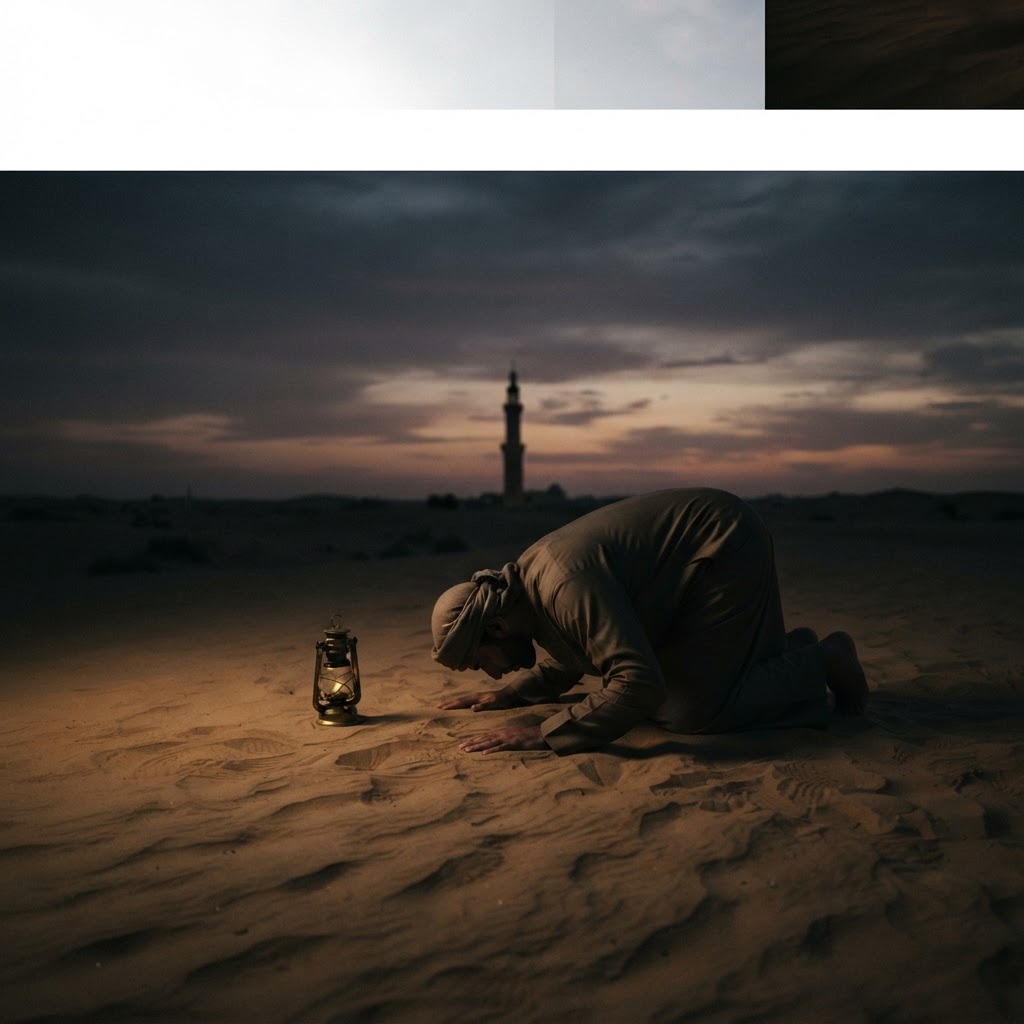
A post-Christian denial of the Cross — the sublime truth borrowed, then broken.

Islam — a cinematic prophetic image
A religion that denies the Trinity, the divinity of Christ, and the saving Cross cannot lead to salvation, for “there is salvation in no one else” (Acts 4:12). Islam is the most eloquent of the fractures — close to the truth in language, furthest from it in substance.

Core Beliefs

  • Strictly unitarian: Allāh is one, with no Son, no Trinity (Surah 4:171; 112:1–4). The Trinity is rejected as idolatry.
  • Denies the divinity of Christ: Jesus (ʿĪsā) is a prophet, not God incarnate; not the Son of God (Surah 9:30; 19:88–93).
  • Denies the Crucifixion that saves: “they killed him not, nor crucified him” (Surah 4:157). The saving Cross is erased.
  • Salvation is by submission to the will of Allāh, weighed on a scale of works; grace, atonement, and adoption are absent.

How It Fractures Truth

  • It fractures the truth of the Trinity — the very name of God revealed by the Son and the Spirit (Mt 28:19).
  • It fractures the truth of the Incarnation: “the Word became flesh” (Jn 1:14), and “the Father has sent his Son to be the Saviour of the world” (1 Jn 4:14).
  • It fractures the truth of the Cross: “we preach Christ crucified… the power of God and the wisdom of God” (1 Cor 1:23–24).
  • It is not a religion independent of Christendom, but a later system that borrows Abrahamic language while removing the heart of the Gospel.

The Verdict

A religion that denies the Trinity, the divinity of Christ, and the saving Cross cannot lead to salvation, for “there is salvation in no one else” (Acts 4:12). Islam is the most eloquent of the fractures — close to the truth in language, furthest from it in substance.

The Church Honours Every Genuine Fragment

Mercy That Tells the Truth

What each does hold

Every major religion preserves fragments of the natural law and the universal hunger for God: Buddhism the discipline of desire, Hinduism the awe of the transcendent, Islam the reverence due to the one Creator. St. Paul testifies that the Gentiles “did by nature what the law requires” (Rom 2:14). These fragments are not nothing — but a fragment is not the whole.

What 'rays of truth' means

Nostra Aetate and Lumen Gentium acknowledge 'rays of truth and grace' in other religions — seeds of the Word, reflections of the one Light. The Church does not despise these. But a ray is not the Sun. The fullness of the means of salvation subsists in the Catholic Church (Lumen Gentium 14). The Church honours every fragment while declaring that only Christ makes the whole.

What about sincere non-Christians?

The Church teaches that those who, through no fault of their own, do not know Christ but sincerely seek God and try to do His will 'may achieve eternal salvation' (CCC 847; LG 16). This is the mercy of Christ reaching beyond visible boundaries — not 'their religion saves them.' Their salvation, if it comes, is by Christ, through grace, in ways known to God. It never justifies telling people that the religion they hold is a saving path.

The burden of the Church — to preach Christ crucified

This is the heart too often left out when quoting Nostra Aetate. The same document that honours what is true and holy in other religions immediately continues: 'The Catholic Church rejects nothing of what is true and holy in these religions. Yet she proclaims, and ever must proclaim Christ, “the way, the truth, and the life” (John 14:6), in whom men may find the fullness of religious life, in whom God has reconciled all things to Himself.' The Church does not merely admire the fragments — she bears the burden of carrying the whole to every people. Precisely because the other religions 'very often contain a ray of that Truth which enlightens all men' but also, in their fractures, 'are ensnared in ignorance, error and sin,' the Church is bound — as a matter of fidelity and love — to proclaim the Cross. The burden of the Church is to preach Christ crucified, the one fullness that the rays only promise: He alone is 'the power of God and the wisdom of God' (1 Cor 1:24), in whom alone the broken roads are made whole.

“She proclaims, and ever must proclaim Christ… in whom men may find the fullness of religious life.”

Why This Must Be Said

Confirming People in Error Is Not Love

A mercy that tells every seeker, “Stay on your path — it leads to God,” is not mercy. It is the cruelest courtesy: it comforts the soul for the few miles before the cliff. The most loving act of the Church is the proclamation of Christ crucified — not as one opinion among many, but as the power and wisdom of God (1 Cor 1:24). The saints did not die to spread a vague spirituality; they died because they believed with all their hearts that Jesus Christ alone is the Saviour of the world.

The missionary mandate is not an arrogance to be outgrown; it is love in its most costly form. To silence it in the name of pluralism is to abandon the nations to their fractures. God raised the Church to be a light to the peoples — not one lantern among many, but the lampstand on which the One Lamp, Christ, has been set (Rev 1:13, 20).

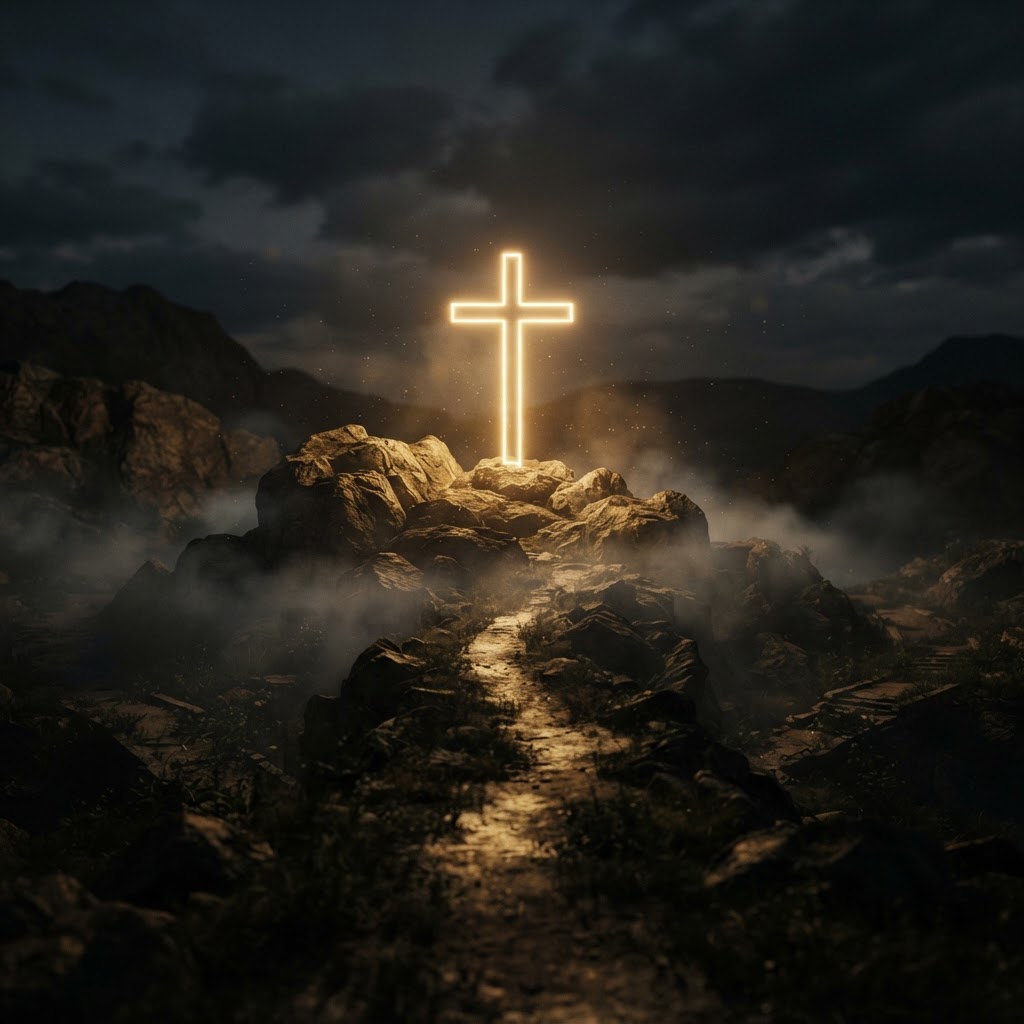
The Narrow Gate — Christ the one way
Christ the narrow gate — the one Cross standing where every other path dissolves into shadow.

“Enter by the narrow gate; for the gate is wide and the way is easy that leads to destruction… For the gate is narrow and the way is hard that leads to life, and those who find it are few.”

Matthew 7:13–14

References

  • Catechism of the Catholic Church, nn. 846–848 (extra Ecclesiam nulla salus)
  • Catechism of the Catholic Church, nn. 26–43 (man's capacity for God; natural revelation)
  • Sacred Scripture: John 14:6; Acts 4:12; 1 Timothy 2:5; 1 Corinthians 1:18–25; Romans 2:14–16; Matthew 7:13–14
  • Vatican II: Lumen Gentium 14–16 (the Church and other religions); Nostra Aetate 2 (rays of truth)
  • St. John of Damascus — On the Heresies (On Islam)
  • St. Thomas Aquinas — Summa Contra Gentiles I:6 (on Muhammad and the rational test of revelation)
  • Pope Benedict XVI — Reaffirmations concerning the uniqueness and universality of salvation in Christ
  • Congregation for the Doctrine of the Faith — Dominus Iesus (2000), on the unicity and salvific universality of Christ and His Church

Interpreted in continuity with the perennial Magisterium. The fullness of the means of salvation subsists in the Catholic Church (Lumen Gentium 14); outside the Church there is no salvation as a doctrinal formula (CCC 846), while God's mercy reaches those who seek Him in invincible ignorance (CCC 847).

Share this page

Share this page with anyone who needs to hear it.