
Dogma · The Mother of the Incarnate Word
The Theotokos
Mary, Mother of God — Defined at Ephesus, Believed from the Beginning
The Church did not call Mary the Mother of God because she gave Him His divinity, but because the Person she conceived and bore is the eternal Son. One title, one Person, one Christ — and a doctrine that reaches back through the Councils, the Fathers, and the painted walls of the Roman catacombs.
“And why is this granted me, that the mother of my Lord should come to me?” — Luke 1:43
A Guide for ProtestantsTo Begin — The Woman in the Tunnel
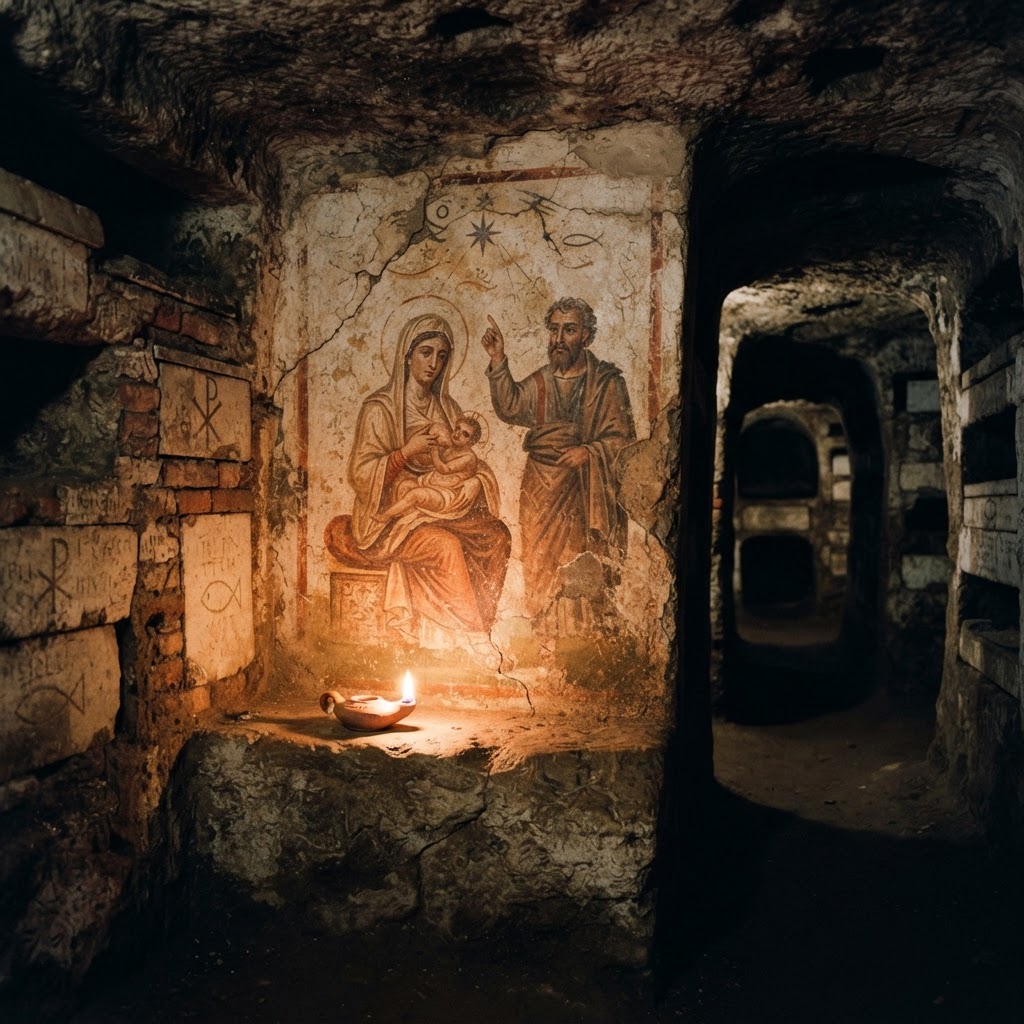
Go down into a Roman catacomb, two floors beneath the vines of the Via Salaria, and hold a lamp up to the plaster. On the wall, painted by a Christian hand in the age of the persecutions, a veiled woman is seated with an infant at her breast. Beside her a figure points upward to a star. There is no inscription explaining who she is, and none is needed: the Church has been looking at this woman since before she could legally own a building.
The doctrine of the Theotokos is often treated as a late medieval flourish, an ornament added to Christianity once it had grown comfortable. The evidence says otherwise. The title appears in a prayer written on papyrus before the Council of Ephesus ever met; it is defended by bishops who were arguing about Christ, not about Mary; and it is painted on the walls of the dead before it is carved into the definitions of the living Magisterium. What Ephesus defined in 431, the catacombs had already been showing.
Section I — The Dogma in One Sentence
She Bore a Person, Not a Nature
A mother does not give birth to an abstraction. She gives birth to someone. That simple human fact is the whole engine of the doctrine. Ask what Mary bore, and the answer is a nature: a complete human nature, body and soul. Ask who she bore, and the answer is a Person: the eternal Son, who took that nature as His own.
“The One whom she conceived as man by the Holy Spirit, who truly became her Son according to the flesh, was none other than the Father's eternal Son, the second person of the Holy Trinity. Hence the Church confesses that Mary is truly ‘Mother of God’ (Theotokos).”
— Catechism of the Catholic Church, 495
Three things follow, and together they are the dogma:
1
One Person
The child conceived in her womb is the eternal Son, the Second Person of the Trinity — not a man later adopted, not a prophet indwelt.
2
A real mother
She gave Him a complete human nature: flesh, blood, body, soul. He was born of her, nursed by her, raised in her house.
3
Therefore Theotokos
Because the Person she bore is God the Son, she may truly be called God-bearer. The title names His identity, not her power.
In plain words
Mary is the Mother of God in the only sense the words can bear: the Person she carried and gave birth to is God the Son. She did not supply His divinity and she does not possess it — but a mother is named for her child, and her child is God. Every Marian doctrine the Church holds grows out of that one sentence.
Section II — Two Words, One Controversy
Theotokos or Christotokos
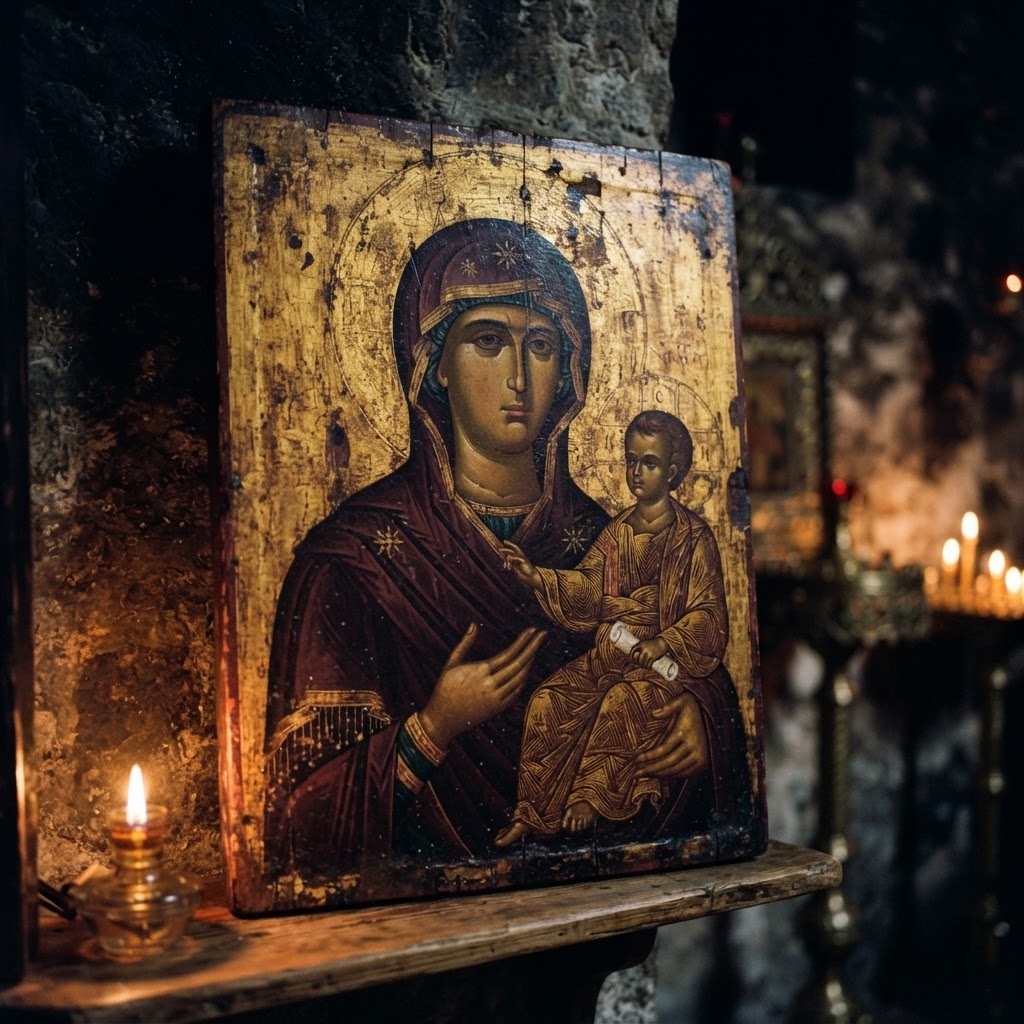
In the fifth century a bishop of Constantinople, Nestorius, objected to a word the churches of his city had chanted for generations: Theotokos, God-bearer. His alternative, Christotokos, sounded cautious and reverent. It was neither. Both words are Greek compounds with the same second half — tokos, “the one who gives birth” — and everything turned on the first half.
Nestorius said
A mother can only bear what is of her own nature. Mary bore a man; therefore call her Christotokos, bearer of Christ, and let the Word dwell in Him as in a temple. To say otherwise, he argued, is to make a creature the mother of the Godhead.
St. Cyril said
You are asking the wrong question. No one claims Mary generated the divine nature. The question is who was born: and the Creed already says the Son of God “was incarnate of the Virgin Mary and was made man.” If the Person born is the Son, then the mother of the Person is the Mother of God.
The Church decided
At Ephesus in 431 the bishops confessed one Christ, one Person, and therefore one Mother of God. The argument was never about Mary's dignity. It was about whether the child in the manger is the eternal Son or a man accompanied by Him.
In plain words
The word Theotokos does not say that Mary is the origin of God. It says that the One she bore is God — and it says it in the shortest possible form, so that the confession cannot be fudged. Change one half of that word and you have not softened Marian devotion; you have split Christ in two. That is why a council was fought over a noun.
Section III — Scriptural Foundations
Mother of My Lord
Scripture never uses the word Theotokos, and it does not need to: it gives the reality and leaves the Church to find the word. What it will not let us do is separate the Son of God from the son of Mary. Every passage that names her also names Him, and the Church's title is simply the shortest honest summary of the two together.
1. Luke 1:43
And why is this granted me, that the mother of my Lord should come to me?
Elizabeth speaks under the inspiration of the Holy Spirit, and the title she gives is already a theological statement. “My Lord” in Luke's Gospel means the Lord God; the child in Mary's womb is the Lord.
2. Luke 1:35
The Holy Spirit will come upon you, and the power of the Most High will overshadow you; therefore the child to be born will be called holy, the Son of God.
The angel does not say she will bear a man who will later be adopted. The child to be born — in that conception — is called the Son of God.
3. Galatians 4:4–5
When the fullness of time had come, God sent forth his Son, born of woman, born under the law, to redeem those who were under the law, so that we might receive adoption as sons.
Paul joins the two facts the Church would later define: the Person sent is the Son of God, and He is born of a woman. Mary's motherhood is the hinge of our adoption.
4. Isaiah 7:14
Behold, a virgin shall conceive and bear a son, and shall call his name Emmanuel.
Matthew quotes this of the Nativity (Matthew 1:23) and translates the name for us: God with us. The prophet's sign is a mother and a child who is God present.
5. John 2:1–5
The mother of Jesus said to him, “They have no wine.”… His mother said to the servants, “Do whatever he tells you.”
At Cana the title is lived before it is defined: she intercedes, He acts, and the disciples believe. The Church's Marian devotion is older than its Marian vocabulary.
6. John 19:26–27
Woman, behold, your son… Behold, your mother. And from that hour the disciple took her to his own home.
From the Cross, the Son gives His mother to the beloved disciple — and in him, the tradition has always heard, to all who belong to Christ.
Section IV — Decreed by the Ecumenical Councils
From the Creed to the Definition
The title entered the Church's dogma gradually and in public, the way a foundation is laid: first assumed in the Creed, then defended against a denial, then written into the definition of faith that every later council would presuppose.
325
Nicæa I
The Creed confesses that the Son of God “for us men and for our salvation came down and was incarnate, and was made man.” The Church's Marian faith is already inside the Christological clause: the One who became man is the One who was begotten, not made.
381
Constantinople I
The Creed is completed: “and was incarnate by the Holy Spirit of the Virgin Mary, and was made man.” The Council names her in the Church's most recited sentence — and names her as Virgin and as Mother of the incarnate Lord.
431
Ephesus
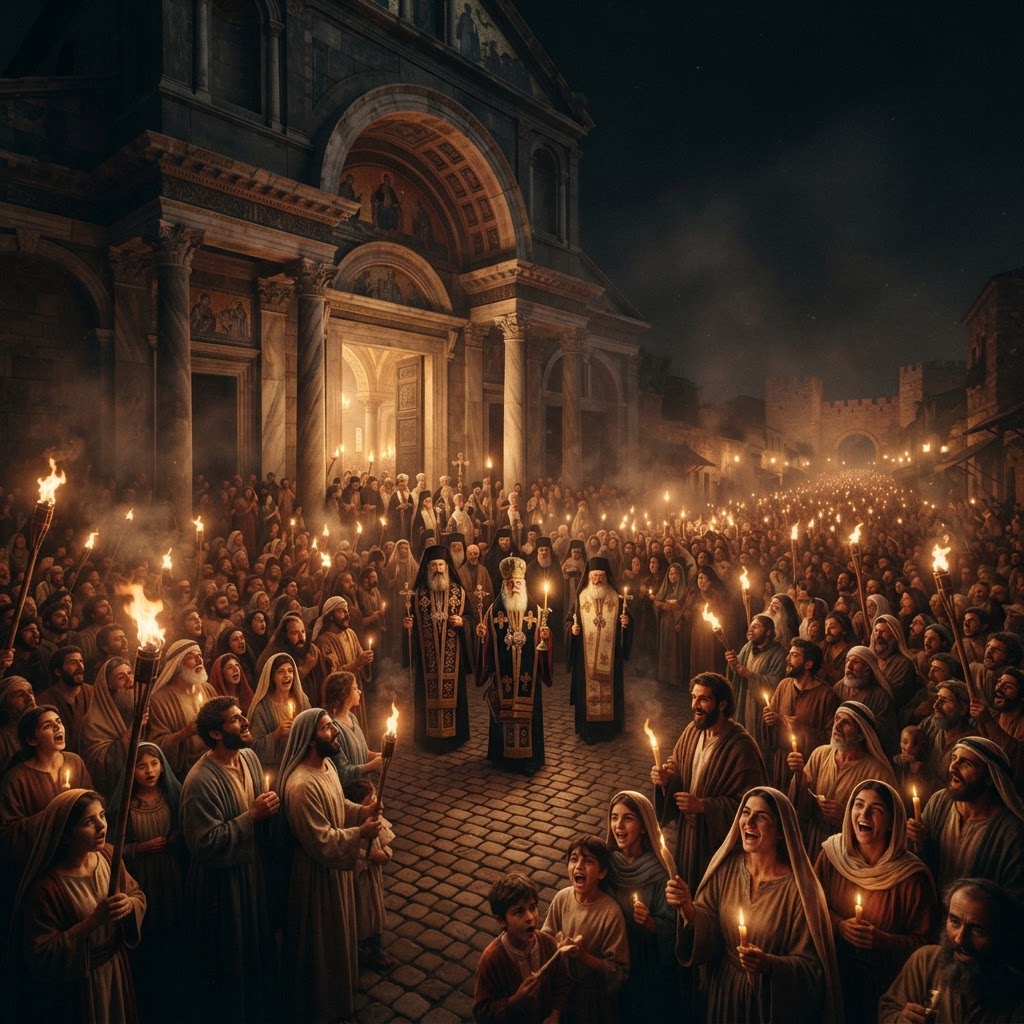
Against Nestorius the Council defined that the one Person of the Word, consubstantial with the Father, is the Person born of Mary — and therefore that she may truly be called Theotokos, God-bearer. The Council met in the Church of Mary at Ephesus; when the definition was read, the people escorted the bishops through the streets with torches.
451
Chalcedon
The Definition of Faith confesses one and the same Christ, “begotten before the ages from the Father according to the Godhead, and in the last days, for us and for our salvation, born of Mary the Virgin, the Mother of God, according to the manhood.” The title is now written into the dogma of the two natures.
553
Constantinople II
Reaffirmed Ephesus and Chalcedon together and condemned any reading that divided Christ — and therefore any reading that divided His Mother's title. The Theotokos was by then fixed in the Roman and Byzantine liturgies alike.
787
Nicæa II
Defended the veneration of images on the ground of the Incarnation: if the Word truly took flesh of Mary, the Invisible may be depicted in the visible. The Council distinguishes the worship due to God alone (latria) from the veneration given to His Mother and the saints (hyperdulia, dulia).
In plain words
Read the Creed you recite each Sunday and you will find her there already: “and was incarnate by the Holy Spirit of the Virgin Mary, and was made man.” Ephesus did not add a new article to the faith. It refused a reading that would have emptied the article the Church already had.
Section V — The Witness of the Early Church
A Century and a Half Before the Council
The earliest Christian writers outside the New Testament do not yet argue about Mary's title — they simply assume her place. What follows is a chain of witnesses across the empire: Antioch, Lyons, Egypt, Cappadocia, North Africa and Jerusalem, in Greek, Latin and Syriac, from the generation after the apostles to the eve of the definition.
St. Ignatius of Antioch
c. 107
“Jesus Christ… was truly of the race of David according to the flesh, but Son of God by the Divine will and power, truly born of a virgin.” (Letter to the Smyrnæans 1) Written within a decade of the Apostle John's death, on the road to martyrdom in Rome.
St. Irenæus of Lyons
c. 180
“The knot of Eve's disobedience was untied by Mary's obedience: what the virgin Eve bound through her disbelief, Mary the virgin loosened through her faith.” (Against Heresies III.22) The earliest developed theology of Mary as the New Eve.
Sub tuum præsidium
3rd–4th century
“Beneath your compassion we take refuge, O Theotokos. Do not overlook our petitions in time of trouble, but rescue us from danger, O only pure, only blessed one.” Found on a Greek papyrus from Egypt (Rylands Papyrus 470), this is the oldest known prayer addressed to Mary — and it already bears the title Theotokos, a full century before Ephesus defined it.
St. Gregory of Nazianzus
c. 382
“If anyone does not believe that Holy Mary is the Mother of God, he is a stranger to the Godhead.” (Letter 101) The Cappadocian Doctor does not treat the title as a compliment to Mary but as a test of whether one has understood who Christ is.
St. Augustine of Hippo
c. 400
“She is the mother of the members of Christ, which we are, because she cooperated by her charity in the birth of the faithful in the Church.” (On Holy Virginity 6) The Mother of the Head is the Mother of the Body.
Liturgy of St. James
4th–5th century
In the anaphora of the Jerusalem liturgy the priest prays “especially for our most holy, most pure, most blessed and glorious Lady, the Mother of God and ever-virgin Mary.” Before the definition, the Church was already praying the dogma.
In plain words
Notice what kind of evidence this is. The Fathers are not speculating; they are quoting prayers and arguing with heretics. The Sub tuum præsidium is the strongest single item: an ordinary Christian in Egypt, in the third or fourth century, praying to the Theotokos by name — because that is what the Church had taught him to call her.
Section VI — The Catacombs and the Stones
Evidence Painted Underground
Before councils wrote, Christians painted. Roman law did not permit them to build in the open, but it left them their dead — and in the tunnels of the catacombs the faith of the ordinary believer survives in pigment and plaster: the woman with the child, the child in the womb, the star that a prophet saw from afar.
The Madonna and Child of Priscilla
In the Catacomb of Priscilla on the Via Salaria in Rome, painted on the plaster of an underground chamber in the second or third century, a veiled woman holds an infant at her breast while a standing figure points to a star above them. It is the earliest known depiction of the Mother of Jesus with her child, and the pointing hand has been read as the prophet Balaam — “a star shall come forth out of Jacob” (Numbers 24:17).
The Annunciation of Priscilla
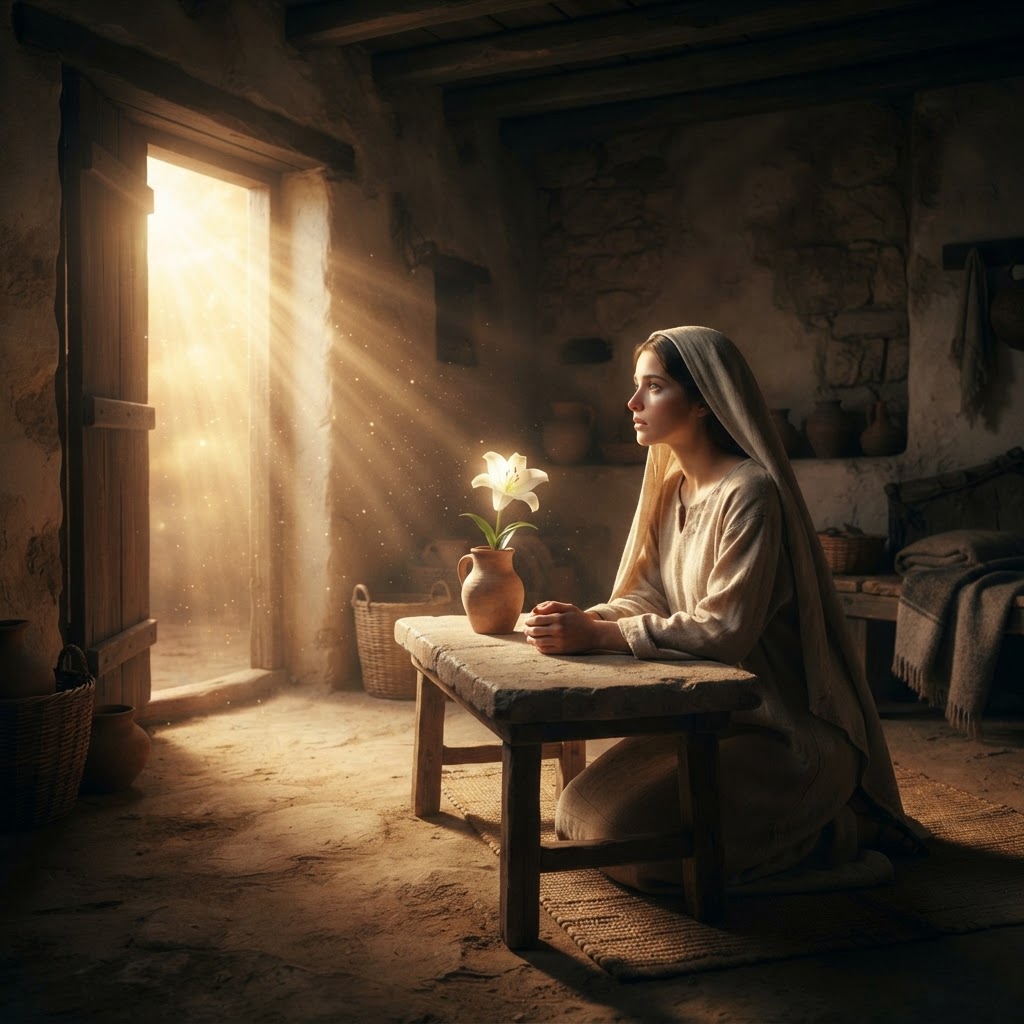
A neighbouring chamber in the same catacomb carries a fresco of a young woman seated while a figure addresses her with a gesture of speech. Dated by most scholars to the second or third century, it is among the oldest images of the Annunciation and shows that the conception of the Lord was already the subject of Christian visual catechesis in the age of the persecutions.
Santa Maria Maggiore
When the bishops returned from Ephesus in 431, Pope Sixtus III rebuilt and adorned the basilica of Santa Maria Maggiore in Rome. The triumph arch mosaics of 432–440 show the Mother of God enthroned in imperial robes and jewels, the child on her lap, the Magi approaching — a public, monumental proclamation of the title the Council had just defined, in the very city of the Caesars.
The Church of Mary at Ephesus
The third ecumenical council did not meet in a neutral hall. It met in the largest church of Ephesus, dedicated to the Mother of God — a building whose very name predates the definition that gave the council its verdict. Archaeology has recovered its ruins and the inscriptions of the city that called her Theotokos.
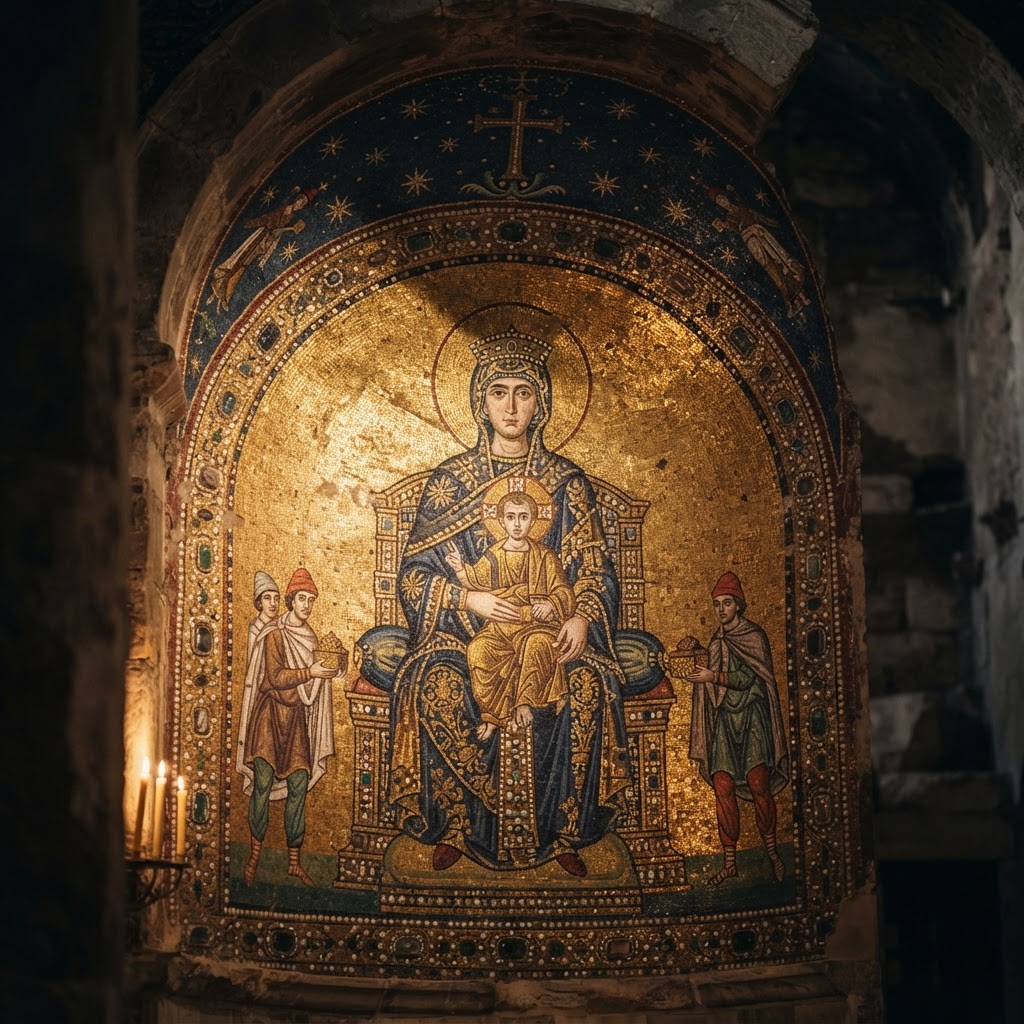
What archaeology can and cannot prove: the catacomb frescoes and the basilica mosaics show us that Christians venerated the Mother of God and pictured her with her Son long before the definition — they are evidence of faith received and practised. They are not themselves a decree. The doctrine was defined by the Church in council; the art shows that the Church already believed it, and the dating of the earliest frescoes is debated by scholars, so the case rests on the whole pattern rather than on one wall.
Taken together — the Priscilla frescoes in Rome, the Sub tuum prayer from Egypt, the Church of Mary at Ephesus, the mosaics of Sixtus III — the material record describes a Church that had already given her heart to the Theotokos before it gave her a definition. Councils do not invent; they certify.
Section VII — What the Title Does Not Mean
The Boundaries Everyone Crosses
A title misunderstood is a title misused — and no doctrine is more consistently misunderstood than this one. Both her critics and some of her friends turn a creature into a goddess. The Church's own boundaries are the strongest statement she has of Mary's creatureliness.
She is not the source of His divinity
Mary did not give birth to the Godhead, and she does not possess it. What a mother gives is a human nature — flesh, blood, a body and a soul. She gave Him everything a mother gives, and nothing of it was divine.
She is not the Mother of the Trinity
The title belongs to one Person only: the Son. Mary is not Mother of the Father and not Mother of the Spirit. The Church has never prayed to the Father “through the Son and His Mother” as if there were a household of four.
She is not a goddess, and not co-redemptrix in the divine order
She is a creature, redeemed by the very Son she bore, sustained by grace at every moment. Her cooperation is real and unique — “let it be to me according to your word” — but it is the cooperation of a creature, not a share in what belongs to God alone.
She is not a fourth Person or a rival mediator
There is one mediator between God and man, the man Christ Jesus (1 Timothy 2:5). Mary's intercession is a participation in His one mediation, the way the prayers of any saint are — real, and entirely dependent.
The rule that keeps it straight: the title is true of her because it is true of Him. Wherever Marian doctrine floats free of Christ, it has already gone wrong — and the Church's own councils, which defended the Mother only while defending the Son, are the proof.
Section VIII — Why This Doctrine Is Ours
What Hangs on the Mother
The title was fought over because it is not finally about Mary. It is about whether God has come close enough to be held — and, if He has, what that does to the creature who held Him and to the family He came to gather.
It is a Christological doctrine
The word Theotokos was not coined to honour Mary but to name Jesus. Deny the title, and you have quietly denied the Incarnation: you have said that the One born of her is not God.
It secures the reality of the Incarnation
If the Person born of her is God the Son, then God truly entered time, truly took flesh, truly died. The whole economy of salvation depends on the identity of that one child.
It grounds our adoption
God sent His Son, born of a woman… so that we might receive adoption (Galatians 4:4–5). The Mother of the Son is the Mother of the many sons; the family we are adopted into is hers.
It teaches us what grace does to a creature
Mary is the Church's portrait of what sanctity looks like at its fullest: faith that accepts a Word it cannot understand, a whole life turned toward the gift. In her the Church sees her own destiny.
It guards the way we pray
Because she is a creature, we ask her prayers; because she is the God-bearer, we trust her nearness. The right words matter: latria for God alone, hyperdulia for the Mother of God, dulia for the saints.
It keeps the Cross coherent
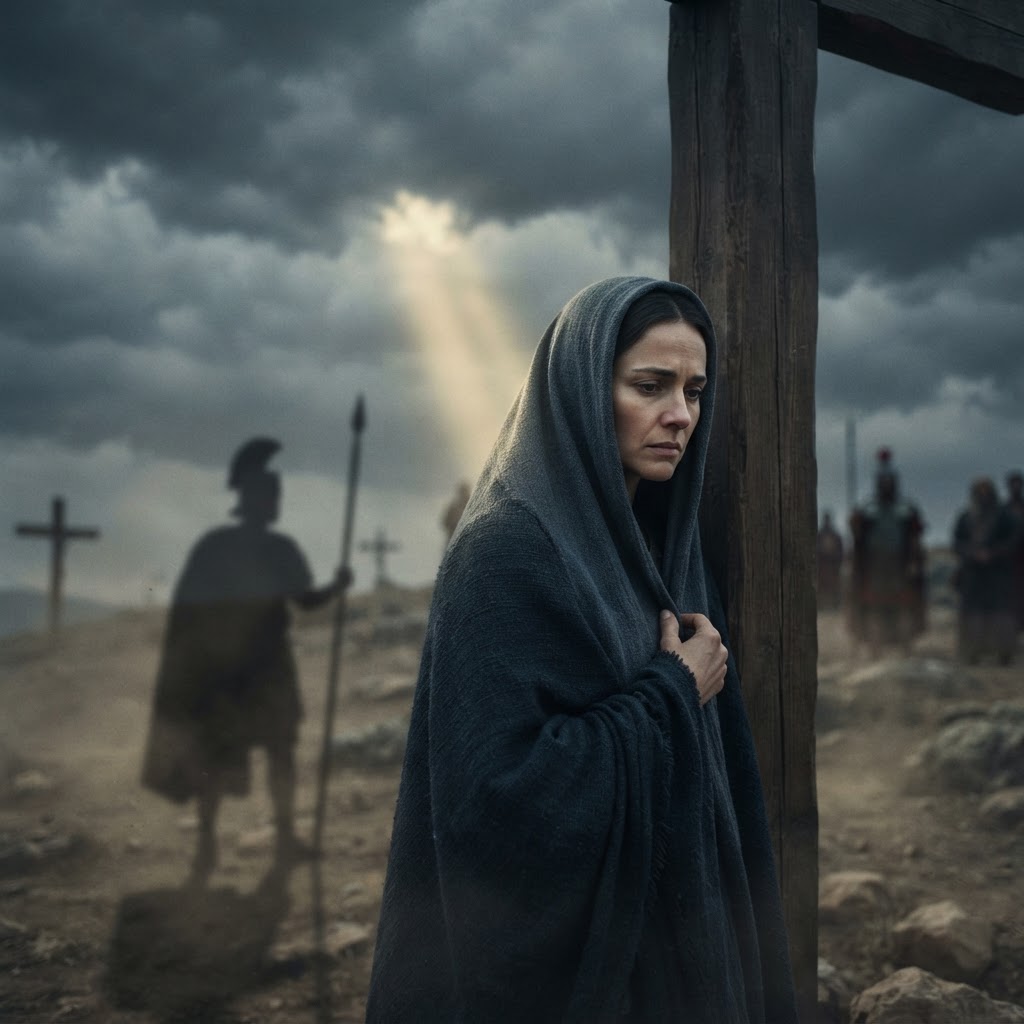
The woman standing at the foot of the cross is the mother of the One on it. If He is not God, Calvary is one more execution. The title at Bethlehem and the death at Golgotha stand or fall together.
Section IX — The Mystery That Calls Us to Prayer
Not a Title to Argue · A Mother to Ask
Every doctrine ends in prayer, and this one ends in the oldest Marian prayer we possess. It was written on papyrus in Egypt, in the age of the martyrs, and the Church still says it: we fly to your protection, O holy Mother of God. The theology and the prayer use the same word.
And notice where the definition leaves us. It leaves us, as it left the beloved disciple, with a mother given from the cross: “behold, your mother.” The dogma is not a wall between us and Christ; it is the doorway by which the family of God becomes ours — and the reason our metanoia has a household to turn home to.
The whole doctrine in five lines
- One Person: the child Mary bore is the eternal Son of God, the Second Person of the Trinity.
- One true Mother: she gave Him a complete human nature — body and soul — as every mother gives.
- One title: because the Person is God, she is truly Theotokos, the Mother of God.
- One controversy: Ephesus (431) defined the title to protect the unity of Christ, not to exalt a creature.
- One consequence: the Son became man so that we might be adopted — and His Mother is ours.
Beneath your compassion we take refuge, O Theotokos.
Do not overlook our petitions in time of trouble, but rescue us from danger,
O only pure, only blessed one. Amen.
A Guide for Protestants and Honest Questioners
Mother of God — A Title About Her Son
Theotokos sounds like the most Marian doctrine imaginable; it is actually the most Christological. Ephesus did not define something about Mary's glory, it defined something about Jesus's identity, and the Reformers themselves used the title without hesitation.
Objection · “Mother of God is an invention of medieval devotion.”
Reply · The title was in use in the liturgy before the council of Ephesus and was defended there in 431 against Nestorius, who wanted to call her Christotokos (Christ-bearer) in order to keep the two natures in two persons. The bishops answered that a mother bears a person, not a nature; since the person is the eternal Son, she is Theotokos. The title exists to protect the unity of Christ.
Objection · “Jesus rebuked devotion to His mother in Luke 11:27-28.”
Reply · He did not rebuke the woman; He completed her blessing. She called His mother blessed, and He said those who hear the word of God and keep it are blessed — which is exactly what Mary did, which is why Elizabeth, filled with the Spirit, said “blessed is she who believed” (Luke 1:45). And Mary herself, moved by the same Spirit, prophesied “all generations will call me blessed” (Luke 1:48). The verse is not a rebuke of honouring her; it is the reason she is honoured.
Objection · “Mary was an ordinary woman, a vessel only.”
Reply · Scripture does not speak of her that way. The angel greets her with kecharitomene — a perfect passive participle, “having been graced,” a state that is already complete and continues (Luke 1:28) — and she is told the Lord is with her. Elizabeth cries out with a great cry. She is the daughter of Zion, the ark of the covenant, the woman of Genesis 3:15. A vessel is not asked for consent; Mary is (Luke 1:38), and her consent is the hinge of the Incarnation.
Objection · “Calling a creature 'Mother of God' exalts her above God.”
Reply · The grammar is the answer: the title describes a relation, not a power. To say ‘the mother of the King’ does not make the mother the King. Theotokos says only that the child she bore is God the Son. This is why the Reformers kept the title: Luther's Magnificat commentary calls her the highest example of grace, and Calvin insists she is rightly called Theotokos. Rejecting the title is what forces a change in Christology, not in Mariology.
Objection · “This is the first step to worshipping Mary.”
Reply · The Church draws a hard line: latria (worship) belongs to God alone; the honour given to Mary is of an altogether different kind, and she is asked for prayer, exactly as a Protestant asks a living friend. If Theotokos led to worship, Ephesus would have been the beginning of idolatry; in fact the same council that gave her the title anathematised anyone who turned her into a goddess. The title's whole purpose is to locate the Incarnation in a real human being.
Your Research Path
- 1
Read the texts behind the title
Isaiah 7:14 (alma, the virgin who bears Emmanuel) · Luke 1:26-56 · John 1:14 · John 2:1-11 · Galatians 4:4 · Revelation 12:1-6.
- 2
Read Ephesus and its aftermath
Cyril's Second Letter to Nestorius, the twelve anathemas, and the definition of Chalcedon. Note that every one of the objections turns on Christology, not on Mary.
- 3
Read the Reformers
Luther, Commentary on the Magnificat (1521) · Calvin, Institutes II.14.4 and his Harmony on Luke 1 · Zwingli's 1522 sermon. All three affirm Theotokos and the perpetual virginity.
- 4
Read an evangelical case
Tim Perry, Mary for Evangelicals · Scot McKnight, The Real Mary · Jaroslav Pelikan, Mary Through the Centuries.
- 5
Read the Church's own limits
Vatican II, Lumen Gentium 52-69, which sets her firmly within the Church and subordinate to Christ and the Church's worship.
Common ground: Protestants and Catholics agree that Jesus Christ is one divine person with two natures, and therefore that the child born of Mary is God. That is the whole content of Theotokos. Where we differ is the extent of the honour shown to her, not who her Son is.
Doctrine Companion
The Heart That Said Yes
If she is the Mother of God, then her place in the Church is not decoration but architecture. Continue into Mariology — the Immaculate Heart, the New Eve, and the Woman of the Apocalypse.
Mariology — The Immaculate Heart of MaryReferences
- Catechism of the Catholic Church, nn. 456–460, 484–511 (esp. 495 on Theotokos, 508 on Mary's virginity)
- Council of Ephesus (431), St. Cyril of Alexandria, Second Letter to Nestorius and the Twelve Anathemas
- Council of Chalcedon (451), Definition of Faith — “born of Mary the Virgin, the Mother of God, according to the manhood”
- Second Council of Constantinople (553) and Second Council of Nicæa (787) on the veneration of images
- Vatican II, Lumen Gentium, nn. 52–69 — Mary, the Mother of God, in the Mystery of Christ and the Church
- St. Ignatius of Antioch, Letter to the Smyrnæans 1 · St. Irenæus, Against Heresies III.22; V.19
- St. Gregory of Nazianzus, Letter 101 (against Apollinarius)
- St. Augustine, On Holy Virginity 6 · St. Ambrose, On Virgins II.14
- St. Cyril of Alexandria, Homily 4 at Ephesus · St. Ephrem the Syrian, Hymns on the Nativity
- Sub tuum præsidium — Rylands Papyrus 470 (John Rylands Library, Manchester)
- Catacomb of Priscilla, Via Salaria, Rome: Madonna and Child and Annunciation frescoes
- Basilica of Santa Maria Maggiore, Rome: triumphal arch mosaics of Sixtus III (432–440)
- Scripture: Luke 1:35, 43; Galatians 4:4–5; Isaiah 7:14; Matthew 1:23; John 2:1–5; 19:26–27
Patristic quotations are given in standard English translations. Art-historical dates follow the ranges commonly given in the archaeological literature; where scholars differ, the range is stated.