
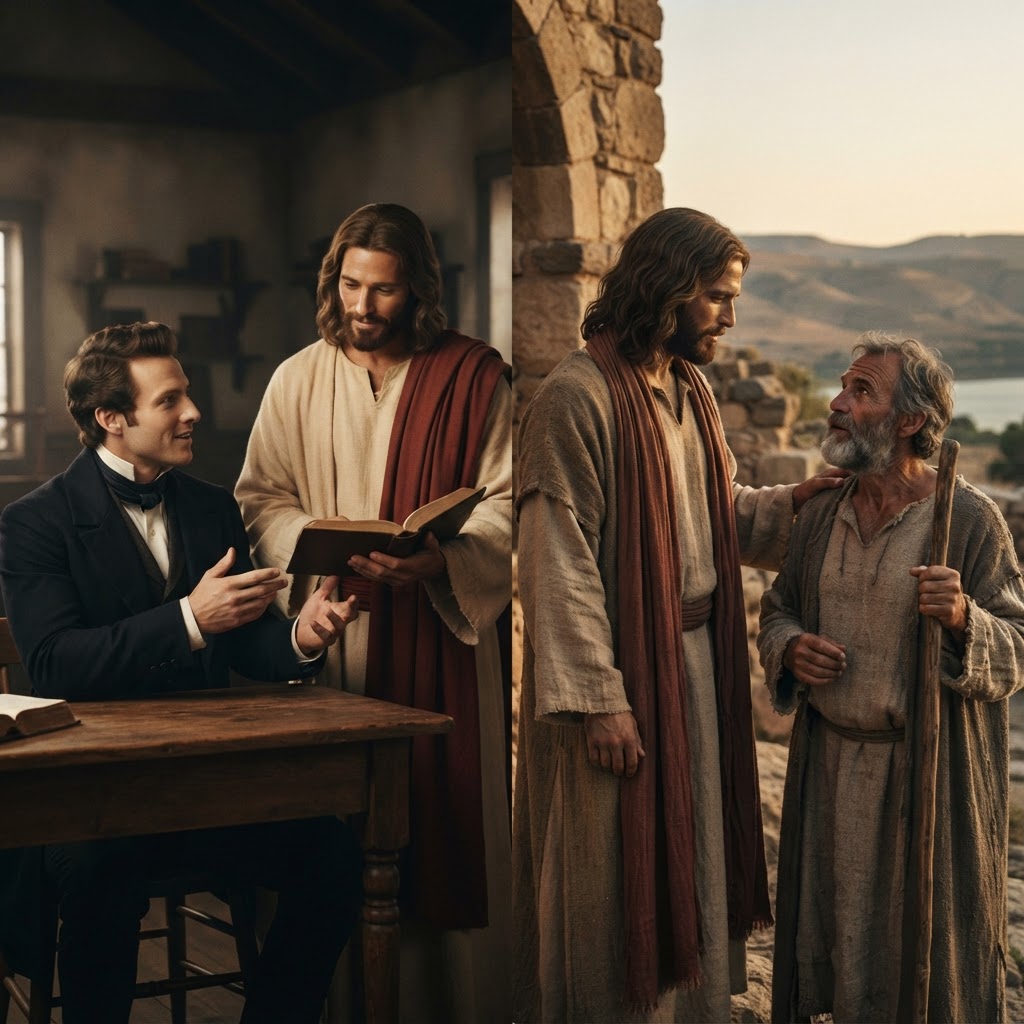
Sitting in the auditorium at the Crown Theatre in Burswood last night, I watched an energetic performance of The Book of Mormon musical. For a practicing Catholic, the experience was an exercise in intense, but manageable, cognitive dissonance. Listening to a packed Perth house laughingly chant explicit curses against God in the Act I song "Hasa Diga Eebowai" (which I am not going to translate here ) was quite uncomfortable, also reflected in the emotional responses of the two main characters on stage realising what was being sung . It is entirely understandable why many people of faith dismiss the production immediately as pure blasphemy. Yet, as the curtains closed, I found myself reflecting on a deeper reality. If we look past the surface-level vulgarity, Trey Parker and Matt Stone’s satire inadvertently creates a fascinating, profoundly illuminating negative mirror. For a discerning Catholic viewer, this piece of secular pop culture does something unexpected: it exposes the deep spiritual brokenness of a world without true revelation, and it ultimately underscores why our historical, orthodox faith is so fiercely necessary.
The Tragedy of the "Light Switch" Theology
One of the most telling observations from last night's performance came during the show-stopping tap number, "Turn It Off." On the surface, it is a hilarious comedic routine about young missionaries suppressing their anxieties. Underneath, however, it is a devastating look at human repression. The song explicitly parodies how these young men, several of whom are clearly implied to be gay, are taught to handle "unacceptable" thoughts or same-sex attractions by simply flipping a mental light switch and pretending the feelings do not exist. From a Catholic theological perspective, this song highlights the tragic consequences of Pelagianism, the heresy that human beings can achieve perfection and moral righteousness through sheer willpower, strict rule-following, and human effort alone, without the radical necessity of God's grace. This is not to dismiss important acts of discipline, or making changes in one's life in order to minimise such distractions, or disorders. A heart attuned to God must surrender its will daily and pick up its cross. However, when a religious system reduces spiritual life to an external performance of flawless rule-keeping, it forces the human soul to fracture. Instead of offering authentic healing, integration, and the transformative power of God’s grace, a purely man-made, works-based theology forces individuals to violently repress their brokenness. "Turn It Off" perfectly captures the psychological trauma that occurs when human religion tries to conquer human nature through suppression rather than redemption.
The Mirror of Human Brokenness and the Gospel Response
This internal repression matches the external brokenness seen in the main setting of the musical: a remote Ugandan village trapped in a horrific nightmare of suffering, poverty, AIDS, and the looming threat of a psychotic warlord. Enter two young, clean-cut American missionaries armed with sunny smiles and overly simplistic platitudes. The contrast is shattering. A superficial, transactional faith cannot withstand the weight of human tragedy. When the villagers sing their despairing curses, it shocks us. But theologically, it accurately captures the raw, existential cry of a broken humanity that feels utterly abandoned by God. As I watched this play out, I couldn’t help but think of how Christ and the Apostles were constantly confronted with this exact kind of human despair. In first-century Judea, the people felt utterly abandoned by God. They were brutally oppressed by the Roman Empire, watching promised Messiahs who never arrived, while societal outcasts were rejected, misunderstood, and left to rot. To cope with their pain, justify their existence, or survive their disillusionment with society, people turned to external coping mechanisms, the strict legalism of the Pharisees, political zealotry, or compliance with corrupt systems. Yet, these external fixes could never truly satisfy the human heart. When Christ encountered this raw hatred, anger, and despair, He did not turn away or offer cheap, sunny platitudes. He listened. He showed radical mercy and compassion. By dining with tax collectors and embracing the outcast, Jesus shared the beating heart of God’s mercy and proclaimed His Kingdom. Crucially, His message was not a superficial, external band-aid; it was a true call to salvation through a conversion from within. Christ entered directly into the brokenness that caused their pain, offering internal redemption rather than an external placebo.
The Irony of "Invention Generating Invention"
The musical, however, offers no such real redemption. The structural comedy of Act II relies on a massive irony: the well-meaning but clueless missionary, Elder Cunningham, realizes the villagers do not care about 19th-century American religious history. To capture their attention, he begins completely fabricating scripture—weaving Star Wars and The Lord of the Rings into his sermons to address the villagers' immediate psychological and social needs. The villagers are comforted, form a community, and are baptized into a completely fake religion. The deep meta-irony here is that Elder Cunningham is unwittingly staging a historical reenactment of how Joseph Smith founded Mormonism in 1830. Like Cunningham, Smith took contemporary American cultural anxieties, local folk magic, pop-archaeology about Native Americans, and a vivid imagination to manufacture a brand-new scripture. As a Catholic, watching this unfold provides a sharp, immediate contrast to the reality of Divine Revelation. For the Church, faith is not a "useful fiction" or a psychological coping mechanism woven together by human imagination to make people feel better. True revelation is theology from above; God breaking into actual human history. Pontius Pilate was a real Roman governor; the empty tomb in Judea was a physical reality. Catholicism treasures a tangible, apostolic continuity that can be traced chronologically back to Christ. By showing how easily man can fabricate a "helpful" religion out of thin air, the musical underscores just how radically different and necessary a historically grounded, unchangeable Divine Revelation truly is.
Ancient Heresies and the Finished Work of Christ
When you listen line-by-line to the show’s centerpiece anthem, "I Believe," the theological gap between human projection and Catholic dogma becomes a chasm. The character Elder Price proudly belts out his belief that God lives on a planet called Kolob, that God buried golden plates in the ground, and that Christ appeared in ancient America after His resurrection. This framework is a modern revival of an ancient heresy. In the second and third centuries, the early Church Fathers had to fiercely combat Gnosticism. Like modern Mormonism, Gnostic sects claimed that the public teachings of the Apostles were incomplete and that salvation required "secret, newly revealed books and tablets." St. Irenaeus of Lyons famously demolished this idea in his treatise Against Heresies, arguing that true Christian revelation is public, universal, and fully complete. If Christ had secret doctrines meant for salvation, He would have entrusted them to the Apostles He publicly commissioned, not left them buried in a hill to be dug up by one man 1,400 years later. Furthermore, the LDS premise that Christ flew to America to put on a "Part 2" of the Gospel fundamentally undermines the absolute finality of the Cross. When Jesus Christ was crucified, he uttered His definitive final words: "It is finished" (John 19:30). With that cry of victory, the Old Covenant was fulfilled, the veil was torn, and the work of salvation was fully completed. As Saint Paul untiringly proclaims throughout his New Testament epistles, Christ's death broke down the dividing wall of hostility, ensuring that the Gentiles were fully, permanently grafted into the single family of God (Romans 11, Ephesians 2). The mission to the world was accomplished then and there; the Holy Spirit was poured out at Pentecost, and the gates of hell did not prevail against the historic Church. To suggest that the Gospel immediately fell into total apostasy until a 19th-century American restoration is to deny the victory that Christ already won.
The Secular Blunder
The creators of The Book of Mormon believed they were writing a sweet, humanist defense of faith. The ultimate thesis of the musical is a deeply modernist one: It doesn't matter if religious stories are total fantasies, as long as they help people get through the day, suppress their anxieties, and treat each other well. Parodying a small, transactional caricature of the Divine is easy. But as Catholics, we can see the tragic flaw in this secular conclusion. A made-up religion can offer a temporary psychological placebo, but it cannot offer salvation. It cannot conquer death, it cannot truly absolve sin, and it cannot heal the deep, existential brokenness of humanity. By showing a fake religion generating another fake religion to solve real suffering, The Book of Mormon inadvertently leaves its theater audience in total darkness. It proves that without the real Jesus of history, without the real Cross, and without an objective, unshakeable truth, humanity is left with nothing but entertaining myths and coping mechanisms. The show intends to mock the absolute nature of religious truth, but for the discerning Catholic looking back at the Burswood stage, it only proves just how desperately the world needs it.
By Justin Poor - Catholic Apologist, drawing from Sacred Tradition, the Fathers, Doctors, and the Full Magisterium.